PART 1
The night Daniela left her son at her mother’s house, she didn’t even come in for dinner.
It was December 24 in León, Guanajuato. Firecrackers popped in the street, neighbors blasted carols at full volume, and in Doña Aurora’s kitchen, a pot of pozole simmered, untouched and untested.
Daniela arrived with a blue suitcase, a crumpled bag of clothes, and a 5-year-old boy clinging to a yellow cup decorated with an axolotl.
—I can’t handle him anymore, Mom—she said from the doorway—. He stays with you. It’s better for everyone.
Doña Aurora thought it was a crisis. Her daughter had always been impulsive, dramatic, the kind to say “I’m leaving” only to return an hour later.
But that night, she didn’t come back.
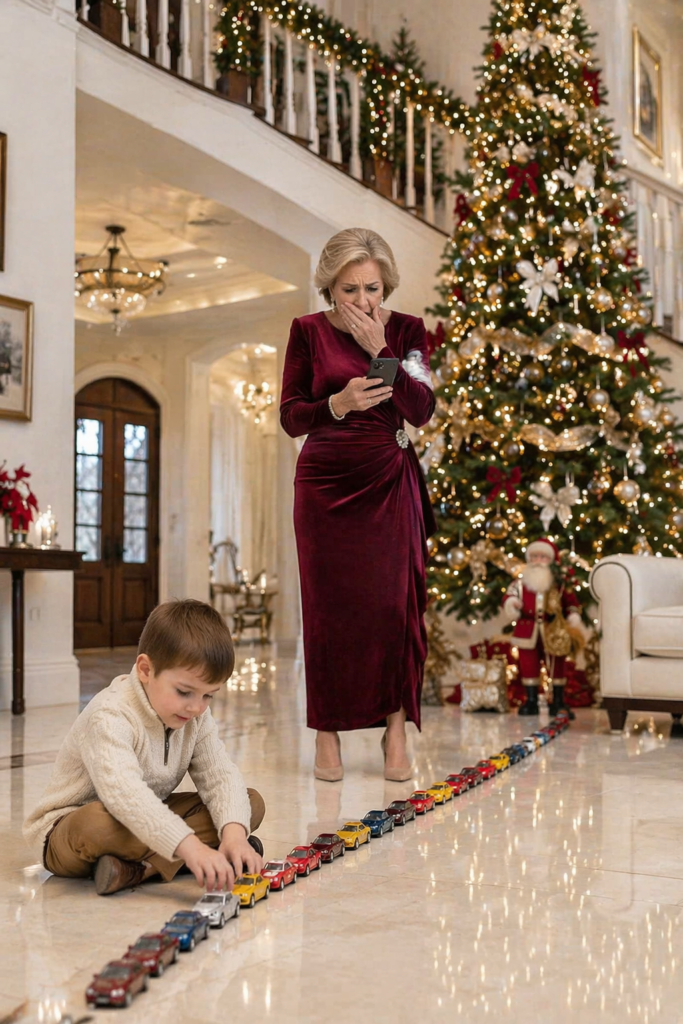
The boy was named Santiago. He barely spoke, didn’t make eye contact, covered his ears when a motorcycle roared by, and screamed if someone moved his toy cars from the exact order he had left them.
Daniela called him “difficult.”
It took Doña Aurora years to understand he wasn’t difficult. He was a child trying to survive in a world too loud for his head.
She had been an elementary school teacher for 32 years, but Santiago taught her that knowing about children didn’t mean knowing this child.
She sold a gold chain, pawned her wedding earrings, and stopped buying expensive medicine to pay for sensory therapies, consultations, transport, and pictograms.
She learned to cook without a blender when he was nearby. She learned to turn off the bright lights. She learned that love could also mean waiting 40 minutes for a child to agree to put on his shoes.
Daniela never called.
She didn’t call when Santiago turned 6. She didn’t call when he spoke his first complete sentence at 8. She didn’t call when they wanted to expel him from elementary school because he “didn’t integrate.”
Eleven years passed.
Santiago grew tall and skinny, with hair perpetually tousled on one side and a mind that could see patterns where others only saw numbers.
At 16, he created a system to detect fraud in digital payments. A company from Monterrey bought it for over 49 million pesos.
The news hit outlets like “Mexican Cybersecurity Prodigy,” without showing his face because he was a minor.
Two weeks later, someone knocked at Doña Aurora’s door.
When she opened it, her legs went weak.
It was Daniela.
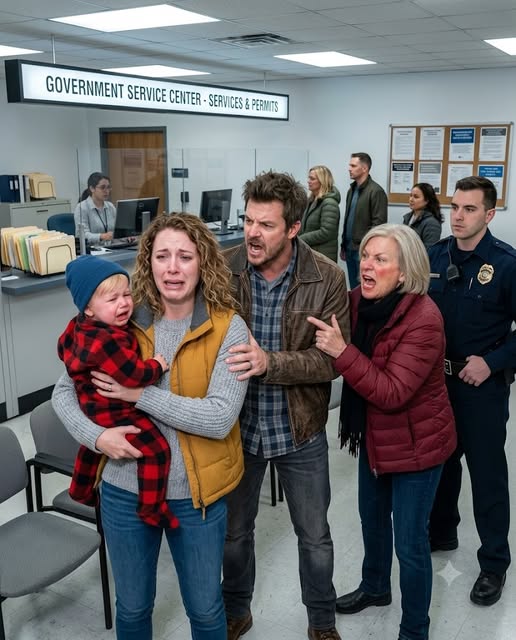
She wore a beige dress, expensive dark glasses, perfect nails, and a smile that didn’t belong to a repentant mother but to someone arriving to collect something.
Beside her was a lawyer with a black folder, notary seals, and neatly organized copies as if Santiago’s entire life fit on paper.
—Hello, Mom—Daniela said—. I’m here for my son.
Doña Aurora couldn’t respond.
The lawyer placed the documents on the table. According to those papers, Daniela had been sending money for years, had visited the boy, had spoken to him on the phone, and Doña Aurora was only caring for him “temporarily.”
It was all a lie.
But it all seemed legal.
—As long as Santiago is a minor—said the lawyer—, his mother can manage his estate.
Daniela glanced down the hallway, where Santiago’s keyboard could be heard.
—Besides, he doesn’t even understand money. He’s always lived in his own world.
Doña Aurora felt her chest shatter.
Without anyone noticing, she took a photo of the open folder with her phone.
That night, she went up to Santiago’s room, unsure how to tell him that the woman who abandoned him had come back for him and his millions.
He didn’t turn around. He just removed one earbud.
—Grandma—he said slowly—, stop shaking.
And then Doña Aurora understood that the silent boy had always listened more than everyone believed.
PART 2
Attorney Teresa Aguilar worked in a small office near downtown León, above a stationery store where they still made copies for one peso.
Doña Aurora arrived with cold hands, her phone pressed against her chest, and the photo of the fake documents as her only defense.
Teresa listened without interrupting: the Christmas, the blue suitcase, the eleven years without calls, the yellow cup, the therapies paid for with sacrifices, and Daniela’s sudden appearance right after the money.
When she finished, the lawyer removed her glasses.
—Doña Aurora, this can be fought. But there’s a serious problem.
—What problem?
—You never sought legal guardianship.
Doña Aurora felt the air leave her.
Teresa explained that Daniela’s parental rights didn’t disappear just because she had been an absent mother. By law, without a prior resolution, Daniela still had rights.
And if she also had well-crafted fake documents, she could try to take provisional control over Santiago’s accounts.
—Can they take him away from me?—the grandmother asked.
Teresa paused for a second to respond.
That second hurt more than eleven years of exhaustion.
—They can try.
Daniela wasted no time. She filed a request with the family court. She claimed that Doña Aurora had “manipulated” Santiago, that she had isolated him from his mother, and that now she wanted to keep his fortune.
She accused her of being self-serving.
To the woman who had sold her earrings to pay for therapy.
The same afternoon the notification arrived, Daniela showed up at the house with new sneakers, branded jackets, and a high-end cellphone.
—I brought things for my son—she said, pushing the gate—. Don’t be ridiculous, Mom. Let me see him.
Santiago was on the stairs. He saw the bags. He saw Daniela. He didn’t come down.
—My love, I’m Mom—she said with false sweetness—. Look, I brought you gifts.
He remained motionless.
Daniela clenched her jaw.
—See? You broke him. You made him dependent on you.
Doña Aurora was about to respond, but Teresa, who was reviewing papers in the living room, stood up.
—Ma’am, any visitation must be legally agreed upon.
Daniela looked her up and down.
—Oh, attorney, you really don’t know who you’re dealing with.
Before leaving, she dropped the bags by the door.
Santiago came down 15 minutes later. He picked up the cellphone with two fingers, as if it burned, and tossed it in the trash.
It wasn’t rudeness. It was defense.
For him, those gifts held no love. They were invasion.
The next day, Teresa reviewed the copies Daniela had submitted to the court. There were deposit receipts, supposed letters signed by Doña Aurora, and records of visits.
Everything looked too clean.
Too perfect.
—There’s something off here—said Teresa.
She showed a letter dated 2017, where supposedly Doña Aurora accepted monthly money from Daniela for Santiago’s expenses.
—That’s not my signature—whispered the grandmother.
—I know. But look at the date.
Doña Aurora froze.
That day, she had been hospitalized for gallbladder surgery at the General Hospital. She hadn’t even been at home.
For the first time, she felt a glimmer of hope.
But Teresa was clear.
—This helps, but it’s not enough. We need to dismantle the entire pattern.
From the dining table, Santiago spoke without looking up from his laptop.
—It’s already dismantled.
The two women turned.
—What’s dismantled, kid?—Doña Aurora asked.
Santiago turned his computer around. On the screen were folders by year, scanned receipts, photos, metadata, call histories, bank statements, school emails, and files with exact names.
—Everything—he said.
Teresa approached slowly.
Santiago explained in short phrases that since he was 13, he had been digitizing every piece of paper in the house because he felt anxious about losing important things.
He kept medical appointments, bills, prescriptions, messages, locations, payment receipts, and even backups from the neighbor’s cameras because once he got lost at the market, and since then, Doña Aurora activated a tracking app for him.
Doña Aurora covered her mouth.
For years, she thought her grandson archived things because he liked computers.
She didn’t know that quietly, he had constructed the complete story of his own life.
—Why did you never say anything?—she asked.
Santiago took time to respond.
—Because no one asked.
He didn’t say it with accusation. He said it as a fact.
The hearing was at 10 a.m. on a Thursday.
Doña Aurora didn’t want to take him. The courtroom was filled with noise, strong perfumes, slamming doors, and people talking over one another.
But Santiago emerged from his room wearing a blue shirt, large headphones, a black backpack, and the yellow cup in hand.
—I’m going—he said.
Daniela was already in the room.
She cried in front of the social worker with a white handkerchief, as if she had spent eleven years searching for her son instead of eleven years ignoring him.
Her lawyer, Licenciado Paredes, smiled calmly.
First, Daniela spoke.
She said she was a young, confused, pressured mother. She said she always wanted to return, but Doña Aurora wouldn’t let her. She said she sent money, called, and suffered in silence.
She delivered her lines so well that some people looked at her with pity.
Doña Aurora felt rage but stayed silent.
Teresa leaned toward her.
—Hold on. Lies speak beautifully when they’re rehearsed.
The judge reviewed the folder.
—Does the defendant have evidence?
Teresa was about to stand, but Santiago stood up first.
The room fell silent.
The boy walked to the front, laptop against his chest and the yellow cup in the other hand. He didn’t look the judge in the eye. He stared at the table.
—I can explain—he said.
Daniela let out a nervous laugh.
—Oh, please. He doesn’t understand what’s happening.
Santiago connected his computer to the screen.
Then he looked at her for the first time.
—I understand—he said—. You came back when you saw the money.
No one moved.
The judge called for order.
Santiago opened the first file. It was a deposit receipt Daniela claimed to have made in 2016.
—On the outside, it says 2016—he explained—. On the inside, it says it was created eight weeks ago.
Daniela’s lawyer stood up.
—Your Honor, this is not a forensic examination.
Teresa replied firmly.
—We’re not substituting a forensic examination. We’re pointing out indications of forgery in documents presented as authentic. We request an official review.
The judge looked at the screen.
—Continue, young man. Be clear.
Santiago opened another document.
He showed the forged signature of Doña Aurora alongside a real signature from the same year. The forged one was too neat, without variations, without natural pressure.
—it was traced—Santiago said—. My grandmother doesn’t sign like that when her hand hurts. That year she already had arthritis.
Doña Aurora closed her eyes.
She never thought he’d notice that.
Then came the supposed 31 visits from Daniela.
Santiago showed dates, maps, phone records, street camera backups, and school notes.
—On no date does she appear entering the house. In no call does her number show up. She didn’t come.
Daniela stood up.
—That’s illegal! I was spied on!
Santiago didn’t change his tone.
—No. You just weren’t there.
The judge again called for silence.
Then came the bank statements.
Santiago showed Doña Aurora’s income: pension, personal loan, pawned jewelry, therapy payments, and consultations.
—Here it says you sent 4,000 pesos a month—he said—. There are no deposits from you.
Doña Aurora felt shame as she saw her sacrifices on screen: the earrings sold, the chain pawned, the small loans she had taken to pay for transport and materials.
But Santiago didn’t present it as poverty.
He presented it as love.
Daniela began to cry differently now. It was no longer pretty crying. It was fury.
—I was unwell—she said—. No one knows what I lived through. He screamed, didn’t sleep, didn’t eat. My mom always wanted to make him seem like a saint and me like a monster.
Santiago opened one last folder.
—This audio is from December 24.
Doña Aurora felt her heart stop.
Daniela’s voice filled the room.
—I can’t handle him anymore, Mom. He stays with you. It’s better for everyone.
The room fell dead silent.
Daniela lowered her gaze.
Her lawyer stopped smiling.
Santiago swallowed hard. His hands trembled, but he didn’t close the computer.
—I also have photos—he said.
On screen appeared him as a child with headphones in therapy. Him sitting in the emergency room on Doña Aurora’s lap. Him at school, apart from the group. Him blowing out a candle without looking at the camera. Him with his yellow cup at birthdays, consultations, trips to the DIF, and mornings with fever.
And Doña Aurora was always there.
Younger, more tired, more hunched over with the years.
But always there.
Santiago stood still for a few seconds.
Then he spoke without looking at Daniela.
—I don’t ask about my mom because I know who left.
Doña Aurora felt something break inside her.
—and I know who stayed.
Santiago walked toward her. He didn’t hug her because hugging was still difficult. But he took her hand in front of the judge, Daniela, the lawyers, and all the strangers.
For Doña Aurora, that was bigger than any hug.
—She’s my grandmother—Santiago said—. My caregiver. My everyday mom.
Daniela covered her face.
The judge suspended the hearing for a few minutes.
When he returned, he ordered the documents to be sent for forensic examination, denied Daniela any control over Santiago’s estate, and ruled for the young man to remain under Doña Aurora’s care.
He also alerted the Public Ministry for possible document forgery and false declarations.
Daniela stood up in desperation.
—He’s my son! You can’t take him away from me!
The judge looked at her sternly.
—Being a mother isn’t about showing up when there’s millions, ma’am.
That phrase left her voiceless.
The following months were heavy. There were interviews, reviews, forensic examinations, and social work visits.
Doña Aurora finally formally requested guardianship. Each signature hurt because she realized too late that loving a child isn’t enough if you don’t also protect him with papers.
The experts confirmed what Santiago had shown: fabricated receipts, altered signatures, manipulated dates, and non-existent deposits.
Licenciado Paredes ended up being investigated. Daniela tried to blame him for everything, but the recovered messages from her cell phone sunk her.
In one, she said:
“With them giving me access to the accounts, I’ll figure out how to take him.”
She didn’t say “my son.”
She said “the accounts.”
Daniela didn’t go to prison because she accepted part of her responsibility and reached a lesser agreement. She paid a fine, lost any chance to manage Santiago’s money, and had to complete community service at a center for families with autistic children.
On the first day, she wanted to leave.
She said she “wasn’t prepared for that environment.”
Doña Aurora, when she learned of this, didn’t comment.
Some people don’t understand what they abandoned, even when they see it up close.
Santiago turned 18 the following year. No one could touch his money. He used part of it to create a cybersecurity company in León, with soft lights, quiet offices, and flexible hours.
At the entrance, he placed a phrase written by him:
“Here, no one has to pretend to be normal to prove their worth.”
He hired young people on the autism spectrum who had been rejected for not making eye contact, for speaking little, or for not smiling “properly.”
Doña Aurora went every Tuesday with red rice, chicken soup, and tortillas wrapped in a napkin.
Santiago didn’t always say much. Sometimes he just opened the door for her and left a cup of black coffee on the table.
That was his way of saying “I’m glad to see you.”
On a shelf in his office, he kept the yellow cup with the axolotl. Old, scratched, with the drawing almost faded.
—Do you still use it?—Doña Aurora asked one afternoon.
Santiago shook his head.
—Not anymore.
—Then why do you keep it, kid?
He took time to respond.
—Because it was with me when I didn’t know how to say anything.
Doña Aurora had to turn away so he wouldn’t see her cry.
Days later, while waiting for the bus outside his office, she received a message from Santiago.
It simply said:
“Thank you for staying.”
Doña Aurora sat on the bench, with the grocery bag on her lap, while the city continued to buzz, hurry, and remain unjust.
For eleven years, she believed Santiago didn’t ask about his mother because he didn’t understand abandonment.
She was wrong.
He didn’t ask because he understood it too early.
Some people give life and leave. And others, without doing it perfectly, stay to pick up the pieces every day.
Sometimes, staying is also a way to give birth to a heart.