PART 1
—If you don’t sign today, Valeria, tomorrow all of Guadalajara will see you on your knees.
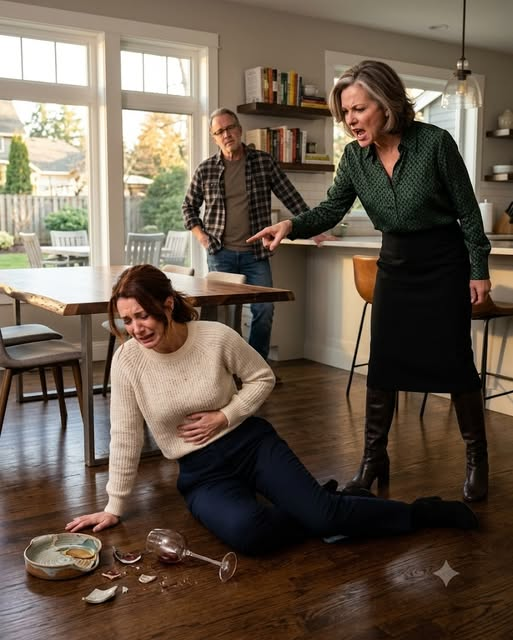
Doña Eloísa said this in front of the altar of the Virgin of Guadalupe in her living room, clutching a steaming cup of champurrado and wearing a smile so pristine it was frightening.
Valeria Cárdenas was 34 years old, five months pregnant, and running a family business of preserves, Mexican wines, and gourmet products that her parents had built from the ground up in Jalisco. She also had a huge house in Colinas de San Javier, three commercial spaces, and a wound that had yet to heal: her parents had died two years earlier in a car crash on the way to Manzanillo.
Amidst that pain came Martín Robles.
Martín was a civil engineer, polite, discreet, one of those men who seem good because they speak softly and carry the grocery bags without being asked. He accompanied her to the notary, to meetings, to the bank, to the cemetery. Valeria mistook that patience for love.
They married eleven months later.
At first, Martín seemed to respect everything. He said the company was Valeria’s legacy, that he only wanted to see her at peace. But three months into their marriage, he asked her to have his mother, Doña Eloísa, and his younger sister, Abril, move into their home.
—It’ll just be until my mom’s blood pressure improves and Abril finishes her degree —he said.
Valeria agreed. She wanted a family. She wanted noise in that house that had felt like a mausoleum since her parents' death.
But from day one, she understood they did not see her as family.
One afternoon, she overheard Abril in the dressing room.
—Mom, seriously, this woman lives like a queen. Did you see her watches?
—Well, she should enjoy it while she can —Doña Eloísa replied—. Martín didn’t marry to keep asking for permission. That company should belong to him too.
Valeria froze behind the door.
She didn’t want to cause a scene. She told herself it was resentment, ignorance, a lack of familiarity. She paid for their clothes, doctors, vacations, Abril’s private university, and even a used car for them to get around the city.
Nothing was enough.
When Valeria announced she was expecting a girl, Doña Eloísa pressed her lips together.
—Another woman calling the shots in this house —she murmured—. God knows why He does these things.
From that moment on, Martín changed.
It started with soft phrases.
—Give me signing authority, love. To help you.
Then came the accusations.
—Everyone thinks I’m a freeloader. What’s it to you to trust me?
Valeria always replied the same:
—My dad taught me that love isn’t signed in blank.
That answer turned the house into a minefield.
One stormy night, Martín said he had to travel to León for an urgent job. He kissed Valeria on the forehead, touched her belly, and promised to return in two days.
At 10:15, Doña Eloísa entered the bedroom with a steaming cup.
—Drink this, daughter. Champurrado with almond. It’ll relax you.
Valeria smelled something strange, bitter, but Abril was at the door watching her.
—Oh, don’t be suspicious, sister-in-law. My mom made it with love.
Valeria drank out of politeness.
Half an hour later, the floor began to sway. Her tongue felt heavy. She wanted to call Martín, but the cellphone slipped from her hand. Her body lay on the bed, awake inside but dead outside.
Then she heard voices.
—Did she fall? —Abril asked.
—Like a board —Doña Eloísa replied—. Martín got something good.
Valeria felt her heart shatter.
—Leave the service door open —Doña Eloísa ordered—. The guys will arrive in twenty minutes. Let them record something ugly, something that forces her to sign tomorrow. If she loses the girl, even better. That way Martín starts fresh.
Valeria wanted to scream.
She couldn’t.
She could only feel her baby moving inside her, as if it too were scared.
Then she bit her tongue until she tasted blood. The pain gave her a spark of life.
She crawled to the edge of the bed while Abril laughed below.
And in that instant, Valeria understood they didn’t want to take the company from her.
They wanted to erase her from the world.
She couldn’t believe the one decision she was about to make…
PART 2
Valeria fell to the floor without a sound. The impact brought tears to her eyes, but it also fully awakened her. Every movement was torture; the sedative weighed on her bones, her vision blurred, and her belly hardened like stone.
But her daughter was still alive.
That was enough.
She opened the door just a crack. In the living room, Abril was lounging on the couch, cellphone in hand, with a stupid grin.
—Hurry up, guys —she whispered—. My mom left the key under the flowerpot. Master bedroom, big bed. She’s not moving at all.
Valeria saw a small cantera sculpture on a console that her father had bought in Tonalá. She picked it up with both hands.
She didn’t think of revenge.
She thought of survival.
She descended six steps as if crossing through a fire. When she reached behind the couch, Abril didn’t even turn. She kept messaging, confident the pregnant woman was defeated.
Valeria raised the sculpture and struck a sharp blow to the back of her neck.
Abril collapsed to the floor, unconscious, cellphone still on. On the screen was a chat with someone saved as “The One-Eyed.”
“Door open.”
“She’s drugged.”
“Record everything.”
Valeria felt nauseous, but there was no time. With a strength she didn’t know she had, she dragged Abril up the stairs. Every step tore a whimper from her. She silently apologized to her baby, not to Abril.
She placed her on the master bed, covered part of her face with her hair, ruffled the sheets, turned off almost all the lights, and left the closet door open, just where she had discovered a tiny hidden camera weeks earlier, stashed by Doña Eloísa.
They wanted to record her humiliation.
She would let them record her own condemnation.
Then she staggered downstairs, grabbed her keys, her phone, and hid in the service room, behind some archive boxes where she kept old company documents. From there, she opened the camera app she had secretly installed when she started noticing strange movements in the house.
At 11:08, the back door opened.
Three men in black jackets entered. They didn’t search for jewelry. They didn’t look at paintings. They didn’t touch anything.
They went straight to the bedroom.
—The lady has already paid half —one said—. The rest when the husband has the video.
Valeria pressed her cellphone against her chest.
Martín wasn’t in León.
Martín was behind it all.
The door closed.
Valeria would never describe what she heard. Not because she wanted to protect Abril, but because there are sounds that cling to the soul even if one doesn’t deserve them.
At 4:30 in the morning, the men left laughing.
At 6:52, Doña Eloísa appeared on the hallway camera. She wore an elegant robe, her hair perfectly styled, and a triumphant expression that felt like sin.
—Let’s see, daughter-in-law —she said, opening the door—. Now you will learn to obey.
She entered.
First there was silence.
Then a scream so brutal that even the neighbors in the private community turned on their lights.
—Abril! My girl! No, no, no!
Doña Eloísa fell to her knees beside the bed. The trap she set for her daughter-in-law had destroyed her own daughter.
Valeria called 911 with a broken voice.
—Men entered my house. I’m pregnant. I hid. My mother-in-law is screaming. Please, help me.
When the police and ambulances arrived, Valeria was trembling in the service room. She didn’t have to pretend to be scared. It was in her blood.
A paramedic checked the baby. When he heard the heartbeat, quick and strong, Valeria cried like she hadn’t since her parents died.
Her daughter was still there.
Alive.
The police found everything: the cup with remnants of the sedative, the messages on Abril’s cellphone, the key under the flowerpot, the hidden camera, and Doña Eloísa sobbing:
—I killed her. I killed my girl.
Abril survived, but she was shattered. She didn’t speak clearly. She only screamed when someone opened a door.
Doña Eloísa was arrested that same morning. She tried to blame Valeria, but the recording buried her. In the audio, her voice planned every detail. Abril could also be heard saying something that changed everything:
—Martín said that if Valeria doesn’t sign tomorrow, The One-Eyed gets paid another way.
When they called Martín, he answered in a desperate husband’s tone.
—Is my wife okay? And my baby?
The commander informed him that Valeria was alive, that his mother was arrested, and that Abril was in the hospital.
On the other side, there was a long silence.
Too long.
—I’m coming over —he finally said.
He arrived in the afternoon, his shirt wrinkled and his eyes red. He rushed toward Valeria.
—My love, forgive me. If I had been home…
Valeria let him hug her. Her body disgusted her, but her face showed nothing.
—Your mom said horrible things —she murmured—. She said you shouldn’t find out yet.
Martín stiffened.
There Valeria understood that fear was already creeping down her throat.
In the following days, she moved to an apartment in Providencia that only her lawyer knew about. She said she couldn’t return to the house. Everyone understood.
Martín began visiting her with flowers, food, and a guilty face. But on the fourth day, when he thought she was weak, he returned to the same.
—You’re not in a position to run the company. Give me temporary authority. Just until the girl is born.
Valeria lowered her gaze.
—Do you really want to help me?
—I’m your husband —he replied—. We’re family.
That word made her nauseous.
But she smiled just a bit.
The next day she signed a document in front of Julián Herrera, her father’s lawyer. Martín saw seals, papers, signatures, and the phrase “administrative powers.” He didn’t read carefully. His hunger blinded him to the fact that the power didn’t allow him to sell properties, move large accounts, or touch shares without board approval.
It was a trap.
And Martín swallowed it whole.
He entered the company as an owner. He changed passwords, shouted orders, and demanded financial statements. Two hours later, he received a call.
—Pay the 38 million, Martín —said a voice—. Your mom ruined the job, but the debt is still alive.
Martín broke out in a cold sweat.
He couldn’t move money. He couldn’t sell spaces. He couldn’t ask for loans under Valeria’s name. Every attempt triggered an alert.
While he sank, Julián and a private investigator gathered evidence: locations of Martín’s cellphone near Tonalá the night of the attack, transfers to false accounts, deleted messages, and audios where he negotiated with The One-Eyed.
The truth was dirtier than Valeria had imagined.
Martín had been gambling in clandestine tables in Zapopan for eight months. He owed 38 million. His plan was to destroy Valeria’s reputation, force her to give up the company, and hand over spaces as collateral.
When Valeria handed everything to the prosecutor's office, she didn’t cry.
She had cried enough.
The arrest occurred in the boardroom of the company. Martín was reviewing papers he didn’t understand when two ministerial agents entered.
—This is a mistake —he said—. My wife is confused.
Valeria appeared at the door in a black dress, her belly high, and her gaze steady.
—I was the confused one when I thought you were a good man.
Martín fell to his knees.
—Valeria, please. I didn’t want it to end this way. My mom went too far. Abril was to blame for not checking the bed.
Valeria felt something inside her break forever.
—Your sister was destroyed by a trap you planned and you still blame her? My daughter almost died because you decided to sell us to pay your debts.
—We’re family —he pleaded.
Valeria stepped close enough for only he to hear.
—Family was my parents breaking their backs to leave me something clean. Family is this girl who will be born without fear. You were never family, Martín. You were hunger disguised as love.
The agents took him away in handcuffs.
At the door, he shouted that she had ruined him, that a good wife would have forgiven him.
Valeria replied without raising her voice:
—A good wife helps a man who falls. Not one who drugs her to push her into hell.
The case exploded in Guadalajara. Some called her brave. Others said she should have forgiven, that a family shouldn’t be destroyed like this.
Valeria never responded.
She sold the house in Colinas de San Javier and opened a foundation for women facing abuse from their in-laws. She named it Casa Aurora, after her mother.
Her daughter was born two months later. Healthy. Strong. With her fists clenched as if she had come ready to fight. Valeria named her Luz.
Because she understood that light doesn’t always enter softly.
Sometimes it breaks doors.
Martín was convicted of extortion, fraud, criminal conspiracy, and participation in planning the attack. The One-Eyed and his men fell when they realized Martín had no way to pay them.
Abril remained hospitalized for a long time. Valeria didn’t celebrate her pain. Nor did she mourn it. Each one had sat in the chair prepared for someone else.
Years later, when someone asked if she regretted it, Valeria looked at her daughter sleeping and remembered the bitter cup, the storm, Abril’s laughter, and the door Doña Eloísa opened thinking she would find her daughter-in-law destroyed.
She didn’t regret surviving.
She regretted confusing education with love, patience with trust, and marriage with total surrender.
Because a woman can love with all her heart, but she should never hand over the keys to her life to someone who expects to see her asleep to steal it away.
And if that makes someone uncomfortable, maybe it’s because there are still those who believe a wife should endure everything to avoid breaking a family.
But a family built on fear, blackmail, and betrayal is not family.
It’s a prison with a nice dining room.
And when a woman manages to escape from such a prison, she doesn’t ask for permission.
She slams the door.
And lets the guilty hear, from within, the echo of their own condemnation.