PART 1
Doña Elena Aguilar didn’t realize she was being recorded until she heard Fernanda’s giggle behind her.
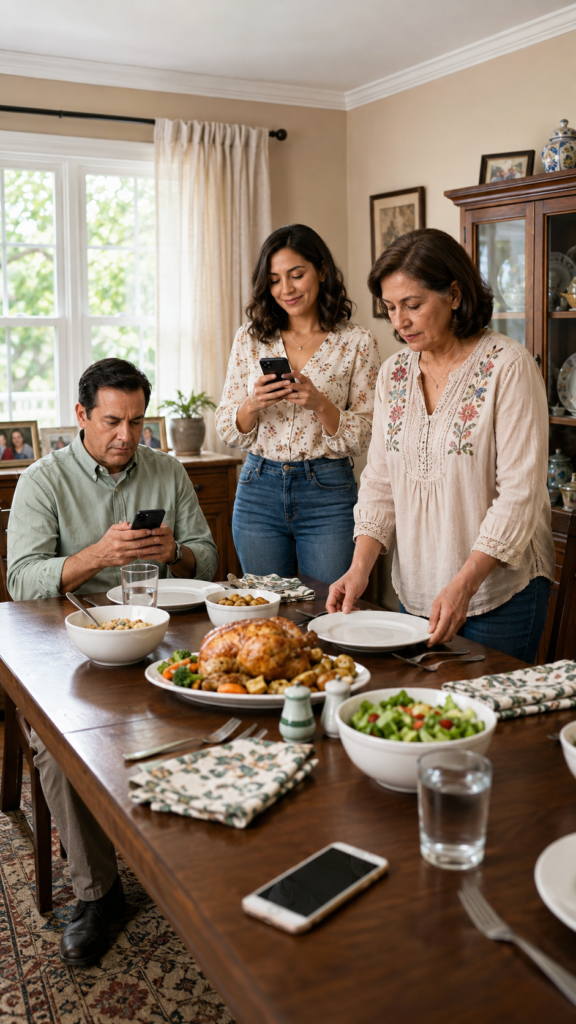
She was in the kitchen of her home in Querétaro, arranging cloth napkins next to the good china, the set she only brought out when family came over. On the stove, the mole boiled, the rice was ready, and the chicken rested on a tray, golden brown, just the way her son Mauricio liked it.
Fernanda, her daughter-in-law, leaned against the doorframe with her phone held high.
"Look at our live-in maid," she said, smiling at the camera. "She lives here, cooks, cleans... at least she’s good for something."
Doña Elena froze.
She didn’t scream. She didn’t drop the napkin. Her voice didn’t tremble because she didn’t even speak.
She just looked up.
Fernanda didn’t apologize. On the contrary, she made a face that said, “Oh, don’t exaggerate,” and kept recording for a few more seconds before heading to the living room.
Doña Elena was 67 years old. She had been a widow for 6 years. That two-story house in a quiet cul-de-sac in Juriquilla hadn’t been a gift from anyone. She had bought it with her husband, Don Arturo, when Mauricio was still wearing a primary school uniform, running down the hall with muddy shoes.
Every wall had a story.
Every piece of furniture had a history of hard work.
Every corner had been paid for with years of labor, sleepless nights, and sacrifices.
But ever since Mauricio and Fernanda moved in "just for a few months" to save money, everything began to change.
First, it was one box in the garage. Then twelve boxes. Soon, Elena’s car ended up sleeping outside while their things took her place.
Fernanda used the kitchen as if it were hers, entered Elena’s room without knocking, invited friends over for coffee without notice, and left clothes, dishes, bags, and makeup scattered throughout the house.
Mauricio always said the same thing:
"Mom, be patient. It’s temporary."
But a year had already passed.
Doña Elena cooked for them, did their laundry, cleaned up, paid part of the grocery bill, and even gave Fernanda an additional card for shared expenses.
"Just for household things," she told her.
Fernanda smiled when she received it.
Over time, that card paid for expensive coffees, wines, supplements, creams, app orders, and even the flowers Fernanda bought to decorate the living room.
That afternoon, after the video, Doña Elena picked up her cell phone.
The post was already on social media.
There she was, folding napkins in her own kitchen. Beneath it read:
"Our live-in maid. At least she’s good for something."
There were laughing emojis. Mocking comments. A friend of Fernanda’s wrote:
"Send her my way, I need one too."
And then Elena saw what hurt her the most.
Mauricio, her only son, had reacted with a laughing-crying emoji.
Nothing more.
Not a defense. Not a "she's my mom." Not a "delete it."
Just laughter.
Doña Elena left the phone on the table, grabbed her purse, took the keys, and walked out of the house without saying a word.
That night, she slept in a small hotel downtown.
The next morning, while she sipped coffee alone, she opened the bank app and canceled the additional card.
Minutes later, the message from Fernanda arrived:
"Why was my card declined? I'm at the register with a full cart."
Doña Elena looked at the screen, took a deep breath, and didn’t reply.
Because no one in that house could imagine what Elena was about to do.
PART 2
When Doña Elena returned home, Fernanda was already waiting for her at the entrance.
Her arms were crossed, her face red, and that offended look of someone who believes they have a right to everything.
"What did you do with the card?" she blurted. "You made me look horrible at the grocery store. The cashier looked at me like I was broke."
Doña Elena calmly hung up her coat.
"I didn’t do anything weird. I canceled it."
Fernanda’s mouth fell open, outraged.
"What do you mean you canceled it?"
Mauricio appeared behind her, disheveled, looking like he hadn’t slept well.
"Mom, you can’t just do that out of the blue."
"I can," Elena replied. "It’s my account."
"But it was for household expenses," he said.
"It was for shared expenses. Not to pay for your lives while you live here for free."
Fernanda let out a dry laugh.
"Oh, please. This is all over a video. It was a joke."
Elena looked at her for the first time, straight in the eyes.
"To you, it was a joke. To me, it was the truth of how I’m seen."
Mauricio lowered his gaze.
Fernanda, however, didn’t back down.
"What a drama queen. My friends understood the humor."
"Then your friends can pay for the groceries too."
The silence was heavy.
Elena extended her hand.
"Give me the card."
Fernanda took a few seconds, but in the end, she pulled it out of her bag and tossed it onto the entryway table.
"Enjoy your tantrum."
Doña Elena took it without arguing.
That was the first change.
But not the last.
The next day, Elena woke up early, made coffee, and sat down to have breakfast alone. She didn’t make eggs for Mauricio. She didn’t cut fruit for Fernanda. She didn’t put sweet bread on the table. She didn’t ask what they wanted to eat.
At 9, Mauricio entered the kitchen with a wrinkled shirt in hand.
"Mom, didn’t you do laundry?"
Elena kept reading the newspaper.
"No."
"I have a meeting at the office."
"The washing machine is in the service patio."
Mauricio blinked, confused, as if she had spoken to him in another language.
"But you always do laundry on Wednesdays."
"Yes. I used to do many things."
He swallowed hard.
"Fernanda doesn’t have time. She’s going to the gym and then has lunch with some friends."
"So you have time."
Mauricio stood there, the wrinkled shirt hanging from his hand, finally understanding that his mother wasn’t angry.
She was changing the rules.
That same day, Elena took a large basket and collected everything that wasn’t hers: Mauricio’s sneakers, Fernanda’s magazines, cups with dried coffee, chargers, bags, a jacket, crumpled receipts, and even 3 empty bottles of sparkling water.
She didn’t throw it away.
She took it all upstairs and left it outside their bedroom.
Then she went down to the guest room and pulled out the green armchair her husband had bought her at a flea market over 20 years ago.
Fernanda hated that armchair.
She said it made the living room look "like a grandma’s house."
Elena placed it by the large window, where the morning light came in. She sat there with a book and a cup of tea.
When Fernanda returned, she froze.
"What’s that armchair doing here?"
"It gives me a place to sit."
"But it doesn’t match."
"It matches me."
Fernanda looked around.
"And my things?"
"In the basket outside your room."
"Why did you bring them up?"
"Because the living room is not your closet."
Fernanda took a deep breath, as if she were about to explode.
"Mauricio and I wanted the ground floor to look more modern."
Elena closed the book.
"Mauricio and you? How curious. I thought the owner was me."
Fernanda didn’t know how to respond.
She went upstairs talking on the phone, saying that Elena had "become unbearable."
That night, Mauricio tried to negotiate.
"Mom, Fernanda is really upset."
"I noticed."
"She feels uncomfortable."
Elena spread avocado on a toast.
"I felt uncomfortable when she recorded me like I was the help in my own kitchen."
"Come on, Mom. She didn’t mean it badly."
Elena set the knife on the plate.
"Mauricio, when someone humiliates another person to make their friends laugh, the intention is already clear."
He fell silent.
After a few seconds, he changed the subject.
"We also wanted to talk to you about the vacation."
Elena almost laughed.
"Vacation?"
"Yeah. We wanted to go to Puerto Vallarta. Fernanda found an amazing house. Her parents might come for a few days. We thought you could support us like last year."
Elena looked at him sadly.
Not because he was asking for money.
But because after everything, he still didn’t understand.
"No."
Mauricio frowned.
"No?"
"I’m not paying for vacations."
"But we were counting on that."
"That was your mistake."
The next morning, Elena called a locksmith.
By 10, there were new locks on her bedroom, her office, and the guest room.
Fernanda discovered the office lock first.
She turned the handle several times.
"Why is it locked?"
Elena replied from the kitchen:
"Because it’s my office."
"What are you hiding in there?"
"My privacy."
"We’re family."
Elena stepped into the hallway.
"Family knocks before entering."
Fernanda pressed her lips together and went upstairs without saying more.
The second blow was the garage.
For months, Elena’s car had been left outside because Mauricio and Fernanda’s boxes filled it to the brim: decorations, old furniture, suitcases, broken appliances, bags with clothes, things they didn’t even remember having.
Elena spent 3 hours moving everything to the covered patio.
She didn’t break anything. She didn’t throw anything away. She just reclaimed the space that was hers.
When Mauricio arrived and saw his car inside the garage, he stormed in, furious.
"Why did you take our things out?"
"They’re not on the street. They’re under a roof."
"They can’t stay there."
"I agree. You have until Sunday to take them to storage."
"We have plans."
"Change them."
Mauricio looked at her as if his mother had stopped being his mother and had turned into a stranger.
But she wasn’t a stranger.
She was the woman he had stopped seeing.
The third blow came with the food.
One Monday, Elena opened the refrigerator and discovered that her cheese, her yogurt, her vegetables, and even the chicken she had bought for the week were gone.
On the door was a note from Fernanda:
"Since you want to separate everything, we used some of your things because we haven’t gone to the store yet. We’ll settle accounts later."
Elena didn’t scream.
She went for a walk.
When she returned, she went into her office, bought a mini-fridge online, and had it installed the next day next to her desk.
There she stored her food: fruit, cheese, salmon, vegetables, yogurt, and a bottle of white wine.
Then she locked it.
That night, Mauricio opened the kitchen refrigerator.
"Mom, didn’t you go to the store?"
"I did."
"There’s hardly anything here."
"Mine is in my office."
Fernanda appeared behind.
"Are you locking up food? How embarrassing."
"My food, Fernanda. Not yours."
"That’s crazy."
"No. Crazy was paying for your groceries and being called a servant on top of it."
For the first time, Fernanda didn’t have a quick response.
The final blow came on a Friday.
Elena was sitting in her green armchair when she heard a car stop. Then she saw Fernanda's parents get out with suitcases.
No one had notified her.
Fernanda opened the door with an exaggerated smile.
"Mom! Dad! Come in, come in. The guest room is ready."
Mauricio followed behind, nervous.
That was enough for Elena to understand that he knew.
Fernanda walked toward the guest room and turned the knob.
It didn’t open.
She tried again.
Nothing.
She turned slowly.
"Open it."
Elena stood up calmly.
"Good evening, Mrs. Lidia. Good evening, Mr. Ramiro. It’s a pleasure to see you."
Fernanda’s parents looked uncomfortable.
Fernanda lowered her voice.
"My parents are staying for the weekend."
"You should have asked that beforehand."
"They always come."
"And they always forget that this is not your house."
Fernanda’s face flushed red.
"You can’t kick them out."
"I’m not kicking them out. You invited them, you take care of them. They have a living room and a sofa bed upstairs."
Mauricio closed his eyes.
That night, Fernanda’s parents squeezed into the upstairs room. The next day, they were out almost all day. They left early on Sunday, with cold goodbyes and a shame that went unnamed.
When their car disappeared at the end of the cul-de-sac, Mauricio found Elena watering the plants.
"Mom, what happened on Friday was humiliating."
Elena turned off the faucet.
"Yes. It was."
"You could have warned us."
She looked at him intently.
"Your wife invited people to sleep in my house without asking for permission. You knew and didn’t say anything. The embarrassment didn’t begin when the room was closed, Mauricio. It started when you thought you could treat my house as if I didn’t exist."
He lowered his gaze.
Elena took a white envelope from her apron pocket.
"What’s that?"
"A rental agreement."
Mauricio froze.
"Rent?"
"You occupy 2 bedrooms, a living room upstairs, part of the garage, and use services. If you want to stay, you’ll pay fair rent and one-third of utilities: electricity, water, gas, and internet."
"Mom, we’re saving for a house."
"And I’m trying to live my old age with dignity."
"If we pay rent, it’ll take us longer."
"Then it will take you longer."
Mauricio took the envelope as if it weighed a ton.
"What if Fernanda doesn’t want to sign?"
"You have 3 months to leave."
That afternoon, there were shouts upstairs.
Fernanda cried, insulted, said that Elena was controlling, bitter, exaggerated, and a bad mother-in-law. Mauricio spoke little. For the first time, he didn’t rush to save her from the consequences.
Three days later, he knocked on his mother’s office door.
Elena opened it.
Mauricio had the signed agreement.
"We’re going to pay," he said. "And we’re going to look for an apartment."
Elena took the papers.
He took a deep breath.
"Mom… I’m sorry."
She waited.
"I’m sorry for the video. For laughing. For letting Fernanda disrespect you. For acting like all of this was normal."
Elena felt her throat tighten.
"Thank you," she said. "It doesn’t fix everything, but it means something."
Mauricio’s eyes were misty.
"I forgot this was your house."
Elena shook her head slowly.
"No, son. You forgot that I was a person."
It hurt Mauricio.
And it had to hurt.
In the following months, things changed. They paid rent. They bought their own food. They did their laundry. They cleaned up after themselves. Fernanda stopped invading the living room, stopped entering without knocking, and took down the video.
She never apologized directly.
But she stopped recording in Elena’s kitchen.
Four months later, they moved to a small apartment in another area of Querétaro. It had no garden, no guest room, no huge kitchen, and no mother-in-law downstairs taking care of everything.
But it was theirs.
On moving day, Mauricio handed Elena the keys to the upstairs.
"It didn’t go as we planned," he said.
"Maybe it went as it had to happen," Elena replied.
He hugged her.
At first, it was awkward.
Then, it was real.
"I love you, Mom."
"I love you too, son."
Elena watched him climb onto the truck. Fernanda didn’t say goodbye warmly, but neither did she mock. She simply waved from the window, serious, perhaps embarrassed.
When the truck drove away, the house fell silent.
But it wasn’t a sad silence.
It was peace.
Elena walked through the living room. The garage had her car. The guest room was hers again. The office smelled of coffee. The kitchen was clean. The green armchair remained by the window, proud, as if it had always known to wait for her return.
The next morning, Doña Elena made coffee and sat there.
There were no shoes in the hallway.
No foreign dishes in the sink.
No one asking what was for breakfast.
No additional card paying for whims.
And no one ever mistook her kindness for obligation.
Fernanda wanted to humiliate her by calling her a servant.
But she ended up awakening the owner of the house.
Because sometimes respect doesn’t come with shouts.
Sometimes it comes with a canceled card.
A locked door.
A contract in a white envelope.
And a woman sitting in her own armchair, sipping coffee in her own home, finally remembering that loving family doesn’t mean letting them erase you.





