PART 1
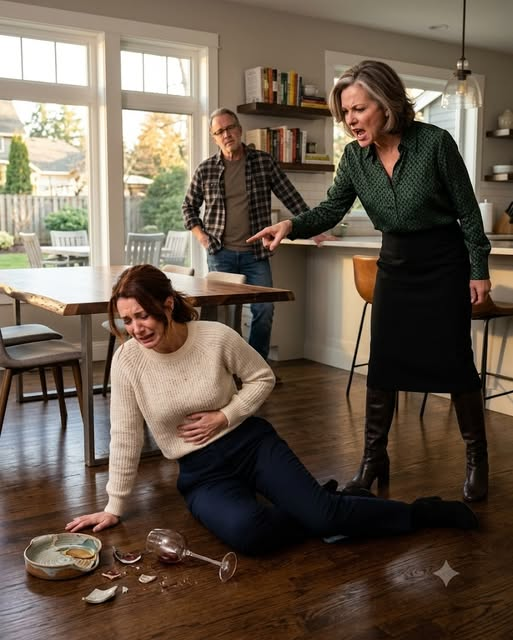
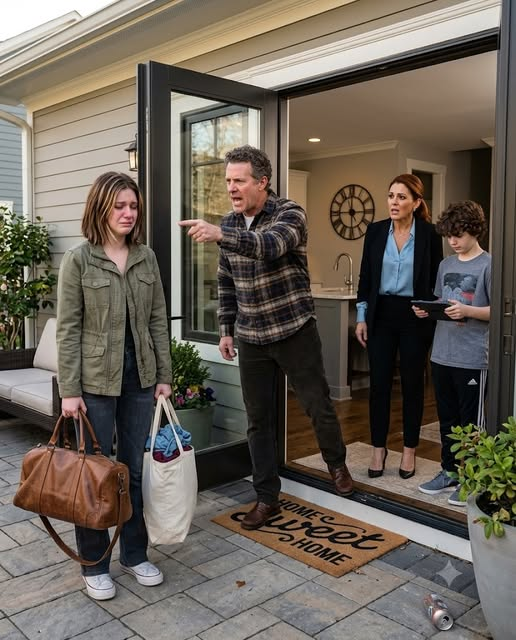
—Disappear before we return. I don’t want to see your old things in my house. I’m tired of carrying a life I didn’t ask for.
The message arrived at 2:13 a.m., while Mariana Ledesma sat on the edge of the bed, in a private home in Metepec, listening to the wind battering the windows.
Another text appeared below.
—And don’t make a scene. Sofía and Mateo are staying with me. They need a happy family, not a bitter mom.
Mariana stared at the screen, unblinking.
For 18 years, she had slept next to Arturo Villaseñor, a man who could shatter someone with three phrases and then pour himself a cup of coffee as if nothing had happened.
Three weeks earlier, Arturo had told her he was marrying Brenda, a 28-year-old designer from his office in Santa Fe.
He dropped the bomb in the kitchen while Mariana heated tortillas for dinner.
—I’m getting married in Cartagena —he said—. My parents are going, my siblings too. The kids need to see me rebuild my life.
—Our kids are going to your wedding? —Mariana asked, her hand clenched against the stove.
Arturo didn’t even look down.
—Don’t start with your dramas. You’ve already had your time.
That night, Mariana cried locked in the bathroom, the shower running so that Sofía and Mateo wouldn’t hear her.
But before Arturo, she didn’t beg.
She didn’t ask what Brenda had that she didn’t.
She already knew the answer: Brenda didn’t yet know who Arturo was when he was offstage.
For nearly two decades, Mariana had been the one to pick up sick children, sign school permissions, organize birthdays, care for her in-laws, pay bills, and pretend to smile at family dinners.
Arturo was “the successful one.”
The businessman.
The man everyone applauded because he arrived in a new truck and paid the bill.
But inside the house, Mariana was the one holding everything together.
At 6:36 a.m., an email arrived at the family account Arturo forgot to close.
It was the complete itinerary.
Flight to Cartagena. Hotel by the sea. Welcome dinner. Civil wedding. Return to Toluca on Sunday at 12:20 p.m.
Mariana read the email four times.
Arturo was not just cruel.
He was confident.
At 7:05, she went down to the laundry room and took out a gray box where she kept her mother’s documents, Doña Elvira.
Inside were the deeds to the land where the house had been built.
Her mother had bequeathed it to her before she died.
—The land isn’t lent to those who confuse love with permission, mija —she once told her—. A house can be fixed. A life can too.
Arturo always mocked that phrase.
—Your mom watched too many soap operas —he’d say—. As if I would take anything from you.
Mariana opened the folder with cold hands.
There it was.
Owner: Mariana Ledesma Robles.
Not Arturo.
Not community property.
Only Mariana.
For the first time in many days, she took a deep breath.
She didn’t smile with happiness.
She smiled like women do when they discover that they haven’t been completely stripped of everything.
That same day she went to a small office near Avenida Las Torres. Attorney Patricia Beltrán read the messages, reviewed the deeds, old payments, and the itinerary.
—He thinks you’re going to stay waiting for him to kick you out —Patricia said.
—That’s what he thinks.
—Then we need to do this cleanly. No threats. No shouting. Everything in writing.
Mariana nodded.
—I want him to come back and understand that he was not the owner of my silence. He was the owner of the land.
In 48 hours, the divorce was initiated, she changed passwords, blocked access, opened another account, and kept a copy of every message.
But the strongest decision came when an engineer entered to review the house.
It was a modular construction, built years ago with a metal structure and reinforced panels, because Arturo wanted “something modern and quick.”
The engineer checked columns, connections, roof, and foundations.
Then he said:
—It can be disassembled. It won’t be cheap, but it can be moved almost completely.
Mariana looked at the living room where her children took their first steps, the kitchen where she spent countless sleepless nights, the hallway where Arturo ignored her for years.
Then she looked at the message from 2:13.
—Do it —she said—. I want him to find not even the shadow of his lie when he returns.
And while Arturo toasted with Brenda by the sea, the house he boasted as his began to detach from the ground.
PART 2
The first truck arrived before dawn.
Mariana stood at the entrance in jeans, a gray sweatshirt, old sneakers, and a black folder under her arm. She didn’t look like an abandoned wife. She looked like a woman who had finally stopped asking for permission.
The crew worked quickly.
They cut services with authorization. Dismantled doors. Numbered windows. Separated modules. Removed cabinets, lamps, closets, and entire structures.
Every piece was photographed.
Every movement was documented.
Attorney Patricia had been clear.
—Let him go crazy if he wants. You need invoices, permits, and witnesses.
Mariana obeyed.
The land was hers. Part of the house had been paid for with money inherited from her mother and transfers Arturo had never wanted to review, because he was sure that Mariana would never dare to defend herself.
That was his mistake.
Meanwhile, in Cartagena, Arturo posted stories.
Brenda in a white dress on a terrace.
Arturo kissing her by the sea.
Doña Rebeca, his mother, hugging the young bride as if Mariana had been a dismissed employee.
Arturo’s siblings raising their glasses.
Sofía and Mateo appeared in a photo in the background.
None were smiling.
At 10:47 p.m., Sofía wrote:
Mom, why didn’t you come for us?
Mariana felt her chest sink.
Who told you that, my love?
Dad said you wanted to go live alone and that you were already tired of us.
Mariana closed her eyes.
There was the real blow.
Arturo didn’t just want to replace her.
He also wanted to erase her place as a mother.
She didn’t respond with insults. Her children were already too hurt.
She simply wrote:
That’s not true. You and Mateo always have a home with me. When you return, we will talk. I love you more than anything.
Sofía sent a broken heart emoji.
Mariana pressed the phone against her chest and cried silently, not for Arturo, but for the ease with which a father could use his children to punish a woman.
The next day, the court granted provisional measures. Mariana would have exclusive use of the property while the divorce progressed, and Arturo could not enter, sell, occupy, or dispose of the place without authorization.
Patricia prepared the notification for the day of return.
—Do not confront him alone —she warned.
—I want to be there.
—Alright. But don’t argue. He will try to make you look crazy.
Mariana let out a dry laugh.
—He already tried that for 18 years.
The last module left on a Friday afternoon.
Neighbors watched from their windows. No one asked, but everyone knew.
In Mexican private neighborhoods, people pretend discretion, but the curtains always speak.
Doña Chayo, the neighbor across the way, approached with a bag of conchas.
—Mijita, I don’t know exactly what happened —she said in a low voice—, but if that scoundrel wanted to kick you out, it’s good you took even the door.
Mariana almost broke down.
Before leaving, she kept what really mattered: school photos, Mateo’s drawings, the broken mug that Sofía made in kindergarten, a board from the hallway frame marked with their heights since they were little.
That didn’t stay.
That went with her.
The house was moved to a temporary land in Lerma, owned by a friend of her mother, while the new installation permit was resolved.
It wasn’t comfortable.
It wasn’t perfect.
But it was hers.
And for the first time in years, Mariana walked inside those walls without feeling like she owed Arturo gratitude for breathing.
On Sunday, she parked her car under a tree, half a block from the empty lot.
In the passenger seat, she carried the deeds, provisional measures, the transfer contract, invoices, photographs of the dismantling, and the printout of the message from 2:13.
At 12:24 p.m., Arturo’s black truck turned the corner.
They were laughing.
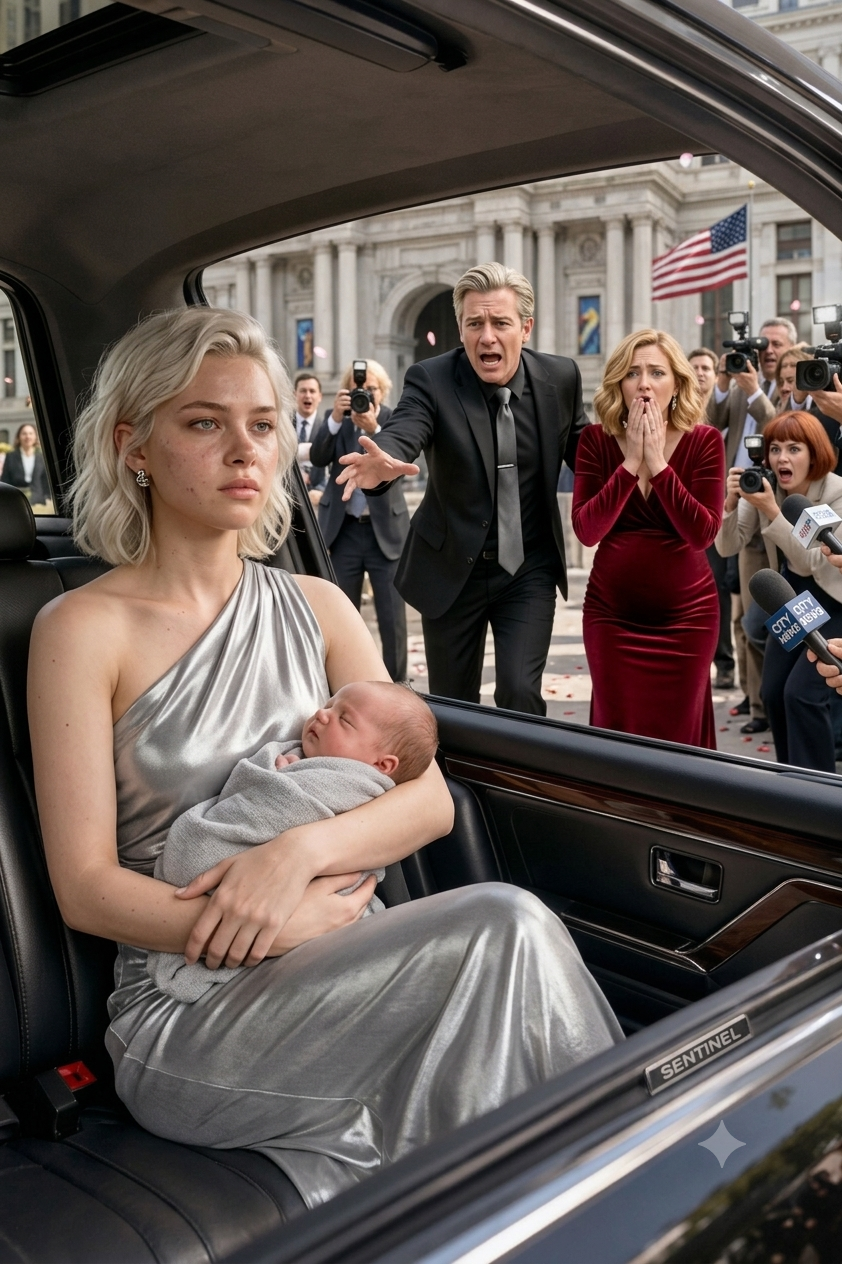
Arturo drove in sunglasses. Brenda sat next to him, tanned, with a wilted bouquet in her lap. Doña Rebeca and Don Julián were in the back, tired but smiling.
Sofía and Mateo got out last.
Laughter died abruptly.
Where the house once stood, there was only marked earth, dust, tire tracks, and open sky.
Arturo took off his sunglasses.
He took three steps.
He turned pale.
—What the hell happened to my house? —he whispered.
Brenda looked at the empty lot.
—Arturo… you told me this house was yours.
In that moment, Mariana opened the door of her car.
Everyone turned.
She crossed the street slowly, with the folder pressed to her chest. She wasn’t in an elegant dress or perfect makeup. She wore the weary face of a woman who hadn’t slept in days, but also the steady gaze of someone who would no longer bow her head.
Arturo looked at her as if she were a stranger.
Maybe it was the first time he saw her whole.
—Mariana —he said, jaw clenched—. Don’t make a scene here.
She stopped in front of the vacant land.
—You asked me to disappear before you returned.
Doña Rebeca scoffed.
—Oh, please. Always so dramatic.
Mariana turned to her.
—Your son wrote to me at 2:13 a.m. that he hated old things. He also told my children that I no longer wanted to be with them. Don’t talk to me about drama, ma’am. Talk about cruelty.
Sofía began to cry.
Mateo looked at his father with a mix of anger and shame.
Arturo tried to approach.
—Look, this can be sorted. Bring the keys and stop throwing a tantrum.
Mariana opened the folder.
—There are no keys. There is no house here anymore.
—That house was mine! —he shouted—. I paid for it!
Attorney Patricia got out of another car and walked towards them calmly.
—Mr. Villaseñor, I am the attorney for Mrs. Mariana Ledesma. The property is registered exclusively in my client’s name. Furthermore, there is a provisional order preventing you from entering or disposing of this place.
Arturo laughed, but the laugh came out broken.
—What place? There’s nothing!
Patricia raised the deed.
—The place is the land. And the land is not yours.
The phrase hit harder than a blow.
Brenda slowly turned to Arturo.
—You lied to me?
—It’s not that simple —he murmured.
—You told me Mariana was leaving because she was crazy. You told me your children were happy. You told me this house would be ours.
Mariana pulled out the printout of the message and handed it to her.
Brenda read it.
Her expression changed.
The confident, young, triumphant bride vanished in seconds.
—“I hate old things” —Brenda repeated, almost voiceless—. Is that how you spoke of your children’s mother?
Arturo tried to take the sheet away.
—Don’t get involved.
Mateo stepped forward.
—Don’t talk to her like that.
Arturo turned furious.
—You shut up, kid.
Mariana placed herself between the two.
—You will not speak to my son like that again.
For the first time, Arturo had no response.
Because everyone was watching him.
His parents. His new wife. His children. The neighbors behind the curtains.
And the lie could no longer stand.
Sofía ran to Mariana and hugged her tightly.
—Dad said you were going to leave us.
Mariana stroked her hair.
—I would never. You are my home, even if there are no walls.
Mateo approached too, trying not to cry.
—Where are our things?
—The important ones are with me —she said—. Your books, your drawings, the photos, the board where we marked how much you grew. I didn’t leave anything of yours behind.
Mateo wiped his face with his sleeve.
—Then let’s go with you.
Arturo reacted immediately.
—No way.
Patricia intervened.
—The provisional measures also stipulate that the minors remain with their mother until the court evaluates the situation. Especially considering the messages and documented manipulation.
Doña Rebeca placed her hand on her chest.
—Manipulation? He’s their father!
Mariana looked at her without hatred, but without fear.
—Being a father doesn’t give you the right to use your children as luggage on your honeymoon.
Brenda dropped the bouquet onto the ground.
—I’m not going to start a marriage standing in an empty lot, with two crying kids and a lawsuit hanging over me.
—Brenda, don’t do this —Arturo said.
She let out a bitter laugh.
—Me? You did it. You sold me a new life built on a humiliated woman.
Doña Rebeca tried to take her by the arm.
—Daughter, this can be fixed.
Brenda pulled away.
—Don’t call me daughter. You also came laughing.
The silence was brutal.
Arturo looked down at the ground, as if searching among the dirt for a door, a living room, a dining room, anything that would prove he still had power.
But there was only dust.
And that dust was his.
Patricia handed a copy of the notification to him.
—You are prohibited from approaching the property or intimidating my client. Any violation will be reported.
Arturo looked at Mariana.
—And where do you want me to go?
She held his gaze.
—You should have thought about that before telling me to disappear.
She didn’t shout.
She didn’t smile.
She didn’t celebrate.
Because seeing her children cry wasn’t a pretty victory. It was justice, yes, but the kind that leaves scars.
The following months were tough.
Arturo fought in court. He said Mariana acted out of spite, that she wanted to ruin him, that she had humiliated him in front of everyone.
Patricia responded with documents.
Deeds. Invoices. Permits. Inherited transfers. Photographs. Messages. Emails. Resolutions.
Arturo had rage.
Mariana had proof.
Brenda left before one month of marriage was complete. She deleted the photos from Cartagena and went back to live with an aunt in Querétaro.
Doña Rebeca left voice messages. First, she insulted. Then she cried. Afterward, she asked to see Sofía and Mateo as if nothing had happened.
Mariana didn’t respond to the insults.
She also didn’t speak ill of Arturo in front of her children, although she had every reason to.
When Mateo asked her if his dad was bad, she took a deep breath.
—Your dad did very bad things. But you don’t have to carry his shame.
The house was installed months later on a smaller plot, near a path with trees and corn carts on Sundays.
It wasn’t the same private neighborhood.
It wasn’t the same neighborhood.
But it was a real home.
Sofía hung her photos back on the wall. Mateo placed his books by the window. Mariana set the height chart on the new hallway.
One rainy night, she turned on the porch light and stayed watching it from outside.
She thought of her mother.
She thought of the message from 2:13.
She thought of all the times she confused enduring with loving.
Time later, she passed by the old lot.
There were no traces of trucks anymore. The grass grew unevenly. Neighbors said Arturo never passed by there again.
At first glance, it looked like an empty lot.
But Mariana knew it wasn’t.
There lay buried the arrogance of a man who believed a wife was an old piece of furniture.
There broke the lie that almost stole their children from them.
There a woman remembered she didn’t have to disappear for another to start a new life.
When someone asked her if she regretted moving the house, Mariana thought of Arturo stepping down from the truck, searching for a door that no longer existed.
Then she replied calmly:
—I don’t regret moving it. I regret taking 18 years to remember that I was always the owner.