PART 1
Yesterday, Don Ernesto quit.
He didn’t make a scene.
He didn’t throw the door open or raise his voice in front of everyone.
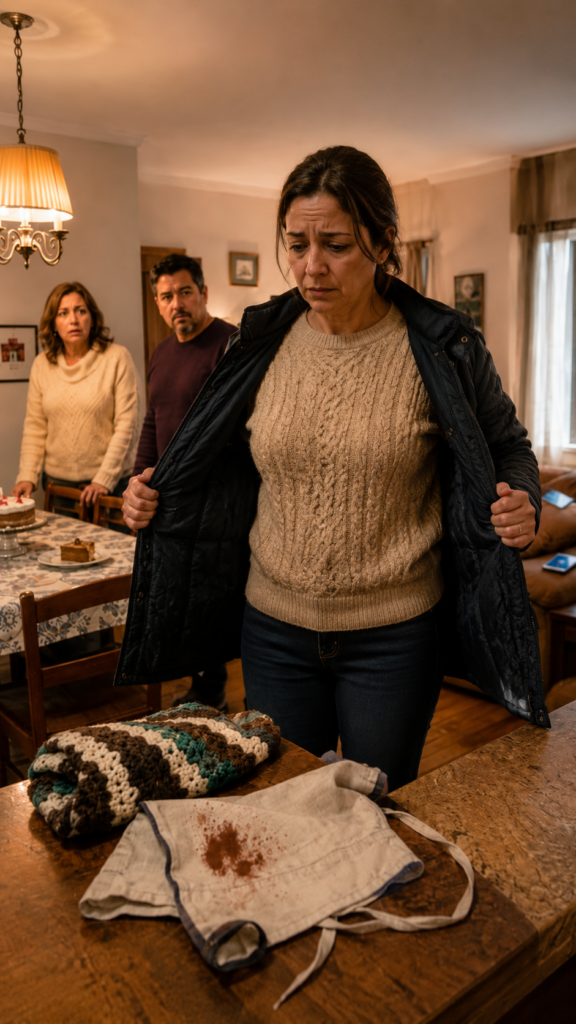
He simply left the cake knife on the table, took off his chocolate-stained apron, and walked out of his daughter’s house like a man who finally understands that he has the right to be tired too.
For six years, he believed he was giving love.
Grandfather love.
Father love.
The kind of love that isn't counted because it springs from the heart.
But that day, right in the middle of his grandson Mateo’s birthday, he understood something that hurt down to his bones: in that house, two new tablets were worth more than his early mornings, his wrinkled hands, and his silence.
Don Ernesto was 64 years old and lived in a quiet neighborhood in Puebla, where neighbors still sweep the sidewalks early and the baker honks his horn as he passes.
His pension was modest, barely enough for his medications, electricity, gas, and a little coffee on Sundays.
Since his wife, Doña Carmen, had passed, the house felt too big for him.
Too clean.
Too quiet.
That’s why, when his daughter Mariana asked for help with her children, he didn’t hesitate.
Mariana worked at an advertising agency in Angelópolis.
Her husband, Rodrigo, was an accountant at a company where there were always meetings, deadlines, calls, and “emergencies.”
They weren’t bad people, Ernesto kept telling himself.
They were just overwhelmed.
When Mateo was born, and then Santiago, Mariana showed up one day with tear-filled eyes.
“Dad, we can’t handle everything. School, homework, meals, soccer practice… and a nanny costs a fortune. No one’s going to take care of them like you do.”
Ernesto heard that as a blessing.
Not as a chain.
Since then, his alarm went off at 5:30.
By 6:15, he was at Mariana’s house, making eggs with beans, checking backpacks, filling thermoses, hunting for uniforms, and separating fights before the day began.
He was the one who said:
“First the homework, then the cellphone.”
He was the one who turned off the television.
He was the one who took Mateo, who was 9, to school, and Santiago, who was 7, to soccer practice.
He also fixed the leaking faucet, picked clothes off the line, heated up meals, and waited for the internet technician.
Over time, he stopped being invited.
He became part of the household machinery.
Like the fridge.
Like the stove.
Like something that’s always there until it breaks.
And then there was Don Álvaro.
Rodrigo’s father.
He lived in Cancun, arriving every few months with dark glasses, linen shirts, expensive perfume, and a tourist’s smile that never carries backpacks.
He didn’t know what day the kids had tests.
He didn’t know their teachers’ names.
He couldn’t remember which one was allergic to peanuts.
But when he showed up, the kids screamed as if Santa Claus had arrived.
That Saturday was Mateo’s 9th birthday.
Don Ernesto had been preparing his gift for weeks.
Since Mateo had trouble sleeping and would wake up saying he felt “weird things in his chest,” Ernesto had sewn a weighted blanket.
It wasn’t luxurious.
It didn’t sparkle.
But he made it with soft fabrics, in blue and green, the boy’s favorite colors.
He sewed it at night, with his glasses on and a picture of Doña Carmen by his side.
He also baked a moist chocolate cake, with nuts and homemade frosting.
He wanted the house to smell like family.
He arrived at 7:00 in the morning.
He swept the patio, set up chairs, inflated balloons, prepared gelatin, cleaned the guest bathroom, and set the table.
Mariana was running around with her cellphone glued to her ear.
Rodrigo was answering work messages.
The kids were running through the living room, screaming.
At 4:20 in the afternoon, the doorbell rang.
Don Álvaro entered like a soap opera star.
“Where are my champions?”
Mateo and Santiago ran toward him without even looking at Don Ernesto, who was holding a tray with glasses.
Álvaro placed two large boxes wrapped in silver paper on the table.
“I didn’t know what to buy, so I brought them something decent.”
The kids tore the paper apart.
They were two new tablets.
Big.
Expensive.
With cases, headphones, and data included.
“Today, no rules,” Álvaro said, winking at them. “That’s what cool grandpas are for.”
The kids screamed.
The guests applauded.
Rodrigo laughed out loud.
Mariana said:
“Oh, Álvaro, you’re going to spoil them.”
But she said it with a smile.
Don Ernesto stood frozen with the folded blanket in his hands.
Suddenly, it felt heavy like it was filled with stones.
He approached Mateo when the boy’s face was already lit up by the screen.
“Sweetheart, I brought you something too.”
Mateo didn’t even raise his eyes.
“Later, Grandpa. I’m downloading a game.”
Ernesto took a deep breath.
“It’s a blanket. I made it so you can sleep better. For when at night you feel…”
Mateo scoffed.
A short, cruel scoff, the kind kids learn when adults don’t teach them gratitude.
“Grandpa, seriously… a blanket? Don Álvaro brought us tablets. You always bring boring stuff. Food, rules, and homework.”
Food, rules, and homework.
The living room felt strange.
Or maybe it was Don Ernesto’s heart that fell silent.
He looked at Mariana.
He waited for a phrase.
Just one.
Something like: “Don’t talk to your grandfather like that.”
But Mariana just made an uncomfortable grimace.
“Dad, don’t take it personally. He’s 9. Of course, he’s more excited about a tablet. You’re the everyday grandpa; Álvaro is the fun grandpa.”
The everyday grandpa.
Like the everyday rice.
Like the everyday dishes.
Like what no one appreciates because it’s always there.
Santiago, with his mouth full of candies that Álvaro had given him, blurted out:
“I wish my grandpa Álvaro lived here. He’s nice. You always make us do stuff.”
Something broke inside Ernesto.
It wasn’t anger.
It was exhaustion.
An old exhaustion, accumulated in every early morning, in every lunchbox, in every “Dad, can you stay a little longer?”.
He looked at his hands.
Those hands had washed uniforms, healed scraped knees, signed school notes, fixed bicycles, cooked beans, and held Doña Carmen’s hand as she faded away.
Then he looked at Álvaro, sitting on the couch, receiving adoration for a credit card.
And he looked at Mariana, calm because she probably thought that in the end, he would pick up everything too.
Ernesto carefully folded the blanket.
He left it on the kitchen counter.
Then he took off the apron.
“Mariana,” he said.
His voice came out so serene it was frightening.
“Yes, Dad? Can you cut the cake? Everyone’s waiting.”
“No.”
Mariana blinked.
“What do you mean no?”
“I’m not going to cut the cake. And I’m not going to keep doing all this.”
Rodrigo looked up from his phone.
“Don Ernesto, don’t start…”
Álvaro let out a chuckle.
“Come on, man, don’t be dramatic. They’re kids.”
Ernesto stared at him.
“Álvaro, enjoy your visit. You’re the fun grandpa. When the sugar runs out, there’s homework to do, and someone’s crying because they lost their password, let’s see how fun you still are.”
Álvaro shifted uncomfortably.
“How curious,” Ernesto replied, “I’m carrying a bad soul.”
Mariana turned red.
“Dad! I have a meeting at 8:00 tomorrow. Who’s taking them to school? Who’s picking up Santiago? Who’s staying with them?”
Ernesto grabbed his jacket.
“I don’t know. Maybe they can sell a tablet and pay someone. Or maybe the fun grandpa can stay. After all, he’s nice.”
“You can’t leave us like this!” Mariana shouted. “We need you!”
Ernesto paused at the door.
He turned just slightly.
“That’s the problem, daughter. You need me, but you don’t see me. I’m not a chauffeur, a cook, or a free servant. I’m your father.”
Mateo finally looked up.
“Grandpa… are you coming tomorrow?”
Ernesto felt the blow.
His instinct was to say yes.
To forgive.
To fix.
To save everyone.
But this time, he didn’t.
“No, Mateo. Tomorrow you’ll be free of my rules.”
And he left.
PART 2
That night, Don Ernesto’s phone wouldn’t stop vibrating.
First came messages from Mariana.
“You ruined the birthday.”
“Dad, it wasn’t that serious.”
“Sorry, but I really need you tomorrow.”
Then Rodrigo wrote.
Cold.
Short.
Like someone demanding a service that had stopped working.
“Don Ernesto, this isn’t fair. Let us know what you’re going to do.”
He didn’t reply.
He made himself a chamomile tea, sat in front of the photo of Doña Carmen, and let the silence do its work.
At first, it hurt.
Then he breathed.
The next morning, he woke up at 9:00.
For the first time in 6 years, he didn’t rush.
He didn’t look for uniforms.
He didn’t fill thermoses.
He didn’t shout, “Hurry up, kids.”
He made himself a coffee and stepped out onto the small balcony.
He saw a lady walk by with her dog and thought that life went on even when one stops holding up the lives of others.
Two days later, at 6:05 in the morning, the doorbell rang.
Ernesto opened his eyes.
It wasn’t the phone.
It wasn’t a message with sad faces.
It was someone standing at his door.
He walked slowly and looked through the peephole.
Mariana.
She came without makeup, her hair hastily tied back, and a cloth bag in her hand.
She looked like a woman who hadn’t slept.
Ernesto opened the door but didn’t step aside immediately.
“What do you want?”
Mariana swallowed hard.
“To talk, Dad. Nicely. Without yelling.”
He looked at her for a few seconds.
Then opened the door.
The house smelled of coffee, old wood, and that sad order of people who live alone.
Mariana entered as if she were stepping into a place she’d never truly seen.
Her eyes stopped at the photo of her mother.
Then at the empty table.
Then at her father’s hands.
“Do you want some coffee?” Ernesto asked out of habit.
“Yes, please.”
They sat in the kitchen.
Neither spoke until the coffee maker finished.
Then Mariana looked down.
“Dad… I’m sorry.”
Ernesto didn’t respond quickly.
“About the birthday?”
She shook her head.
“About everything. For having turned you into part of the house like you were a piece of furniture. For asking without asking. For not seeing you.”
Ernesto’s jaw trembled a bit, but he stayed still.
“What happened these days?”
Mariana let out a bitter laugh.
“What happened is we discovered everything you did.”
She told him that on Monday she was late to her meeting because Santiago couldn’t find his sneakers.
That Rodrigo forgot Mateo’s homework notebook.
That Mateo cried at the school entrance because he said the day “felt off” without his grandpa.
She also told him that that first night Mateo couldn’t sleep.
He woke up three times.
Said his chest felt heavy.
Ernesto tightened his grip on the cup.
“And the blanket?”
Mariana opened the bag.
She pulled out the blanket he had left in the kitchen.
It was folded.
Clean.
Well-kept.
“Santiago found it,” she said. “He dragged it to Mateo’s bed without saying a word. That night, Mateo fell asleep hugging it.”
Ernesto looked down.
Mariana continued:
“The next day, he asked me if you made it with your hands. I told him yes. He went quiet and then said, ‘Then I was really dumb, wasn’t I?’”
Ernesto brought the cup to his mouth to hide the lump in his throat.
Mariana cried silently.
“Dad, when I heard myself saying ‘cut the cake’ to you, as if you were a button in the kitchen… I felt ashamed. Truly. I felt ashamed of myself.”
“And Álvaro?” Ernesto asked.
Mariana took a deep breath.
“He left the next day. Said his back was acting up and the flight was long. He didn’t pick up a single plate.”
Ernesto wasn’t surprised.
“Rodrigo got angry with you,” she admitted. “A lot. But he also got angry with his dad. It’s just that he doesn’t know how to say it. Álvaro gets forgiven because he arrives with gifts. We demand from you because you always deliver.”
There it was, the truth.
The family had confused availability with obligation.
And love with free labor.
Mariana pulled out a small notebook.
She placed it on the table.
“I made a schedule.”
Ernesto frowned.
“I didn’t come to hire you, Dad. I came to show you that I understood. Here I wrote which days are ours, which afternoons we can pay for help, and what things we’re not going to assume as yours anymore.”
She opened the notebook.
On one page it said, underlined:
DAD’S TIME.
Below it:
FREE FRIDAY FOR ERNESTO. NON-NEGOTIABLE.
Ernesto looked at her.
“And what if you have a meeting?”
“I’ll handle it.”
“And what if Rodrigo says he can’t?”
“Let him learn.”
“And what if the kids cry?”
Mariana swallowed hard.
“They’ll learn too. Not everything is solved by squeezing you dry.”
Ernesto felt relief.
And fear.
Because sometimes one gets so used to being needed that freedom feels like abandonment.
“And the tablets?”
Mariana made a face.
“Put away. With rules. There was drama, of course. Mateo yelled that Don Álvaro said that fun grandpas don’t set limits.”
“And Rodrigo?”
“For the first time he replied: ‘Your grandpa Álvaro is here for a visit. Your grandpa Ernesto takes care of life. Here, we respect.’”
Ernesto blinked.
It wasn’t enough to erase years, but it was something.
Mariana reached into the bag again.
She pulled out a folded sheet.
“Santiago made this for you.”
It was a clumsy drawing, with bold colors.
A man with a mustache and huge hands.
Two kids beside him.
A blanket like a rainbow.
And a tablet with an X on top.
At the bottom, in crooked letters, it said:
“GRANDPA SORRY. YOUR BLANKET DOES HUG.”
Ernesto stared at the paper for a long time.
Mariana spoke softly:
“Mateo also asked me to tell you something.”
“What?”
“That he knows you love him even though he behaved badly. And that he wants to learn to sew with you to make something for Santiago.”
Then something settled inside Ernesto.
It wasn’t pride.
It was tenderness.
That tired tenderness that survives even when it’s hurt.
“I’m not going to go back to the way I was,” he said.
Mariana nodded quickly.
“I don’t want you to go back to the way you were. I want you to come back as a dad. As a grandpa. Not as an employee.”
Ernesto looked at her seriously.
“Words are easy, Mariana.”
“I know.”
“If I enter your house and someone talks to me like I’m service, I’m leaving. No yelling. No fighting. I’m leaving.”
“I accept that.”
“And I want to talk to Rodrigo. Face to face. Not through dry messages.”
“He’s waiting. He’s embarrassed, but he’s waiting.”
That noon, Ernesto went to have lunch at his daughter’s house.
He didn’t arrive early.
He didn’t carry bags.
He didn’t prepare anything.
He just rang the doorbell.
Mariana opened the door and didn’t say, “I’m glad you’re here, help me with this.”
She said:
“Good to see you, Dad.”
Mateo slowly emerged from the living room.
He was holding the blanket in his arms.
“Grandpa…”
Ernesto knelt to his height.
Mateo’s eyes were filled with tears.
“I’m sorry. I said mean things.”
Ernesto felt the urge to say, “It’s okay.”
But it wasn’t.
And kids must also learn that words weigh.
“You said things that hurt,” he replied. “But saying sorry also means a lot.”
“Will you forgive me?”
Ernesto placed a hand on his hair.
“I forgive you.”
Mateo hugged the blanket.
“It does feel like a hug.”
“Because things made with love take time,” Ernesto said. “Screens are quick, but they don’t know how to care.”
Santiago appeared with a spoon in hand.
“Is there cake today?”
Mariana looked at her father, nervous.
Ernesto smiled slightly.
“Today, we’ll all cut the cake together.”
Rodrigo approached.
He had a serious expression.
“Don Ernesto… I’m sorry.”
He didn’t say much.
But he looked him in the eyes.
And for a man who always hid behind work, that was already a lot.
“Thank you,” Ernesto replied. “Now we have to prove it.”
They ate together.
Awkwardly.
Clumsily.
But differently.
For the first time, Ernesto sat down before everyone.
For the first time, no one asked him to get up for napkins.
For the first time, Mariana served coffee for him.
When they finished, Ernesto grabbed his jacket.
“I’m leaving.”
Mateo got scared.
“Already?”
“Yes. I came to eat. Not to stay and solve the house.”
Mariana took a deep breath but didn’t protest.
“Okay, Dad.”
At the door, she hugged him.
Not like someone clinging to a solution.
But like someone hugging a person.
“I love you,” Ernesto said.
“I love you too,” she replied. “And now I’m going to see you, not just need you.”
That afternoon, Don Ernesto walked to the community center in his neighborhood.
There were men playing dominoes, women laughing in a dance class, and a sign that read: “Chess Workshop for Adults.”
An elderly woman with white hair looked at him.
“Are you here to sign up?”
Ernesto smiled.
“I’m here to learn.”
That night, when he returned to his apartment, he found a message from Mateo.
It was short.
Surely written with help.
“Good night, Grandpa. Thank you for my blanket-hug.”
Ernesto turned off his phone.
He stepped out onto the balcony.
The air smelled of sweet bread and approaching rain.
He looked at the quiet street, the yellow lights of the lampposts, and the dark sky over Puebla.
For the first time since Doña Carmen died, silence didn’t feel like punishment.
It felt like space.
A space where, at last, he also fit.





