PART 1
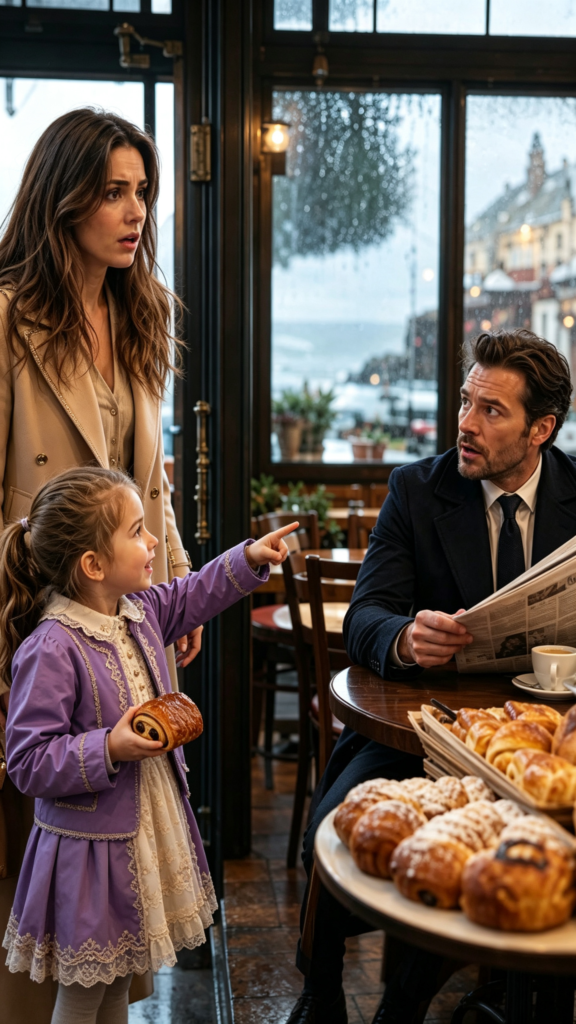
—Your grandmother already put up the money, but that doesn’t mean we have to drag her around Europe.
Santiago Morales heard that phrase from the hallway and froze, his hand resting on the kitchen door.
At eighteen, living in Puebla, he had always believed his family was strict, cold, but decent. His dad, Ernesto, was an architect. His mom, Laura, managed a dental clinic. His aunt Beatriz lived in Querétaro and flaunted a life of travel, brunches, and motivational quotes on Facebook.
In that house, they talked a lot about prestige, image, and “not making a fool of themselves.”
But rarely did they speak of love.
The only person who had ever given Santiago unconditional affection was his grandmother Rosario, a 74-year-old woman living in Atlixco, in a little house with yellow walls, geranium pots, and a kitchen that always smelled of coffee, cinnamon, and freshly warmed tortillas.
Rosario had been an IMSS nurse for over 40 years. She raised Ernesto and Beatriz alone after her husband left for another woman and never returned.
She worked all night, sold her wedding earrings, sewed school uniforms, and stopped buying shoes so her children could study.
When Ernesto became a professional and Beatriz married into money, they began to visit her less.
First, every Sunday.
Then only for birthdays.
Eventually, if lucky, through video calls.
Santiago still went. He spent weekends with her, accompanied her to the market, fixed her cell phone, and watched soap operas by her side while she prepared hot chocolate for him.
—You have a clean heart, mijo —Rosario would tell him—. Don’t let anyone harden it.
So when Ernesto announced the family trip to Europe, Santiago felt a surge of excitement.
—Madrid, Paris, Rome, and London —his dad said at dinner—. Three weeks. The whole family.
—What about my grandmother? —Santiago asked.
Laura smiled too quickly.
—Of course. Your grandmother is coming too.
Rosario could hardly believe it when they told her. She said she was too old, that her knees hurt, that she didn’t want to be a burden.
But Ernesto took her hand with a tenderness Santiago hadn’t seen in years.
—Mom, you deserve to see the world. Without you, none of us would be here.
Beatriz showed up two weekends in a row with flowers, fancy cookies, and an overly sweet voice.
—Mom, imagine yourself in Paris. You in your blue sweater, sipping coffee in front of the Eiffel Tower. It’ll be beautiful.
Rosario cried.
Days later, she transferred $30,000 from her savings. It was nearly all she had saved over the years.
They told her it was for tickets, hotels, medical insurance, tours, and transportation.
Santiago wanted to believe them.
Until he overheard the conversation in the kitchen.
—Did the transfer go through? —Laura asked.
—Yes —Ernesto replied—. A full $30,000.
—Perfect —Beatriz said on the phone—. With that, we can move to better hotels. I was so tired of counting pesos.
Santiago felt a horrible chill in his stomach.
—And my mom? —Ernesto asked.
There was silence.
Then Beatriz released a dry chuckle.
—Oh, brother, come on. Do you really think we’re taking a 74-year-old woman around Europe? She’ll get sick, she’ll tire us out, she’ll ruin our pictures.
Laura lowered her voice.
—At the airport, we’ll say her ticket didn’t show up. That it was the agency’s mistake. Once we’re there, she won’t make a scene.
Santiago pushed the door open.
The three of them froze in shock.
—What did you say about my grandmother?
Ernesto stood up, red with anger.
—Stay out of adult matters.
—They took her money.
—Your grandmother helped the family —Laura said—. Don’t be dramatic.
Santiago stared at the phone on the table, still with the call open.
On the other end, Beatriz said:
—Calm him down. If he opens his mouth, he won’t go on the trip either.
That night, Santiago couldn’t sleep.
He wanted to call Rosario, warn her, stop everything. But the next day, she sent him a photo of a new pair of white sneakers.
“Do you think these will be good for walking in Paris, mijo?”
Santiago stared at the screen, his eyes burning with rage.
Because he understood that his family wasn’t planning a vacation.
They were staging a betrayal.
PART 2
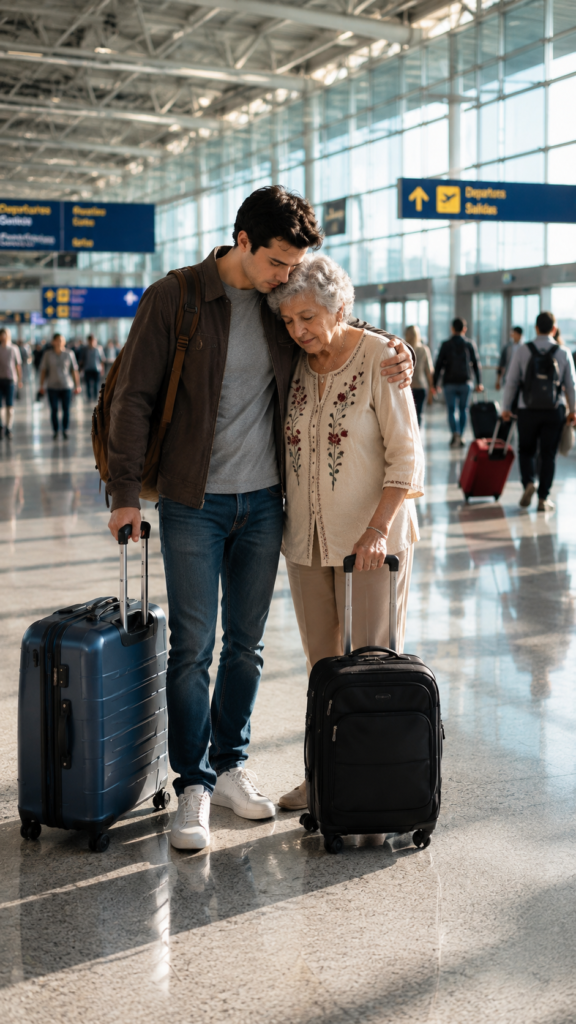
On the day of the flight, they arrived at Mexico City International Airport before dawn.
Rosario stepped out of the van with a red suitcase, a bag of medicines, her white sneakers, and a folded blue sweater over her arm. She had carefully styled her hair and wore a small flower brooch that Santiago had given her when she was 12 years old.
—Do I look good, mijo? —she asked, nervously.
Santiago swallowed hard.
—You look beautiful, abue. Like an elegant lady from a movie.
She smiled with a hope so pure it hurt him to see it.
Ernesto, Laura, Beatriz, her husband Hugo, and the cousins quickly moved toward check-in. No one helped Rosario with her luggage. No one asked her if she wanted water. No one walked at her pace.
Santiago took the red suitcase.
—I’ll carry it.
Rosario squeezed his arm.
—Always so good to me.
When they reached the counter, Ernesto stepped forward with the passports. He spoke to the airline employee, raised his eyebrows, pretended to be surprised, and then returned with a face that looked rehearsed in the mirror.
—Mom… there’s a problem.
Rosario blinked.
—What happened, son?
—Your reservation doesn’t show up.
She froze.
—What do you mean it doesn’t show up? You said everything was already paid for.
Beatriz sighed, as if the news were a minor annoyance.
—Oh, mom, maybe it’s a sign. You know those flights are exhausting. It’s a lot of hours sitting.
Hugo added:
—And you walk a lot there. With your knees, it would’ve been complicated.
Rosario looked at Ernesto.
She didn’t look at anyone else.
—Son, tell me the truth. Did you ever buy my ticket?
The silence was more cruel than any answer.
The airport announcements continued to sound. Families rushed by with suitcases. Children cried. A couple embraced before passing through security.
But for Rosario, everything went dark.
—You didn’t buy it —Santiago said.
Laura grabbed his arm.
—Shut up, Santiago.
He pulled away.
—No. That’s enough. They stole $30,000 from her and now they want to leave her here like she’s a burden.
Ernesto gritted his teeth.
—Lower your voice.
—Why? Are you ashamed for them to hear you, or are you ashamed of what you did?
Rosario didn’t cry.
That was the worst part.
She just held her purse with both hands and stared at the floor, as if her right to lift her face had been taken away.
—I thought we were going together —she whispered.
Beatriz looked at the screen.
—Mom, don’t start with the drama. We’re going to miss the flight.
Santiago dropped the large suitcase he had brought for the trip.
—I’m staying.
Rosario reacted immediately.
—No, mijo. You go. Don’t lose this because of me.
—I’m not getting on a plane with people capable of abandoning their own mother in an airport.
Ernesto stepped forward, furious.
—If you stay, forget about me paying for your college.
Santiago looked at him without fear.
—Then I’ll pay for it myself.
Laura let out a bitter laugh.
—How easily you forget who takes care of you.
Santiago pointed at Rosario.
—You all forgot who raised you.
The flight appeared on the screen. Beatriz quickly kissed Rosario on the forehead, dry and brief, without looking her in the eye.
—We’ll sort this out later, mom.
Hugo pretended to be uncomfortable. The cousins put on headphones. Laura pulled her suitcase. Ernesto didn’t apologize.
One by one, they walked toward security.
No one looked back.
Santiago stayed with his grandmother in the middle of the airport, holding the red suitcase, while the family she had raised disappeared toward Europe with her money.
In the taxi back to Atlixco, Rosario stared out the window.
They passed toll booths, food stands, dark hills in the early morning. She didn’t say anything for almost an hour.
Then she quietly asked:
—Was it because I’m old now?
Santiago felt something inside him break.
—It was because they don’t know how to love, abue.
Rosario closed her eyes.
—I changed their diapers. I healed their fevers. I made them lunches. I paid for their schools. At what point did I stop being their mother and become a burden?
Santiago had no answer.
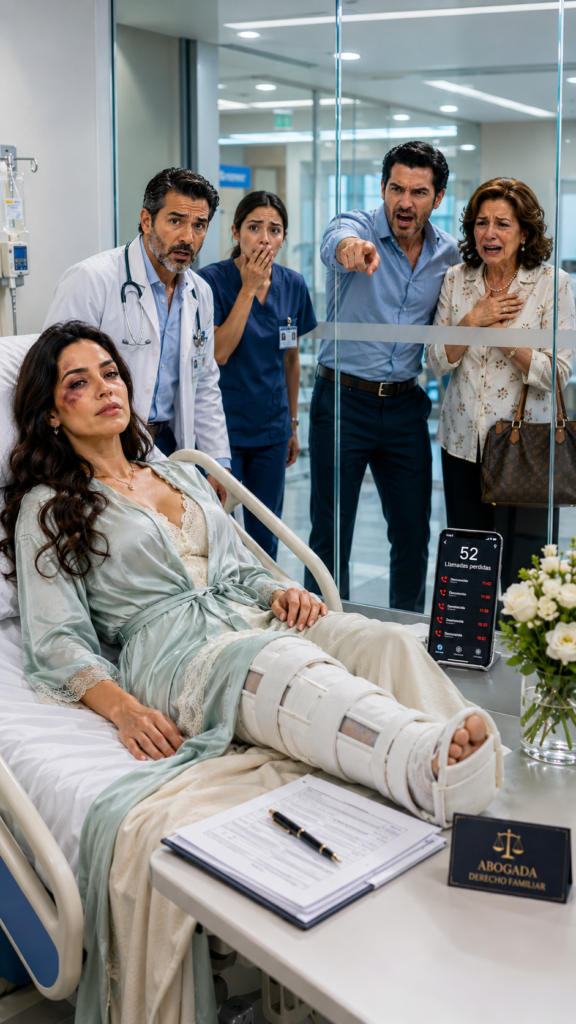
That same night, while Rosario slept with her white sneakers beside the bed, he sought help. He found information about financial abuse against the elderly, guidance from the DIF, and free legal advice in Puebla.
The next day, he took Rosario to a lawyer named Jimena Salgado.
The office was small, with an old fan and stacked files, but Jimena listened without interrupting. She asked for bank statements, messages, screenshots, audio recordings, and any proof that Rosario had given the money under the promise of traveling.
Santiago pulled out his phone.
He had recorded part of the conversation from the kitchen.
When Rosario heard Beatriz’s voice saying, “We’re not going to take a 74-year-old woman around Europe,” she clutched her chest.
—She’s my daughter —she murmured.
Jimena lowered the volume.
—Yes, Mrs. Rosario. But she could also be your financial abuser.
Rosario shook her head, not to defend them, but because accepting that would be like burying her own children alive.
—I don’t want jail. I don’t want a scandal.
—This isn’t about revenge —Jimena said—. It’s about ensuring they never touch your money or your dignity again.
Santiago took her hand.
—Abue, you taught me not to leave the sick alone. Now let me not leave you alone.
Rosario cried then.
Not loudly. Not with screams. She just cried like someone who has been holding back for too many years.
For the next three weeks, while Ernesto, Laura, Beatriz, and the others posted pictures from Paris, Rome, and London, Santiago and Rosario gathered evidence.
In one photo, Beatriz appeared with designer bags in front of an expensive store.
In another, Laura flaunted a hotel room with a view.
Ernesto posted:
“Dream family trip. Life rewards hard work.”
Santiago saved every post.
He also called the airline. With a formal request, Jimena obtained a key piece of information: there was never a ticket in Rosario Morales's name for that flight.
It wasn’t a mistake.
It wasn’t confusion.
They never intended to take her.
The first legal notification arrived just as the family returned to Mexico.
They came back tanned, with dark glasses, new suitcases, and smiles of people who think they’ve gotten away with it.
But as they crossed through the arrivals door, Jimena was waiting with two documents.
Beside her stood Santiago and Rosario.
Rosario wore the same blue sweater. Not out of nostalgia, but out of dignity.
Ernesto stopped dead in his tracks.
—What is this?
Jimena spoke calmly.
—A complaint for possible financial abuse, fraud, and economic exploitation against an elderly woman. Also a request for measures to protect Mrs. Rosario’s accounts and assets.
Beatriz lost her color.
—Mom, how could you?
Rosario looked at her with a sadness that weighed more than fury.
—That’s what I wanted to ask you.
Laura approached Santiago.
—You got her into this, didn’t you? You’re so ungrateful.
Santiago stepped forward.
—I didn’t get her into this. I pulled her out of where you left her.
Hugo tried to laugh.
—Come on, this is a family dispute. Don’t exaggerate.
Jimena showed another sheet.
—Then explain to me why part of Mrs. Rosario’s money ended up paying for hotel upgrades, purchases in Rome, and four first-class tickets.
Beatriz opened her mouth but said nothing.
That was the first blow.
The second came days later.
Rosario received an updated account statement. There she discovered that Ernesto had not only used the $30,000 from the trip. Months earlier, he had made three small withdrawals from an account where she had him listed as authorized “for any emergency.”
12,000 pesos.
18,500 pesos.
25,000 pesos.
Laura said they were medical expenses for Rosario.
But Rosario had never received those treatments.
—That too? —she asked, her voice shattered.
Santiago clenched his fists.
—Abue…
She raised her hand.
—Don’t say anything. I want to hear how far my blindness has gone.
PART 3
At the hearing in Puebla, Ernesto arrived in a dark suit, wearing a victim's face. Beatriz wore large glasses to hide her swollen eyes. Laura looked at everyone with disdain, as if the real problem was that they had caught her.
Their lawyer tried to present the money as a family assistance.
“Mrs. Rosario voluntarily transferred funds for a trip for her children and grandchildren.”
Jimena responded calmly.
“She transferred it because they promised her she would travel with them. That promise has been false from the start.”
The airline employee testified that Ernesto approached the counter asking if they could “pretend to check” a non-existent reservation to avoid a scene.
That detail froze the room.
Rosario lowered her gaze.
Santiago felt a surge of anger, wanting to stand up and shout, but he remained still.
Then they played the audio from the kitchen.
Beatriz’s voice filled the space:
“We’re not going to carry around a 74-year-old woman all over Europe.”
No one spoke.
Not even Laura.
Ernesto tried to justify himself.
“My mom couldn’t travel. It was for her health.”
The judge looked at him intently.
“Then she shouldn’t have accepted your money under a lie.”
Beatriz cried when the mention of a full refund came up.
She didn’t cry for her mother.
She cried for the debts.
In that moment, Rosario understood something that hurt her more than abandonment: her children were not remorseful for hurting her. They were scared of having to pay.
The resolution was not cinematic. There were no applause or victory music.
But it was clear.
Ernesto, Laura, Beatriz, and Hugo had to return the full amount, plus legal fees. They were also restricted from accessing any accounts, cards, properties, or estate decisions regarding Rosario.
Additionally, the judge ordered the DIF to monitor for possible economic and psychological violence against an elderly person.
As they left the courthouse, Ernesto caught up with Santiago in the hallway.
“You’ve destroyed this family.”
Santiago stopped.
“No, Dad. You destroyed it when you walked toward a plane and left my grandmother with her suitcase.”
Ernesto raised his hand as if to hit him, but Rosario appeared behind.
“Don’t you dare.”
Her voice was low, tired, but firm.
Ernesto lowered his hand.
Rosario looked at him as one would gaze at a stranger who was once a son.
“I didn’t raise you for this.”
He opened his mouth.
“Mom…”
“No. Don’t use that word to ask for forgiveness only when it suits you.”
Beatriz wanted to hug her.
Rosario took a step back.
“Don’t touch me.”
That small gesture destroyed more than any insult.
For months, Atlixco became a refuge again. Rosario got her money back, but she didn’t regain her innocence. She no longer expected calls. She no longer prepared mole “just in case they came.” She no longer saved gifts for birthdays that no one celebrated.
Santiago moved in with her.
He got a scholarship at the university, worked weekends at a pharmacy, and started medical school. He said he wanted to be a doctor because Rosario had taught him that caring for someone wasn’t just giving them pills.
It was also staying when everyone else left.
On Tuesdays, Rosario began painting classes at the Cultural House. At first, she said her trees looked like sad brooms and her mountains like flattened tamales.
But gradually she painted bougainvilleas, coffee cups, hospital hallways, and a red suitcase next to an airport bench.
Santiago hated that painting.
Rosario adored it.
“I didn’t paint it out of sadness, dear,” she explained. “I painted it because that’s where you chose me.”
Years later, when Santiago received his white coat, he went straight to Atlixco before celebrating with anyone else.
Rosario awaited him at the door with coffee.
“My doctor,” she said, touching his face.
He leaned down to hug her.
“This is all for you.”
She shook her head with a smile.
“No, dear. It’s for what you decided to be when you could have looked like them.”
Rosario never knew Europe.
She never took a picture in front of the Eiffel Tower or walked through Rome in her white sneakers.
But in her home, there was something no famous city could buy: peace.
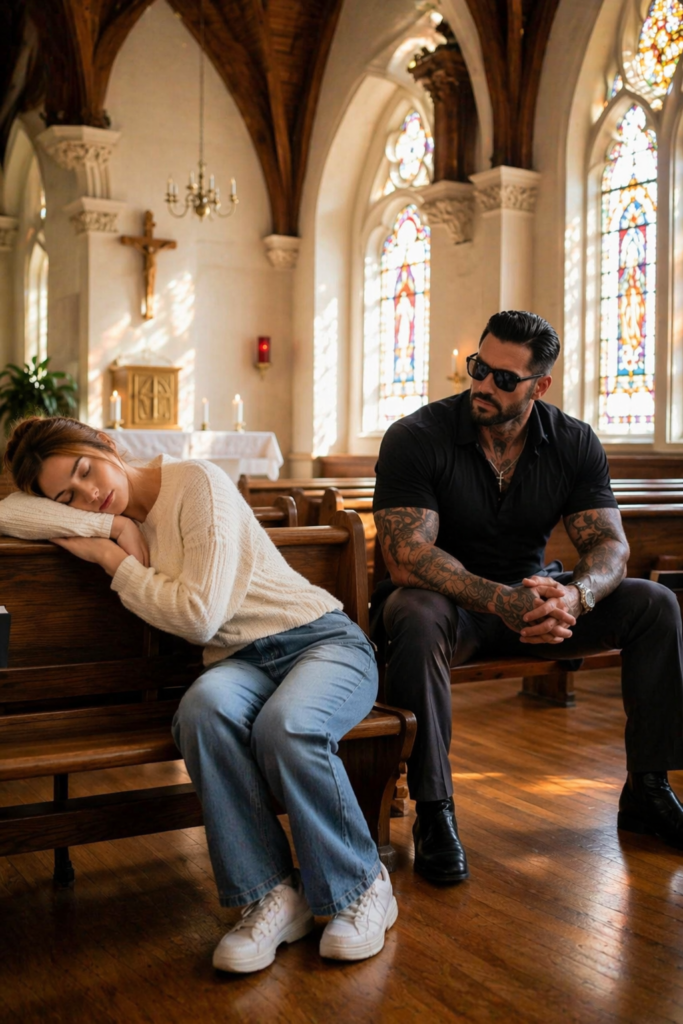
When she died, many years later, the church in Atlixco filled with retired nurses, neighbors, former patients, market ladies, and children who had once received her healing.
Ernesto didn’t go.
Neither did Beatriz.
Laura sent a cold message:
“We regret the loss.”
Santiago didn’t respond.
In the office he opened later, he hung the painting of the red suitcase. Many patients looked at it with curiosity.
“What a sad painting, doctor.”
Santiago always smiled.
“No. It’s a painting of love.”
Because he learned that family isn’t always those who share your blood or who appear in the pretty pictures.
Family is who picks up your suitcase when the world leaves you behind.
Family is who stays even if staying costs money, future, and comfort.
And that morning at the airport, while everyone chose flights, hotels, and appearances, Santiago chose Rosario.
Because many say “I love you” when there are inheritances, trips, and convenience.
But true love is recognized in the exact moment when someone can abandon you…
And chooses not to.