PART 1
The first time Ximena Reyes saw Alejandro Moncada, he didn’t look like a millionaire.
He looked like a man on the verge of death.
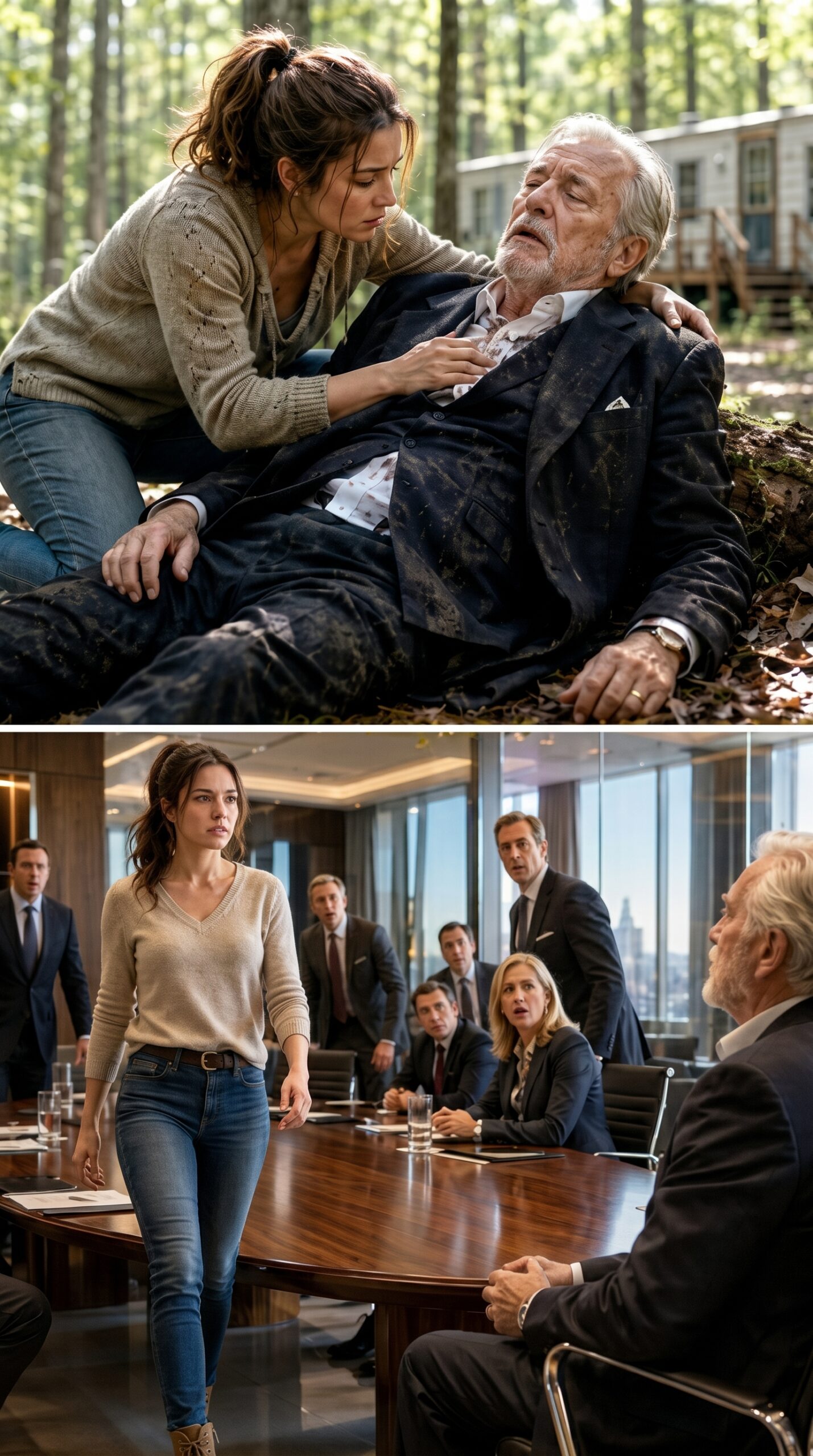
He lay between the pines, beside the old road descending from Valle de Bravo, his suit torn, his face smeared with blood, and one hand clutching his side.
Ximena was 17, her sneakers muddy, a backpack filled with cheap sweet bread for her mom and little brother. She had been walking back from the store since the bus no longer passed through Las Jacarandas that late.
At first, she thought he was just a drunk. Then she saw the marks on his wrists and heard engines nearby.
Three men climbed out of a black truck, shining flashlights among the trees.
—If he’s still alive, we’ll find him —one said—. Licenciado Quiroga doesn’t want any mistakes.
The man on the ground barely opened his eyes.
—Help me —he whispered—. I have a daughter.
Ximena froze.
In Las Jacarandas, people learned from a young age not to get involved. If you saw something, you looked away. If you heard screams, you turned up the volume on the TV. If a rich person got into trouble, they surely had problems far more expensive than your life.
But that man didn’t ask her for money.
He didn’t ask for a phone.
He asked to live.
Ximena dragged him along a dirt path, covering his mouth each time he moaned. When one of the men passed nearby and asked if she had seen anyone, she pointed toward the river.
—A man ran that way —she lied.
The man looked her up and down, saw her old sweatshirt, her trembling hands, and let out an ugly laugh.
—Come on, girl. You don’t know anything. You’re nobody.
When he left, Ximena returned to the injured man.
—Can you walk?
He tried to get up and nearly collapsed.
—Who are you? —he murmured.
She draped his arm over her shoulders.
—Right now, the only person who didn’t let you die, dude.
Getting to Las Jacarandas was hell. The neighborhood was a maze of tin houses, old trailers, skinny dogs, and lights hung with borrowed wires. Doña Carmen, Ximena’s mother, opened the door with a comal in hand, ready to defend herself.
Seeing her daughter soaked and holding a bloodied stranger, the color drained from her face.
—Ximena Reyes… what have you done?
—I saved someone. I think.
They hid him in the room where they kept buckets, tools, and old clothes. Carmen cleaned the wounds with boiled water, alcohol, and worn towels. Toño, her 9-year-old brother, stared at the stranger as if he were a character from a soap opera.
Near midnight, the man said his full name.
—Alejandro Moncada.
Carmen dropped the towel.
Even Toño knew that last name. Moncada Hospitals. Moncada Foundation. Moncada Infrastructure. Commercials with smiling children in mobile clinics that never reached Las Jacarandas.
—My partner ordered my murder —Alejandro said, his voice broken—. Ramiro Quiroga. There’s a council vote tomorrow. I discovered he embezzled money from the Rural Medical Network.
Carmen clenched her jaw.
—Money for doctors?
Alejandro looked at Toño, who was coughing until he doubled over.
—For kids like him.
Ximena felt rage swelling in her chest. They had been waiting four months for an appointment for Toño. Four months of hearing, “Come back next week.”
Alejandro looked directly at her.
—If you help me get to that meeting tomorrow, I promise your brother will get care.
—I didn’t save you to demand something in return —she said.
—I know —he replied—. That’s why I trust you.
Before dawn, four black trucks entered Las Jacarandas.
The dogs stopped barking.
The curtains moved.
And someone knocked on Carmen’s door, saying:
—Mr. Moncada, we know you’re in there.
PART 2
Carmen stood in front of her children with a kitchen knife in hand.
Alejandro tried to rise but the pain bent him. Ximena peeked through a crack and saw a tall, dark-skinned man in a dark suit, his hands visible.
—I’m Bruno Salgado —he called from outside—. Head of security for Mr. Moncada. His daughter sent me.
Alejandro froze.
—Renata?
The man lifted a cellphone. On the screen appeared a young woman with short hair, swollen eyes, and a face that hadn’t seen sleep.
—Dad —she cried—. If you’re alive, tell that family to help you. Bruno is trustworthy. The key is: Sunday tamales.
Alejandro closed his eyes as if that memory hurt him more than the wounds.
—It’s him.
Carmen didn’t lower the knife.
—That’s nice about the tamales, but we don’t just open the door for anyone.
Ximena took the cellphone through the crack, talked to Renata, asked quick questions, and analyzed every gesture of Bruno. She had grown up among collectors, corrupt police, and violent neighbors. She knew when a man lied with his eyes.
Finally, she opened the door.
Bruno stepped in, and seeing Alejandro made his voice crack.
—Sir…
—We can cry later —Ximena said—. First, we need to get him out alive.
Bruno explained that Ramiro Quiroga had told the council that Alejandro was missing due to a nervous breakdown. The vote to remove him would start in two hours at the corporate tower in Santa Fe.
Alejandro wanted to walk and nearly fell.
—You’re not going to any meeting like that —Carmen said—. You look like a corpse at a stranger’s wake.
In twenty minutes, Las Jacarandas became a makeshift headquarters. Don Beto lent a black suit from when he was a best man. Señora Lucha brought coffee. A barber neighbor cut Alejandro’s bloodied hair. Toño drew a map in a notebook, convinced he was helping with a secret mission.
When Alejandro emerged, he looked once again like the businessman from the magazines, though pale, bandaged, and in a suit that was too big.
—Your family is coming with us —Bruno said.
—No —Ximena replied—. My brother isn’t.
—If Quiroga tracks us here, you’re all in trouble —he said.
Toño raised his hand.
—Does this count as a field trip?
Ximena hugged him.
—A very weird field trip.
—Will there be tacos?
Alejandro, despite the pain, smiled.
—If we survive this morning, I’ll buy you all the tacos you want.
Ximena looked at him sternly.
—Don’t promise my brother things you won’t fulfill.
—I will fulfill them —he said.
The road to Mexico City was silent. Carmen held Toño, who coughed every few minutes. Alejandro was ahead of Ximena, pressing on his wound.
—Are you really a millionaire? —Toño asked.
—That’s what they say.
—More than an Oxxo?
—Much more.
Toño’s eyes widened.
—Then why were you lying in the woods?
Alejandro glanced down.
—Because money buys many things, Toño. But it doesn’t buy loyalty.
The Moncada Tower shone in Santa Fe as if made of glass and arrogance. Outside, there were reporters. Ramiro had called the press to showcase Alejandro’s downfall.
He didn’t count on seeing him step out alive from a truck, wearing a borrowed suit from a poor neighborhood.
The cameras exploded.
—Mr. Moncada! Are you incapacitated?
—Is it true you’ve lost your mind?
—Who is the girl coming with you?
Alejandro turned to Ximena.
—Walk behind me.
—I pulled you out of the woods.
—Then let me repay you a little.
They entered amid flashes. In the private elevator, Carmen squeezed Toño’s hand. Ximena saw her reflection in the metal doors: disheveled, muddy sneakers, standing next to people who smelled of expensive perfume and costly fear.
On the 41st floor, behind glass doors, Ramiro’s voice was heard.
—Alejandro is my friend, but we cannot allow his instability to destroy the company or affect thousands of patients.
Alejandro stopped.
—He was my partner for 22 years.
Carmen let out a dry laugh.
—Well, he had 22 years to learn not to be a rat.
Bruno opened the doors.
The room fell silent.
Ramiro Quiroga stood, impeccable, in a navy suit, and his face went blank in one second.
—Alejandro…
—Sorry for being late —Alejandro said—. They were trying to kill me.
Chaos erupted. Counselors shouting. Reporters filming. Ramiro raised his hands as if calming a sick person.
—Alejandro, you’re hurt. You don’t know what you’re saying.
—I’m hurt —he replied—. But I’m not confused.
Bruno connected a tablet to the screen. A video from the parking lot appeared: Alejandro struggling with two men. Then a recording played.
—Don’t let him reach the meeting. Alive or dead, I don’t care.
It was Ramiro’s voice.
The silence was brutal.
Alejandro displayed false transfers, ghost clinics, invented suppliers, and millions siphoned from the Moncada Rural Medical Network. Money meant for pediatric consultations, medications, mobile units, and respiratory treatments in forgotten communities.
Toño coughed in a chair next to Carmen.
Alejandro heard him, and his expression hardened.
—This child waited four months for a consultation that the fund should guarantee. And he’s not the only one.
Ramiro pointed at Ximena with disdain.
—And who is that girl? Your great witness? A kid from a tin neighborhood?
Carmen wanted to stand, but Ximena stepped forward.
Her legs trembled, but her voice didn’t.
—Yes. I’m from Las Jacarandas.
Everyone stared at her.
—I’m the kid who found him under the pines while your men searched for him. I’m the one who lied to keep him from being killed. And I’m the “nobody” one of them thought they could ignore.
Ramiro clenched his jaw.
—You have no proof.
Ximena pulled an old cellphone with a cracked screen from her bag.
—I recorded when they passed by me.
The audio played in the room.
—If he’s breathing, they take him up. If not, they throw him in the river. Quiroga pays double if nobody talks.
No one defended Ramiro again.
He tried to run, but Bruno and two guards stopped him before he reached the door. Ramiro shouted that it was a trap, that everyone owed him favors, that Alejandro didn’t understand how to manage “an empire.”
Alejandro looked at him with cold sadness.
—The health of the poor wasn’t your petty cash.
When they took him away in handcuffs, the same cameras Ramiro had called to humiliate Alejandro recorded his ruin.
Alejandro resisted until the elevator doors closed.
Then he fell.
Ximena was the first to reach him.
In the private hospital, the doors opened like magic. Doctors, stretchers, specialists, paperwork vanished before it even existed.
Ximena felt a horrible anger.
For Alejandro, the world was running.
For Toño, the world had said “wait.”
Renata arrived crying and hugged Ximena without asking permission.
—Thank you for bringing my dad back to me.
—I just yelled a lot at him —Ximena said, uncomfortable.
—He probably needed it.
Hours later, Alejandro woke up and asked to see her. He was pale, connected to machines, but conscious.
—My commander —he said weakly.
—You look terrible.
—Always so diplomatic.
She didn’t smile.
—My brother needs a doctor.
Alejandro nodded.
—Today.
—I don’t want charity.
—It’s not charity. It’s overdue justice.
That night, Toño was evaluated by pulmonologists. He had a treatable respiratory illness exacerbated by mold, poorly managed infections, and months of medical neglect.
Treatable.
Carmen cried in the hallway until she had no strength left.
Two days later, Alejandro appeared at a conference from a wheelchair. Ximena, Carmen, Toño, Renata, and Bruno stood beside him.
—I’m alive because a 17-year-old girl stopped when many would have just kept walking —Alejandro said before the cameras—. Her name is Ximena Reyes. She didn’t know who I was. She didn’t know how much money I had. She just saw a wounded man and chose to help.
The flashes turned toward her.
—But this story isn’t about a millionaire being rescued —he continued—. It’s about entire communities that have been asking for help for years while powerful people use their pain as a personal budget.
He took a deep breath.
—The Rural Medical Network will be audited, expanded, and moved to where it should have been from the start: close to the people. The first permanent clinic will open in Las Jacarandas, along the bus route, not on a pretty avenue for a photo op.
Carmen covered her mouth.
—And it will have a simple name —Alejandro said—: Clinic Nobody Is Nobody.
Ximena could hardly breathe.
A reporter asked her how she felt.
She looked at the cameras and thought of Toño coughing at night, of Carmen counting coins, of the men saying she didn’t matter.
—I feel like no child should find a dying millionaire for finally getting an appointment.
The phrase went viral throughout Mexico.
Some called her a heroine. Others said she was ungrateful. Some accused Alejandro of using her to clean his image. Others said Ximena sought fame.
People online always wanted to pick a side, even though life was more complicated than a Facebook comment.
But in Las Jacarandas, something did change.
The old furniture warehouse next to the bus stop turned into a clinic. They tore down moldy walls, put in large windows, and painted the door blue because Toño said hospitals shouldn’t be scary.
Carmen got a job at reception.
—Clinic Nobody Is Nobody, good afternoon —she said on the phone—. No, ma’am, you’re not bothering. That’s what we’re here for.
Toño started treatment. He began to run again. He went back to sleeping without Carmen getting up to listen to him breathe. One day he told Ximena:
—The house doesn’t sound sick anymore.
Because they also moved them to a new home. Not to a mansion. To a clean little house, with dry walls, hot water, and a blue room for Toño.
Ximena cried the first night in the hallway.
Not out of sadness.
Out of exhaustion.
She had been strong for so long that she didn’t know how to stop being so.
Months later, Alejandro came to inaugurate the clinic. He arrived with a cane, Renata by his side, and Bruno behind him, pretending not to get emotional.
Toño ran toward him.
—You owe me tacos.
—I never forgot.
—With soda too.
—With soda too.
At the event, the mayor wanted to cut the ribbon, but Alejandro handed the scissors to Carmen.
—Doña Carmen was the one who said the clinic should be near the bus. She cuts.
Carmen raised the scissors with trembling hands.
—Oh, don’t kid. I didn’t even comb my hair right.
People laughed.
Ximena took Toño by one hand and her mom by the other. Together they cut the ribbon. The blue door opened, and Las Jacarandas entered.
Three years later, Ximena studied public health with a scholarship that was not just for her, but for young people from forgotten neighborhoods. She didn’t want to be the poor girl turned symbol for everyone to applaud and then forget the rest.
She wanted to open doors behind her.
Alejandro invited her to the community council of the network. Some businessmen twisted their mouths.
—with all due respect —said one council member—, life experience doesn’t replace education.
Ximena held his gaze.
—You’re right. But money doesn’t replace conscience either. That’s why doctors, financiers, and also the people who know what happens when a mom can’t afford the bus and her child can’t breathe must speak here.
No one called her “inspiring” again when they meant “nuisance.”
At 24, Ximena returned as the director of community strategy. Her office was small, with a used desk and a window facing the blue door.
On the wall, she hung a photo of Toño with a plate of tacos and an old drawing from that night in the woods. She also placed, in a simple frame, the piece of fabric with which she had stopped Alejandro’s bleeding.
Not as a trophy.
As a reminder.
Years later, people still asked about “the night that saved the millionaire.” They wanted to know about the trucks, the betrayal, Ramiro in prison, the cameras, and the council.
But Ximena remembered something else.
She remembered a hand emerging from the wet earth.
She remembered the fear.
She remembered being able to keep walking.
And choosing to stop.
One spring morning, Alejandro took her to the same place in the woods. Carmen, Toño, Renata, and Bruno also went. There was no press. No grand speeches.
Just a wooden bench under a pine.
The plaque read:
“For those who stop when the world keeps walking.”
Ximena touched the letters.
Alejandro stood by her side.
—I didn’t make you valuable —he said—. You already were. I just took too long to understand that the people called nobody are often the ones who hold the world up.
Toño opened a bag.
—Emotional moment with tacos, please.
Everyone laughed.
Ximena sat on the bench and looked at her family, at Renata, at Bruno, and at the man who had come into her life covered in blood and other people’s lies.
She didn’t end up with a mansion.
She didn’t end up with a wedding.
She didn’t end up as a poor girl saved by a rich man.
She ended with a clinic open every morning, with children breathing better, with Carmen answering calls, with Toño running without fear, and with Ximena going to work under a blue sign that read:
Here nobody is nobody.