PART 1
At 6:50 every morning, Santiago Valdés occupied the corner table at a café in Puebla. He ordered coffee and opened his laptop, pretending to review the numbers for his corporate empire.
In reality, he was waiting for Renata Cruz.
At 6:57, she crossed the boulevard with a patched backpack, a bakery uniform under her arm, her hair still damp. She never looked toward the window. She walked like someone in debt to life.
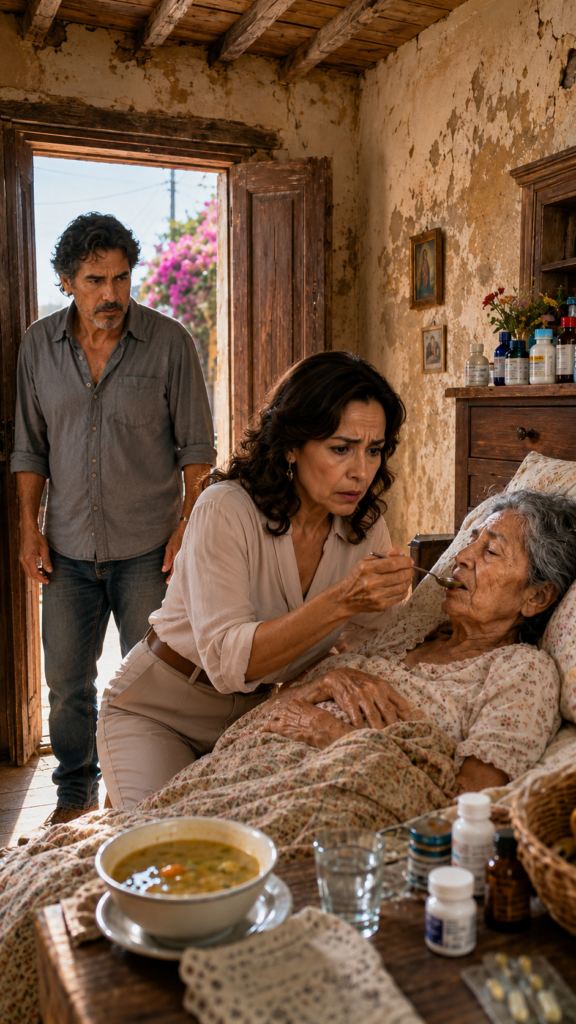
Renata was studying accounting at a public university. Before classes, she baked bread from 3:30 AM; in the afternoons, she worked at a stationery store, and at night, she cared for her grandmother, Doña Ofelia, who was sick with heart problems.
Santiago knew all of this, though Renata didn’t even know his name.
Three years earlier, when his construction company was on the brink of bankruptcy and his fiancée left him for a politician with more money, Santiago saw her outside the bus station. Renata was carrying two small sandwiches.
A crying candy vendor approached her, saying he hadn't eaten. She gave him both.
“Take one to your sister. I can wait.”
Santiago, crushed by the loss of his privileges, felt a wave of shame. She had almost nothing, yet shared everything.
From that day forward, he helped her from the shadows. An organization covered part of her tuition, a pharmacy gave discounts to Doña Ofelia, and the university received computers when Renata considered dropping out.
Only Teresa, Santiago’s financial director, knew the truth.
“Boss, you’re head over heels.”
“When she finds out how much money I have, how will I know if she looks at me or my last name?”
That’s why he never approached her.
But Mauricio Barragán did.
He arrived at the stationery store with an expensive watch, a calm smile, and a perfect story. He left an absurd tip, and when Renata tried to return it, he held her gaze.
“Hardworking people deserve to be valued.”
Renata smiled for the first time in weeks.
Santiago investigated Mauricio and found debts from gambling, shell companies, and fraud against landowners. He also discovered something worse: months earlier, he had inquired about a plot of land owned by the Cruz family near San Andrés Cholula.
A future shopping center had inflated its value to millions.
Renata was unaware it even existed.
Doña Ofelia kept the deeds in a trunk, along with a letter from Renata’s grandfather: when the land appreciated, wolves disguised as lovers would appear.
Mauricio started bringing her coffee, listening to her problems, and asking gentle questions.
“Does your grandmother have any old papers?”
“Have you ever thought about selling?”
Renata thought he genuinely cared. After years of feeling invisible, that attention felt like a miracle.
Until Doña Ofelia suffered a heart attack.
In the hospital, while Renata cried without money for the procedure, Santiago arranged for a specialist to travel from Mexico City through an urgent program.
Mauricio also arrived but noticed the keys to the apartment hanging from Renata’s bag.
Hours later, a neighbor sent a photo.
Mauricio was inside her home, kneeling in front of the trunk, with the deeds opened.
Behind him was the notary, Efraín Montalvo, who had asked Renata a week earlier to sign “simple support papers” for the surgery.
And in the last image, they both smiled as they placed their signatures on a contract she had never read.
PART 2
Renata felt the hospital hallway tilt.
She zoomed in on the photo. Mauricio held the deeds; the notary Efraín Montalvo was reviewing a yellow folder. It was the same one he had brought to the stationery store under the pretense of hiring her to organize documents.
Santiago approached.
“What happened?”
She showed him the phone. He called Teresa and requested to review cameras, the notary's movements, and any power of attorney signed by Renata.
“Did you already know about the land?” she asked.
“Yes. I knew Mauricio was investigating it before I met you.”
Renata’s expression hardened.
“And you also investigated me? Do you really think because I’m poor I’m stupid?”
Santiago lowered his head.
“I should have talked to you. You're right.”
A nurse announced that Doña Ofelia had woken up. Renata entered alone.
Her grandmother was pale, hooked up to monitors, but conscious.
“The trunk,” she whispered. “Tell me it’s safe.”
Renata showed her the photo.
“Your grandfather created a trust,” Doña Ofelia explained. “The land can’t be sold with just your signature.”
“Then what were they looking for?”
“Authorization to use it as collateral. They could encumber it and force a sale.”
Renata recalled the documents Efraín had brought her. They stated they were medical support requests. She had signed three sheets because Mauricio was rushing her, and her grandmother had just fainted.
“Grandma, I signed something.”
Doña Ofelia squeezed her hand.
“Then we don’t have time.”
Teresa arrived 40 minutes later with copies from Efraín’s office. One sheet authorized him to represent Renata before a private lender. The signature was real, but the text had been placed over a page she signed almost blank.
Mauricio intended to request a multi-million loan using the plot as collateral. When the debt fell into default, a company linked to him would buy the land for a fraction of its value.
The evidence appeared on the stationery store’s camera.
It showed Mauricio distracting Renata with a fake hospital call while Efraín sorted several sheets.
They could also hear his voice:
“Sign here, sweetheart. It’s to authorize your grandmother’s support. Don’t waste time reading.”
Renata felt rage and shame.
“I trusted him.”
“Trusting doesn’t make you guilty,” Santiago said. “They used your fear.”
Doña Ofelia’s surgery was scheduled for that night. Before entering, she asked to speak with Santiago.
“You’re the coffee boy, right?”
He froze.
“An old woman sees more than she lets on,” she said. “I noticed someone was paying for medicine without showing off. But my granddaughter doesn’t need a savior. She needs to be respected enough to be told the truth.”
Santiago nodded.
“You’re right.”
When they took Doña Ofelia away, Mauricio texted:
“Let me explain. I did everything to secure our future.”
Renata responded that she would meet him at a nearby diner.
“I’m going with you,” Santiago said.
“No. This time, I decide.”
She arrived with her phone recording in her bag. Mauricio looked pristine, as if he hadn’t invaded a home.
“My love, I’m so glad you came.”
“Don’t call me that.”
“Efraín and I were organizing the documents. That land can solve your life.”
“Is that why you forged an authorization?”
Mauricio’s smile faltered.
“You signed.”
“You told me it was for the hospital.”
“You were agitated. If I explained everything, you would have ruined the opportunity.”
Renata clenched her fists.
“Did you come to me because of the land?”
Mauricio leaned in toward her.
“At first, yes. Then I grew fond of you. You’re good, beautiful, and obedient when you’re not filled with fear.”
That phrase fully opened her eyes.
“I wasn’t obedient. I was tired, scared, and alone. You confused my need for affection with permission to use me.”
Mauricio slammed the table.
“That land is worth over 80 million pesos. Your grandmother let it rot, and you didn’t even know it existed. People like you need someone who thinks big.”
Several people turned to look.
Renata pulled out her phone.
“Thanks for confessing.”
Mauricio tried to snatch it away, but two agents entered. Teresa had filed the complaint with the recordings, the neighbor's photo, and the altered documents.
Efraín was arrested when he attempted to destroy files. On his computer, they found contracts from six other families deceived in the same way.
But the hardest blow came afterward.
The company set to receive the land didn’t belong to Mauricio.
It belonged to Jimena Ríos, Santiago’s former fiancée.
Teresa discovered transfers and messages where Jimena described Renata as “the ideal girl: exhausted, in debt, and easy to pressure.” There were also photos of Santiago at the café.
Jimena knew he was watching Renata.
She had hired Mauricio to take over the land and, additionally, to humiliate the man who years ago couldn’t bear to see himself thriving without her.
Renata froze. Santiago seemed to be thrown back into the betrayal that had marked him.
Jimena arrived at the hospital before the police could locate her. She entered with dark glasses and a cold smile.
“You always had terrible taste, Santiago. First me, then a little employee who can’t tell a contract from a napkin.”
Renata stepped forward.
“The little employee just dismantled your fraud.”
Jimena laughed.
“With his help. Without his money, you’d still be serving coffee.”
The phrase landed like a slap.
Santiago wanted to respond, but Renata raised her hand.
“Yes, I received help. But I got up at 3:30 AM, studied while sleepy, cared for my grandmother, and worked until my feet bled. His help opened doors; my legs were the ones that walked.”
Jimena lost her smile.
“He’s going to leave you when he gets bored.”
“That will be decided by time. The law has already decided that you will answer for fraud, criminal conspiracy, and forgery.”
The agents arrived seconds later.
Jimena looked at Santiago, expecting to see him shattered. But he wasn’t looking at her.
He was looking at Renata.
The surgery lasted five hours.
When the doctor announced that Doña Ofelia had made it through, Renata collapsed in tears. Santiago knelt in front of her but didn’t touch her.
“Can I hug you?”
For the first time, someone asked for permission before deciding what she needed.
She nodded.
Two days later, Doña Ofelia opened her grandfather’s letter in front of both of them.
“Renata: this land can give you money, but it will also attract those who think your need has a price. Don’t sell out of fear. Don’t sign in haste. Never confuse those who promise to save you with those who respect your strength.”
Doña Ofelia pulled out a second page, written by her husband many years before.
The grandfather had rejected four suspicious offers for the plot. One came from Jimena’s father, who attempted to buy it for almost nothing when the shopping center was still just a rumor.
“So this goes way back,” Renata said.
Doña Ofelia nodded.
“The Ríos family thought we would forget about the land. When Santiago regained success, Jimena discovered he was watching you and saw two opportunities: to take the plot and hurt him.”
Santiago clenched his jaw.
“My fear paved the way for her. If I had spoken to you, Mauricio wouldn’t have had so much room to maneuver.”
Renata looked at him firmly.
“Don’t carry the guilt of what they did. But don’t turn your silence into something romantic either. For three years, you knew things about my life that I didn’t know about yours.”
He received those words without defending himself.
“Then I’ll start from scratch. I’m Santiago. I’m afraid of being loved for my money, I hate cilantro, and I’ve been drinking terrible coffee for three years just because I could see you pass from that table.”
Renata let out an unexpected laugh.
“The coffee there really is pretty bad.”
It was the first time they spoke as two normal people, without invisible debts between them. There were no promises of love, just honest questions.
And for Renata, after so many lies disguised as help, that simple conversation was worth more than any gift.
The plot was protected. Part of it was allocated, through a transparent agreement, to affordable housing and another part generated income for scholarships and support for caregivers of elderly adults.
Renata graduated a year later. She left one job but kept her independence.
Santiago stopped helping her in secret.
He learned to ask.
She didn’t accept a relationship right away. She asked for time, truth, and no secrets. He agreed, even if it meant waiting without guarantees.
Months later, at 6:57, Renata stopped in front of the café.
Santiago was at the same table. There were two coffees and an empty chair.
Renata entered, left her patched backpack, and sat down.
“You took three years to talk to me.”
“And you took three years to see me.”
“Well, we were both foolish.”
They both laughed.
Renata took his hand, not out of gratitude or need, but because she already knew the whole truth.
Santiago understood that loving someone doesn’t mean solving their life, but rather not taking advantage of their wounds, not buying their trust, and not deciding for them.
Renata learned something even harder: needing help never made her weak.
The weak were those who believed her exhaustion could turn her into prey.
Because poverty can empty pockets but doesn’t cheapen anyone’s heart.