PART 1
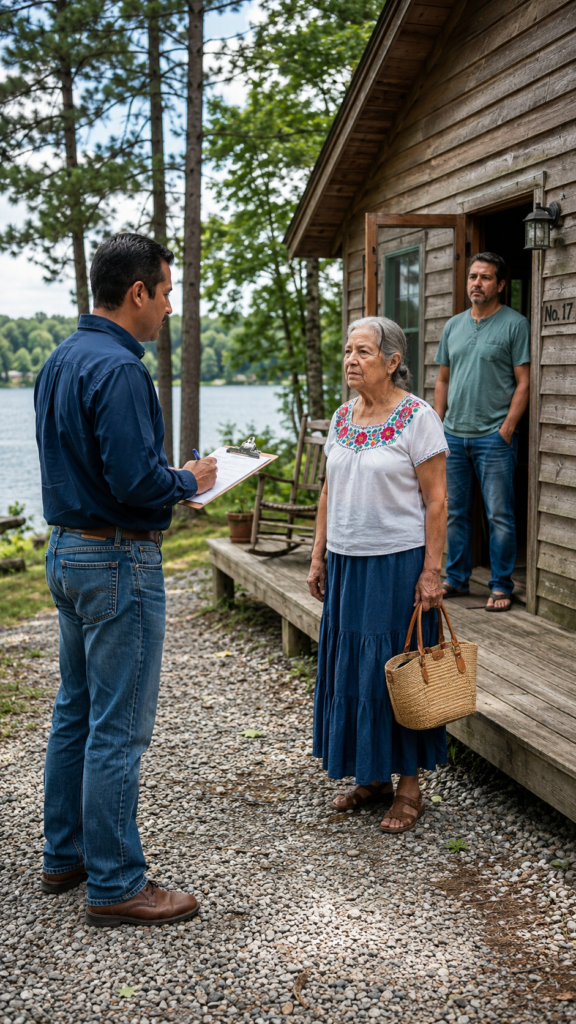
The black truck stopped in front of a humble house on the outskirts of Morelia. Before the driver opened the door, several neighbors were already watching from behind their curtains.
Valeria Montes had returned to the neighborhood where she grew up.
In financial magazines, she was described as an unstoppable woman. She owned a chain of clinics, appeared at conferences, and had properties in Mexico City, Guadalajara, and Monterrey.
However, that morning, she didn’t look like a successful businesswoman.
She looked like a scared daughter.
Her mother had been sick for several days, and a neighbor, tired of waiting for a response, had called Valeria's office directly.
As she entered the house, a wave of guilt hit her.
There was moisture on the ceiling, old furniture, and a bucket collecting water under a leak. In the kitchen, there were barely any tortillas, beans, and two packets of coffee left.
This didn’t make sense.
Valeria sent money every month.
A lot of money.
—Mom? —she shouted as she walked down the hallway.
A deep cough came from the bedroom.
Valeria rushed in, opened the door, and froze.
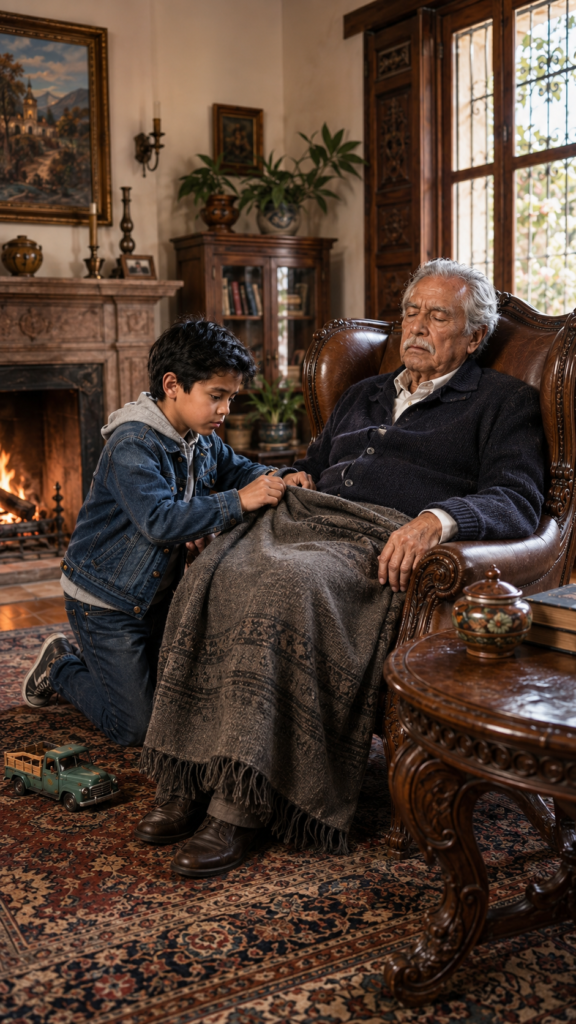
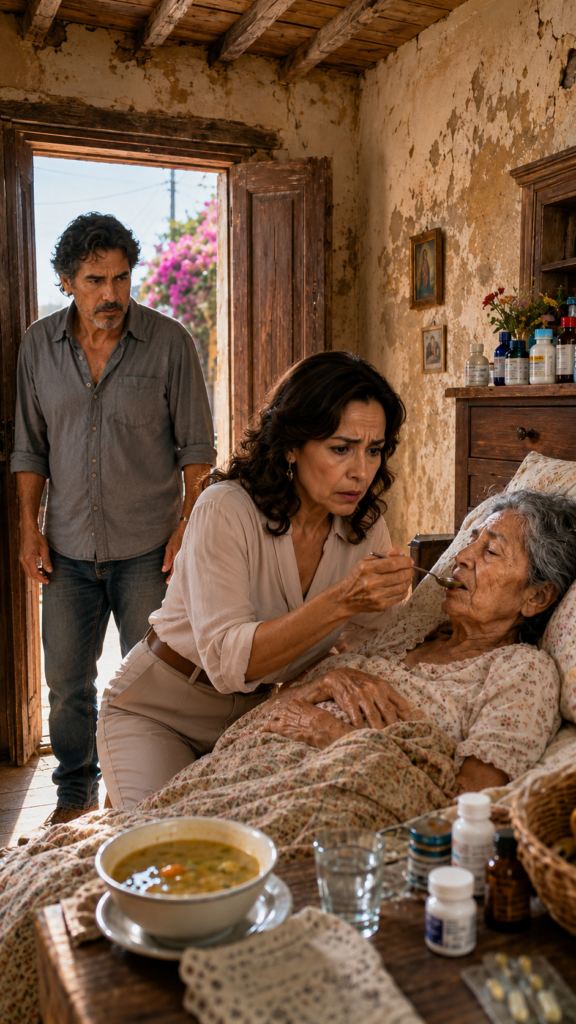
Her mother, Doña Elena, lay pale and covered with a shawl. Next to her was Mateo Salgado, Valeria’s ex-husband.
Mateo held a spoon as he slowly fed her broth. His hands were rough, his shirt stained with paint, and his hair damp from the rain.
—What are you doing here? —Valeria asked.
Mateo set the spoon down on the plate.
—Your mom had a fever last night. I couldn’t leave her alone.
—You’re no longer part of this family.
Doña Elena tried to intervene, but started coughing. Mateo adjusted her pillow, checked her temperature, and searched for an inhaler on the nightstand without needing to ask where it was.
Valeria noticed the medications organized by schedule, the clean sheets, and a notebook full of notes.
Mateo hadn’t just arrived.
He had been taking care of her for a while.
—Mom, why didn’t you hire a nurse? —Valeria demanded—. I send you enough to pay for three if necessary.
Doña Elena looked at her with sadness.
—A nurse can give me pills, daughter. But she can’t replace someone who stays when I’m scared.
Valeria felt that comment as a personal attack.
She followed Mateo outside when he went to the patio for a bag of medications. By the wall was an old motorcycle, caked in mud.
—You’re still the same —she said—. Working day by day, fixing walls, and sticking your nose where you’re not wanted.
Mateo clenched his jaw.
—I’m just helping Elena.
—Don’t use her to get close to me.
—Really, Valeria, not everything revolves around you.
She felt humiliated.
—Get out. From now on, I’ll take care of my mother.
Mateo wanted to respond, but Doña Elena appeared, leaning on a cane.
—Don’t kick him out, daughter.
Valeria opened the door.
Mateo set the medications on a table.
—The white one is after lunch. The red one is for the fever. If she has trouble breathing, call me immediately.
—I’m not going to call you.
He lowered his gaze and left under the rain.
Valeria thought she had finally set things straight.
Then she discovered a folder full of prescriptions, studies, and medical receipts under the bed.
All were paid in cash.
On the last one was a note written by the pharmacist:
“Covered by Mateo Salgado.”
Valeria looked at her mother.
—Why is he paying for this?
Doña Elena started to cry.
—Because for four years, he was the only one who didn’t abandon me.
Valeria paled.
—And the money I send?
The elderly woman pointed to a rusty box hidden in the wardrobe.
—Your money stopped coming a long time ago, daughter… and inside that box is the reason Mateo never dared to tell you the truth.
PART 2
Valeria pulled the box out with trembling hands.
It was a blue metal box that had belonged to her father. When she was a child, he kept the house deeds, electricity bills, and family photographs in there.
Doña Elena handed her a small key.
—Mateo asked me not to open it until you returned willing to listen.
Valeria felt rage.
—Since when does Mateo decide what I can know?
—Since you stopped answering us.
The answer left her speechless.
She opened the box.
Inside, she found account statements, copies of IDs, bank receipts, photographs, and dozens of letters addressed to her.
Valeria first picked up the receipts.
The deposits existed.
Every month, transfers of 90,000, 130,000, and even 200,000 pesos left her accounts. She had paid for treatments, maintenance, food, and supposed nursing services.
—See? —she said, breathing with relief—. I never stopped sending money.
Doña Elena didn’t respond.
Valeria continued reading.
Hours after each deposit, almost the entire amount was transferred to a company called Bienestar Dorado Servicios Médicos.
The invoices seemed authentic, but Doña Elena had never received those services.
In several documents, there was an authorization to manage her account.
The signature was forged.
Underneath was the name of the responsible party.
Octavio Cárdenas.
Valeria’s administrative director.
Her wedding godfather.
The man who, after the divorce, had convinced her that Mateo was a mediocre resentful who only wanted to live off her success.
—It can’t be —she murmured.
Octavio managed her personal accounts, her investments, and the payments meant for Doña Elena.
He was also the one who reviewed the private correspondence that arrived at the office.
Valeria picked up one of the letters.
“Daughter, I don’t want to bother you. Medicine has gone up in price, but Mateo got extra work and helped me. I hope you can call me on Sunday.”
The next one said:
“Daughter, today was my birthday. I thought you’d come. I understand that you have a lot of work.”
There were more.
All were opened.
None had reached her hands.
Valeria remembered the birthdays solved with expensive flowers, the messages answered by her assistant, and the calls she postponed saying she’d have time later.
She paid to not feel guilty.
But not even that money had arrived completely.
At the back, she found an envelope with her name written in Mateo's handwriting.
She opened it.
Mateo explained that four years ago, Doña Elena had asked him for 600 pesos to buy medication. He was surprised because he knew how much money Valeria sent.
He accompanied her to the bank.
He discovered that the deposits came in but disappeared the same day.
For months, he gathered copies, spoke with employees, photographed receipts, and sought help from a trusted lawyer. When he tried to warn Valeria, Octavio found out.
Then he began to threaten him.
First, he offered him money to keep quiet.
Mateo refused.
Then he promised that he would report Doña Elena for participating in a supposed tax fraud if he spoke without sufficient proof.
The letter included screenshots of messages.
“Valeria will never believe a starving painter.”
“She was the one who left him for being useless.”
“If he opens his mouth, the lady will end up paying the consequences.”
Valeria felt as if she was gasping for air.
—Why didn’t he come to me personally?
Doña Elena let out a bitter laugh.
—He did.
The elderly woman pulled out another paper.
It was a visitation record from Valeria's corporate building. Mateo had visited seven times.
Each time, there was the same note:
“Access denied by instructions from management.”
—Octavio told security that Mateo was dangerous —Doña Elena explained—. He also changed my number in your records and blocked my calls.
Valeria remembered that Octavio always said her mother was fine.
“I had everything checked, don’t worry.”
“Mateo is just trying to get attention.”
“Focus on the business, I’ll sort the rest out.”
For four years, Valeria had trusted him without reviewing a single number.
—Mateo kept quiet because he wanted to get proof that couldn’t turn against you —Doña Elena continued—. And because he knew you despised him too much to believe him.
That hurt the most.
It was true.
Valeria had left Mateo because he didn’t want to move to Mexico City or turn his small remodeling business into a national company.
She said he lacked vision.
Mateo said he didn’t want to live chasing money and forgetting the people he loved.
Valeria was ashamed to take him to dinners with investors. His boots, his simple manners, and the way he spoke to waiters as if they were friends annoyed her.
Octavio took advantage of every difference.
He repeated to her that Mateo was envious.
That a man without ambition would always end up holding her back.
Valeria ended up believing him.
While she flaunted success, Mateo worked double shifts to pay for medication she supposedly had already covered.
That night, Valeria didn’t return to her hotel.
She made soup for her mother, washed the dishes, and changed the sheets. She put her phone away in a drawer and sat next to the bed.
Doña Elena was asleep when Valeria picked up an old photograph.
In it were the three of them during a posada: Doña Elena in the middle, Mateo holding a piñata, and Valeria laughing without worrying about her makeup.
She didn’t remember when she had stopped being that woman.
The next morning, she called her legal team.
She ordered a secret audit.
The first results were worse than expected.
Bienestar Dorado had no employees, doctors, or facilities. It was a ghost company created by a cousin of Octavio.
For four years, it had received more than 18 million pesos.
Part of the money had been used to buy two apartments, a truck, and land in Querétaro.
But another surprise emerged.
Octavio hadn’t just stolen from Doña Elena.
He had also diverted funds from a support program meant for low-income patients.
Valeria realized her absence had allowed many families to be deceived.
Three days later, she summoned Octavio to her office in Santa Fe.
He arrived smiling.
—What a miracle you left Michoacán. I thought that family drama would keep you busy all week.
On the desk awaited copies of the accounts, the false invoices, and the messages sent to Mateo.
Octavio’s smile faded.
—Where did you find that?
—In a box you couldn’t control.
He sat down slowly.
—Valeria, I can explain.
First, he blamed an accountant.
Then he claimed that Doña Elena had authorized the movements.
Then he said Mateo had fabricated everything out of revenge.
—That guy always wanted to destroy you —he insisted—. He was hurt that you succeeded without him.
Valeria turned on a screen.
A video from a bank branch appeared. In the recording, Octavio accompanied Doña Elena and pointed out where she should sign.
The elderly woman believed she was authorizing the payment for a consultation.
In reality, she was relinquishing control of her account.
Octavio paled.
—Your mom understood what she was signing.
—My mom could barely read because of her cataracts, and you knew it.
—I built your company with you.
—You built it while robbing me.
Octavio slammed his hand on the desk.
—You never reviewed anything! You didn’t even visit that woman! I just took advantage of money that meant nothing to you.
Valeria felt the urge to slap him.
She didn’t.
The door opened, and agents from the Prosecutor’s Office entered, accompanied by two lawyers.
Octavio backed away.
—Valeria, don’t be stupid. If this comes to light, your reputation will go down the drain.
—My reputation can recover. The four years you stole from my mother can’t.
As they placed handcuffs on him, Octavio delivered his final blow.
—Don’t pretend to be the perfect daughter. I could do all this because you disappeared.
Valeria didn’t respond.
That sentence contained an unbearable truth.
Octavio was a thief.
But she had left the door open.
In the months that followed, Valeria recovered part of the money and collaborated with the authorities. She sold properties, compensated affected families, and replaced several executives.
However, the hardest change occurred in Doña Elena’s house.
Valeria learned to monitor her blood pressure, accompanied her mother to consultations, and began to cook for her, even though at first, she burned the rice.
She hired a nurse but never used her as an excuse to be absent again.
Mateo, on the other hand, stopped coming when Valeria was there.
He brought medications, fixed a leak, and left before she could see him.
One afternoon, Doña Elena lost her patience.
—That’s enough, daughter. You can face businessmen and lawyers, but you hide to avoid asking a good man for forgiveness.
—I don’t know what to say to him.
—Tell him the truth.
—And if he doesn’t forgive me?
—Forgiveness isn’t demanded. It’s asked for.
Valeria found Mateo working on the remodeling of a public school. He was painting a wall when he saw her approaching.
—My mom is fine —he said before she could ask—. I already left her medications.
—I didn’t come for the medications.
Mateo climbed down from the ladder.
Valeria wore simple pants and a top with no visible labels. There was no driver, no security, no assistants.
—I read everything —she said—. I also saw the times you tried to get into my office.
Mateo remained serious.
—It doesn’t matter anymore.
—It does matter. I treated you like you were an opportunist when you were taking care of the woman who gave me life.
—I didn’t do it to win you back.
—I know. That’s why it’s worth more.
Valeria took a deep breath.
—Forgive me for underestimating you. For confusing your simplicity with mediocrity. For believing that having more money made me better than you.
Mateo looked away.
—You made me feel ashamed of being who I was.
—I know.
—When I warned you about Octavio, you said he had more credibility than me because he wore a suit.
Valeria began to cry.
—I remember that too.
—I can’t pretend that it disappeared.
—I’m not asking you to get back together with me.
Mateo looked surprised.
—Then what are you looking for?
—To stop running. To learn to take care of my mother. And to show you, even from afar, that I understood the damage I caused.
Mateo fell silent.
Finally, he picked up a brush from the ground.
—Start by being on time for the appointment on Friday.
Valeria smiled through her tears.
She didn’t receive a hug.
She didn’t receive a promise.
But she received a chance to change without buying the outcome.
Eight months later, Doña Elena regained enough strength to walk through the plaza.
Octavio was linked to the process, and several of his accomplices began to testify.
Valeria created a program to protect the accounts of elderly individuals, but this time she didn’t just sign checks.
She personally listened to the families.
Mateo began to stay when she arrived.
First, they shared coffee.
Then, short conversations.
One afternoon, they repaired the fence of the house together. Valeria held the boards while Mateo nailed them in.
—You did it crooked —he said.
—Not all of us are born knowing how to build.
—But you sure knew how to destroy.
Valeria lowered her gaze.
Mateo let out a small smile.
—It was a joke.
—I deserved it.
Doña Elena watched them from the porch.
She didn’t know if they would become a couple again.
Maybe yes.
Maybe some wounds needed more time than love.
But that house was no longer empty.
There was medicine, food, and enough money. Above all, there were conversations, acknowledged mistakes, and people willing to stay.
Valeria took years to understand.
Eighteen million could be recovered.
A company could be rebuilt.
A criminal could be punished.
But no bank would return lost birthdays, ignored calls, or the nights when a sick mother believed her daughter had forgotten her.
Because abandonment doesn’t always happen when someone leaves.
Sometimes it happens when a person sends money, convinces themselves they’ve fulfilled their duty, and lets another occupy the place where their heart should have been.