PART 1
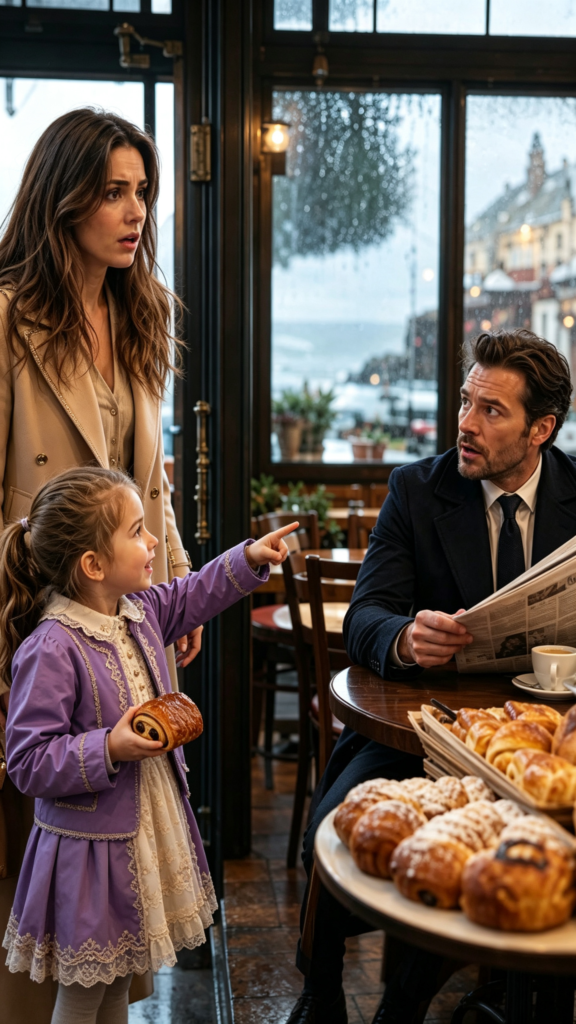
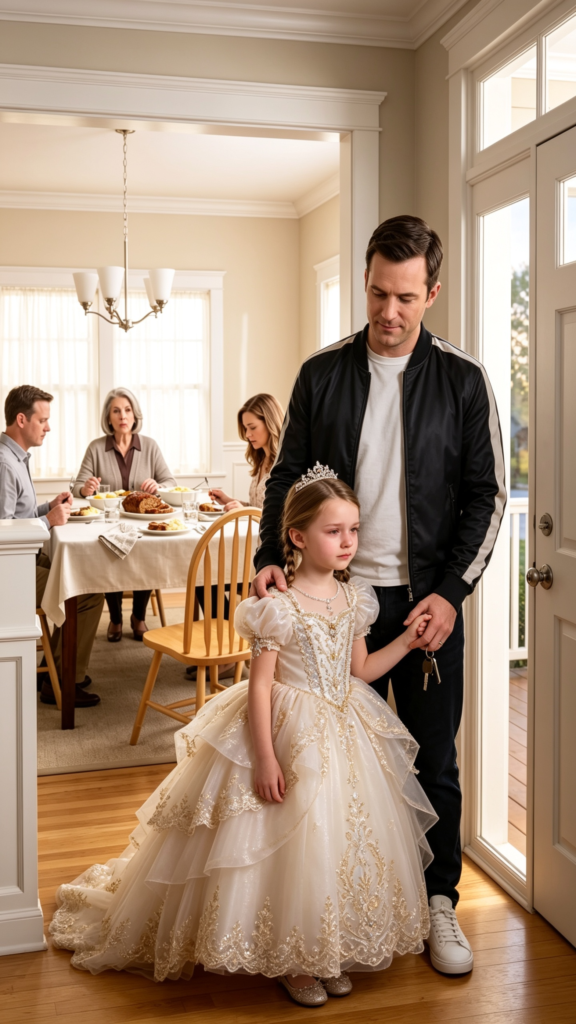
At the Sunday lunch in a spacious house in Lindavista, where everyone spoke loudly to hide they no longer cared for each other, Doña Rebeca looked at Valeria, an eight-year-old girl, and dropped the phrase that split the table in two.
"Oh, the truth is, this girl turned out quite dull. Neither pretty nor charming, nothing. It's like she was born to be pitied."
Valeria left her spoon suspended over her noodle soup.
She didn't cry.
That was what hurt Andrés, her father, the most.
The girl just lowered her gaze, pressed her lips together, and stayed still, as if she'd just learned that even within family, there were those capable of dimming her spirit.
Around her were uncles, three cousins, two sisters-in-law, and Don Eusebio, the grandfather who always pretended to be deaf when it suited him.
Everyone heard.
No one said a word.
Doña Rebeca, mother of Mariana, Andrés's deceased wife, wiped her mouth with the napkin as if she hadn’t just destroyed a girl in front of the mole and tortillas.
Mariana had died three years earlier from an illness that took her silently, leaving Andrés with a little daughter and a promise embedded in his chest.
In the hospital, when she could barely speak, Mariana had taken his hand.
"Take care of my mom, even if it’s hard. Don't leave her alone."
And Andrés had fulfilled that.
For three years, he paid Doña Rebeca's car installment, medical insurance, private consultations, medicines, overdue property taxes, and every emergency she invented with a victim's voice.
He also swallowed her comments.
That Valeria was odd.
That she had no spark.
That Mariana would have known how to raise her better.
That Andrés was raising her "too delicately."
But that afternoon, the lady crossed a line that couldn’t be erased.
Valeria squeezed her napkin with both hands. Her cousin Renata let out a low giggle, and her mother touched her arm, not to correct her, but to tell her to hide it.
Andrés placed his glass on the table.
"Repeat it," he said calmly.
Doña Rebeca raised an eyebrow.
"Oh, Andrés, don't make a scene. I just spoke the truth. There are kids who don’t shine, and that’s it."
Valeria swallowed hard.
Andrés turned to her.
"Go get your sweater, sweetheart. We're leaving."
"But the flan is left," an aunt said, uncomfortable.
Andrés didn't even look at her.
Doña Rebeca let out a dry laugh.
"Sure, take her. This way she'll never learn to endure. Then don't complain when the world eats her alive."
Andrés smiled.
It wasn't a happy smile.
It was one of those cold smiles that appear when a person has already closed the door inside.
"Keep talking, Doña Rebeca. You have a few hours left to use that mouth without consequences."
The table froze.
"Are you threatening me?" she asked, feigning shock.
"No," Andrés replied, taking Valeria's hand. "I'm giving you a heads-up."
He left without shouting.
He didn't slam the door.
He didn't insult anyone.
But as he drove back to his apartment in Narvarte, with Valeria crying silently in the back seat, Andrés made four calls.
At 6:11 p.m., he canceled the auto-pay for Doña Rebeca's car.
At 6:26 p.m., he canceled the private medical insurance he had been paying for.
At 6:39 p.m., he blocked the automatic transfers.
And at 7:02 p.m., he called a family attorney.
When Doña Rebeca tried to pay for gas with the additional card Andrés had left her "for any emergency," the terminal showed declined.
At that very moment, she received a message:
"From today, my daughter stops paying the promise I made to your daughter."
PART 2
Doña Rebeca called 21 times that night.
First, she cried.
Then she yelled.
Then she sent audios saying Mariana would die of shame again if she knew how Andrés was treating her own mother.
Andrés didn't respond to a single message.
Valeria was in her room, sitting on the bed, hugging a stuffed puppy Mariana had given her before entering the hospital.
Andrés knocked softly on the door.
"May I come in, my love?"
The girl nodded without raising her face.
He sat next to her.
"What your grandmother said isn't true."
Valeria stroked the puppy's ear.
"But no one said anything."
That phrase hurt him more than any insult.
Andrés took a deep breath.
"Yes. And that was wrong. Very wrong."
The girl finally looked at him.
"Would my mom also think I’m pitiful?"
Andrés's throat tightened.
"No, Vale. Your mom looked at you like you were the most beautiful thing that ever happened to her. And she was right."
Valeria cried then.
She didn't cry loudly.
She cried like children who have already learned not to bother adults.
Andrés held her until she fell asleep.
The next morning, at 9:00 a.m., he arrived at the office of Lourdes Manzano, a family attorney in Colonia Roma Sur. The office was above a small café, smelling of toasted bread and strong coffee.
Lourdes was a woman with short hair, brown glasses, and a calmness that imposed more than any shout.
"Tell me from the beginning," she said.
Andrés talked about the lunch.
The insult.
Mariana.
The promise.
The three years paying other people's bills.
The car.
The insurance.
The consultations.
The transfers.
The messages where Doña Rebeca asked for money for medicines and then posted photos dining on seafood in Polanco.
Lourdes took notes without interrupting.
When Andrés finished, she put down her pen.
"Do you think your mother-in-law might try to take your daughter away?"
Andrés lowered his gaze.
"Last night, she sent me an audio saying I was losing my mind and she would rescue Valeria."
Lourdes didn't change her expression.
"Then we'll treat her as a real threat."
That phrase gave Andrés a strange calmness.
The attorney was direct.
Doña Rebeca could present herself in family court. She could say Andrés was unstable from grief. She could invent abandonment, emotional violence, or isolation.
"The important thing is that you don't respond to anything," Lourdes said. "No calls, no audios, no fights at the door. Everything in writing and everything through me."
"Understood."
"Now tell me something good. Do you have proof?"
For the first time since the lunch, Andrés felt he could breathe.
"I have everything."
Lourdes looked up.
"Everything?"
"Bank statements, SPEI transfers, insurance receipts, car payments, medical bills, message captures, tuition receipts, school reports, pediatrician appointments, and grief counseling."
The attorney barely smiled.
"Perfect. Then your mother-in-law just picked the wrong dad to lie about."
The lawsuit arrived six days later.
A process server left the envelope at Andrés's building at 4:18 p.m.
Rebeca Solórzano against Andrés Cárdenas.
Urgent request for provisional custody.
Andrés read each accusation in the kitchen while Valeria was at dance class.
Emotionally unstable father.
Intimidating behavior.
Lack of care.
Unsafe environment.
Child isolated from her maternal family.
Psychological risk.
Doña Rebeca claimed she was the only stable figure Valeria had left since Mariana's death.
Andrés felt fear.
Not because it was true.
But because lies, when they arrive with seals, signatures, and legal words, can scare even the strongest.
Lourdes arrived that same afternoon with a black portfolio.
"It's an aggressive lawsuit," she said, reviewing the papers. "But aggressive doesn't mean solid."
They worked through each point.
Income.
Home.
Work schedules.
Tuition.
Medical records.
Grief therapy.
Birthday photos, school festivals, homework nights, visits to the pediatrician, trips to Bicentennial Park and Chapultepec Zoo.
They also gathered what Doña Rebeca never thought existed.
Three years of transfers.
$9,200 monthly for the car.
$4,800 for the medical insurance.
$31,000 for dental surgery.
$17,600 for clinical analyses.
$14,000 for a supposed emergency that turned out to be a weekend in Valle de Bravo with her friends.
Lourdes organized everything into a folder with dividers.
"Parenting."
"Stability."
"School."
"Health."
"Witnesses."
"Economic dependency of the grandmother."
"This not only proves you take care of your daughter," Lourdes said. "It also proves she's lying out of revenge."
The first hearing was in the Family Court of Mexico City.
Doña Rebeca arrived in a navy blue dress, pearls, and an expensive bag Andrés recognized from a purchase he had paid for unknowingly.
She entered slowly, like a frail grandmother.
Her lawyer, a man named Ramiro Paredes, said Andrés used money to control Rebeca and his grief over Mariana had made him dangerous.
Andrés felt his blood boil.
But Lourdes had already warned him.
"Don't react. Even if they lie. Even if it hurts. Your calmness will also testify for you."
Doña Rebeca went up to speak.
She said she loved Valeria.
She said Andrés had threatened her.
"He told me I had hours left to use my mouth," she sobbed. "I feared for my safety."
Judge Clara Montemayor looked at her over her glasses.
Lourdes stood up.
"With your permission, your honor. That phrase happened after the lady called an eight-year-old girl ‘dull,’ ‘not pretty,’ and said she was pitiful in front of the entire family."
The judge turned to Rebeca.
"Did you say that?"
Doña Rebeca pressed her lips.
"It was taken out of context."
The judge didn't blink.
"Explain to me what context makes it acceptable to humiliate a minor like that."
Doña Rebeca was speechless.
That was the first crack.
Then came the money.
Ramiro tried to say Rebeca had been Valeria's main emotional and financial support.
Lourdes submitted the bank statements.
The judge reviewed in silence.
Page by page.
Payment by payment.
Transfer by transfer.
"Mrs. Rebeca," she finally said, "it appears here that Mr. Andrés has covered your personal expenses for three years."
Doña Rebeca swallowed hard.
"He wanted to help me."
"And yet you claim you're in a better position to care for the child than the person who was paying your bills."
No one spoke.
The judge denied the provisional custody.
Valeria would stay with her father.
But she ordered a full hearing three weeks later, because the accusations were serious and needed to be reviewed.
Andrés felt relief for 30 seconds.
Then Doña Rebeca made another move.
She filed a complaint with the Attorney General's Office for the Protection of Girls, Boys, and Adolescents of the DIF.
She said Andrés left Valeria alone.
That he yelled at home.
That the girl was afraid of him.
That there was emotional abandonment.
Lourdes called him immediately.
"Don't panic. Cooperate. Open your house. Let them interview Valeria. Don't reach out to Rebeca. Don't even think about sending her a 'Come on, lady, stop it already.'"
That night, Andrés cleaned until his hands hurt.
Not because the house was dirty.
But because fear always looks for something to scrub.
The social worker arrived the next day at 5:00 p.m.
Her name was Miriam Herrera. She had a green folder, comfortable shoes, and the tired look of someone who had already seen too many families break apart out of pride.
She inspected the living room.
Photos of Mariana with Valeria.
The lilac backpack by the door.
The fridge with drawings, class schedules, and a lunch list written with a marker.
She entered Valeria's room.
There was a pink blanket, children's books, dance medals, and a photo of Mariana on the nightstand.
Then Miriam sat in the kitchen with Andrés.
She asked about schedules.
Meals.
School.
Doctors.
Support network.
Neighbors.
Emergencies.
Andrés answered everything.
Then she spoke with Valeria in the living room. Andrés stayed far enough that his daughter could see him without feeling the need to please him.
"Do you feel safe in your house?" Miriam asked.
"Yes."
"Does your dad take good care of you?"
"Yes."
"Does he ever hurt you?"
Valeria frowned, confused.
"No. My dad isn’t like that."
"Are you afraid of him?"
The girl clutched her stuffed puppy.
"No. I'm afraid of adults who say mean things and then want everyone to act like nothing happened."
Miriam wrote something down.
Four days later, Lourdes called.
"They closed the investigation. The report says Valeria is healthy, emotionally connected to you, and shows no signs of neglect or fear. The complaint was deemed unfounded."
Andrés sat on the edge of the bed.
And cried.
Not for Rebeca.
Not for the lawsuit.
He cried because he realized he had been carrying a promise that had turned into a chain for three years.
The final hearing came on a Friday.
The courtroom was fuller than expected.
The uncles who had stayed silent at the lunch were in the back. Renata, the cousin who had laughed, was now looking at the floor.
Doña Rebeca testified first.
She said Valeria was her last connection to Mariana.
She said Andrés had ripped her away from her maternal family.
She said she only wanted to protect her.
Lourdes stood up with a thin folder.
"Mrs. Rebeca, how many times did you visit Valeria outside of Sunday lunches in the last three years?"
"Many."
"According to messages, photos, and records, it was twice. Is that incorrect?"
Rebeca looked at her lawyer.
"Not exactly."
"Did you attend school meetings?"
"No."
"Festivals?"
"No."
"Medical appointments?"
"No."
"Did you know the name of her teacher before filing this lawsuit?"
Doña Rebeca opened her mouth.
Closed it.
"No."
Lourdes turned the page.
"On the day of the lunch, did you say that Valeria wasn’t pretty, wasn’t charming, and was pitiful?"
"It was taken out of context."
Lourdes held her gaze.
"Again: what context makes it acceptable to say that about a child?"
Rebeca didn’t answer.
Then the witnesses entered.
The teacher testified that Andrés attended every meeting, responded to messages, and supported Valeria with her homework.
The pediatrician testified that the girl was up-to-date on vaccinations, consultations, and psychological follow-ups for grief.
A neighbor, Doña Chayo, testified that she saw Andrés take her to school, pick her up, cook for her, and sit with her in the patio to read.
Miriam, the social worker from DIF, confirmed that the complaint was baseless.
Ramiro tried a final blow.
He called a friend of Rebeca’s, Mrs. Nidia, who claimed to have seen Andrés shouting violently in the street.
Lourdes asked the date.
Nidia answered confidently.
Lourdes connected a USB drive to the screen.
It was the building's security camera.
In the video, Andrés was seen on the sidewalk yelling:
"Get out of there, darn it! Come on, out!"
Then a stray cat appeared, emerging from a trash bag with a chicken leg in its mouth.
The courtroom tried not to laugh.
The judge looked down to hide a smile.
Lourdes looked at Nidia.
"Was Mr. Andrés yelling at a cat?"
Nidia turned red.
"Well… it seems so."
"No further questions."
Doña Rebeca lost strength.
But the real twist came afterward.
Lourdes presented an audio mistakenly sent to the family group two nights before the lawsuit.
In the audio, Rebeca was speaking with a sister.
"If Andrés doesn’t pay me, I’ll bury him. I can’t even stand the girl that much, but it’s the only way to press him."
The silence was brutal.
One of the uncles covered his face.
Renata began to cry.
The judge asked to play it one more time.
Doña Rebeca turned pale.
"I was upset."
Lourdes replied without raising her voice.
"No. You were being honest."
The judge delivered the verdict that same afternoon.
Andrés retained full custody of Valeria.
Doña Rebeca would not have unsupervised visits.
She could only see her under supervision, if she completed family therapy, respectful parenting workshops, and offered a formal apology without justifying her behavior.
Moreover, she had to pay her own expenses and refrain from defaming Andrés or approaching the residence without authorization.
The gavel fell.
Doña Rebeca remained seated.
She didn’t look remorseful.
She looked furious because her victim act hadn’t worked.
Outside the courthouse, she tried to approach Andrés.
"Mariana would be ashamed of you."
Andrés looked at her with a calm he hadn’t felt in years.
"No. Mariana would be ashamed of you for using her name to hurt her daughter."
Doña Rebeca tried to respond, but Lourdes stepped in.
"All contact will be through my office."
That afternoon, Andrés picked up Valeria from Doña Chayo’s house.
The girl came out with her backpack and her stuffed puppy under her arm.
"Is it over?" she asked.
Andrés knelt in front of her.
"For now, yes."
"Is Grandma still mad?"
"Probably."
"Do I have to see her?"
Andrés shook his head slowly.
"Only if she truly changes. And only if you want to."
Valeria thought for a few seconds.
"Then right now, I don’t want to."
"That’s okay."
That night, they ordered pizza and ate in the living room, watching an old movie Mariana loved. The house was peaceful. The phone didn’t ring. No one knocked on the door. No one criticized how Valeria talked, ate, or smiled.
Suddenly, the girl burst into laughter with her mouth full.
Andrés laughed too.
And hearing her, he thought of Mariana.
He thought of that promise in the hospital.
To take care of her mother.
He had tried for three years.
But no promise made in front of a hospital bed was worth more than protecting the living daughter that same woman had loved with all her heart.
Mariana would have understood.
Because before being Rebeca’s daughter, Mariana was Valeria’s mom.
And any real mother would have chosen the child.