PART 1
—Mom… that boy has my face.
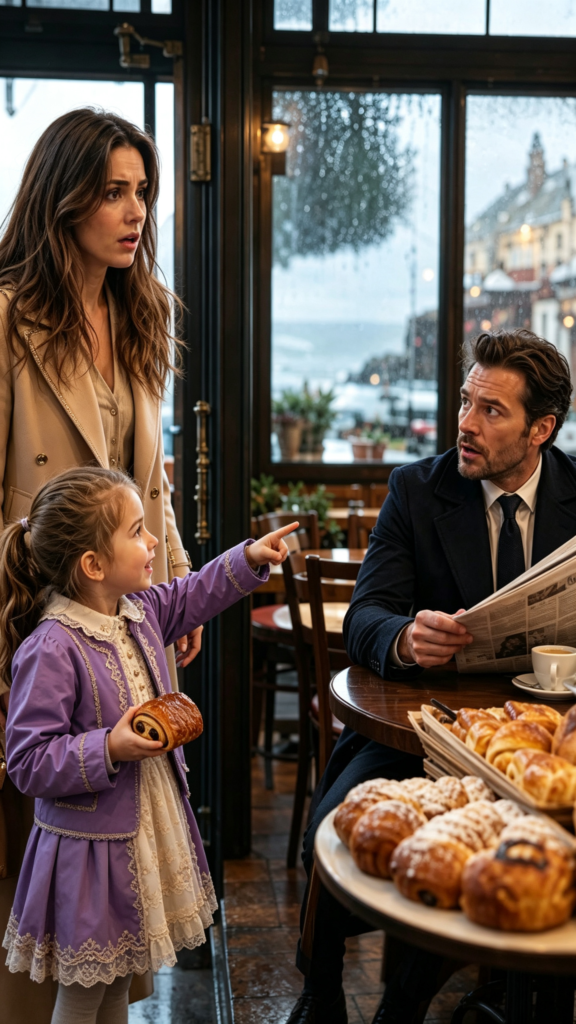
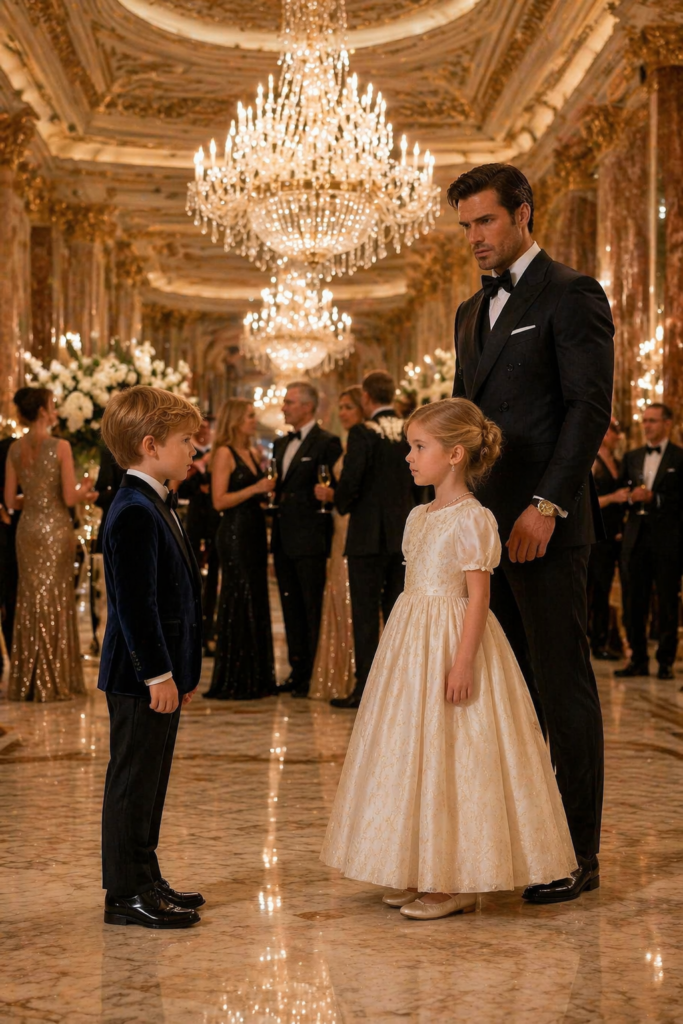
Camila whispered this, just 6 years old, as she clutched her lemonade glass at an elegant gala in Polanco.
The hotel ballroom sparkled as if everything were clean, perfect, and free of secrets. Huge chandeliers, white tablecloths, businessmen with rehearsed smiles, and ladies discussing charity while checking their gold bracelets.
Camila sat near a column, wearing an ivory dress her grandmother had chosen because “a Moncada must always look impeccable.”
But she didn’t want to look impeccable.
She wanted to go home.
Her dad, Rodrigo Moncada, owner of construction companies, private hospitals, and half the world’s influence in Mexico City, was greeting politicians. Her grandmother, Doña Amparo, kept watch from afar, wearing that matronly expression that demanded authority because she believed her last name granted her the right to command.
Camila didn’t have a mom.
Or so they had repeated to her since she could remember.
“Your mom left because she couldn’t live in this family,” Doña Amparo would say.
Rodrigo never spoke ill of that woman, but he never spoke of her at all. He would just fall silent, and to Camila, that silence hurt more than any lie.
Then she saw the boy.
He was on the other side of the ballroom, next to a woman in a simple but pretty dark green dress, the kind of person who doesn’t need to make a noise to be noticed.
The boy wore a gray suit, his tie crooked, and he looked annoyed.
Camila froze.
Same huge brown eyes.
Same eyebrows.
Same tiny nose.
Same serious mouth.
Even the same cowlick in his hair.
The boy saw her too.
He slipped from the woman’s hand and crossed the ballroom, weaving between waiters and glasses, as if something was pulling him.
“Hi,” he said. “I’m Nico.”
Camila swallowed hard.
“I’m Camila.”
Nico looked her up and down, confused.
“Why do you look like my picture when I get mad?”
Camila almost smiled.
“You look like my mirror.”
“How old are you?”
“6.”
Nico’s eyes widened.
“I’m 6 too.”
The two fell silent, breathing as if they had just uncovered something enormous.
“I don’t have a dad,” Nico said.
Camila felt a punch in her chest.
“I don’t have a mom.”
Nico moved closer, lowering his voice as if proposing a secret deal.
“Then let’s trade. My mom can be your mom, and your dad can be my dad.”
Camila smiled for the first time that night.
“Okay.”
A few meters away, an older woman in a nanny’s uniform dropped a napkin. Her name was Petra, and she had worked in the Moncada household since before Camila learned to walk.
Seeing Nico, she turned pale.
Because she knew that face.
Because she had seen two babies born.
And because for five years, she had pretended not to know that a mother had been robbed of half her life.
Three weeks later, Nico entered his new school in Santa Fe.
His mom, Lucía, adjusted his backpack and kissed him on the forehead.
“Behave, my love. No getting into trouble.”
Nico nodded, but when he opened the classroom door, he froze.
Camila was sitting by the window.
In the same uniform.
They smiled at each other as if destiny had played a trick.
During recess, beneath a jacaranda tree, they hatched a plan.
Camila would tell her dad that the principal urgently needed to see him. Nico would tell Lucía the same thing.
“They have to meet,” Camila said. “If they see us together, they’ll understand.”
“What if they get mad?”
“Let them get mad, but they have to tell the truth.”
The next day, Nico took Lucía to the school cafeteria.
“Wasn’t it in the office?” she asked.
“It’s here, Mom.”
Lucía stepped inside.
And the world shattered in her face.
At a table sat Camila.
Her daughter.
And next to her, Rodrigo Moncada.
The man Lucía had fled from five years ago.
Camila looked up, trembling.
Nico looked at Rodrigo.
And asked what left everyone breathless:
“So… are Camila and I really siblings?”
PART 2
No one answered.
The cafeteria smelled of coffee and freshly baked bread, but the air grew so heavy that even the moms at other tables stopped pretending they weren’t listening.
Lucía walked toward Camila with shaky legs. She knelt in front of her and touched her cheek, as if fearing it was a cruel dream.
“Cami…”
The little girl opened her eyes.
No one called her that.
She had only ever heard that name in dreams, in a sweet voice she could never fully remember.
“Are you my mom?” Camila asked.
Lucía couldn’t speak. She hugged her with such desperation that Camila first stiffened, but then wrapped her small arms around her and began to cry silently.
Rodrigo slowly stood up.
He was a man accustomed to having doors opened for him, voices lowered, and words measured. But before Nico, he didn’t seem powerful.
He looked like a man who had just found the missing piece.
He crouched before the boy.
“Hi, champ.”
Nico glared at him with rage and fear.
“Are you my dad?”
Rodrigo swallowed hard.
“Yes.”
Nico clenched his fists.
“And why didn’t you ever come for me?”
That question pierced Rodrigo like a knife.
He didn’t have a clean answer.
There was no pretty way to explain five years of lies, pride, lawyers, and silence.
He just opened his arms.
Nico hesitated but eventually embraced him. Then he cried like he had never cried before, with that child’s sob that finally understands what has been missing does indeed exist.
The principal arrived alarmed, but stayed at the door.
This wasn’t a fight.
It was a broken family finding each other in public.
When the children returned to the classroom, Camila took Nico’s hand.
“Promise you won’t separate us,” she said before leaving.
Lucía looked at Rodrigo.
Rodrigo looked at Lucía.
They couldn’t promise love.
Not yet.
But they could promise not to continue punishing two children for a war they hadn’t started.
“I promise,” Lucía said.
“Me too,” Rodrigo replied.
When they were left alone, the silence hurt more than the screams.
Lucía couldn’t look him in the eye.
Rodrigo seemed to be holding back five years of questions.
“You raised Nico well,” he said.
“Camila is also a lovely girl,” Lucía replied. “Though they treat her like a display doll.”
Rodrigo looked down.
“That’s going to change.”
Lucía let out a bitter laugh.
“Now, really?”
He took a deep breath.
“I thought you left because you wanted to.”
Lucía glared at him with fury.
“I found you in a hotel room with Valeria, Rodrigo. What did you expect me to do? Applaud?”
The name dropped between them like old poison.
Valeria Luján.
Doña Amparo’s perfect friend. The elegant woman who always appeared at dinners, baptisms, charity gatherings, and business trips. The one who called Rodrigo “Rorro” as if she had permission.
The same woman Lucía saw one night in a hotel in Acapulco, wrapped in sheets, while Rodrigo could barely stand and repeated in a lost voice:
“They drugged me, Lucía… please don’t leave.”
She was eight months pregnant.
Then the twins were born.
Nico and Camila.
Lucía wanted to leave the Moncada house with both of them, but that night everything turned chaotic. Private nurses, bodyguards at the door, lawyers, Doña Amparo screaming that she was unstable.
Lucía managed to get Nico out.
Camila had a fever and was in Petra’s arms.
Lucía swore to return for her daughter.
But Rodrigo moved lawyers.
Doña Amparo blocked visits.
Valeria filled the house with rumors.
Lucía changed cities, jobs, and phones.
And fear became routine.
“I never touched Valeria,” Rodrigo said. “They drugged me. The doctor confirmed it, but when I woke up, you were already gone.”
“Your mom told me you bought the doctor.”
“My mom told you what she needed for you to hate me.”
Lucía felt her blood chill.
Doña Amparo had always treated her as “the girl from Xalapa,” the one who didn’t know how to use cutlery, the one who didn’t understand the kind of family she had entered.
“Did your mom know they were twins?” Lucía asked.
Rodrigo didn’t answer immediately.
And that pause was enough.
That day, they agreed to see the children little by little. No more outbursts, no showing up with trucks at the house, no crazy decisions.
But the children were already moving faster than they were.
At recess, Camila shared her crunchy snacks with salsa. Nico taught her how to make paper airplanes. The teacher separated them three times because they wouldn’t stop talking.
At dismissal, Camila waited for Rodrigo.
But a black SUV arrived.
A tall driver got out wearing dark glasses.
“Miss Camila, your grandmother is waiting for you.”
Camila stepped back.
“My dad said he would come.”
“Plans changed.”
Nico stepped in front of her.
“She’s not going with you.”
The driver tried to smile.
“Kid, move aside.”
“She’s my sister.”
Camila clung to Nico’s hand.
The driver grabbed her arm. He didn’t hit her, but he pulled her with that cold adult strength that assumes a child doesn’t matter.
Camila screamed.
Nico ran after the SUV until the gate closed.
When Lucía arrived, she found her son on the sidewalk, shirt dirty, eyes red, and Camila’s paper airplane clutched against his chest.
“Are we leaving, right?” Nico asked.
Lucía didn’t answer.
That night, she packed two suitcases.
Fear returned like an old animal.
She thought about going back to Querétaro, changing schools, disappearing again. It was what she knew how to do. Run before the Moncadas took everything from her.
But Nico didn’t throw a tantrum.
He didn’t scream.
He just lay down hugging the airplane and cried silently.
That’s what broke Lucía.
A child who no longer fights is not at peace.
He’s losing hope.
On the other side of the city, in the Moncada mansion in Las Lomas, Camila was the same.
Doña Amparo tried to distract her with dresses, expensive dolls, and vanilla ice cream.
“That woman only came back for money,” she said. “Your dad is confused.”
Camila looked at her with swollen eyes.
“My mom smells like lavender soap.”
Doña Amparo fell silent.
“And Nico folds airplanes. And he has my face. You can’t take my brother from me.”
Rodrigo arrived that night furious.
“Who authorized picking up Camila?”
Doña Amparo set her cup down on the table.
“I did. Because you’re about to destroy this family for a woman who has already abandoned us.”
“Don’t you ever touch my children again.”
“Your children?” she scoffed. “The girl, yes. The boy, who knows what story they filled his head with.”
Rodrigo looked at her with a new coldness.
“Nico is my son.”
“Then get a paternity test.”
The silence was poisonous.
Rodrigo understood too late.
“You always knew they were twins.”
Doña Amparo averted her gaze.
“I protected the family name.”
“No. You stole a childhood.”
The next day, Lucía was at the North Bus Terminal with Nico. She didn’t want to go to the airport because she knew Rodrigo could track flights. She was going to take a bus to Veracruz.
Nico held his backpack without saying a word.
Lucía stared at the departure screen, repeating to herself that it was the right thing to do.
Then she saw Valeria Luján.
Not in a memory.
Not in a nightmare.
There, just a few meters away, with dark glasses, a small suitcase, and the face of someone who could no longer bear the weight of guilt.
Valeria recognized her.
She approached slowly.
“Lucía, I need to talk to you.”
Lucía placed Nico behind her.
“I have nothing to discuss with the woman who destroyed my home.”
Valeria looked down.
“Yes, you do. Because Rodrigo didn’t betray you.”
Lucía felt the noise of the terminal fade away.
“What did you say?”
Valeria took a deep breath.
“I slipped him medication in his drink. I paid for the hotel room key. I got into bed with him. Doña Amparo called you to get you there just then.”
Nico squeezed his mom’s hand.
Lucía couldn’t breathe.
“Why?”
Valeria began to cry.
“Because I wanted him before you did. Because Amparo told me you were an opportunist. Because I thought if you left, Rodrigo would choose me.”
Lucía slapped her.
Several people turned to look.
Valeria didn’t defend herself.
“I deserve it. But Rodrigo doesn’t. Camila doesn’t. Your son doesn’t either. I’ve already talked to a lawyer. I have messages, audios, and transfers.”
Lucía trembled all over.
Five years hating the wrong man.
Five years believing she had saved Nico when she had also taken his dad from him.
Five years leaving Camila with a family that used her as a trophy.
Nico lifted his face.
“Mom… are we going for Cami?”
Lucía looked at the suitcases.
Then she looked at her son.
“Yes.”
They left the terminal without boarding.
At noon they arrived at the school. Camila was by the gate, serious, with her backpack slung over one shoulder.
When she saw Nico, she ran.
He did too.
They awkwardly embraced, desperately, as if they hadn’t seen each other in years, not just one day.
Lucía knelt before Camila.
“Forgive me, my love.”
Camila looked at her with fear.
“Are you leaving again?”
Lucía shook her head, crying.
“Never again without you.”
The little girl threw herself into her arms.
That afternoon, the four of them gathered in the Moncada house.
Rodrigo entered the dining room and found Nico and Camila sitting together, Lucía standing next to the table, and a cellphone playing Valeria’s confession in front of a lawyer.
There were also messages from Doña Amparo.
“Lucía must see them in bed.”
“If she takes the two babies, we lose control.”
“Let her keep the boy if she wants. The girl stays in this house.”
Rodrigo listened to every word without blinking.
Then he asked for his mother to be called.
Doña Amparo entered elegantly, perfumed, confident she still held power.
But upon seeing the phone on the table, her face changed.
“Rodrigo, son…”
“Don’t call me son.”
Camila hid behind Lucía.
Nico stood next to his sister.
Doña Amparo tried to approach.
“I did what I had to. That woman wasn’t for you. She would have brought the family down.”
Rodrigo raised his hand to stop her.
“That woman was my wife. They were my children. And you decided your last name was worth more than their childhood.”
Doña Amparo cried.
But she didn’t cry out of remorse.
She cried because for the first time, no one rushed to console her.
Rodrigo ordered her to leave the house that very night. He also initiated legal actions against Valeria, the driver, the lawyers who manipulated documents, and those involved in the separation of the twins.
There were no shouts.
That was the hardest part.
Sometimes justice doesn’t sound like revenge.
Sometimes it sounds like a door closing forever.
The months that followed were no fairy tale.
Nico was afraid to sleep away from Lucía.
Camila woke up crying to confirm her mom was still there.
Rodrigo and Lucía had conversations that hurt more than any trial. They talked about pride, fear, abandonment, silence, and how someone else’s poison grows when no one dares to ask the truth.
They didn’t forgive each other in one day.
But they started.
Camila showed Lucía a box full of drawings. There were 31 sheets with a faceless woman. On the last one, she drew Lucía in a green dress and wrote: “My mom came back.”
Nico took Rodrigo to his Father’s Day festival. When the teacher said, “Dads, come forward,” the boy squeezed his hand so tightly that Rodrigo had to look up to the ceiling to keep from crying.
One year later, they didn’t have a big wedding.
No hotel in Polanco.
No press.
No pretentious last names.
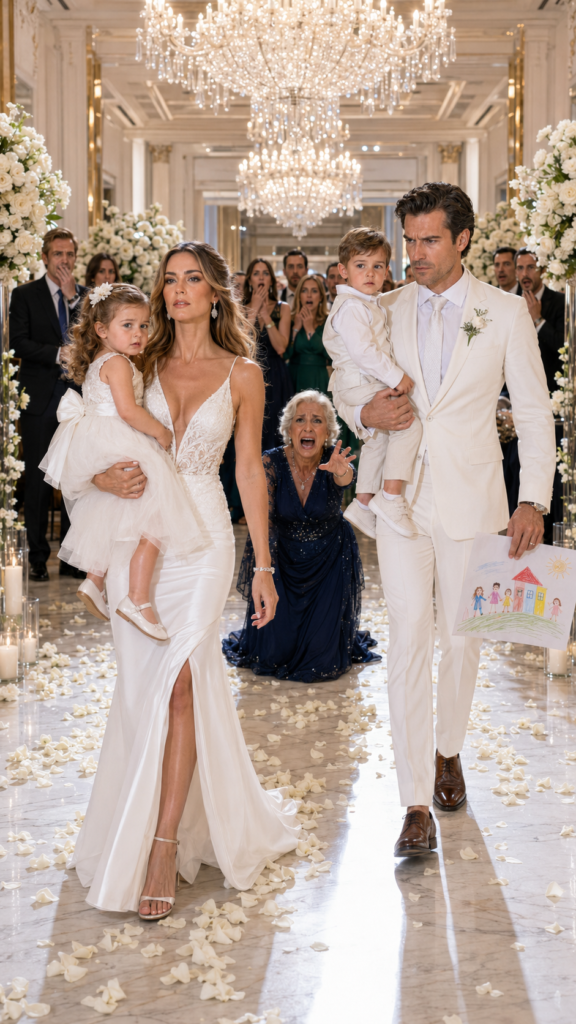
Just a small ceremony in Valle de Bravo, with jacarandas, mole, kids running, and a long table where no one had to pretend.
Lucía wore a simple dress.
Rodrigo didn’t seem like the feared businessman anymore. He looked like a man grateful for a second chance.
Camila walked with flowers.
Nico walked beside her carrying a sign made with blue marker:
“Operation Twins Together: Mission Accomplished.”
Everyone laughed.
Lucía cried.
Rodrigo did too.
When it was time for the vows, Camila and Nico held hands.
This time, no one separated them.
Because some families don’t break due to lack of love, but because of lies sown by others and silences that one allows to grow.
And sometimes adults need two 6-year-olds to look each other in the eye and ask the simplest question in the world to reveal what everyone pretended not to see:
“Why do we look alike?”
That question destroyed a lie.
It returned a daughter to her mother.
It returned a son to his father.
And it reminded everyone that no last name, no fortune, and no meddling mother-in-law is worth more than the childhood of two children who just wanted to be together.