PART 1
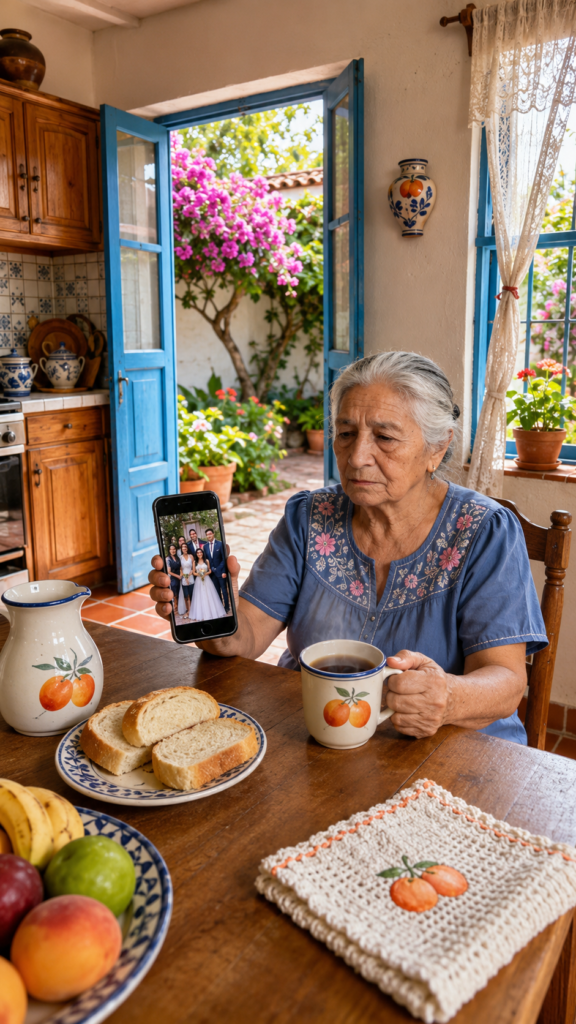
Doña Amparo was 74 years old and lived alone in a simple little house in Tonalá, Jalisco, where every morning she opened Facebook while her pot coffee cooled.
That Monday, she saw something that squeezed her chest.
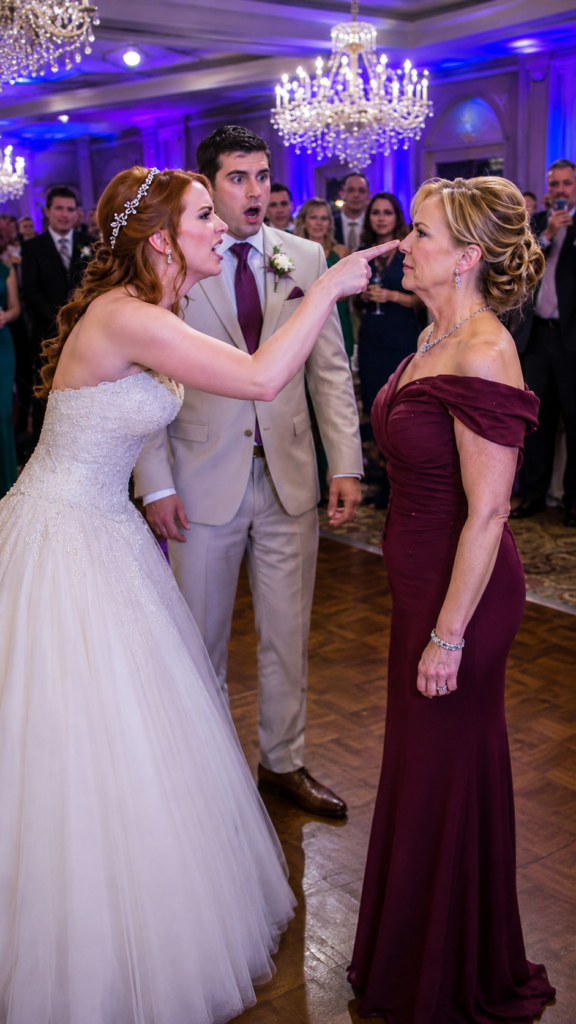
Her granddaughter Renata had gotten married.
There were 40 photos. Renata in white, smiling with her bouquet. The family gathered, hugs, music, tables filled with food, uncles, cousins, neighbors, even people Amparo barely recognized.
But no one notified her.
No one called her.
She was just 40 minutes by bus from the venue.
In one photo, at the front, there was an empty chair with a little white sign. Doña Amparo zoomed in, but her tired eyes couldn’t read it.
She thought maybe it was for someone who couldn’t make it.
She never imagined that chair was for her.
It had been 12 years since the family had split when her son Ernesto divorced Laura, Renata's mother. Doña Amparo, like many Mexican mothers, took her son's side.
“He's my boy,” she would say. “A mother doesn’t abandon her child.”
Renata went to live with her mother and, little by little, stopped visiting her grandmother. Or so Amparo believed.
Ernesto, on the other hand, called every Sunday.
“Have you eaten, Mom? Have you taken your medicine? Don't go out alone; the heat is awful.”
He was the attentive son, the good one, the one who never forgot.
He had also been the one, four years ago, to help her with a monthly transfer to support Renata with college.
“Send it to me, Mom. I’ll get it to her. The girl’s acting weird with you, but she’s still your granddaughter.”
Amparo believed him.
Every month, she sent money to an account Ernesto wrote down on a yellow sheet. She never missed a payment. Even though Renata never thanked her, even though she never called.
Three days after seeing the wedding on Facebook, Ernesto called.
“Did you see the pictures, Mom?”
“Yes,” she replied, swallowing her pride. “Why wasn’t I invited?”
Ernesto sighed.
“It was Renata’s decision. She said she didn’t want any fights. That you no longer belonged there.”
Doña Amparo felt something snap inside her.
The next day, she went to the bank and canceled the transfer.
Then she went to the notary and removed Renata from her will. The porcelain display case from her mother, the little savings of a lifetime, she erased it all.
She didn’t cry.
She told herself it was dignity.
Three weeks later, Renata called with a trembling voice.
“Grandma… did you cancel a transfer?”
“Yes. The one I sent you every month.”
There was a long silence.
“Grandma… I never received any money from you. Not a peso.”
Amparo froze.
Renata continued crying.
“I did invite you. I gave the envelope to my dad. He said you answered that you wouldn’t come even if you were crazy. And still, I saved you a chair, Grandma. Up front. With your name.”
Doña Amparo opened the drawer, pulled out the yellow sheet, and read the account number.
Renata whispered:
“That’s not my account.”
Then Amparo called the bank to ask whose name it was under, and when she heard the answer, she felt the world crash down around her.
“The account is under Ernesto Salgado Morales, ma’am.”
Her own son.
PART 2
Doña Amparo hung up, unable to say thank you.
She stood frozen in the kitchen, the yellow sheet in one hand and the phone in the other. The coffee was still cold, just like the morning when she saw the pictures.
Four years.
Every month, without fail.
Money she sent "for Renata" that actually fell into Ernesto’s account.
Twelve years believing her granddaughter was ungrateful.
Twelve years repeating in the market, at church, and with the neighbors:
“My granddaughter takes after her mother. She doesn’t even remember me.”
And all because of Ernesto’s voice.
The son who called every Sunday.
The son who asked about her medicine.
The son who, in the wedding photos, appeared in a gray suit, glass raised, with a full man’s smile.
Rage overcame pain.
She grabbed her bag, stuffed the yellow sheet inside, put on her black shoes, and took a bus to Ernesto’s apartment in the Oblatos area.
She was ready to confront him.
She was thinking about asking him how he could so easily steal from his own mother and separate a grandmother from her granddaughter.
But when she arrived, no one answered.
She knocked three times. Then banged hard.
A neighbor emerged from the apartment across the hall, a short-haired woman in a floral apron.
“Are you looking for Ernesto?”
“I’m his mother.”
The neighbor changed her expression.
“Oh, dear… I thought you knew.”
Amparo felt a hollow feeling in her stomach.
“Know what?”
The woman lowered her voice.
“Your son hardly comes around. He’s been in and out of the IMSS and this apartment for over a year. Cancer, I think. I’ve seen him lose weight terribly. Sometimes he can hardly walk up the stairs.”
Doña Amparo clutched the railing.
More than a year.
More than a year of Sunday calls.
More than a year of “Have you eaten, Mom?” while he was slowly falling apart.
The rage didn’t leave. It couldn’t.
Ernesto had robbed her. He had lied to her. He had made Renata believe her grandmother despised her.
But now the anger had another edge.
A new question began to ache:
Why didn’t he tell me?
That night, she didn’t sleep.
She sat in her backyard and replayed every call.
She remembered one Sunday when Ernesto sounded hoarse.
“It’s just a cold, Mom. Don’t make a fuss.”
She remembered his birthday when he hardly touched the mole.
“I had a late lunch.”
She even joked with him:
“You’re so thin, son. You look like a clothesline.”
And he laughed.
He had been dying in front of her and she hadn’t seen it.
At dawn, Amparo went to the IMSS.
She found him in a bed, connected to an IV, skin clinging to bone, eyes sunken.
For a moment, she didn’t recognize the man from the wedding.
That wasn’t the Ernesto with the raised glass.
He was a tired child hidden under a sheet.
“Mom…” he murmured. “You shouldn’t have come.”
“You shouldn’t have lied to me.”
Ernesto closed his eyes.
Amparo pulled out the yellow sheet.
“I know about the account. I know the money never reached Renata. I know you told her I didn’t love her. And I also know she did invite me to her wedding.”
He didn’t deny anything.
He didn’t even have the strength.
“Why, Ernesto?” she asked. “If you needed money, you could have asked me. I would have sold whatever. Why destroy us like this?”
Ernesto struggled to breathe.
“Because if you and Renata talked… everything would fall apart.”
“Fall apart? What everything?”
He gestured weakly at his body.
“This.”
Amparo pressed her lips together.
“I’m your mother.”
“That’s why, Mom. Because you’re my mother. I didn’t want you to see me like this. I didn’t want you to carry me. A mother shouldn’t bury her son.”
Amparo’s legs trembled.
Ernesto explained that the insurance didn’t cover certain medications, tests, and transfers. That he felt ashamed to ask. That he thought a small amount each month wouldn’t be missed.
“I was a coward,” he said. “And I was terrible to Renata. That has no forgiveness.”
Amparo felt the urge to hug him and to hit him at the same time.
“You took 12 years of being a grandmother away from your daughter.”
“I know.”
“You made her believe I despised her.”
“I know, Mom.”
“And you made me hate a girl who was still waiting for me.”
Ernesto cried silently.
“The wedding was the worst,” he whispered. “Renata gave me your invitation. I kept it. I told her you wouldn’t come because if you walked into the hall, I wouldn’t be able to hold myself together.”
“Hold together for what?”
He looked at the ceiling.
“To stand tall. To smile. To pretend I was still strong. I wanted Renata to have a nice photo with me. The last one. If you arrived and looked me in the eyes, the act would fall apart, Mom. I would cry like a child.”
Amparo remembered the photo: Ernesto in a gray suit, glass raised, firm smile.
It wasn’t pride.
It was goodbye.
It wasn’t a man celebrating.
It was a dying father gathering his last strength for his daughter to remember him whole.
Amparo couldn’t respond. She leaned over, kissed his cold forehead, and stepped into the hallway.
There, sitting among plastic chairs, gelatin vendors, and families waiting for news, she cried for the first time.
She cried for Renata.
She cried for Ernesto.
She cried for herself, for having been so easily deceived and so quick to punish.
But she still had pride.
That old, stubborn, very Mexican pride that sometimes one confuses with dignity.
She went home thinking:
“He lied to me. He lied to the girl. He robbed me.”
At 2 a.m., she bolted upright.
She understood something simple and brutal: she might wake up the next day, but Ernesto might not.
She called Renata.
The girl answered, scared.
“Grandma?”
“Sweetheart, your dad is very sick. He’s dying. He lied to us both so we wouldn’t see him like this. Come to the IMSS in the morning. I’ll be waiting for you at the door, like I should have always been.”
On the other end, there was only a sob.
At 7 a.m., grandmother and granddaughter met outside the hospital.
They didn’t hug as family at first.
They embraced like two strangers who had suffered from the same lie.
Renata cried with fury.
“I thought you hated me.”
“And I thought you had erased me, my girl.”
“I put your name on the chair.”
“I know.”
They went up together.
But Ernesto had died at 5:30 in the morning.
They missed him by an hour and a half.
An hour and a half to forgive.
An hour and a half to speak the truth out loud.
An hour and a half for Ernesto to see his mother and daughter holding hands.
The nurse handed them a transparent bag with his belongings: wallet, watch, phone, and the gray jacket from the wedding.
Renata hugged it to her chest and broke down.
“This was the one he wore that day.”
Amparo reached into the inner pocket.
She found a sealed envelope.
On the front, in careful, rounded handwriting, it read:
“For my grandmother Amparo.”
It was the invitation.
The invitation Renata had given to Ernesto.
The invitation he never delivered.
The one he didn’t throw away.
The one he kept close to his heart until his last day.
On the back, in trembling handwriting, Ernesto had written a single phrase:
“If I see her walk through that door, I won’t be able to stand.”
Amparo couldn’t take it anymore.
She collapsed over the gray jacket and cried as one cries when there’s no one left to blame.
Renata hugged her.
They didn’t forgive each other all at once. That would be a lie.
Pain isn’t fixed with a pretty phrase.
But from that day, they began to rebuild.
Doña Amparo returned to the notary and reinstated Renata in the will. Not out of guilt, but because she understood the girl had never truly left.
She also went back to the bank, even though that account could no longer fix anything.
The canceled transfer, the one she cut out of anger, had been part of the money Ernesto used for his treatments. And that weight, Amparo carried in silence.
Not because she was guilty of his death.
But because love, when it arrives late, still hurts.
Renata began visiting her every Sunday, at the same hour Ernesto used to call.
She brought sweet bread, flowers, or simply her presence.
Sometimes they talked about him.
Sometimes they didn’t.
In the kitchen, Doña Amparo kept the sealed envelope in the napkin drawer.
She never opened it.
She said it wasn’t necessary.
On the front was her name, written by the granddaughter who waited for her in an empty chair.
On the back was the confession of the son who pushed her away to avoid crumbling in front of her.
And inside was an invitation to a day that would never return.
Every Sunday, before Renata knocked on the door, Amparo would take out the envelope, run her finger over her name, and whisper:
“Yes, I’ll go, my girl. Forgive me for being late.”
Then she would put it away again.
And the coffee, like that morning when she saw the wedding on Facebook, would cool in her hand once more.
Because there are empty chairs that are never filled.
And there are lies born wanting to protect, but they end up destroying what they love the most.