PART 1
At 10:03 that morning, Julieta Navarro signed the final document of her divorce in an office in the Roma neighborhood of Mexico City.
She didn’t cry.
Nor did she claim the 12 years she had devoted to a man who had treated her for months as if she were an old piece of furniture.
Before her, Mauricio Cárdenas could barely hide his smile.
As soon as he signed, he pulled out his cell phone and called Pamela, the woman he had left Julieta and their two children for.
"It’s done, my love," he said, not bothering to lower his voice. "I’m heading straight to the clinic. Today, we’ll finally see the baby clearly. My mom, my dad, and Roxana are already there."
Julieta stood frozen.
Mauricio hung up and adjusted his jacket as if he had just closed the deal of a lifetime.
"The Polanco apartment stays with me," he declared. "So does the truck. You can take the kids. Honestly, with Pamela pregnant, I need to start fresh."
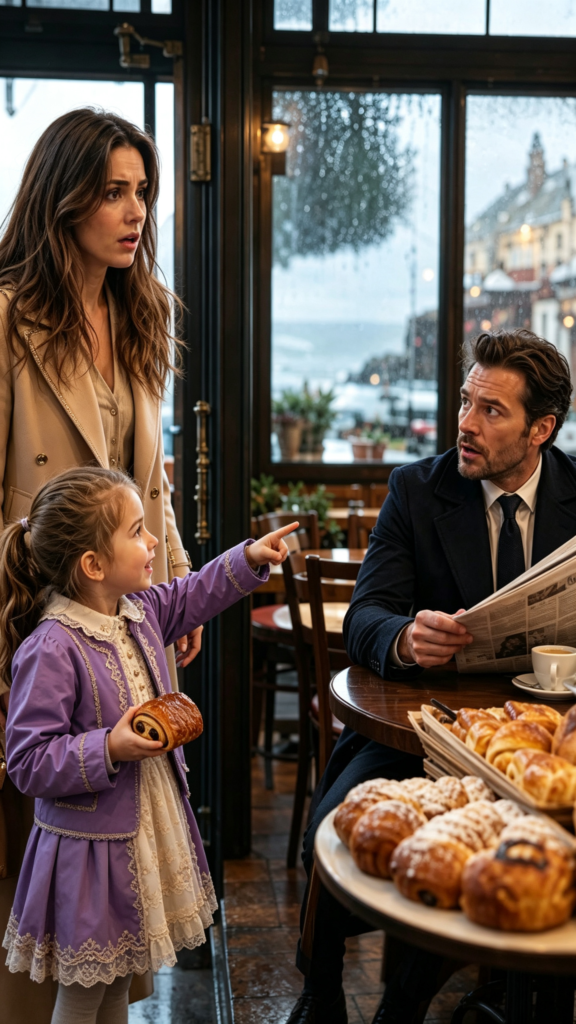
Mateo, 9, squeezed his sister Sofía’s hand, 7.
They had heard every word from their little chair by the door.
Roxana, Mauricio’s sister, let out a little laugh.
"Don’t make a scene, Julieta. My brother deserves a woman who truly admires him and can give him a child to proudly carry the Cárdenas surname."
That statement hit harder than any insult.
Mauricio had raised Mateo and Sofía since they were born. They were his legal children, carried his last name, and still called him Dad.
But now, he spoke of them as if they were excess baggage.
Julieta pulled the apartment keys from her bag and slid them across the table.
"Keep it," she said with a calm that made the lawyer nervous. "What was never really yours always ends up returning to its true owner."
Mauricio frowned.
"Another one of your weird phrases?"
She didn’t respond.
Taking her children by the hand, she left the building.
On the sidewalk waited a black Mercedes GLS. A suited chauffeur immediately stepped down and opened the door.
"Mrs. Navarro, your father requested we take you to the airport. The plane is ready to depart for Guadalajara."
Mauricio heard from the entrance.
His triumphant expression vanished.
"Your father? What plane? Since when do you have money for this?"
Julieta only looked at Mateo and Sofía.
"Before I met you," she murmured.
As the vehicle pulled away, Mauricio felt for the first time that perhaps he had signed something without truly understanding it.
Yet, the excitement for Pamela prevailed.
An hour later, he entered a private clinic in Santa Fe, where his family had brought flowers, blue balloons, and even a little America jersey with the last name Cárdenas.
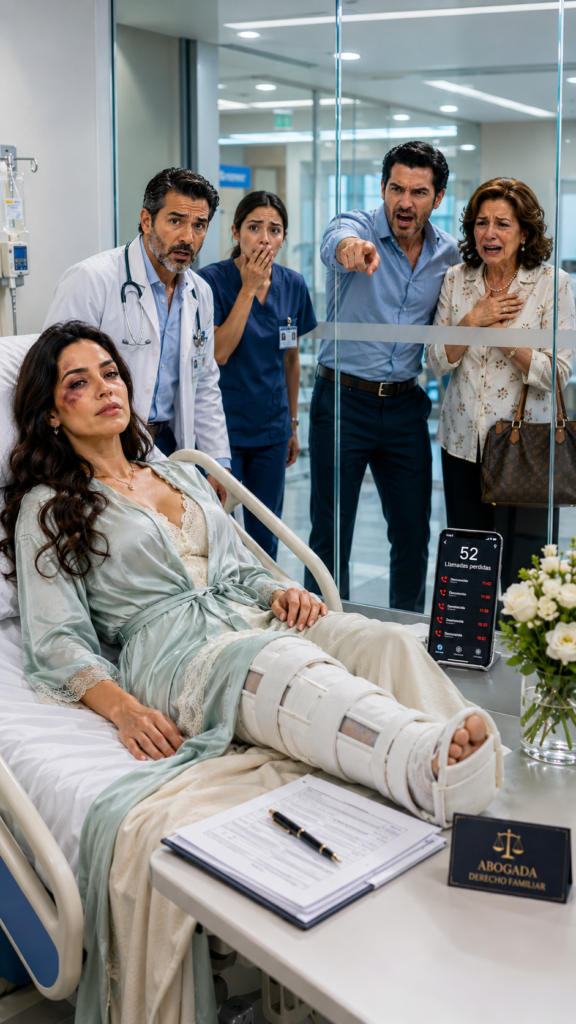
Pamela smiled, reclining on the examination table.
Doctor Salgado began the ultrasound.
He moved the transducer, observed the screen, and checked the file twice.
Then he asked the nurse to close the door.
"Doctor, don’t scare us," said Mauricio’s mother. "Is my grandson okay?"
The doctor set the device aside.
He looked at Pamela, then at Mauricio, and finally at the envelope with the results of the prenatal genetic study.
"The baby is healthy," he said. "But there are two things this family needs to know today."
Pamela turned pale.
"The first is that the pregnancy is not 18 weeks, but almost 29."
Mauricio stopped breathing.
The doctor opened the envelope.
"And the second… is that you cannot be the father."
PART 2
For several seconds, no one spoke a word.
The blue balloons continued to sway absurdly cheerfully next to the air conditioning as Mauricio stared at the doctor as if he had just insulted him.
"Check again," he ordered. "That result is wrong."
Doctor Salgado kept his voice steady.
"The test was repeated in two laboratories. The baby’s genetic profile does not match yours. Moreover, the file you authorized to consult shows azoospermia for the past 13 years."
Mauricio’s mother placed a hand on her chest.
"Azoospermia? What does that mean?"
Mauricio looked down.
He knew.
At 24, after a poorly treated infection, several specialists had confirmed that he could not father biological children.
When he married Julieta, they both underwent assisted reproduction with a donor. Mateo and Sofía were born that way, with Mauricio’s legal consent and a promise he repeated before Julieta:
"I will be their father every day of my life."
For 12 years, Julieta protected his secret.
She endured the Cárdenas family insinuating that she was "the defective one," because Mauricio begged her never to reveal the truth.
And that very morning, he had dismissed the two children to boast about a child that could never be his.
"So those kids aren’t Mauricio’s either," Roxana blurted out, horrified.
"They are legally his children," the doctor replied. "Biology does not cancel a paternity accepted and exercised for years."
"Julieta deceived us!" the mother screamed.
"No," Mauricio admitted, nearly voiceless. "She didn’t deceive anyone. I asked her to keep quiet."
The room changed completely.
The woman they had blamed for years had protected the dignity of the man who had just abandoned her.
Pamela began to cry, but not out of shame.
She looked toward the door, searching for an exit.
"I didn’t know about your problem," she said. "You swore those kids weren’t yours because Julieta had betrayed you."
Mauricio approached the exam table.
"Who is the father?"
"It doesn’t matter."
"Of course it matters!"
At that moment, Emiliano, Mauricio’s younger brother, dropped the keys he held in his hand.
Everyone turned.
His face was white.
Pamela closed her eyes.
The mother understood before anyone else.
"No… not you, Emiliano."
He swallowed hard.
"Pamela and I dated for almost a year. We broke up when she started working at the company. Seven months ago, we were together again, but then she blocked me."
Mauricio lunged at him.
Their father and two nurses had to separate them.
"You stole my son!"
Emiliano pushed him back in anger.
"He’s not your son, dude! And Pamela left me when you told her you owned Casa Navarro, the apartment, and everything else."
Pamela shouted that was a lie, but Emiliano pulled out his phone.
He had saved messages in which she asked how much money Mauricio would inherit, if the penthouse was in his name, and when he planned to divorce.
In another message, sent after discovering the pregnancy, Pamela had written:
"If Mauricio thinks it’s his, my baby will have a secure life."
Mauricio’s mother ripped the balloons from the wall.
His father left without looking at him, and Roxana remained seated, unable to defend anyone.
Then Mauricio’s phone rang.
It was the manager of the Polanco building.
"Mr. Cárdenas, we need you to remove your belongings by 6:00 PM. The owner revoked your occupancy permit today."
"What owner? The apartment is mine."
"The deed has belonged to the Navarro Trust for 16 years. You only had a right of use while you were married to Mrs. Julieta Navarro."
Mauricio felt the ground disappear.
He hung up and called the company’s accountant.
He got no answer.
Then he tried to access corporate banking.
Access denied.
His corporate email had been deactivated, and the truck he thought he had won in the divorce was registered in the name of Casa Navarro.
Roxana received another message.
The additional card she used to pay for restaurants, bags, and trips had also been canceled.
"What did you do?" she yelled at Mauricio. "You left us with nothing!"
The answer came from the television in the waiting room.
A financial channel broadcasted a brief interview recorded that morning in Guadalajara.
On the screen appeared Don Ernesto Navarro, founder of Casa Navarro, a tequila and export company that the Cárdenas family always believed was controlled by Mauricio.
Next to him was Julieta.
She no longer wore the gray divorce dress, but a white suit and the same serenity with which she had handed over the keys.
The banner read:
"Julieta Navarro assumes the presidency of the family group."
The reporter explained that she had owned 72% of the shares since before marrying and had avoided public life while raising her children.
Mauricio had never been an owner.
He only held the position of operational director by Julieta’s decision.
She had convinced her father to give him a chance when he was a debt-ridden salesman barely able to afford rent.
The office, the apartment, and the cars were merely perks of his position.
Mauricio left the waiting room and called Julieta 11 times.
She answered on the twelfth.
"Tell me."
"Why did you do this to me?"
Julieta was watching from a private room at the Guadalajara airport as Mateo and Sofía ate tortas ahogadas with their grandfather.
"You signed the divorce. The agreement states that each retains their assets prior to marriage and waives any claim to participation in family businesses. Your lawyer read it."
Mauricio remembered that he had barely glanced at the pages.
He was in a hurry to get to the ultrasound.
"But you told me the apartment could stay with me."
"I gave you some keys. I never handed over a deed."
"We can fix this. Pamela deceived me. The baby isn’t mine."
"That doesn’t change what you told Mateo and Sofía."
The silence on the other end was harsher than any scream.
"I was confused," he murmured. "Let me talk to them."
Julieta didn’t decide for the kids.
She put the phone on speaker and asked if they wanted to hear their father.
Sofía hid her face in her grandfather’s shoulder.
Mateo stared at the screen for a few seconds.
"He said we didn’t fit into his new life," he whispered. "We don’t want to be a burden either."
Julieta ended the call.
Mauricio sat in the clinic hallway, the phone in his hands.
For the first time, he didn’t have a lover waiting for him, a wife solving his problems, or two children running to hug him.
But the fall was just beginning.
That afternoon, auditors from Casa Navarro found transfers of 3,800,000 pesos made to a supposed advertising agency called P&M Strategies.
The company had no employees, and the account belonged to a friend of Pamela.
The messages showed that Mauricio authorized false payments to fund the apartment, a truck, and the baby’s party.
Roxana had also used corporate resources for personal expenses and had signed three fake invoices.
Julieta had known part of the fraud for weeks.
She waited to protect the workers, secure the servers, and prevent Mauricio from hiding the money.
She also needed him to sign, without pressure or excuses, the clause that ended all his powers within the group.
At 10:03, with that signature, he had closed the door himself.
Casa Navarro filed a complaint for fraudulent administration.
Pamela tried to blame Mauricio.
Mauricio blamed Pamela.
Roxana insisted she only signed what her brother asked.
None could explain why the money ended up paying for luxuries they all enjoyed.
Emiliano requested a formal paternity test after the birth.
The result confirmed he was the father.
He didn’t go back to Pamela, but he recognized the girl and obtained an agreement to be involved in her upbringing.
The baby bore no guilt for the lies of the adults.
Six months later, Mauricio and Roxana were charged with a process. To avoid a greater sentence, they returned what they could, sold personal properties, and agreed to repair part of the damage.
Pamela lost the rented apartment funded by the company and returned to live with an aunt in Ecatepec.
The Cárdenas family stopped discussing surnames, heirs, and women "up to par."
The truth had taught them, in the worst way, that pride without honesty is just well-dressed misery.
In Guadalajara, Julieta reorganized the company and opened a daycare for the children of distillery workers.
Mateo began therapy.
Sofía went back to sleeping without asking if her dad would also abandon his dreams.
Julieta never forbade them from seeing Mauricio.
She only established that any meeting must occur with professional accompaniment until he proved he wanted to be a father out of love and not out of fear of being alone.
Mauricio sent letters, gifts, and audio messages for months.
The children accepted some letters.
The gifts were returned.
One afternoon, almost a year later, Mateo asked his mother if forgiving meant allowing everything to go back to the way it was.
Julieta explained that forgiveness could free the heart, but it didn’t obligate anyone to open again a door someone had destroyed.
Mauricio had believed that divorce handed him a house, a car, and a new family.
In reality, his signature only revealed what had always been his: his decisions and the consequences of each.
And it also left a question that divided everyone who knew the story:
Does a man who renounces his children at the moment he believes he has something "better" deserve a second chance as a father, or are there words that even remorse cannot erase?