PART 1
"Don't make a scene, Valeria. By Monday, this house will be in Rodrigo's name."
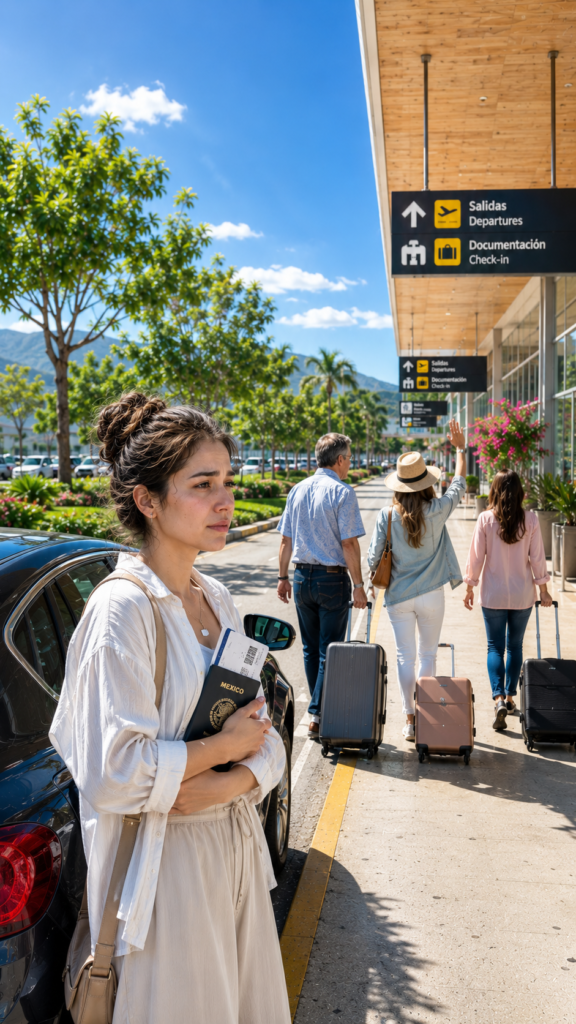
That was the first thing Valeria Lira heard when she opened the back gate of her house in Coyoacán, dragging a black suitcase and carrying a bag with a three-milk cake that was falling apart in the heat.
She had returned two days early from her trip to Monterrey. Her plan was simple: arrive as a surprise, prepare a quiet dinner, and maybe reconcile with Rodrigo after weeks of awkwardness, dropped calls, and explanations that always sounded like lies.
But as she stepped into the side hallway, she froze.
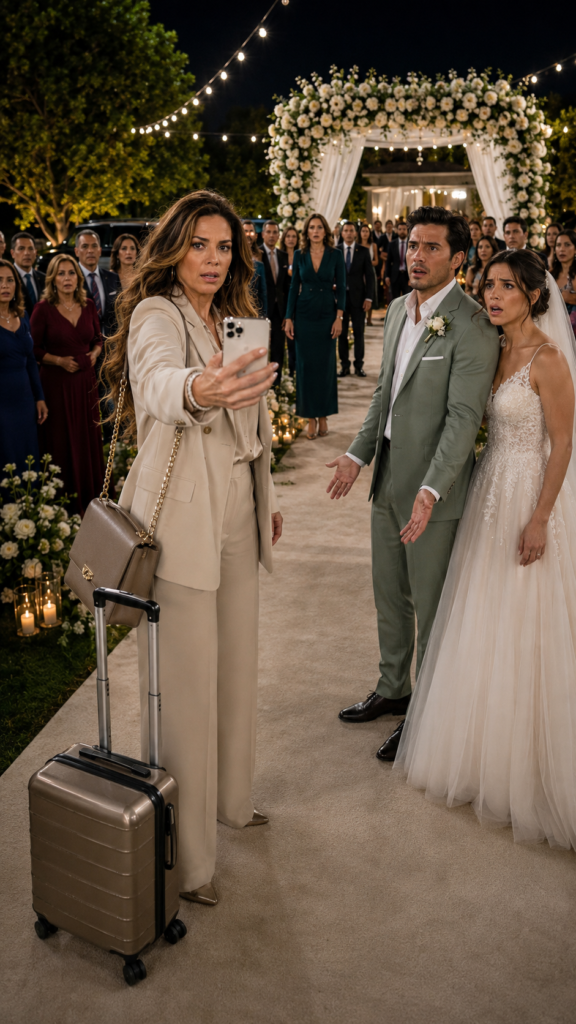
Her garden looked like something out of a wedding magazine.
There were lights hanging from the jacaranda tree, round tables adorned with white tablecloths, gleaming glasses, ivory rose arrangements, and a string quartet tuning up near the fountain. On the terrace, a feast was laid out with trays of almond mole, poblano cream, canapés, and expensive bottles.
Everything was set up in her house.
With her money.
And under the floral arch stood Rodrigo.
He was holding hands with Camila, Valeria's best friend since college.
Camila wore a fitted white satin dress, a light veil over her hair, and a smile that didn’t seem embarrassed. In her ears sparkled the pearl earrings that belonged to Valeria's grandmother, the same ones Camila had borrowed six months earlier, claiming she needed them for "an important dinner."
Valeria didn’t scream.
She couldn’t.
The air snagged in her chest.
Rodrigo’s mother, Doña Amparo, lowered her champagne glass and looked at Valeria as if she were a waitress who had walked in by mistake.
"Valeria," she said with a venomous calm. "You weren’t supposed to come back until Sunday."
Rodrigo turned pale.
Camila did not.
Camila tightened her grip on Rodrigo's hand and lifted her chin.
"It made no sense to hide it anymore," she said. "Rodrigo and I deserve to be happy."
The guests began to murmur. Almost all were Rodrigo's family, his father's business partners, and friends with heavy surnames. People who had smiled at Valeria over the years while treating her like a wallet in heels: useful for paying, signing, organizing, and staying silent.
Valeria stared at the terrace.
The cake had golden initials: R and C.
The florist had used the roses she had set aside for their anniversary.
The sound system was connected to her home phone.
The dinnerware was her grandmother's.
Then she saw a small table next to the arch.
On top was a beige folder, a gold pen, and several documents with color tabs. On the first sheet, she could make out:
Transfer of property rights.
Valeria lifted her gaze.
"What is that?"
Rodrigo's father, Don Horacio Salcedo, stepped forward in his gray suit and his face of a man used to buying silence.
"Don't complicate things, girl. Rodrigo has invested years here. You have no children, no family depending on you. This house must go to someone who knows how to manage it."
"This house belonged to my grandmother," Valeria said.
"Belonged," corrected Doña Amparo. "Things change."
Rodrigo took a step toward her.
"Vale, please. Don’t humiliate yourself."
Valeria felt something inside her break silently.
She had cried over Rodrigo in bathrooms, parking lots, and through sleepless nights. She had listened to Camila tell her, "Girl, you're seriously exaggerating," while she surely tried on that dress.
But that night, there were no doubts.
Valeria pulled out her cell phone.
Rodrigo frowned.
"Who are you going to call?"
She smiled slightly, her eyes dry.
"Good thing. No one knows what I did before I walked in."
Don Horacio pointed to two security men.
"Get her out. This is a private event."
Valeria didn’t lower her phone.
"Not in my house."
At that moment, from the other side of the gate, the screech of several tires on gravel echoed.
Conversations died.
Rodrigo turned.
Camila drained of color.
And Valeria said, staring at the folder on the table:
"They arrived just before you signed the last page."
PART 2
The first person to cross the gate wasn’t a police officer.
It was Abril Serrano, Valeria's lawyer, with a black briefcase in one hand and an old deed in the other. She came serious, impeccable, with that calmness of someone who doesn't arrive to ask but to close a door.
Behind her entered two financial investigators and a patrol car from the Mexico City Prosecutor's Office.
The quartet stopped playing.
The civil judge standing by the arch took three steps back, as if the ground had suddenly turned to mud.
Rodrigo tried to smile.
"Vale, my love, this is getting out of control. We can talk inside."
Abril positioned herself next to Valeria.
"Of course you can talk. But first, we can discuss the forged signature, the attempted mortgage loan, the halted transfer of eight million pesos, and the medical request to declare her mentally incapacitated."
A murmur spread through the garden.
Doña Amparo clutched her designer bag to her chest.
"That's slander."
The lead agent, with the last name Ríos, showed an ID.
"Not when there are emails, bank accesses, documents sent from Mr. Rodrigo Salcedo's computer, and a scheduled medical appointment with a prepared diagnosis before examining Mrs. Lira."
Rodrigo looked at Valeria with a mix of fear and rage.
"You set a trap for me."
"No," she replied. "I paid attention to you. There’s a huge difference."
For months, Rodrigo had repeated that his consulting firm was in crisis. He told her she needed to sell assets, cut expenses, trust him more, let him review her accounts because "that's what couples do."
But Valeria wasn’t broke.
On the contrary.
She had closed a private investment for 42 million pesos to expand her wealth advisory firm. She hadn’t told Rodrigo because, for the first time in four years, her intuition told her to keep silent.
Rodrigo found a draft of the agreement on Valeria’s desk.
And decided that money should be his.
Camila, who worked as a legal assistant in a Polanco firm, obtained templates, copied old signatures, and prepared documents to move assets to a shell company. Doña Amparo contacted a doctor willing to declare that Valeria suffered from "paranoia episodes." Don Horacio spoke with a banking executive to expedite a loan using the house as collateral.
Everything was planned for Monday.
The wedding wasn’t just a betrayal.
It was a pre-party for theft.
Abril took the beige folder that was next to the arch and reviewed the first sheet. Then she let out a dry laugh.
"How curious."
Don Horacio raised his voice.
"That document is already signed. Rodrigo has rights to the property."
Abril raised her gaze.
"This document intends to transfer a property of Grupo Lira Consultores."
"Exactly," Camila said, trying to regain control. "The house belongs to the company."
Valeria looked at her as one looks at someone who no longer deserves an explanation, yet will still receive it.
Abril smiled.
"No. The house never belonged to Grupo Lira Consultores."
The silence fell heavy.
Valeria took a deep breath.
"The house belongs to my grandmother's family trust," she said. "Rodrigo could forge a hundred signatures and still couldn’t touch it."
Camila turned to Rodrigo.
"You told me you reviewed it."
Rodrigo clenched his teeth.
"Shut up, Camila."
That "shut up" broke the mask completely.
Camila was no longer the brave bride choosing love. She was a discovered accomplice, standing atop an expensive dress, realizing she had been used too.
Agent Ríos took the folder.
"The transfer of eight million was blocked this morning due to a banking alert. Mrs. Lira did not call the bank to claim. She called her lawyer and then us."
Doña Amparo took a step toward Valeria, no longer smiling.
"Daughter, you know Rodrigo loves you. Men make mistakes. That woman tangled him up."
Camila let out a bitter laugh.
"Me? Ma'am, you were the one who said Valeria was a poor lonely woman, without children, without character, and that’s why she would sign crying."
Several heads turned toward Doña Amparo.
Camila's mother, sitting in the second row, covered her mouth with her hand.
Guests began to rise. One of Don Horacio’s partners put away his phone. An aunt murmured that she knew nothing, that she had only come out of obligation. The caterer tried to disappear behind a tray of stuffed chiles.
Rodrigo grabbed Valeria's arm.
"Enough. Tell them to leave."
An agent immediately restrained him.
"Don’t touch her."
Valeria looked at him.
That same man had slept by her side, had kissed her forehead, had talked about children, trips to Oaxaca, a house with dogs and barbecue Sundays. And there he was, holding her as if he could still command her silence.
Camila seized the movement to walk toward the gate.
Valeria raised her phone.
"Don’t leave, Cami."
Camila stopped.
Valeria tapped the screen, and the garden's sound system lit up with a crack.
"We still have the vows left."
First, there was a dry sound.
Then came Rodrigo's voice, clear, relaxed, mocking.
"When the money comes in, I’m marrying Camila. Valeria will be in Monterrey; she won’t find out until it’s too late."
Then came Camila's laughter.
"And what if she comes back early? You know she gets her intense attacks sometimes."
Doña Amparo's voice entered like a knife.
"That’s why Dr. Méndez is here. No one will believe a hysterical woman saying her house was stolen on the day of a wedding."
No one spoke.
The garden lights continued to shine, but they no longer seemed elegant. They felt like interrogation lamps.
Valeria looked at Rodrigo.
For four years, she had loved that face. She had defended his delays, his lies, his late-night meetings, and his silences. She had listened to Camila console her with loyal friend phrases while stabbing her with the other hand.
The recording continued.
Camila said:
"I’m keeping the pearl earrings. After all, she doesn’t even bother to look good."
Rodrigo replied:
"Keep whatever you want. After signing, everything she owns will go through me."
Then Don Horacio’s voice appeared.
"The loan must go through before Monday. If the girl suspects, pressure her emotionally. Tell her that a single woman can’t handle such a fortune."
An older woman crossed herself.
Camila's father stood up, red with embarrassment.
"Camila… tell me that’s not you."
Camila said nothing.
The final audio was the most cruel.
Rodrigo, chuckling softly, said:
"Valeria is useful, but she’s not a wife. A wife isn’t the one who builds; she’s the one who sparkles next to you. Camila understands her place."
Valeria felt something inside her close.
It wasn’t rage.
It was a door.
A heavy, definitive door.
She turned off the sound.
Agent Ríos approached Rodrigo.
"Rodrigo Salcedo, you are being arrested for suspected forgery of documents, identity theft, attempted fraud, and criminal association."
Doña Amparo screamed.
"You can’t take him! He’s not a criminal!"
Abril looked at her coldly.
"Your voice appears in five audios and your name in two emails. I’d lower the volume if I were you."
Another agent approached Camila.
She stepped back, stepping on the edge of her white dress.
"Valeria, please. We’re friends."
Valeria almost laughed, but it didn’t come out.
"No. You were the place I went to cry while you stole my life."
Camila raised her hand toward the earrings.
"I’ll give them back. I swear, I’ll give them back right now."
"They are no longer a favor," Valeria said. "They are evidence."
The agent asked her to remove them.
Camila complied with clumsy fingers. The pearls fell into a transparent bag, small and luminous, as if Valeria's grandmother had also waited for this moment to come home.
Rodrigo, handcuffed, looked at her.
"You’ll regret this. No one humiliates my family like this."
Valeria moved close enough for only him to hear.
"You all threw a wedding in my garden while trying to steal my name, my house, and my business. Humiliation is the cheapest part of what you all will pay."
Don Horacio’s partners left first.
By midnight, his construction company already had an internal audit opened. By Tuesday, three irregular loans linked to public projects appeared. By Friday, two contracts were suspended and Don Horacio stopped answering important calls.
The man who felt untouchable became news in less than a week.
Doña Amparo called Valeria seventeen times.
First, she cried.
Then, she insulted.
Afterward, she begged.
Valeria did not answer.
Camila was fired from the firm before Monday ended. The lawyer who had allowed her access to private templates was under investigation. Her parents refused to pay for her defense when they discovered she had also used their information to request personal loans.
Rodrigo denied everything for months.
He said it was a misunderstanding, that the audio was edited, that Valeria was vengeful. But the emails, digital accesses, bank records, and deleted messages showed no mercy.
In the end, he accepted a plea deal.
He received prison time, restitution, and a sentence he wouldn’t be able to hide even with all his family’s surnames.
Camila cooperated and received less time, but lost her career, her friendships, and the image of the fine girl she had built with borrowed clothes and expensive lies.
The Salcedos sold their house in Lomas to cover lawyers, fines, and debts.
Valeria kept hers.
That night, when they took everyone away, the garden was filled with empty chairs, expensive flowers, and half-drunk glasses. The catering workers didn’t know whether to collect or apologize.
Valeria paid them double.
"It wasn’t your fault," she told them.
Then she entered the guest room.
On the bed was Camila's suitcase, open, with makeup, white shoes, and a silk robe embroidered with the word "bride."
Valeria didn’t break anything.
She didn’t scream.
She didn’t burn the dress.
She took photographs, made an inventory, and delivered everything to Abril.
That night, she understood that real revenge doesn’t always make a scene.
Sometimes it sounds like a lock changing.
Like a frozen account.
Like an email sent on time.
Like the silence of a woman who no longer needs to ask for explanations.
A year later, the same garden was filled with lights again.
But this time there was no false wedding.
There was a fundraising dinner for women trying to rebuild their lives after economic violence. Under the jacaranda, lawyers, accountants, psychologists, businesswomen, and women who had come with fear but also with the desire to start over, sat.
On each plate was a card that read:
"No one has the right to call you exaggerated when you are defending what you built."
Valeria wore a simple ivory dress and her grandmother's pearl earrings.
The rose arch was still there, rebuilt with new flowers.
It no longer looked like a stolen scene.
It looked like an entrance.
Abril lifted her glass.
"To coming back early."
Some women laughed. Others applauded with moist eyes.
Valeria looked toward the gate, the same one she had entered dragging a suitcase and leaving a lie behind.
She no longer felt shame.
She no longer wondered how she hadn’t seen it before.
She understood something many women learn too late: trusting isn’t being stupid, loving isn’t being weak, and discovering the truth doesn’t destroy you when you choose not to kneel before it.
Valeria lifted her glass.
"To the exact moment," she said.
The garden shone in silence.
And for the first time in a long time, the house felt completely hers again.