PART 1
—Your grandma already forked over the $30,000, Daniel. Seriously, do you still want us to drag her around Europe?
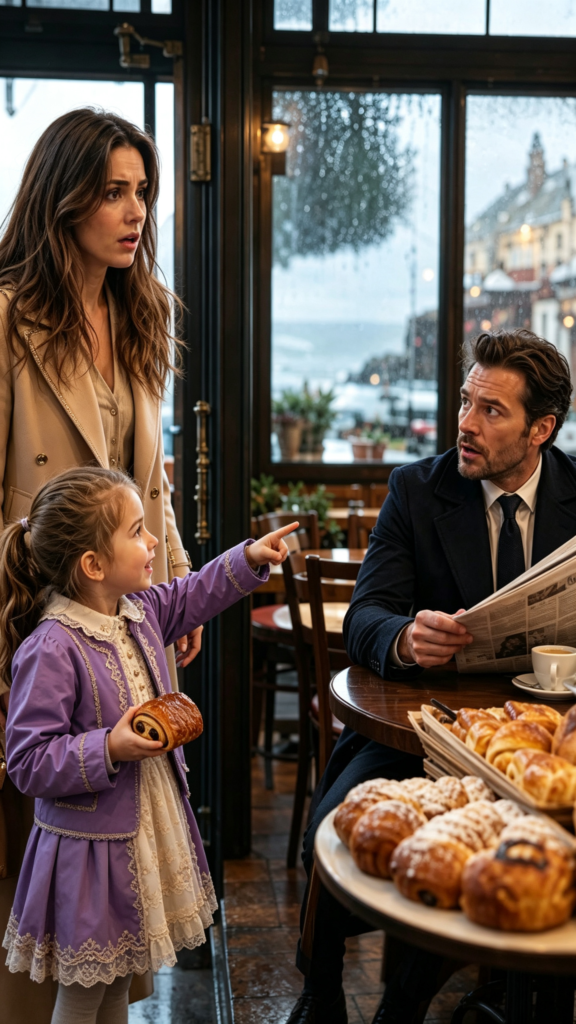
Daniel Mendoza heard those words from the hallway and froze, his backpack hanging from one shoulder.
At 18, living in Cholula and fresh out of high school, success, travel, business, and looking good were the only topics of conversation in his family. His father, Raúl, owned a small construction company. His mother, Verónica, sold homes in upscale neighborhoods in Puebla. His aunt Sandra boasted that her husband had connections in Querétaro.
But the one person who never boasted was Doña Carmen, Daniel’s grandmother.
Carmen was 74, living in a little house in Atlixco, with yellow walls, pots of basil, rose bushes in old buckets, and a kitchen that always had beans, coffee from a pot, and warm tortillas.
She had raised Raúl and Sandra alone since her husband left “for work” and never came back. She had been a nurse, sold tamales, cared for the sick at night, and even washed other people’s clothes so her children could study.
When Raúl started making money, he stopped visiting her.
When Sandra married a wealthy man, she began to speak to her like she was doing her a favor.
Daniel, on the other hand, still went. He spent vacations with her, accompanied her to the market, fixed her phone, and let her hug him as if he were still 8 years old.
So when they announced the family trip to Europe, Daniel was genuinely excited.
—Madrid, Paris, Rome, and London — Raúl said during a meal —. Three weeks. We’re all going.
—All? — Daniel asked.
Verónica smiled a little too quickly.
—Of course. Your grandma too. It’s her turn to see the world.
Doña Carmen nearly cried when they told her.
—Oh, my boy, I don’t even have a passport.
—We’ll help you, Mom — Raúl said, taking her hand with a tenderness Daniel had never seen.
For days, everyone was kind to her. Sandra brought her fancy bread. Verónica called her “little mother.” Raúl visited her two Sundays in a row.
Doña Carmen ended up transferring $30,000 from her savings, saying she wanted to treat the whole family before she died.
—It’s so we can be together — she said —. Money can be recovered, family cannot.
Daniel wanted to believe his parents were finally changing.
Until he overheard the conversation.
—With what my mom gave us, we can switch to better hotels — Raúl said.
—And her? — Verónica asked.
Sandra let out a dry laugh.
—Oh, please. Can you imagine a 74-year-old lady walking around Rome? She’ll ruin our photos.
—At the airport, we’ll say her ticket is missing — Raúl replied —. That it was the agency’s mistake. Once we’re there, she won’t make a scene.
Daniel felt blood rush to his face.
He pushed the door open.
The three fell silent.
—Are you really going to leave my grandma here after taking her money?
Raúl stood up, furious.
—Stay out of grown-up matters.
Daniel looked at his father as if he were seeing him for the first time.
That night, he couldn’t sleep.
The next day, Doña Carmen sent him a picture of a pair of white sneakers.
“Do you think these will work for walking in Paris, my boy?”
Daniel squeezed his phone until his hand hurt.
Because he understood that his family wasn’t planning a trip.
They were preparing a betrayal.
PART 2
On the day of the flight, they arrived at the Mexico City International Airport while it was still dark.
Doña Carmen got out of the van with her red suitcase, her blue sweater folded over her arm, and a little bag of medicines organized with rubber bands. Her hair was carefully styled, and she wore fake pearl earrings that Daniel had given her in middle school.
—Do I look too country? — she asked nervously.
Daniel smiled, even though inside, his chest was knotted.
—You look great, Grandma. Like a movie lady.
She chuckled softly.
Raúl, Verónica, Sandra, Uncle Gerardo, and the cousins walked ahead, dragging huge suitcases. They talked about restaurants, shopping, photos in Paris, and not wasting time on “old people’s stuff.”
Nobody helped Carmen.
Daniel took her red suitcase.
At the counter, Doña Carmen began looking for her documents.
—Raúl, honey, do you have my ticket?
Raúl pretended to check his phone.
—We’ll see right now, Mom.
The airline employee asked for passports. She went through the names one by one. Daniel saw his father lean in, speak softly, frown, and then return with a rehearsed expression.
—There was a problem.
Doña Carmen blinked.
—What problem?
—Your reservation isn’t confirmed.
—But I paid, son.
Sandra sighed, as if she were being bothered.
—Mom, maybe it’s a sign. Europe is tough. Lots of walking.
Gerardo added:
—Besides, with your blood pressure, it’s better not to risk it.
Doña Carmen looked at Raúl.
—Tell me the truth. Did you buy my ticket?
Nobody answered.
The silence was crueler than any scream.
Daniel stepped forward.
—He didn’t buy it, Grandma.
Verónica yanked him by the arm.
—Shut up, Daniel.
—No. They stole her money.
Raúl stepped closer, teeth clenched.
—You’re crossing the line.
—You crossed the line the moment you used her as an ATM.
Doña Carmen didn’t cry. That hurt more. She only gripped her purse with both hands, staring at the shiny airport floor as if she wanted to disappear.
—I thought you wanted to go with me — she whispered.
Sandra looked at the screen.
—Boarding is about to close.
Daniel dropped his own suitcase.
—I’m staying.
Doña Carmen lifted her face, frightened.
—No, my boy. You go. Don’t miss the trip for me.
—I’m not getting on a plane with people who abandon their mother like she’s old luggage.
Raúl pointed at him.
—If you do that, forget about me paying for your university.
Daniel took a deep breath.
—Then I’ll pay for it myself.
Verónica looked offended.
—What an ungrateful son you turned out to be.
Daniel looked at his grandmother.
—Ungrateful? You’re the ungrateful ones.
The flight was announced for the last time.
One by one, they walked toward security.
Sandra gave Carmen a dry kiss on the forehead.
—We’ll sort this out later, Mom. Don’t make a scene.
Nobody apologized.
Nobody looked back.
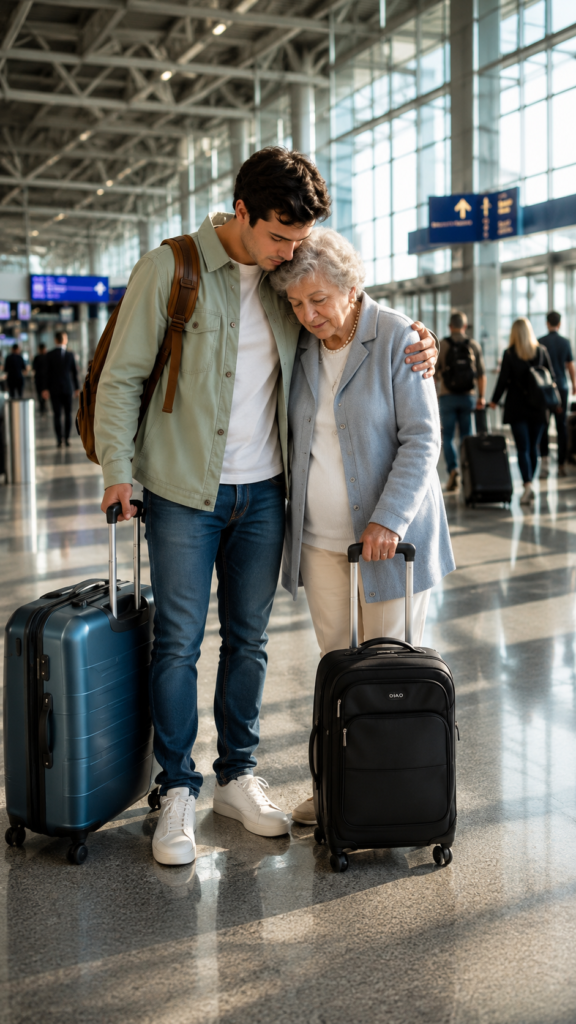
Daniel and Carmen stood in the middle of the airport, surrounded by families hugging before traveling.
Carmen looked at the door where her children had disappeared.
—Was it because I’m old?
Daniel felt something break inside him.
—It’s because they have no mother, Grandma. Even though you’re still alive.
On the way back to Atlixco, Doña Carmen barely said anything. She just stared at her white sneakers, new, clean, useless.
That night, Daniel found her sitting in the kitchen with a cup of cold coffee.
—I don’t want to report them — she said —. They’re my children.
—And you’re their mother. That doesn’t give them the right to break you.
The next day, Daniel sought legal advice. He went to the Institute for the Care of Older Persons in Puebla and then to a lawyer named Lucía Castañeda.
Lucía listened to everything without interrupting. She asked for bank statements, messages, screenshots, proof of the transfer, and the name of the airport employee.
—This isn’t a family dispute — the lawyer said —. This could be financial abuse against an older adult.
Carmen looked down.
—I gave them the money because I trusted them.
Lucía replied softly:
—And they used that trust to deceive you.
Daniel thought the case would be difficult until the first twist came.
The airline employee agreed to testify. She confirmed that there was never a ticket in the name of Carmen Mendoza. Neither canceled, nor lost, nor misspelled.
Nothing.
But something worse was missing.
While checking Carmen’s old phone, Daniel found deleted messages that had been stored in the cloud. Sandra had written to Raúl a week before:
“After the trip, we have to convince her to sell the house in Atlixco. If she already gave us $30,000, she can let that go too. After all, Daniel is going to college and she doesn’t need that much on her own.”
Daniel felt disgusted.
They didn’t just want to travel with her money.
They wanted to leave her without a home.
Three weeks later, the family returned from Europe sun-kissed, laden with bags, and smiling as if nothing had happened.
Raúl was recounting how “impressive” Rome was. Sandra wore new sunglasses. Verónica was posting stories from the airport.
But their smiles faded as they exited.
Daniel was there.
At his side, Doña Carmen held her red suitcase.
And next to them stood Lucía Castañeda with two legal notifications.
Raúl went pale.
—What is this?
Daniel looked at him without flinching.
—My grandmother didn’t want to report you.
He paused.
—I did.
Sandra let out a nervous laugh.
—Don’t be ridiculous. This is something that can be settled in the family.
Lucía stepped forward.
—That’s precisely why we’re here. Because you used the word family to cover up a fraud.
Verónica tried to hug Carmen.
—Oh, little mother, it was all a misunderstanding.
Carmen stepped back.
That small step was stronger than a slap.
—Don’t call me little mother when you left me alone.
The case went to court in Puebla.
Raúl argued that the money had been a voluntary contribution. Sandra insisted that Carmen was no longer fit to travel. Verónica cried, but only when she heard the word refund.
Then Lucía presented the messages, the $30,000 transfer, the audios where they promised to take her, and the airline’s testimony.
The judge listened in silence.
Then he asked:
—If the lady wasn’t going to travel, why did you accept money for a trip where you promised to include her?
Raúl didn’t know how to respond.
And then the second blow came.
Gerardo, Sandra’s husband, trying to save himself, handed over screenshots of another chat. In that chat, Raúl and Sandra discussed selling Carmen’s house and splitting the money “before Daniel got involved.”
Sandra screamed that her husband was a traitor.
Gerardo replied:
—You’re the traitors. I’m just tired of paying lawyers for your trash.
Doña Carmen closed her eyes.
She didn’t cry.
She just aged ten years in ten seconds.
The verdict ordered Raúl, Verónica, Sandra, and Gerardo to return the $30,000, cover legal expenses, and sign restrictions to not manage Carmen’s accounts, property, or financial decisions.
There were no applause.
No happy ending like in the movies.
Carmen left the courtroom leaning on Daniel.
—We won, right? — she asked.
Daniel swallowed hard.
—Yes, Grandma.
She looked at the gray sky of Puebla.
—How sad that winning against your children feels like losing them all over again.
After that, life changed.
Daniel moved to Atlixco and started medical school on a scholarship. He worked weekends in a pharmacy and studied late at the table where Carmen used to make tortillas.
She got her money back, but she never waited for calls again.
She didn’t curse her children.
She didn’t air their dirty laundry on Facebook.
She didn’t seek revenge.
She simply stopped saving them food.
That was her limit.
On Tuesdays, she began painting classes at the Cultural House. At first, she painted crooked flowers and hills that looked like burnt bread.
—Look at this, my boy, my volcanoes look like squashed bolillos.
Daniel laughed.
Months later, she painted a red suitcase next to an airport bench.
Daniel hated that painting.
Carmen hung it in the living room.
—I didn’t paint it out of sadness — she told him —. I painted it because that’s where you chose me.
Years passed.
Daniel became a doctor. Every achievement, he first brought to her: the white coat, the shifts, the patients, the all-nighters. Carmen kept everything in a cookie box: photos, credentials, notes, and even an empty prescription he had signed as a joke.
—For when I get sick from pride — he’d say.
But one winter, a cough that wouldn’t go away came.
Then came tests, specialists, and serious looks.
Advanced cancer.
Daniel wanted to fight against everything. Carmen, however, chose to spend her last months at home, among bougainvilleas, coffee from a pot, low ballads, and neighbors who came in with soup.
One night, she took his hand.
—Don’t carry my story like a stone.
Daniel cried.
—I don’t know how not to hate them.
—Then don’t hate them for me — she whispered —. Just don’t become like them.
The day Daniel received his medical degree, she couldn’t go to Puebla anymore. He drove straight to Atlixco in his cap and gown.
He entered the room.
—Grandma, I’m a doctor now.
Carmen opened her eyes with effort.
—My doctor — she barely said.
She died that night, peacefully, with one hand near the painting of the red suitcase.
At the funeral, there were retired nurses, neighbors, former patients, market children, and ladies who still remembered her gentle injections.
Raúl didn’t go.
Verónica didn’t go.
Sandra didn’t go either.
Daniel wasn’t surprised.
Years later, in his office, he hung a painting of bougainvilleas in front of a yellow house. When patients asked who made it, he answered:
—A woman who had ungrateful children but never lost her heart.
Sometimes, when passing by a travel agency, Daniel thought of Paris, Rome, Madrid, and London.
He thought of the white sneakers his grandmother never wore in Europe.
But he also remembered something bigger.
That she didn’t need a famous tower to leave a mark.
Her true greatness lay in a kitchen smelling of coffee, in a red suitcase left in front of a counter, and in the dignity of not becoming cruel even though cruelty ran in her blood.
Because family isn’t always who shares your last name.
Family is who stays when staying costs.
And that day, while everyone rushed toward a plane bought with deceit, Daniel took his grandmother’s suitcase and chose not to abandon her.
That’s where the most important journey of the two began.
One that didn’t need a passport.
Only love.