PART 1
—What are you doing standing there? Get to the kitchen, the family is here and everyone is hungry.
That was the first thing Mariana Robles heard when she opened the door to her own house on a Friday at 8:47 PM, after eleven hours working at a marketing agency in Polanco.
She stood frozen at the entrance, her laptop hanging from her shoulder, makeup smeared from exhaustion, and keys still clutched in her fingers.
Her house smelled of carnitas, beer, cheap perfume, and spilled salsa on the floor.
In the garden, three trucks were parked on the freshly manicured lawn. In the living room, the band blared at full volume. Several kids were running down the hallway, and someone had placed a cooler next to the bookshelf her father had handcrafted.
Mariana blinked, believing she had made a mistake and was at the wrong house.
But no.
It was her house.
The house in the Del Valle neighborhood that her parents had gifted her when she turned thirty, not as a luxury, but as protection.
Her mother had said it tearfully that day:
—Honey, a woman with her own roof doesn’t have to endure humiliation out of fear of ending up on the street.
There were two months left until her wedding with Óscar. Mariana thought he was calm, hardworking, and from a close-knit family. So when three weeks before the wedding he asked for a copy of the key, she didn’t suspect.
—It’s for any emergency, love —he told her—. We’re getting married soon. This will also be our home.
Mariana thought giving him that key was a sign of trust.
She didn’t know she had just handed over the entrance to a trap.
On the gray couch, she found Óscar’s uncle with his shoes on the table. A cousin was charging her phone with Mariana’s cable. In the kitchen, a woman rummaged through her drawers as if she were in her own apartment.
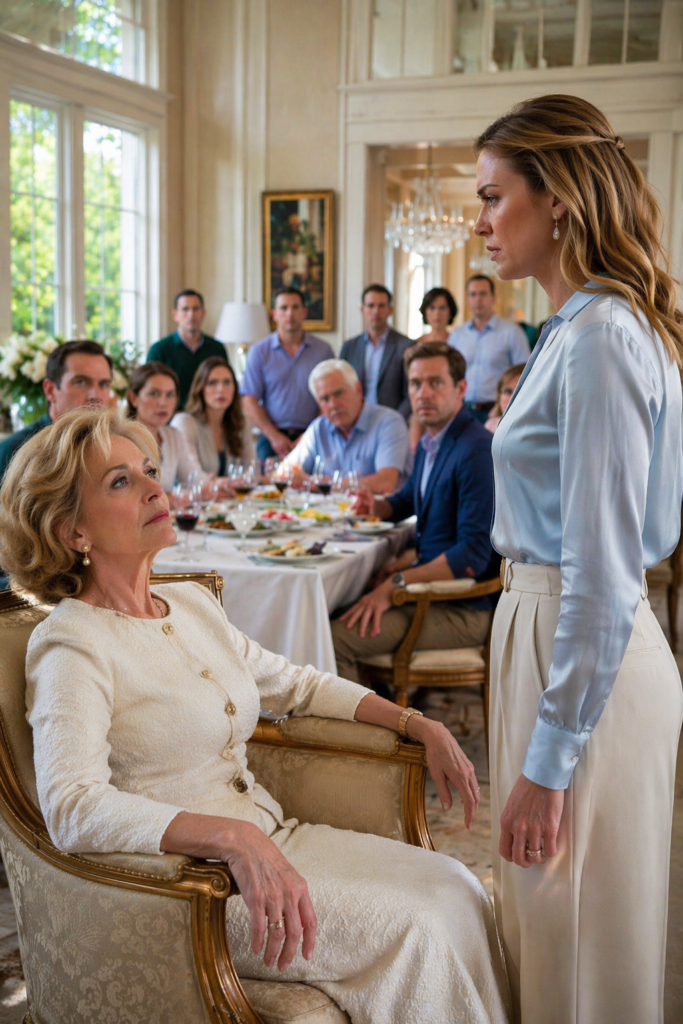
And in her favorite chair, wearing a red blouse, gold earrings, and a look of ownership, was Doña Irma, Óscar’s mother.
Doña Irma looked her up and down.
—Come on, Mariana. Don’t stand there like a statue. Heat up some tortillas and start prepping more beans. Your future husband’s family doesn’t take care of themselves.
Mariana felt her throat tighten.
She searched for Óscar with her eyes.
He was by the window, drinking beer, staring at his phone as if this were the most normal thing in the world.
—Óscar —she said, trying not to tremble—. What’s going on here?
He barely lifted his gaze.
—My family came to hang out. Please don’t create drama.
An aunt let out a giggle.
—Oh, what a nice house Óscar got, right? You scored big, sweetie. Many would wish to marry someone like that.
Mariana tightened her purse strap.
—This house isn’t Óscar’s. This house is mine.
The noise dropped abruptly.
Doña Irma let out a dry laugh.
—Oh, dear, you’re getting married soon. Don’t start with those empowered single woman ideas. When one gets married, everything is shared.
—Sharing doesn’t mean coming in unannounced.
Óscar stepped closer, annoyed.
—Mariana, really, don’t start this in front of everyone.
From the stairs, a male voice shouted:
—The upstairs room is perfect for us when we come on weekends!
Another woman replied:
—My mom says the one across will be for my son when he stays to study in the city.
Mariana slowly raised her gaze.
They weren’t visiting.
They were claiming rooms.
She ascended the stairs without saying anything, her heart pounding against her ribs. In the guest room, there were two open suitcases, folded clothes on the bed, and a bag with shoes. In her study, someone had placed a blanket and a backpack on her desk.
Then she heard Doña Irma’s voice below, low but crystal clear:
—She’ll stop being so haughty when she understands we’re all going to live here.
Mariana froze.
And in that second, she understood they hadn’t just entered her house.
They had entered convinced they could take over her life.
PART 2
Mariana slowly descended the stairs.
She didn’t scream.
She didn’t cry.
That calmness was what unsettled Óscar the most, because he knew her well enough to understand that when Mariana went silent, something broke inside.
In the living room, no one moved like a guest.
A cousin opened a beer using the edge of the table. A niece was eating chips on the carpet. An aunt was looking through family photos Mariana had on a shelf, murmuring that after the wedding they’d need to change them for pictures of “the new family.”
Doña Irma raised her voice again from the kitchen.
—Mariana, we’re missing plates. Where do you keep the good dishes?
—No one is touching them —Mariana replied.
The sentence fell like a bucket of cold water.
Doña Irma came out with a cloth in hand, feigning surprise.
—Excuse me?
—I said no one will touch my dishes. And I also said everyone has to leave my house.
A heavy silence filled the room.
Óscar set the beer down on the table.
—Mariana, enough. You’re making a fool of yourself.
—A fool? —she asked—. I came home from work and found your family settled in my house, using my things, occupying my rooms, and ordering me to cook.
—It’s my family.
—And this is my house.
Doña Irma crossed her arms.
—You have a terrible attitude, honey. A woman who enters a family must learn to serve, not to set conditions.
Mariana looked at her without blinking.
—I’m not entering a family to become a servant.
An aunt clicked her tongue.
—No wonder many women end up alone. They think too highly of themselves just because they have a house.
Mariana took a deep breath.
—Better alone than married to someone who allows this.
Óscar quickly approached and grabbed her arm.
It wasn’t a hit, but it was pressure. A warning.
—Come with me —he whispered—. Don’t humiliate me in front of everyone.
Mariana looked at his hand on her arm.
—Let me go.
Óscar obeyed, though with his jaw clenched. He led her down the hall, away from the others, but not far enough that his mother couldn’t hear.
—You’re exaggerating —he said quietly—. My mom just wanted to organize a gathering. It’s Mother’s Day this weekend and she wanted to bring everyone together.
—With suitcases?
He didn’t answer.
—With people picking out rooms?
Óscar looked toward the living room.
—They’re just comments; don’t be so intense.
—With a new lock?
He opened his eyes.
Mariana pointed to the front door.
Above the original lock was a shiny silver deadbolt, newly installed. She had seen it upon entering, but her mind hadn’t wanted to process it until that moment.
—Who put that there? —she asked.
Doña Irma appeared in the hallway before Óscar could respond.
—I had it put in. For security.
Mariana felt her stomach twist.
—You changed the lock on my house without my permission?
—Don’t exaggerate. We didn’t change the whole thing; we just reinforced it. With so many people coming and going, one never knows.
—There shouldn’t be that many people coming and going here.
Doña Irma smiled coldly.
—Well, you’d better get used to it, because after the wedding, this house is going to be the meeting point. Óscar is the oldest. He has responsibilities to his family.
Mariana turned to him.
—Did you know?
Óscar swallowed hard.
—My mom told me it was better to put another deadbolt. I didn’t think it would bother you so much.
Mariana let out a brief, dry laugh, devoid of joy.
—you changed the security of my house and thought I wouldn’t mind.
—I didn’t do it to hurt you.
—You did it without asking me.
That was all it took.
But Doña Irma wasn’t finished yet.
She fixed her hair, lifted her chin, and spoke as if giving a family order, not confessing an abuse.
—Look, Mariana, let’s be clear. You work a lot; you’re hardly ever home. This house needs management. After the wedding, it would be best if Óscar handled the paperwork and the big expenses.
—What paperwork?
Óscar closed his eyes.
Doña Irma continued.
—The deeds, dear. You can’t enter marriage with everything in your name. It looks really bad. It seems you don’t trust your husband.
Mariana felt a horrible chill in her back.
—You want me to transfer my house to Óscar’s name?
—to the family name, to avoid problems.
—The family?
—Óscar and I can guide you. There are notaries who can do these transfers quickly. Plus, if one day a credit needs to be requested, it’s easier if he signs.
There the truth began to peek through.
It wasn’t just invasion.
It wasn’t just a bossy mother-in-law.
It was a plan.
Mariana looked at Óscar, hoping, for one last time, that he would say something decent.
That he would laugh and say his mother was crazy.
That he would apologize.
That he would take her side.
But Óscar merely murmured:
—We could review it after the wedding. Don’t shut yourself off.
Something broke inside Mariana.
There was no noise.
It didn’t show.
But it shattered.
At that moment, her phone vibrated inside her bag. It was a message from an unknown number.
“I’m Rubén, Irma’s brother. Don’t trust them. Óscar owes over 900,000 pesos. Your house is the plan.”
Mariana read the message twice.
Then she lifted her gaze.
Óscar was pale.
Doña Irma saw it too.
—Who wrote to you? —she asked, too quickly.
Mariana put her phone away.
—Someone with more shame than you.
Doña Irma stepped toward her.
—Watch how you speak. You still don’t know what it’s like to be part of this family.
—and thank God I can still decide not to join.
The living room went silent again.
Óscar opened his mouth.
—Don’t say stupid things.
Mariana walked to the table, took her bag, and pulled out a black folder she always kept in the entrance cabinet. Inside were copies of her deeds, IDs, and property tax receipts.
Óscar looked at her in fear.
—What are you going to do?
—Defend my house.
Doña Irma let out a nervous laugh.
—Oh, please. Are you going to pull out papers to humiliate the family?
—No. I’m going to call the police.
Then there were indeed screams.
A cousin said she was crazy. An uncle stood up indignantly. The aunt with the dishes shouted that no decent daughter-in-law calls the authorities over a family gathering.
Mariana dialed without looking away.
She gave her name, her address, and explained that unauthorized people were inside her property, with suitcases installed and a lock changed without permission.
Óscar tried to take the phone from her.
Mariana stepped back.
—Don’t you dare.
He stopped.
Maybe out of fear.
Maybe because for the first time he understood she was no longer asking for permission.
Doña Irma exploded.
—Ungrateful! My son was going to give you a family!
—Your son was going to take my house.
The phrase left everyone frozen.
Doña Irma pressed her lips together.
—No one was going to take anything from you. We just needed order.
—You needed my property.
Óscar ran his hand over his face.
—Mariana, we can talk about this. Yes, I have debts. Yes, my mom got involved. But I was going to fix it.
—with my house?
—with a temporary credit. Nothing more.
—And that’s why you brought suitcases? That’s why you changed the lock? That’s why your mother sent me to the kitchen?
He didn’t answer.
No need.
When the police arrived, the music immediately stopped.
The kids stopped running. The uncles lowered their voices. The aunts who moments ago thought they owned the living room began picking up bags as if suddenly everything was a misunderstanding.
An officer asked to speak with the owner.
Mariana handed over her identification and the documents.
The officer reviewed the papers calmly.
—The property is under the name of Mariana Robles Gaitán —he said aloud—. Did she authorize you to remain here?
No one answered.
Doña Irma lifted her chin.
—My son is going to marry her.
The officer didn’t blink.
—That doesn’t give anyone the right to enter, settle in, modify locks, or allocate rooms in someone else’s property.
Mariana felt that finally, someone was putting order amidst so much manipulation.
—You are requested to leave immediately —the officer said—. If the owner wishes to proceed for damages or trespassing, she can do so at the Public Ministry.
The word “trespassing” fell like a stone.
The uncle with his shoes on the table became serious. The cousin who occupied the room started folding clothes quickly. The aunt who said Mariana should serve didn’t look at her again.
One by one, they began to leave.
The trucks roared to life in the garden. Someone loaded the cooler. Someone forgot a bag of sweet bread. The kids asked why they were leaving when the party had just begun.
Doña Irma was the last.
Before crossing the door, she turned to Mariana with eyes full of rage.
—You’re going to regret this. No one wants a wife who humiliates her husband’s mother.
Mariana didn’t look down.
—And no one should marry a man who lets his mother humiliate his future wife in her own home.
Doña Irma wanted to respond, but couldn’t find the words.
She just left, slamming the door shut.
Óscar remained in the living room.
The house was a mess. There was salsa on the floor, dirty dishes, napkins thrown about, shoe marks on the rug, and two cushions stained with beer.
But still, Mariana felt better.
It was her mess.
Not a taken territory.
The officer recommended changing the locks again and filing a report. Mariana nodded.
When the officers left, Óscar tried to approach.
—I’m sorry.
Mariana looked at him as one looks at someone no longer in the same place as before.
—Don’t apologize for the party. Apologize for the plan.
He broke down.
He sat on the couch, sinking his elbows into his knees.
—I owe money —he confessed—. It started with credit cards. Then loans. Then gambling. I wanted to recover by investing in a business with a friend, and it went worse. My mom signed as a guarantor on two loans.
—How much?
Óscar swallowed hard.
—About 1,200,000 pesos.
Mariana closed her eyes.
The number didn’t hurt as much as the intention.
—and you thought you’d marry me without telling me?
—I thought I’d resolve it before.
—Lies.
He raised his face, desperate.
—I didn’t want to lose you.
—No. You wanted to tie me down before I knew the truth.
Óscar began to cry.
Mariana had never seen him like that. For nearly three years, he had been the attentive boyfriend, the one who brought her coffee at work, the one who said he admired her independence, the one who promised he would never make her feel alone.
But that night she understood there are men who admire a woman’s independence until they discover they cannot control her.
—My mom said if the house remained as family property, we could mortgage part of it and pay everything —he murmured—. Then I would compensate you.
—Compensate? —Mariana repeated—. How does someone compensate for using you as a lifebuoy without telling you the ship is already sinking?
Óscar wiped his face.
—we can get through this. The wedding doesn’t have to be canceled. It was a foolish mistake, yes, but I love you.
Mariana looked around.
She looked at the almost abandoned suitcases.
She looked at the new deadbolt.
She looked at her invaded house.
And she remembered her mother’s words.
A woman with her own roof doesn’t have to bow her head out of fear.
—The wedding is canceled —she said.
Óscar jumped up.
—Mariana, please.
—I also want you to return the original key. And tomorrow I’m filing a report for the lock and damages.
—Are you going to report me?
—I’m going to protect myself.
—After all we lived…
—After all you planned.
He fell silent.
This time, his silence wasn’t cowardice.
It was defeat.
Óscar pulled the key from his keychain and placed it on the table. Before leaving, he glanced at the wedding invitations still in a box beside the bookshelf.
—Not everything was a lie —he said.
Mariana felt a knot in her throat, but she didn’t allow herself to crumble.
—Maybe not. But what was a lie is enough to destroy everything else.
Óscar left without saying another word.
When the door closed, the silence was immense.
Not empty.
Immense.
As if the house also breathed after having contained humiliation for hours.
That night, Mariana called her parents. Her mom arrived in pajamas and sneakers, with her hair tied up and eyes full of worry. Her dad walked in behind her, saw the mess, and didn’t ask anything.
He just hugged his daughter.
At first, Mariana didn’t cry for Óscar.
She cried for the version of herself that almost stayed silent to avoid seeming rude.
She cried for confusing peace with enduring.
She cried for all the women told that “this is how family is,” when in reality, they are being pushed to disappear within a house they also want to take from them.
In the following weeks, she canceled the venue, the dress, the banquet, and the honeymoon. Some acquaintances said she was exaggerating. Others opined that in Mexico, family always meddles, and one must learn to negotiate.
Mariana stopped explaining.
Because no one who isn’t about to lose their property understands the fear of seeing strangers’ suitcases in your room.
No one who hasn’t heard “get to the kitchen” in their own house understands the poison of that phrase.
Months later, she painted the living room olive green, changed all the locks, and planted a bougainvillea at the entrance. She also had the grass fixed where they parked the trucks.
She didn’t marry.
She didn’t lose a family.
She didn’t lose a future.
She saved herself before signing it away.
And every time someone told her she was too harsh, Mariana replied the same:
—A key is not permission to invade. And love isn’t shown by allowing someone to take what your parents gave you to keep you standing.
Because sometimes, closing the door isn’t a lack of education.
Sometimes it’s the only way to continue being the owner of your life.