PART 1
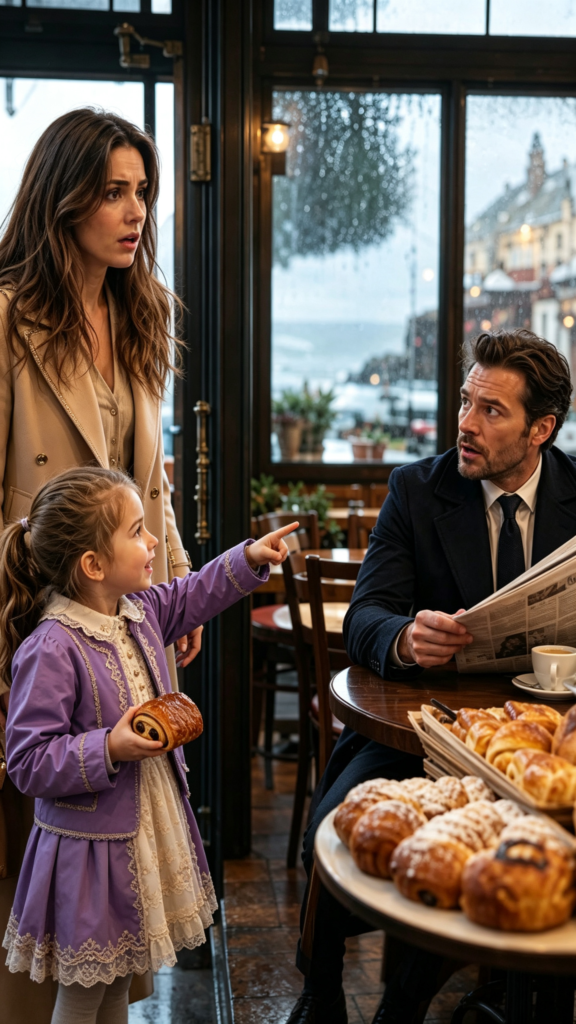
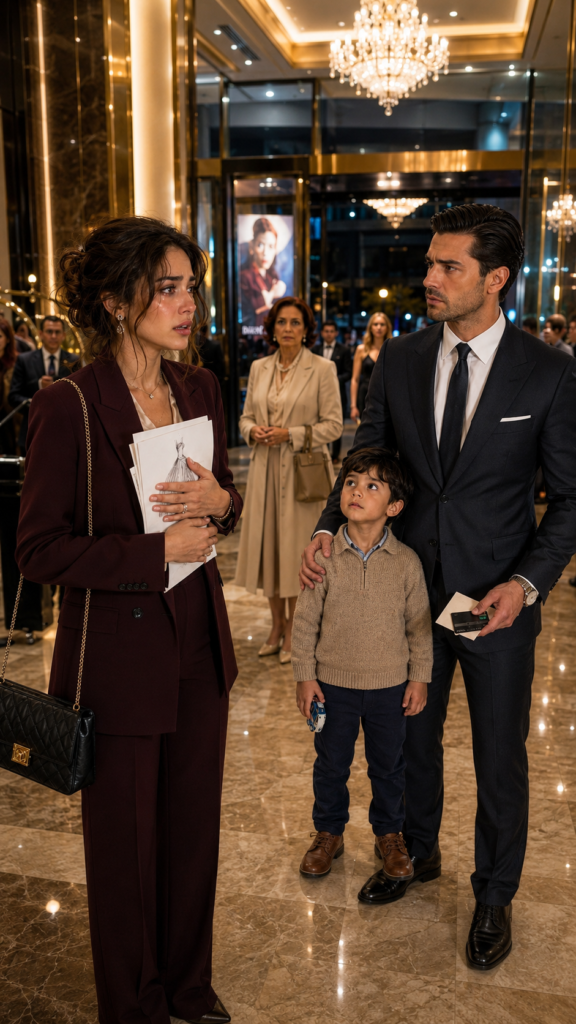
The boy didn’t cry when he entered the hotel lobby.
He didn’t ask for permission either.
He just walked among models, photographers, and businessmen as if he owned the place, stopped in front of Valeria Montes, and placed a black card on the table.
"They say you really like money," he said, with a seriousness that didn’t seem to belong to a five-year-old. "So tell me, how much does it cost for you to accept being my mom?"
Valeria felt the noise of the hotel fade away.
Outside, Mexico City sparkled for Fashion Week. Inside, all she could do was gaze into those gray eyes, identical to those of Adrián Santillana, the man who once swore her love and then let his family erase her like a stain of shame.
Valeria was a set designer.
She had been born in Iztapalapa, daughter of a carpenter and a seamstress. She didn’t come from long surnames or fancy meals in Polanco. She had built her career with sleepless nights, loaded trucks, hands cut by wood and fabrics, and a stubbornness many mistook for pride.
Five years ago, she had a child with Adrián Santillana, heir to a family that owned construction companies, hotels, and media.
They loved each other.
Or so she thought.
When the baby was born, Doña Regina Santillana, Adrián's mother, summoned her to a stark, cold white room filled with lawyers.
On the table lay a check.
10 million pesos.
“Take it and disappear,” she said. “My grandson will grow up where he belongs. You would only be a stain on his life.”
Valeria signed.
And she left.
No one knew she spent three nights in a bus station, her blouse soaked with milk and her arms empty.
No one knew she never touched that money.
She kept it all in an account for her son.
Because they took away her right to raise him but not her right to love him in silence.
And now that boy was standing in front of her.
“What's your name?” Valeria asked, though her heart already knew the answer.
“Tomás Santillana,” he replied. “But my dad calls me Tomi. My grandpa says I should be called earthquake because wherever I go, something breaks.”
Valeria almost smiled.
That cheekiness wasn’t from Adrián.
It was from her.
“Tomi, you can’t just go around offering black cards to strangers.”
“But you’re not a stranger.”
The phrase left her frozen.
The boy lowered his voice.
“I saw your picture in my dad’s office. He hid it inside a boring book. When I asked who you were, he closed it so fast he almost crushed my fingers.”
Valeria couldn’t breathe.
“Maybe you’re mistaken.”
“No,” he said. “I also heard my grandma say that you traded me for money.”
That shattered her heart.
“And you believed her?”
Tomi looked at her intently.
“No. Because people who love money laugh when they have it. And you look like you want to cry every time I talk about it.”
Valeria wanted to hug him.
She wanted to apologize for every missed birthday, for every fever she didn’t tend to, for every night he might have asked for her.
But she stayed still.
“I can’t help you, Tomi.”
The boy pressed his lips together.
“I just need you to come to my school festival. A girl said I don’t have a mom. I told her I do. That my mom is famous, beautiful, and a designer.”
Valeria took a step back.
“I can’t.”
Tomi didn’t cry.
The Santillanas didn’t cry in public.
But his eyes filled with a sadness so immense that Valeria felt something break inside her.
The boy ran towards the revolving door.
“Tomi!” she shouted.
She followed him to the entrance.
Then she saw him.
Next to a black car, in a dark suit and with the same face that had haunted her for five years, was Adrián Santillana.
Tomi ran to him and hit his leg.
“It’s all your fault! You took too long to bring her!”
Adrián looked up.
When his eyes met Valeria’s, the past came rushing back like a blow.
And then he said:
“Tomi didn’t come alone, Valeria. I gave him your address.
PART 2
Valeria felt her legs give way.
It wasn’t the night’s cold that sent chills down her spine, but the certainty that Adrián had known where to find her.
For five years, she had lived with the idea that he never searched for her.
For five years, she forced herself not to write his name, not to see news about the Santillanas, not to imagine her son’s face growing up without her.
And now Adrián was there, so serious, so impeccable, so guilty.
“Did you send him?” she asked.
“I didn’t send him,” he replied. “I told him part of the truth.”
Valeria let out a bitter laugh.
“What a lovely talent you all have for breaking the truth into pieces, huh?”
Tomi looked back and forth between them, confused.
“Do you know each other well?”
No one answered.
Adrián knelt in front of the boy and adjusted the collar of his sweater.
“Get in the car with Julián. Give me five minutes with Valeria.”
“No.”
“Tomás.”
“Don’t call me Tomás while you’re acting like the grumpy old man.”
Adrián closed his eyes for a second, weary.
“I promise he won’t leave without saying goodbye.”
Tomi looked at Valeria.
“Do you promise too?”
That question pierced her.
Because she had already failed him once, even if he didn’t know the whole story.
“I promise,” she said.
Only then did the boy get in the car.
When the door closed, Valeria and Adrián stood face to face, in the middle of the sidewalk, surrounded by flashes, bodyguards, and curious people pretending not to look.
“You had no right,” she said.
“I know.”
The answer disarmed her more than any excuse.
“Then why did you do it?”
Adrián swallowed hard.
“Because my son has been asking about his mom for two years. Because my mother told him that you sold him. Because I was a coward and let that lie stay in my house.”
Valeria clenched her fists.
“And what did you think? That I accepted ten million and happily went to buy expensive bags?”
He lowered his gaze.
“That’s what I was made to believe.”
“Don’t make things up.”
“Valeria, my mother handed me a letter signed by you.”
He pulled out an old envelope from his jacket, crumpled at the edges.
Valeria recognized it before she touched it.
It was the letter that Doña Regina forced her to sign when she could barely walk after giving birth.
It stated that she renounced any contact with her son, that she accepted the financial agreement, and that she didn’t want to be part of Adrián Santillana’s life or his heir’s.
“She gave it to me three days after you left the hospital,” Adrián said. “She told me you asked for money before seeing the baby one last time.”
Valeria felt nauseous.
“I begged to see him.”
Her voice came out broken.
“I pleaded with her to let me hold him one more time. Your mother told me that if I insisted, she would destroy my dad. That she would accuse him of fraud in a project where he hadn’t even signed blueprints. She told me that you had judges, lawyers, newspapers, contacts. I was 24 years old, just gave birth, and I was alone.”
Adrián paled.
“Valeria…”
“I wasn’t brave,” she continued. “I was broken. They handed me papers, threats, and a check. They made me believe that if I fought, Tomi would pay the consequences.”
Adrián stood still.
For years, Valeria imagined this reunion.
She thought she would scream at him.
That she would call him a coward.
That she would throw every sleepless night in his face.
But seeing him there, guilt raining down on him, she understood something worse: maybe he too had been trapped in a lie.
“I never spent that money,” she said.
Adrián looked at her, confused.
“What?”
“The ten million. They are all intact in a trust for Tomi. Every peso. I never used anything.”
He was left speechless.
“I didn’t leave because I wanted a better life,” Valeria said. “I left because your family made me believe my son would be safer if I disappeared.”
At that moment, the car door swung open.
Tomi came down with a red face.
“I knew my grandma was lying!”
Adrián turned.
“I told you to stay inside.”
“And I told you I’m not a statue.”
The boy ran to Valeria and hugged her around the waist.
He didn’t ask for permission.
He didn’t hesitate.
He clung to her as if his body remembered something his memory couldn’t.
Valeria placed a hand on his hair.
And cried.
She didn’t cry beautifully.
She cried with shame, with rage, with relief, with five years stuck in her throat.
Tomi hugged her tighter.
“Don’t leave again,” he whispered.
Valeria looked at Adrián.
He didn’t move closer. He didn’t want to steal that moment. He just stood there, eyes wet, accepting the punishment of watching what they had lost.
“I can’t just show up in your life tomorrow and pretend nothing happened,” Valeria told the boy.
Tomi lifted his face.
“But can you start today?”
That question was bigger than any forgiveness.
Valeria didn’t walk the runway as planned.
Her team almost fainted when she said she needed an hour. The most important night of her career had to wait because after five years her son was in front of her, asking for not a stage, but a chance.
They went to a discreet café in Polanco.
Tomi ordered hot chocolate.
Valeria ordered coffee.
Adrián ordered nothing.
The boy spoke non-stop.
He told that his grandma arranged the cutlery as if they were soldiers, that his grandpa fell asleep watching the news, that once he put a toy axolotl in the soup bowl during a family dinner and everyone screamed as if there had been an earthquake.
“Dad didn’t scream,” Tomi said. “He covered his mouth. I think he was laughing.”
“I was choking,” Adrián corrected.
For the first time in five years, Valeria laughed with them.
Later, Tomi fell asleep on her coat.
When his breathing became calm, Adrián spoke.
“My mother is coming tomorrow.”
Valeria wasn’t surprised.
“Of course. Doña Regina doesn’t lose battles. She buries them.”
“She doesn’t want to apologize,” he said. “She wants to stop this.”
The next day, Doña Regina Santillana appeared at the hotel before 9 AM.
She entered the lobby with pearls, a cream coat, and that cold elegance of women who confuse cruelty with education.
Valeria was reviewing some sketches for Tomi’s school festival.
Because yes.
She had accepted.
Not for Adrián.
Not for money.
For her son.
Doña Regina stopped in front of her.
“I see you finally found a way to come back.”
Valeria didn’t raise her voice.
“I didn’t come back. I was found.”
The woman smiled slightly.
“Tomás is a Santillana. He doesn’t need scandals.”
“Tomás needs truth.”
“The truth is that you accepted ten million.”
Valeria pulled a folder from her bag and placed it on the table.
“Here are the statements of the trust. The money is still intact. Beneficiary: Tomás Santillana Montes.”
The surname Montes made Doña Regina blink.
“There are also the emails from your lawyers, the threats against my father, and a copy of the medical report you hid.”
Adrián, who had just entered, froze in place.
Doña Regina lost color.
That was the dirtiest secret.
When Tomi was born, he had a mild respiratory complication. Nothing irreversible. But Doña Regina used that fear to break Valeria.
She told her that if she started a legal fight, it could delay the treatment for the baby.
She made her believe that loving her son meant staying away.
“You made me choose between being close to my baby or letting him be treated without obstacles,” Valeria said. “That wasn’t protection. It was blackmail.”
Adrián looked at his mother as if he were seeing her for the first time.
“Is that what you did?”
Doña Regina tried to maintain her posture.
“I did what was necessary to protect the family.”
“No,” Adrián replied, with a calmness that hurt. “You protected your name. You destroyed my son, Valeria, and me so that no one at your dinners would have to explain that the mother of the heir came from Iztapalapa.”
The woman opened her mouth, but she couldn’t say anything.
Tomi appeared from the elevator with his backpack.
He had heard enough.
“Grandma,” he said, “if you say again that my mom traded me for money, I’m going to tell at your charity dinner that you hide seashells in the napkin drawer.”
The silence was absolute.
Valeria couldn’t help but laugh.
Adrián did too.
And for the first time, Doña Regina was defeated not by lawyers, nor by money, nor by contacts.
She was defeated by a five-year-old boy who no longer believed her.
The school festival was three weeks later.
Valeria didn’t make an expensive stage.
She made a magical one.
A paper sky lit up, moving clouds, stars slowly descending, and a golden moon in the center.
Tomi came out dressed as an astronaut, forgot two lines, invented three, and in the end said in front of everyone:
“My mom made this sky. That’s why I’m no longer afraid of the night.”
The parents applauded.
Valeria cried again.
But this time she didn’t hide.
Adrián was by her side.
He didn’t try to take her hand until she left it near.
Then he barely brushed her fingers.
“I’m not going to ask you to come back,” he murmured. “I don’t have the right.”
“You don’t.”
“But I’m going to ask you to let me show you, day by day, that I’m no longer the man who let others decide for him.”
Valeria looked at him.
Before, she would have run into his arms.
Now she was different.
Stronger.
More broken.
More careful.
“First we’ll be parents,” she said. “Then, if there’s anything left to save, we’ll see.”
Adrián nodded.
There was no perfect promise.
There was no fairy tale ending.
There was something better: truth.
Tomi ran towards them with the crooked cardboard crown.
“So are you coming to dinner? There’s soup, but I promise I won’t put weird animals in it.”
Adrián sighed.
“That’s what you said last time, champ.”
Tomi took Valeria’s hand.
“Mom, tell him to trust.”
The word “mom” no longer hurt like a wound.
This time, she held it.
Valeria crouched, hugged her son, and said:
“Alright, earthquake. Let’s start with dinner.”
That night, for the first time in five years, Valeria didn’t return alone to the hotel.
She didn’t recover the lost time.
No one can return a childhood that began without its mother.
But she understood that true love doesn’t always return with perfect apologies. Sometimes it comes back in the form of a stubborn child, a useless black card, and a question that shatters the soul:
“Can you start today?”
And yes.
Sometimes, starting today is the bravest way to heal.