PART 1
Someone was holding the lock from the inside.
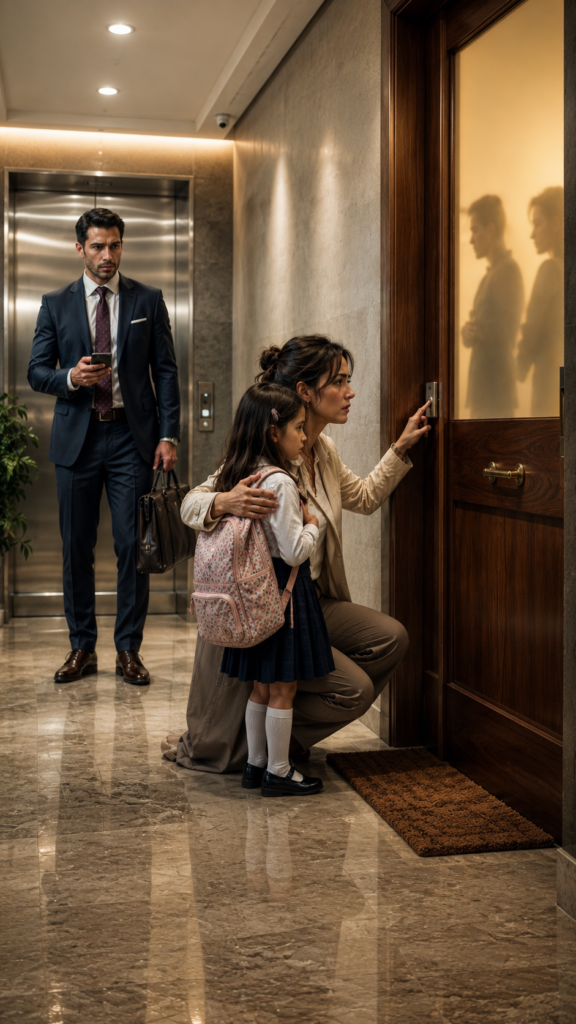
Sofia, just 6 years old, had been sitting in the hallway of the building for almost 40 minutes, clutching her pink kindergarten backpack as if it were a shield.
Her cheeks were wet, her knees scraped, and her uniform wrinkled. Every time she knocked on the door, her small voice cracked more and more.
—Aunt Fer, let me in... I'm cold.
But no one opened.
When Mariana Ortega arrived at the apartment in the Portales neighborhood of Mexico City, it felt like the floor was shifting beneath her. She had been running from the clinic where she worked, her heart pounding in her chest and her cell phone still in her hand.
She had seen everything on the hallway camera.
Her sister-in-law Fernanda had taken Sofia out under the pretense of throwing away a bag of trash. Then she shut the door and never opened it again.
Mariana pressed the doorbell once.
Then again.
Then 10 times.
From inside, the voice of Doña Teresa, her mother-in-law, could be heard.
—Mariana, don't make a scene. The girl needs to learn that not everything is done your way.
Sofia clung to her mother's legs, trembling.
—Mommy, they won't let me in.
Mariana swallowed hard. She didn’t want to cry in front of her daughter. Not there. Not in front of that locked door as if they were strangers.
Then the elevator chimed.
Roberto Cardenas stepped out with his briefcase, weary after a long day at his accounting office on Reforma.
He first saw Sofia on the floor.
Then he saw Mariana, finger pressing the doorbell.
Finally, he glanced at the door of their own apartment, behind which his mother and sister remained silent.
—What happened? he asked, but his voice no longer sounded normal.
Before Mariana could respond, Fernanda let out a laugh from inside.
—Oh, brother, thank goodness you’re here. Your wife is putting on quite the show. We’re just teaching the girl that she doesn’t call the shots here.
Roberto said nothing.
His face changed in a way Mariana had never seen before. He didn't shout. He didn’t pound on the door. He didn’t hurl insults.
He simply dropped the briefcase on the floor, pulled out his phone, and dialed.
—Good evening. I need an urgent locksmith in Portales. Yes, right now. I want to change all the locks in my apartment.
On the other side of the door, silence grew heavy.
Three months earlier, Fernanda had arrived from Guadalajara with two enormous suitcases and a smile that seemed rehearsed.
—It’ll only be for a few days, bro —she told Roberto—. While I find a job in the city.
Doña Teresa came with her, carrying a bag of sweet bread as if this were an innocent visit.
—We're family, Mariana. You’re not going to deny them a roof, are you?
Mariana didn’t refuse.
Neither did Roberto.
The apartment was legally theirs. He had bought it before marrying, and the deed was only in his name. Mariana had never made a fuss about it. To her, a home was built with respect, not with papers.
But Fernanda understood it differently.
First, she occupied the couch as if it were a bedroom. Then she started moving furniture without asking. After that, she would enter Sofia's room, take her crayons, toss her dolls, and say the girl was “too spoiled.”
Doña Teresa always defended her.
—She’s your aunt. Don’t exaggerate, Mariana.
One day, Mariana found Sofia's white desk on the balcony, covered in dust, with her notebooks crumpled and her pencils scattered.
Sofia was hiding behind the curtain.
—My aunt said my desk was in the way because this house isn’t ours.
Mariana felt a fire rise in her throat.
That very night, she installed cameras at the entrance, the hallway, and the living room.
She also started saving receipts, transfers, school payments, groceries, furniture, and repairs for the apartment.
Not because she wanted to fight.
But because a woman learns to protect herself when she starts feeling like a guest in the home where she cares for her daughter.
And now, in front of that closed door, Roberto was about to see something that would forever shatter the perfect version of their family.
PART 2
—Before you open that door —Mariana said firmly—, you need to see this.
Roberto looked down at his wife’s phone.
The video started 40 minutes earlier.
Sofia could be seen stepping into the hallway with a little trash bag in her hand. Behind her, Fernanda came, her hair tied back and her phone pressed to her ear.
—Take this down, girl.
—My mom says I can’t go out alone —Sofia replied.
Fernanda crouched in front of her, but not to protect her.
—Your mom is in charge when she’s here. Right now, I am, got it?
Sofia took a step back.
Then Fernanda opened the door, pushed her slightly with her palm on her back, and closed it.
It wasn’t a hard push.
It was worse.
It was a cold, calculated gesture, done with the confidence of someone who believes they won’t be challenged.
Sofia knocked on the door.
—Aunt Fer, let me in.
From inside, Doña Teresa’s voice could be heard.
—Leave her for a bit. That’ll cool her tantrum.
Roberto clenched his jaw.
Mariana said nothing.
The video continued.
Sofia sat on the floor, hugging her backpack. Minutes passed. Then she got up, tried to open the lock, and fell to her knees. That’s when she scraped herself.
In the recording, Fernanda peeked through the peephole and let out a laugh.
—Oh, what a drama queen. Just like her mother.
Roberto closed his eyes, but he couldn’t stop watching.
When Sofia said, “I’m scared,” something inside him broke.
The locksmith arrived 15 minutes later with an assistant.
As soon as they heard the tools, Doña Teresa burst open the door.
—Roberto! Thank God you’re here. Your wife is crazy. Look at the scene she’s causing in the hallway.
Fernanda appeared behind her, arms crossed.
—I’m serious, brother, don’t let her manipulate you. The girl went out by herself. Mariana always exaggerates everything.
Roberto raised his phone.
He played the video.
Sofia’s voice filled the entryway.
“Aunt Fer, let me in... I’m cold.”
Doña Teresa turned pale.
Fernanda swallowed hard.
—That’s taken out of context —she murmured.
Mariana let out a dry laugh.
—Is it also taken out of context to tell a 6-year-old that her mom doesn’t call the shots here?
Roberto looked at his sister.
—Pack your things.
Fernanda blinked.
—What?
—You have one hour.
Doña Teresa put a hand on her chest.
—Roberto, please. She’s your sister. Family forgives.
—Sofia is also my family —he replied—. And today, they left her crying outside her own home.
Fernanda began to cry, but not from sadness. It was rage.
—For her? For Mariana? This house is yours, Roberto. Your wife isn’t even on the deed. I don’t understand why you defend her so much.
The silence was brutal.
Mariana felt that phrase falling on her like a stone. Not because it surprised her. Because it was finally being said out loud.
Roberto stepped closer.
—Because a deed says who bought an apartment. But it doesn’t say who turned this place into a home.
Doña Teresa shook her head.
—She’s turning you against your blood.
—No, Mom. You’re showing me exactly what you do when I’m not around.
Fernanda tried to respond, but Mariana took her phone again.
—There’s more.
Roberto looked at her.
Mariana opened another video.
On the screen, Fernanda appeared entering Sofia's room weeks earlier. She took her white desk and dragged it down the hallway, banging it against the wall.
Sofia came out behind her, holding a stuffed animal.
—Aunt, that’s where I do my homework.
Fernanda turned and said:
—Listen well, princess. This house belongs to my brother. Your mom lives here because he wants her to. And so do you.
Doña Teresa appeared in the background.
—Don’t pay her any mind, sweetheart. Girls these days cry over everything.
Roberto stood frozen.
Mariana saw the shame rising in his face. That shame hurt more than the rage, because it wasn’t just for what he had seen. It was for everything he hadn’t wanted to look at before.
—How long? he asked.
Mariana took a deep breath.
—Three months.
Fernanda immediately defended herself.
—Oh, please. They were just jokes. Mariana plays the victim because she wants to keep your apartment.
Then came the twist no one expected.
Mariana pulled a folder from her bag.
She hadn’t prepared it for that night. She had carried it for weeks because her friend Paola, a lawyer in Roma Norte, had told her something very clear:
“When a woman starts to feel like a stranger in her own home, she needs proof, not hope.”
Mariana placed the folder on the entrance table.
Inside were screenshots of messages, audio clips, receipts, transfers, and videos.
There were payments for Sofia’s tuition, purchases of furniture, mold repairs, boiler replacement, groceries, medicines, and even the loan Mariana gave Roberto when he opened his office.
Fernanda scoffed.
—And what’s that? Are you going to charge your husband for every taco he ate?
Mariana looked at her for the first time without fear.
—No. I’m going to prove that no one lives off pity here.
Roberto took the papers with trembling hands.
There was a transfer of 120,000 pesos that Mariana made two years earlier to save Roberto’s office when it was about to close.
There were invoices for the furniture in Sofia’s room.
There were messages from Doña Teresa saying: “It’s not in your best interest to fight, Mariana. Remember the house isn’t yours.”
And there was an audio clip of Fernanda talking to a cousin.
“When Roberto gets tired of that old lady, I’ll take the big room. After all, the apartment is my brother’s.”
Roberto lifted his gaze.
—Did you say that?
Fernanda paled.
—I was angry.
—No. You were being yourself.
Doña Teresa tried to touch his arm.
—Son, don’t destroy your family over a bitter woman.
Roberto pulled his arm away.
—My family is right here —he said, pointing at Sofia, who remained hugged to Mariana—. And you hurt her.
The locksmith cleared his throat, uncomfortable.
—Sir, shall we proceed?
Roberto nodded.
—Change them all. The main one, the service one, the balcony one, everything. I also want to change the code for the gate and inform the guard that these two can’t come up without authorization.
Fernanda exploded.
—You can’t throw us out like this!
—Yes, I can —Roberto said—. And if you want to make this difficult, Mariana has enough evidence to report harassment, emotional abuse, and abandonment of a minor.
Doña Teresa opened her mouth but said nothing.
Because for the first time, she understood that “we are family” was no longer enough.
Fernanda packed her bags with force. She threw clothes, makeup, and shoes inside as if each item were Mariana’s fault.
Doña Teresa helped her, crying.
Before leaving, she stopped in front of Roberto.
—You’re going to regret it when that woman takes everything from you.
Roberto didn’t look down.
—I will regret my whole life for taking so long to believe her.
That phrase was what broke Mariana completely.
Not because it fixed everything.
But because finally, someone was naming the entire wound.
When the door closed behind them, Sofia asked very softly:
—Is my aunt never going to take me out again?
Roberto knelt in front of his daughter.
His eyes were red.
—No, my love. No one is going to take you out of your house again.
Sofia looked at him doubtfully.
—Even if they get mad?
—Even if they get mad.
The locksmith changed the locks that same night. The sound of the tools filled the apartment as if they were tearing something old from the walls.
But when it was all over, the silence didn’t feel peaceful.
It felt real.
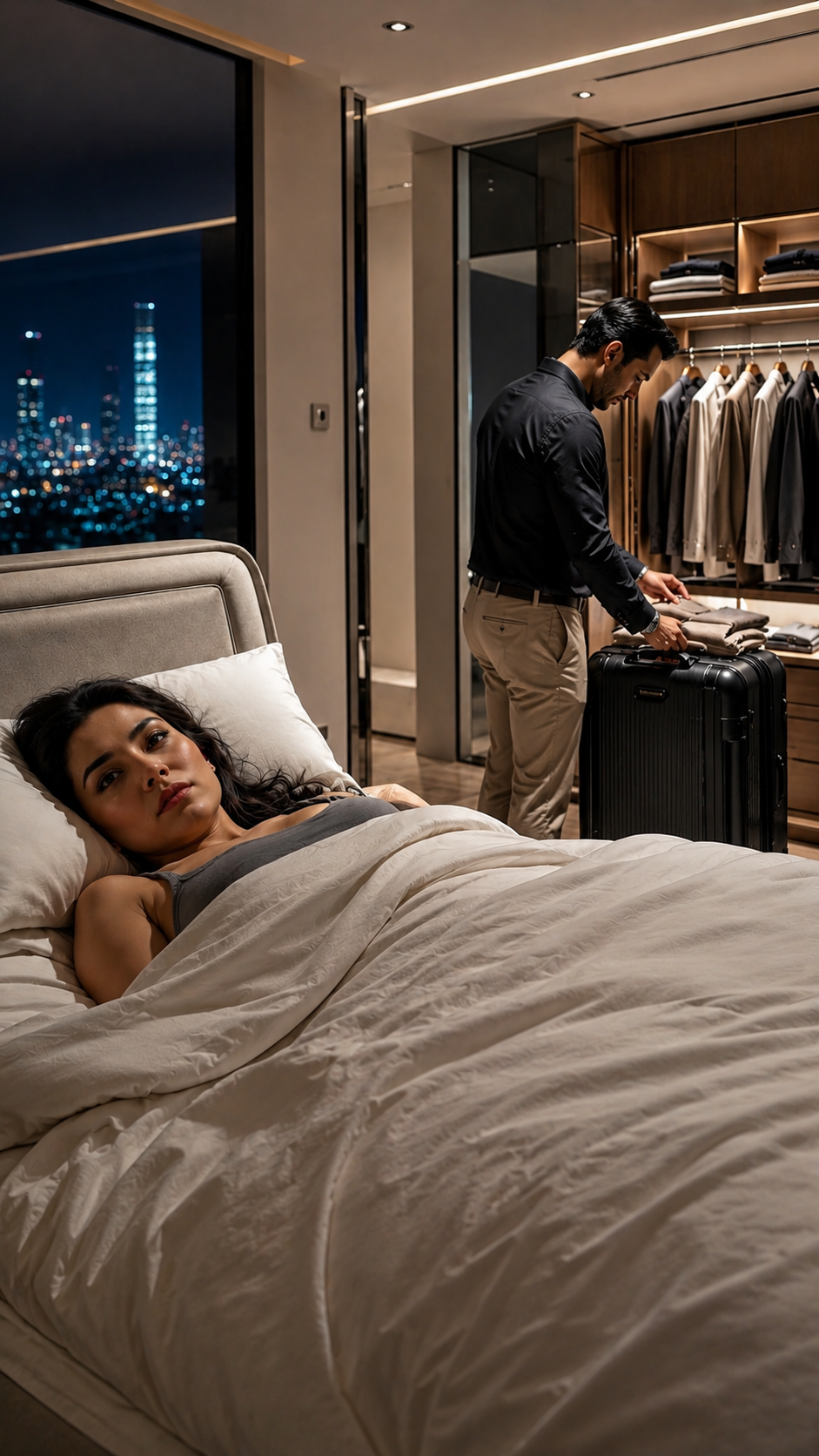
Later, when Sofia fell asleep in Mariana’s bed, Roberto sat in the living room with the folder open on his lap.
—I’m sorry —he said.
Mariana stood by the kitchen.
—It’s not enough.
He nodded slowly.
—I know.
—It’s not enough to just kick them out today and tomorrow act like nothing happened. Sofia was scared in her own house. I had to gather proof because I didn’t know if you would believe me.
Roberto lowered his head.
—You’re right.
—I need therapy for all three of us. I need clear boundaries with your mom and sister. I need them never to come back here. And I need you to understand something: I never wanted to take this apartment from you. I just wanted to live in peace within it.
Roberto covered his face with his hands.
—I was a coward for not seeing it.
Mariana didn’t console him.
Sometimes a woman also needs to allow the other to carry their guilt.
The following days turned into a silent war.
Doña Teresa called aunts, cousins, and acquaintances. She said Mariana was a gold digger, that she had manipulated Roberto, that she used Sofia to separate him from his family.
Fernanda posted passive-aggressive remarks on Facebook.
“There are women who enter a house without putting down a dime and think they own it.”
But Paola, the lawyer, sent a formal warning with copies of the videos, messages, and audio files. There was no need to publish anything. No show. No social media fight.
Just facts.
And the facts silenced many mouths.
Sofia took longer to heal.
For weeks, she checked twice if Mariana had keys. She asked who could ring the doorbell. She got nervous when someone slammed a door.
Roberto started picking her up from kindergarten three times a week. Not to make a good impression. To repair.
He sat with her to color. He learned which was her favorite doll. He had the white desk fixed and put it back in her room.
—This is mine —Sofia said one day—. And no one moves it.
Mariana cried silently from the hallway.
Months later, the apartment still had the same owner on the deed.
But it was no longer the same home.
The locks changed.
So did the rules.
No one ever entered again with suitcases and fake smiles. No one ever called Mariana exaggerated again. No one ever made Sofia feel like a guest.
One night, the girl stuck a drawing on the refrigerator.
It showed three people holding hands in front of a huge door. Above, in crooked letters, she wrote:
“My safe home.”
Roberto stared at the drawing for a long time.
Mariana said nothing.
She left it there.
Because sometimes a family isn’t saved by forgiving everything.
Sometimes it’s saved when someone finally opens their eyes, changes the right lock, and understands that blood doesn’t give anyone the right to humiliate another.
And that a house should never be called a home if a child learns to be afraid inside of it.