PART 1
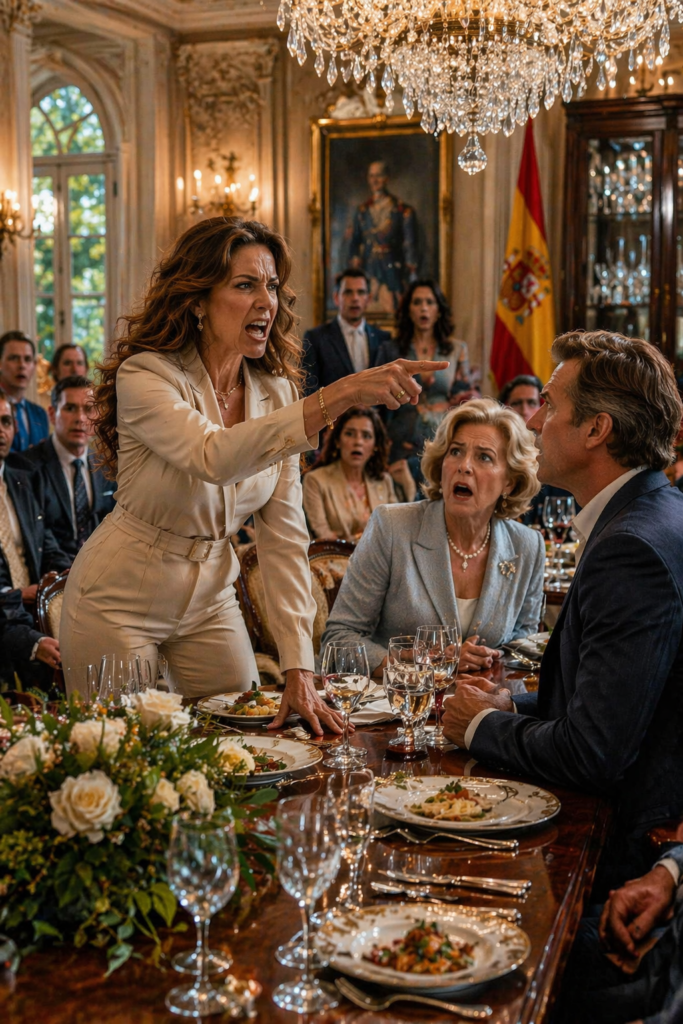
The table went silent as Valeria Montes set her glass down on the tablecloth and looked directly at her husband.
She didn’t shout.
She didn’t cry.
She didn’t even raise her voice.
That was what unsettled everyone the most in that apartment in the Del Valle neighborhood, where Daniel's mother had prepared mole, red rice, and a salad nobody was touching because the atmosphere already smelled more like a fight than family food.
Doña Marina, her mother-in-law, had the fork suspended in mid-air.
Daniel lowered his eyes.
In that moment, Valeria understood she wasn’t married to a neutral man.
She was married to a son who still sought permission with his gaze.
Valeria was 34, working as a commercial director at an advertising agency in Santa Fe, earning well. Very well.
Not because it was handed to her.
Because she had spent years arriving late, traveling to Monterrey, missing birthdays, eating in conference rooms, and enduring bosses who thought a young woman with a good salary should apologize for existing.
But for Marina, that money was never an achievement.
It was “family support.”
It was “shared blessing.”
It was “the bare minimum a decent wife does for her husband’s family.”
That night, Marina brought up the topic again.
—Oh, Valeria, how great that you did so well with your bonuses this year —she said, serving herself more mole—. Because a family is supported by everyone, right? Not just with love.
Valeria took a deep breath.
Daniel continued eating.
—My bonuses are part of my job —she replied—. They’re not an open piggy bank.
Marina let out a dry chuckle.
—You’re getting so defensive. I’m just saying that when a woman enters a family, she also brings what she has. That’s how I was taught.
Daniel cleared his throat, but not to defend his wife.
To warn her not to ruin dinner.
Valeria turned to him.
—One more word from your mom about my salary and polite conversations about money are over —she said calmly—. I’ll explain to her myself what her place is and why my money doesn’t belong to anyone. Do you understand?
The silence was heavy.
Marina’s eyes widened, offended, as if Valeria had spat on the Virgin of Guadalupe.
—Excuse me? —she said.
Daniel set down his fork.
—You didn’t have to react like that.
Valeria stared at him without blinking.
—React like what?
—Aggressive.
The word hit like a slap.
Marina smiled slightly, satisfied.
Because Daniel had chosen.
Not out loud.
Not with a speech.
But he had chosen.
They left 20 minutes later. In the elevator, Daniel said nothing. In the car, as they drove down Avenida Universidad under a light rain, Valeria awaited an apology.
It didn’t come.
—You made my mom feel bad —he finally said.
—Your mom humiliated me.
—You know how she is.
—Yes —Valeria replied—. I know how she is. I also learned today how you are.
Daniel gripped the steering wheel tight.
When they arrived home in Coyoacán, Valeria went straight to the bedroom. She took off her earrings in front of the mirror and tried not to tremble.
Then her phone vibrated.
It was Marina.
"Sweetheart, I hope when your anger subsides, you understand that family supports each other. Career women sometimes become cold. Call me when you calm down. Mom."
Valeria read that last word.
Mom.
That woman had never earned that place.
At that moment, Daniel’s phone lit up on the nightstand.
He grabbed it quickly but not quickly enough.
Valeria caught a glimpse of five words from his message.
“Ingrate. We already left. Sorry, mom.”
Daniel went into the bathroom and turned on the shower, as if the water could wash away his cowardice.
Valeria remained still.
Then the phone lit up again.
Now it was Marina.
The message read:
“Don’t forget what we talked about. She still can’t find out.”
PART 2
Valeria didn’t touch Daniel’s phone.
Not because she didn’t want to.
Her hand was inches from the screen, while steam billowed from the bathroom and Daniel hummed as if that night had been a normal argument.
But Valeria pulled her hand back.
She wasn’t going to uncover the truth by stealing a password.
She would uncover it better.
With documents.
With dates.
With proof.
When Daniel came out of the bathroom, she was already lying down, facing away.
—Are you asleep? —he asked.
—No.
—My mom is really upset.
Valeria stared at the wall.
—How strange. So am I.
Daniel sighed.
—Let’s not do this today.
That phrase had closed many doors over seven years.
“Not today.”
“Don’t exaggerate.”
“It’s my mom.”
“That’s just how she talks.”
“Just let it go.”
That night, Valeria stopped asking for permission to feel hurt.
At 2:13 AM, she went down to the kitchen, opened her laptop, and logged into the shared account.
At first, she just checked the transactions.
Mortgage.
Utilities.
Groceries.
Car insurance.
Nothing unusual.
Until she saw small transfers.
$3,800 to Marina.
$2,200 to an unknown account.
$5,500 labeled “repairs.”
$1,750 in “support.”
$1,299 monthly to a storage unit in Tlalnepantla.
Valeria furrowed her brow.
They didn’t have any storage unit.
She kept scrolling.
The charges appeared over months. Almost always after calls from Marina. Almost always in small enough amounts that she would feel miserable if she complained.
But combined, they were something else.
By 3:40 AM, Valeria had a spreadsheet with over $286,000 pesos in transactions she had never clearly authorized.
By 4:18, she found a forwarded email from her own computer.
Subject:
“Bridge Options – Temporary Liquidity.”
It was a PDF sent by a financial advisor named Evelyn Duarte, a friend of Marina.
Valeria had seen that woman once at a family meal in San Ángel. Red nails, expensive glasses, sharp smile.
The document spoke of “household support capability,” “available income of the daughter-in-law,” and “projected bonuses.”
Her name appeared in the middle of the page as if she were a repossessable asset.
Valeria Montes.
Monthly income.
Estimated liquidity.
Annual bonuses.
She gasped for air.
She saved a copy to a private email that Daniel didn’t know.
The next morning, when he went down for coffee, she was already dressed.
—You’re up early —Daniel said.
—I had things to review.
His phone vibrated. Upon seeing the screen, he tensed.
—Your mom? —Valeria asked.
—Yeah. She’s being dramatic.
—Maybe you should calm her down.
Daniel smiled with relief.
He thought Valeria had returned to her place.
He didn’t know she had just learned to smile like them.
At 9:15, Valeria drove to the storage unit in Tlalnepantla. The place was next to a tire shop, a paint store, and a quesadilla stand that smelled of hot oil.
At reception, a young man in a blue uniform searched for Daniel’s name.
—Unit 27C —he said.
—Who has access?
—Daniel Rivas and Marina Rivas.
Valeria felt her ring tighten.
—Is the payment up to date?
—Yes, ma’am. Automatic charge.
She placed the card connected to the shared account on the counter.
—From here?
The employee saw the last four digits.
He didn’t want to say it.
His face said it all.
Valeria left with a tight throat.
She didn’t know what was inside unit 27C.
But she knew something worse.
She was paying to have something hidden from her.
That same day, she called her attorney, Licenciada Patricia Salcedo, who had reviewed her prenuptial agreement years ago because Valeria’s father had requested it.
Daniel had been offended back then.
Marina had said that prenups were “things for distrustful women.”
How curious.
The family that despised other people’s papers had used theirs in secret.
Patricia listened to everything without interrupting.
—Don’t talk about this topic with your husband anymore —she said—. Send me screenshots, statements, and that PDF. If your name was used without authorization, this is no longer just a family dispute.
—Then what is it?
The attorney paused for a second.
—It could be fraud.
That word pierced her chest.
Fraud.
At 2:03 PM, Daniel sent a message.
“My card was declined at lunch. What happened?”
Valeria didn’t respond.
At 2:15:
“Did you call the bank?”
At 2:22:
“Valeria, answer.”
She had already separated her salary, blocked authorized users, and changed the passwords to her personal accounts.
At 6:40, she got home.
Daniel was in the kitchen, with his sleeves rolled up and his phone face down on the counter.
—What did you do? —he asked.
He didn’t say “hello.”
He didn’t say “are you okay?”
—I corrected access —she replied.
—Did you cancel my card?
—I removed you as a user on mine.
—We’re married.
—That used to mean trust.
Daniel turned red.
—All this over one dinner.
Valeria set her bag down on a chair.
—No. The dinner was the tipping point for all of this.
He looked at her, confused.
She pulled out the spreadsheet and set it on the counter.
—Explain unit 27C.
The color drained from his face.
That was the first genuine gesture Daniel had shown in days.
—It’s my mom’s stuff.
—What stuff?
—Furniture, boxes. You know, she’s reorganizing.
—For 18 months?
Daniel swallowed hard.
His phone lit up.
Marina.
The visible message read:
“Did she ask about the papers yet?”
Valeria saw it.
Daniel also saw her see it.
For one second, neither breathed.
Then he flipped the phone over.
Too late.
—What papers, Daniel?
He didn’t answer.
He went upstairs, and she followed him. Daniel opened the closet, pulled out a box of documents, and searched desperately for something.
Valeria stepped forward.
Inside was a beige envelope with her name handwritten on it.
“Valeria.”
Daniel tried to take it.
—That’s old.
—Then it doesn’t matter.
He opened it.
Inside were printed emails between Marina, Daniel, Evelyn Duarte, and a company called Hogar Patrimonial del Valle.
The phrases were cold.
“Letter of family support.”
“Economic capacity of the spouse.”
“Internal commitment to contribution.”
“Regularization of Doña Marina Rivas’s apartment.”
Valeria read her own name several times.
She also read figures that could only have come from her bank statements, tax returns, and pay stubs.
—Did you use my financial information? —she asked.
—Not like you’re saying.
—Then how do you say it?
Daniel ran his hands over his face.
—My mom was about to lose her apartment. Evelyn said she needed to demonstrate family support to negotiate payments.
—And when did I agree?
—You didn’t have to get involved directly.
Valeria let out a dry laugh.
—Listen to yourself.
—You’re my wife.
—I’m not your automatic guarantor.
—But you were doing well.
There it was.
The truth stripped bare.
It wasn’t love.
It was access.
Daniel didn’t see her salary as effort.
He saw it as a key.
—Did you sign anything on my behalf?
—No.
Too quickly.
—Did your mom sign anything?
Daniel looked away.
The silence betrayed him.
At that moment, Daniel’s phone rang. He answered on instinct.
—Mom, not now.
Marina’s voice came out loud, shrill.
—Did she find the papers?
Daniel closed his eyes.
Valeria moved closer to the phone.
—Yes, Marina. I found them.
There was a long silence.
Then Marina spoke with a sweet, venomous tone.
—Oh, Valeria. Don’t be dramatic. I was the one who moved everything, yes. Because someone had to protect my son from a woman who thinks her money is worth more than family.
Daniel hung up.
But his hand trembled.
Not because his mom had lied.
But because she had begun to tell the truth.
The next day, Patricia received the complete documents.
The letter said that Valeria and Daniel committed to supporting Marina monthly for 24 months.
Valeria never signed.
But Marina had signed an “internal consent declaration” assuring that Valeria agreed.
And there was something worse.
Several small transactions from the shared account had been used as “evidence of conduct.”
In other words, every peso Valeria didn’t question became a supposed acceptance.
Her silence had been turned into evidence.
Patricia was clear.
—Legally we can fight it. But emotionally you need to understand something: they didn’t just take money. They built a story where you looked like an accomplice.
Valeria called her father, Don Arturo Montes.
He didn’t ask if she was exaggerating.
He simply asked:
—Are you safe in that house?
That question broke her.
Because until that moment, she had thought about banks, papers, and signatures.
Not about what a family could do when they lost the source of money they already considered theirs.
That night, Don Arturo came for her. Tall, serious, with the calmness of a man who doesn’t threaten because he doesn’t need to.
Daniel arrived when Valeria was packing clothes and documents into a suitcase.
—Did you call your dad? —he said with disdain.
—Yes.
—How lovely. Now you want to make me look like the monster.
Don Arturo didn’t move.
—Answer clearly and no one will have to imagine anything —he said.
Daniel breathed heavily.
—My mom used her information to save her apartment. I helped because Valeria would have said no.
The room froze.
He realized too late what he had just confessed.
Valeria zipped the suitcase.
—You’re right. I would have said no.
—It’s my mom.
—And I was your wife.
—Don’t destroy my family over money.
Valeria looked at him with a sadness that no longer asked for anything.
—No, Daniel. You destroyed your marriage by believing my consent was an inconvenience.
When she left the house, Marina had already posted on Facebook.
“There are women who come into a family and never understand the sacrifice. Some prefer money over the peace of a husband and an elderly mother.”
The comments defended her.
“Poor Daniel.”
“What a greedy daughter-in-law.”
“That’s how modern women are.”
Valeria didn’t respond.
Patricia did.
She sent formal letters to Marina, Daniel, Evelyn, and Hogar Patrimonial. She demanded to preserve emails, metadata, and documents. She also warned that any publication implying greed or abandonment would be used as evidence.
48 hours later, the final twist came.
Evelyn Duarte, the advisor, delivered emails to save herself.
In one, Marina wrote:
“Valeria shouldn’t know until the restructuring is closed. After that, she’ll calm down. My son knows how to handle her.”
In another, Daniel replied:
“Just make sure she doesn’t need to sign anything directly.”
And in the last, the cruelest one, Marina said:
“She was never family. She’s just funding with a maiden surname.”
Daniel cried when Patricia read that aloud in front of him at the first conciliation hearing.
Marina did not cry.
She was indignant.
—I only protected my son —she said.
Valeria, with a firm voice, replied:
—No. You protected your comfort with my work.
The agreement was decisive.
Daniel had to acknowledge in writing that Valeria never authorized the use of her information. Marina lost the negotiation for her apartment and had to sell it to cover debts. Evelyn was reported to the appropriate authorities for the improper handling of data and misleading documents.
The divorce progressed quickly.
The house in Coyoacán was sold.
Valeria recovered part of the money through a settlement, but she never regained what hurt the most: the years she thought Daniel’s silence was clumsiness, not complicity.
Months later, Marina tried to call her from another number.
Valeria answered by mistake.
—Sweetheart… —the woman began.
Valeria interrupted her.
—Don’t call me sweetheart. Moms don’t turn their daughters into guarantors.
She hung up.
That night, Valeria had dinner with her father in a small fonda in Narvarte. They ate green enchiladas and talked about simple things: the traffic, the weather, a plant he couldn’t revive.
Before leaving, Don Arturo told her:
—I taught you to take care of your money, but I forgot to teach you something more important.
—What?
—That whoever loves you doesn’t charge you for belonging.
Valeria didn’t respond.
She just looked out the window at the wet street, and for the first time in a long time, she felt that solitude wasn’t punishment.
It was peace.
And in Mexico, where so many still believe a wife must endure for “the family,” her story left an uncomfortable question in thousands of comments:
How many women have lost money, dreams, and entire years just because someone told them that setting boundaries was being ungrateful?