PART 1
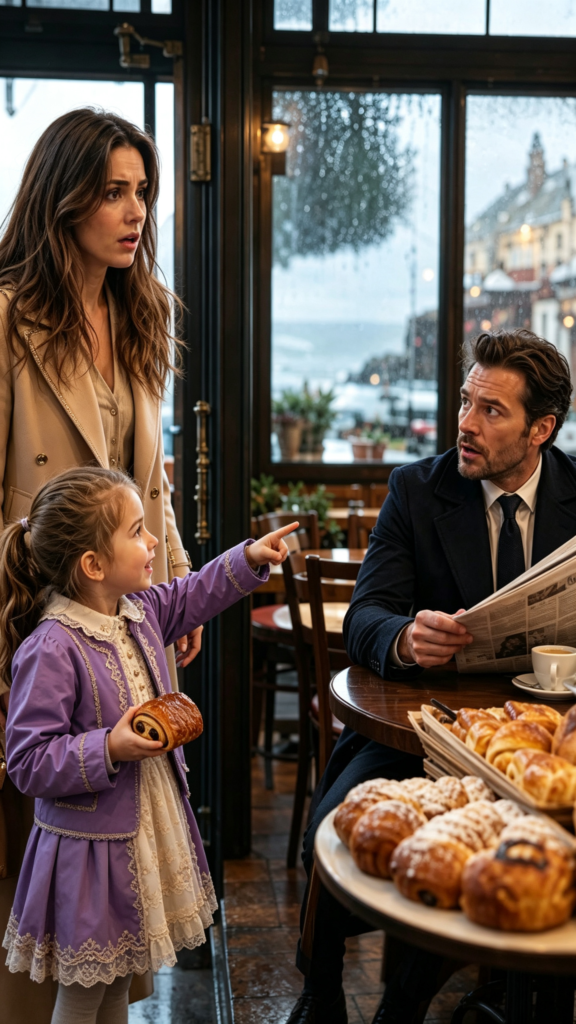
At six years old, Valentina began to vanish before her mother's eyes.
Not all at once. Little by little.
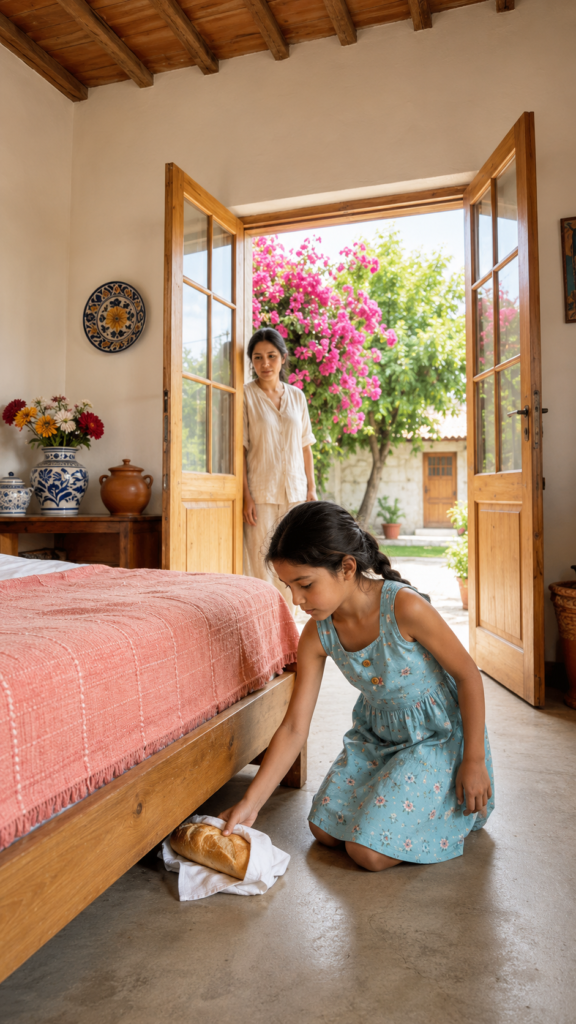
First, she left half her breakfast behind. Then she barely tasted her meals. After that, she started hiding tortillas, bread, and pieces of chicken wrapped in napkins beneath her bed.
But every morning, the food was gone.
And Valentina continued to grow thinner.
Mariana worked ten-hour shifts at a pharmacy in Guadalajara. Ever since the girl's father left with another woman, her mother, Doña Elvira, moved in to help.
Grandma would comb Valentina's hair, take her to kindergarten, and serve her meals.
—This girl has something going on in her stomach —Mariana would say, distressed.
She took her to the IMSS. Tests were done.
The doctor was clear: Valentina had no illness. She was healthy… and malnourished.
It made no sense.
There was always food in the house. Doña Elvira cooked as if they were five, even though only three lived there.
She always set an extra plate.
—In case someone shows up —she would say.
Mariana would scoff.
—Who’s going to show up, Mom?
Doña Elvira never responded.
One afternoon, while changing the sheets, Mariana found a bitten piece of bolillo beneath the mattress. The bite marks weren’t Valentina's.
They were smaller teeth.
That night, she heard her daughter talking behind the door.
—Don’t cry. I’ll bring you more tomorrow. Just hold on a bit.
Mariana burst in.
Valentina was sitting on the floor, pressed against the wall, completely alone.
—Who are you talking to?
—No one.
The girl was trembling.
Days later, a tiny, old gray sock appeared beneath the bed. It didn’t belong to Valentina.
Mariana took her by the shoulders.
—My love, tell me the truth. Who are you taking food to?
Valentina turned pale.
—If I say, Grandma says they’ll take him away. And if they take him, he’ll die.
Mariana felt her chest tighten.
Then she remembered the rooftop room.
A rusty door that was always locked. Doña Elvira said water came in there, that there were rats, that no one should go up.
The key hung day and night from Grandma’s apron.
That dawn, Mariana waited for her mother to fall asleep. She took the key and went up barefoot.
Doña Elvira caught up with her on the stairs.
—Get down from there.
—What are you hiding, Mom?
The old woman grabbed her with a strength Mariana had never known.
—If you open that door, you’ll kill him.
Mariana pulled away, inserted the key, and turned it.
The room smelled of dampness, sweat, and confinement.
In the corner was a mattress, a bucket, and a blanket that moved.
Mariana approached and pulled back the fabric.
Underneath was a boy.
He looked about six years old. He was so thin that his knees seemed like stones beneath his skin. He had long hair, enormous eyes, and arms covered in scratches.
The little boy lifted his face.
He looked at her as if he had been waiting for her his whole life.
And he uttered a single word:
—Rosario.
It was the name of Mariana's sister, missing for six years.
The boy had her same eyes… and Doña Elvira still hadn’t confessed the worst.
PART 2
Mariana didn’t correct him.
She couldn’t tell him that Rosario wasn’t in front of him. She knelt on that filthy mattress and let the boy squeeze her finger with all his strength.
Behind her, Doña Elvira cried, clinging to the railing.
—Get him down —Mariana ordered—. Right now.
The boy’s name was Emiliano. They sat him in the kitchen, wrapped in a clean blanket. He looked at the ceiling light as if it were a star.
He didn’t speak. He only held a piece of tortilla in his fist.
Doña Elvira boiled water and began to tell the truth.
Rosario hadn’t disappeared heading to the United States, as everyone believed.
She had returned.
Six years earlier, on a rainy dawn, she arrived beaten, eight months pregnant and fleeing from Gael Murillo, a man connected to a dangerous family in Tamaulipas.
—He had broken her face twice —Doña Elvira said—. The third time, he would kill her. And he would keep the child.
Rosario hid in the rooftop room. A midwife helped with the birth without asking questions.
Emiliano was born alive.
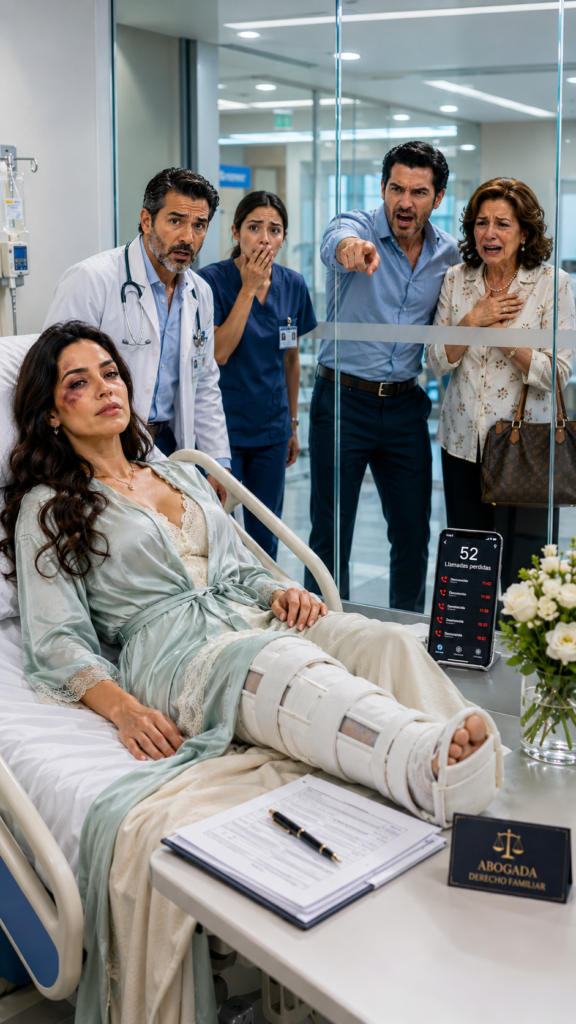
Rosario didn’t survive.
She bled to death on the very mattress where Mariana had just found her son.
Doña Elvira buried her daughter in secret, in an abandoned family plot. There was no wake, no death certificate, no cross with a name.
According to her, announcing the death would also announce the birth.
And if Gael knew the child existed, he would come for him.
—That room wasn’t a prison —the grandmother insisted—. It was the only place they couldn’t find him.
Mariana watched Emiliano devour rice with his hands.
She wanted to hate her mother.
But in front of her was a woman who had buried her daughter alone and had lived six years guarding a door to save her grandson.
Then a memory returned that Mariana had buried since that very night.
Rosario had knocked first at her house.
Mariana lived eight streets away. Valentina was only two months old. She was exhausted, alone, and terrified.
Hearing the knocks, she peeked through the window.
She saw Rosario in the rain, pregnant and with a ruined face.
She also saw a black truck on the corner. Inside, the tip of a cigarette flickered on and off.
—Let me in, sister —Rosario pleaded.
Mariana didn’t open.
—Go to Mom. I have my baby. I can’t get involved in this.
She closed the curtain and covered her ears with a pillow.
The worst wasn’t the fear.
It was the relief she felt when Rosario walked away and the truck followed her.
Now she understood that every extra plate had been for the son of the woman she had shut the door on.
Later, she confronted her mother.
—Did you know she came to me first?
Doña Elvira looked down.
—She told me before she died.
—And that’s why you hid the boy from me?
—Not just for that. Rosario made me swear two things: that I would protect her son and that I would never leave him with you.
Mariana stepped back.
—That’s not true.
—Her words were: “Don’t give him to my sister. She already made a choice once.”
The phrase fell like a sentence.
—You locked him up for six years! —Mariana whispered—. You used Valentina to feed him! My daughter was starving.
Doña Elvira straightened up.
—What did you want? To trust the child to the woman who didn’t open to his mother?
Mariana had no answer.
But she couldn’t forgive what she had done to Valentina either.
For months, the girl had been sharing her food, sleeping on the floor to listen to Emiliano, and carrying an enormous secret.
At five in the morning, Mariana made a decision.
Emiliano would never return to the rooftop.
But she wouldn’t go to the police either.
She wouldn’t reveal the clandestine grave, the hidden birth, or the name of the father. She would get documents, say Emiliano was the son of a deceased cousin, and raise him as her own.
She knew she was breaking the law.
She also knew Gael was still alive.
At dawn, she set four plates on the table.
For the first time, the extra plate wasn’t hidden.
Emiliano ate in the light, without letting go of the spoon. Every three bites, he looked around, expecting someone to take the food away.
Mariana served him more.
Then she understood something terrible: she was choosing the same path as her mother.
To lie.
To hide.
To close a door to protect those she loved.
She thought the worst was over.
She was wrong.
In the afternoon, she sat Valentina on her lap.
—Emiliano will stay with us. You did well to help him, but you should have never stopped eating.
The girl squeezed her hands.
—You’re not going to throw him out, right?
—Of course not. Why do you say that?
Valentina looked toward Grandma's room.
—Because she said that once you didn’t open the door to a lady and because of you, she died. She said that if I told you about Emiliano, you’d leave him outside too.
Mariana felt the world stop.
Her mother had told a six-year-old girl the worst act of her life.
She had turned that guilt into a threat.
That’s why Valentina stayed silent.
She didn’t fear Gael.
She feared her own mother.
Mariana entered Doña Elvira's room with a soaked face.
—Seriously, Mom, how could you say that?
—I needed her to keep silent.
—She’s a child!
—And thanks to her silence, Emiliano is still alive.
—You made her distrust me! You let her go hungry.
Doña Elvira clenched her jaw.
—I told her to share, not to go without eating.
—She’s six years old, Mom. To her, sharing meant sacrificing herself.
The grandmother fell silent.
For the first time, she seemed to see the full damage.
Mariana awaited an apology.
Instead, Doña Elvira opened a drawer and pulled out a yellowed envelope.
Inside were three photographs.
In one, Gael stood in front of the pharmacy where Mariana worked. In another, near Valentina’s kindergarten.
The photos were from two weeks ago.
There was also a message:
“We know the boy survived.”
—Why didn’t you tell me? —Mariana asked.
—Because you would have gone to the police. And there are cops who work for him.
That night, a black truck parked in front of the house.
Doña Elvira turned off the lights.
Mariana hugged the two children. Valentina trembled. Emiliano recognized the fear and hid under the table.
The engine ran for twenty minutes.
Then it left.
The next morning, Mariana wanted to flee. The argument with her mother exploded.
Valentina listened from the hallway.
Suddenly she shouted:
—Just shut up already!
She pulled an old phone from her backpack.
It was Rosario’s cell phone.
Emiliano found it in a box on the rooftop. The children had turned it on three days earlier to look at pictures of their mom.
The signal could reveal their location.
But the device also held a video.
Rosario appeared beaten, looking at the camera. Behind her, Gael's voice demanded a notebook with names, payments, and police license plates.
Rosario said she had copied that information and sent it to a journalist in Mexico City.
The video ended with a warning:
“If anything happens to me, Gael doesn’t seek my son out of love. He seeks him because he believes I hid the copy with him.”
There was the truth.
Emiliano wasn’t being chased because his father wanted him back.
He was a living clue.
Mariana understood that hiding him wasn’t enough anymore. As long as Gael believed the boy had the information, he would never stop looking for him.
She contacted the journalist mentioned in the video.
The woman had Rosario's files. The digital notebook contained evidence against Gael and four police officers.
She agreed to publish it all with the help of a child protection organization.
Doña Elvira opposed.
—No one is taking my grandchildren away.
—Because of your fear, one lived locked up and the other learned to fear me —Mariana replied—. You’re not going to decide alone anymore.
They delivered the video.
Three days later, Gael was arrested while trying to flee to Nuevo Laredo. Two officers were arrested; the other two disappeared.
Rosario’s story came to light without revealing where Emiliano was.
But justice didn’t come clean.
Doña Elvira had to testify about the clandestine burial and the six years of confinement. Mariana was also investigated for hiding the boy and pretending to obtain false documents.
For four months, Valentina and Emiliano lived with a supervised foster family.
Mariana visited them every week.
Emiliano cried when she left.
Valentina didn’t.
That hurt more.
The girl still loved her, but asked everything: who knew the truth, who could take them away, what door they would close now.
Doña Elvira apologized only once.
—I saved one and hurt two —she said—. I thought fear gave me permission.
Mariana didn’t look for excuses either.
With the help of a psychologist, she told Emiliano that she wasn’t Rosario and that his mother died bringing him into the world.
Then she confessed to Valentina that years earlier, she had been a coward.
She didn’t say everything was okay.
She told them the truth: adults can love and hurt at the same time.
Months later, Mariana obtained provisional custody of both. Doña Elvira could see them, but only under supervision.
On their first day together, Mariana served four plates.
Then she put one away.
They no longer needed a place for ghosts.
Three of them sat at the table.
Emiliano broke a tortilla and offered half to Valentina.
She pointed to the basket.
—There’s more. You don’t have to save anymore.
Mariana understood that protecting someone doesn’t mean deciding for them their whole life.
Sometimes love becomes a cage when fear rules.
To this day, some relatives call Doña Elvira a saint. Others say no threat justifies locking up a child and manipulating a girl.
There are also those who condemn Mariana for not opening that door.
She knows she was a victim, guilty, a mother, and a coward at different moments.
Only one question still wakes her in the middle of the night:
Did Doña Elvira save Emiliano for six years… or did she find a way to keep him alive while teaching the whole family to breathe behind a closed door?