PART 1
—This house isn’t yours. Grab your kids and get out before I call the cops.
At 4 PM, beneath an icy rain that pounded the quiet streets of Querétaro, Mariana Ríos stood frozen in front of the door to the house where she had raised her two children.
That very morning, she had buried her husband, Alejandro Castañeda, dressed in the gray suit he always claimed gave him a "look of an important man."
Her son Mateo, 16, hadn’t cried at the cemetery. He had only clenched his jaw while holding his little sister Camila, 9, who clutched a photo of their dad.
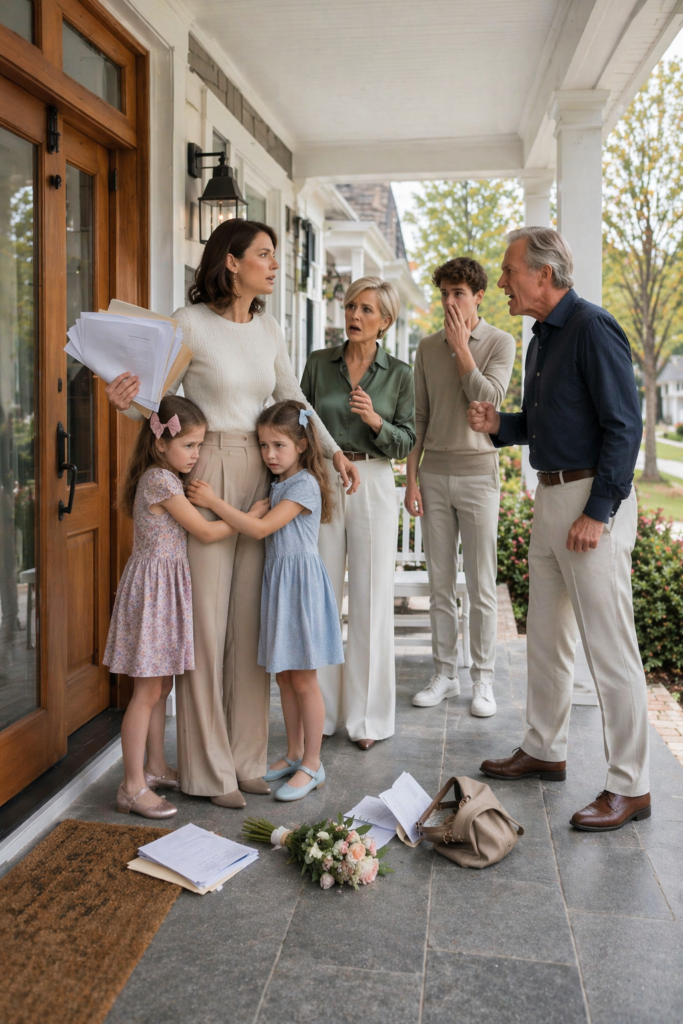
But mere hours after the funeral, Alejandro’s parents stood on the porch as if they owned life, the house, and even their pain.
Don Ernesto Castañeda held a bunch of keys. Beside him, Doña Beatriz, immaculate in her black coat and pearls, looked Mariana up and down.
—Alejandro isn’t here to support you anymore —Beatriz said—. We’re not going to take care of a widow without a job and two kids who just drain resources.
Mariana felt her throat close.
—This is our house. We lived here with Alejandro. My children’s things are here.
Ernesto let out a dry laugh.
—The house belongs to the Castañeda family. You were just the wife while my son was breathing.
Mateo stepped forward, drenched from the rain.
—Don’t talk to my mom like that.
Ernesto glared at him with disdain.
—Back off, kid. You don’t know who you’re talking to.
Mariana stepped in front of her son.
—You buried your father today. Have a little respect.
She couldn’t say more.
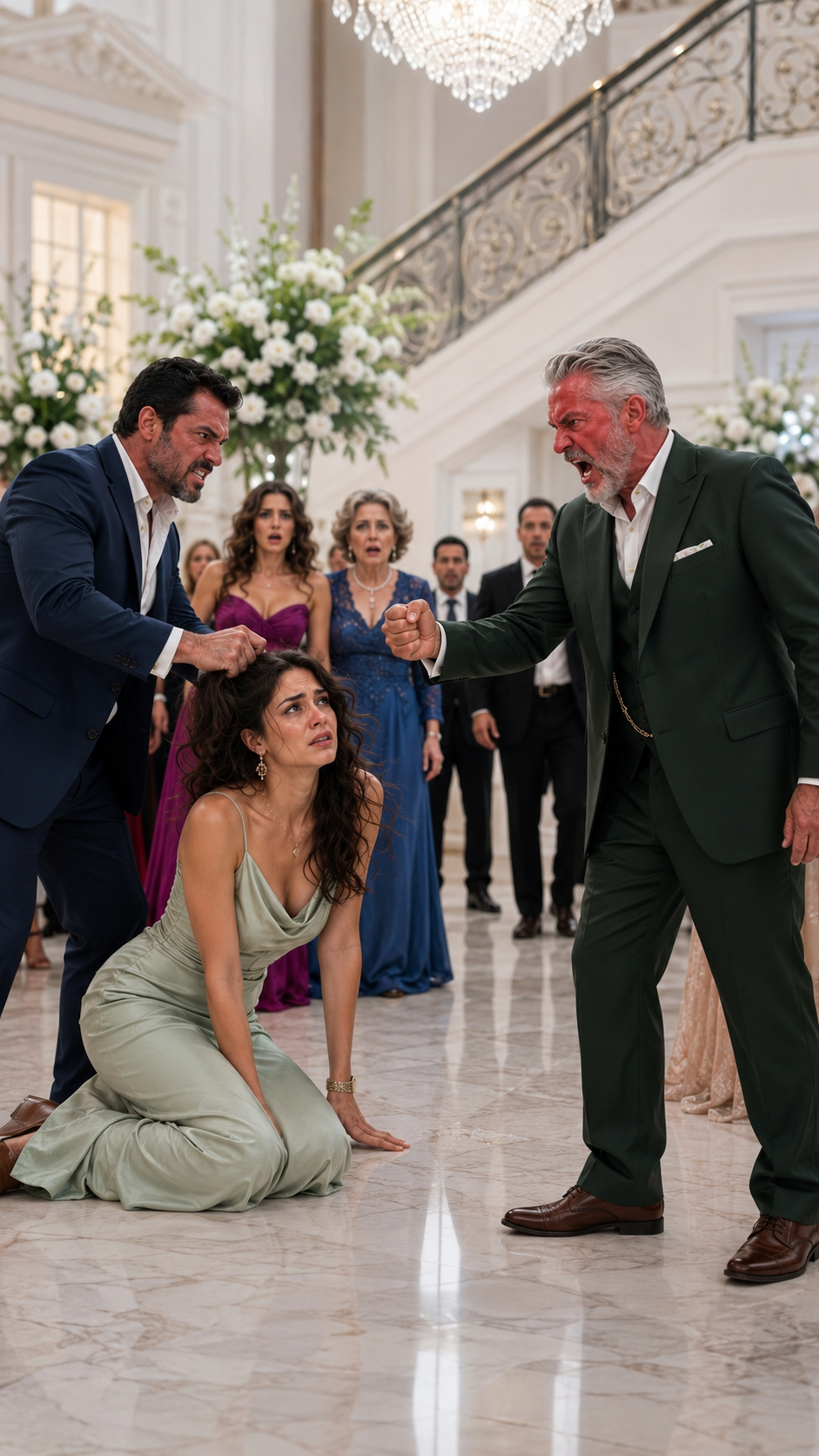
Ernesto’s hand sliced through the air, striking Mateo in the face with such force that the boy slammed against the railing. Camila screamed as if something had been ripped from her chest.
Mariana felt everything cloud over.
—You’re insane! He’s a child!
While she held Mateo’s swollen face, Beatriz grabbed her left hand.
In one swift motion, she yanked the wedding ring off. The metal scraped against her skin, leaving a red line on her finger.
—This ring belonged to my mother —Beatriz said, clenching it in her fist—. It should never have ended up on a woman like you.
For 12 years, Mariana had worn that ring while accompanying Alejandro through hospitals, chemotherapy, impossible bills, and nights where he trembled in pain, not wanting to scare their children.
For 12 years, the Castañedas had called her "family" over Sunday meals.
Now they treated her like trash.
Mariana didn’t scream.
She took Mateo by one arm, pulled Camila close with the other, and walked toward the old car Alejandro had left her.
—That’s right, leave —murmured Ernesto—. Finally, you understood your place.
Inside the glove compartment, Mariana remembered the brown envelope Alejandro had handed her two months before he died.
"Don’t open it until you truly need it," he had said.
With trembling hands, she broke the seal.
The first page was written in Alejandro’s feeble handwriting.
"Mariana, if my parents harm you or try to kick you out of the house, don’t argue. Call Attorney Clara Mendoza. The house is yours. The cabin in Valle de Bravo is yours. My shares in the company are protected for you, Mateo, and Camila. My parents know nothing."
Mariana looked up at Ernesto and Beatriz, who remained on the porch in the rain.
Then she dialed the number.
Clara answered on the third ring.
When Mariana explained everything, the attorney’s voice turned cold.
—Stay in the car. Don’t go back to the door. I’m coming over with certified copies and I’ll call a police unit.
Ernesto saw her talking on the phone and scoffed.
—Are you calling your sister? Tell her to bring black bags for your clothes.
Mariana lowered the window just a few inches.
—I’m calling Alejandro’s lawyer.
Ernesto’s smile vanished.
Beatriz clenched her fist around the ring.
And for the first time that afternoon, fear crossed their faces.
PART 2
Twenty minutes later, a patrol car parked in front of the house.
Behind it arrived a dark blue sedan. Clara Mendoza stepped out, a lawyer in a gray suit, leather briefcase, and a hard gaze.
She didn’t greet Ernesto or Beatriz.
First, she walked to the car, saw Mateo’s swollen cheek, glanced at Camila shivering in the back seat, and then took Mariana’s injured hand.
—You did exactly what Alejandro expected —she said softly.
Then she turned to the in-laws.
—You are trespassing on a property legally administered by Mariana Ríos de Castañeda.
Ernesto let out a nervous laugh.
—What nonsense. My son bought this house before he married.
Clara opened the briefcase and pulled out documents protected in plastic.
—Eight months ago, Alejandro created a family trust. Mariana is the primary beneficiary and administrator. The house, the cabin in Valle de Bravo, and 40% of his shares in Transportes Castañeda are protected for her and her children.
Beatriz turned pale.
—Alejandro would never have left us out.
—He didn’t leave you out —Clara replied—. He left you the apartment in Acapulco and an annual pension. What he didn’t leave you was permission to throw his widow and grandchildren out in the rain on the day of his funeral.
The police officer approached Mateo.
—Did this man hit you?
Mateo looked at Mariana. Then he nodded.
Ernesto raised his hands.
—I just corrected him. He disrespected me.
—He’s a minor —the officer said—. And you have no right to touch him.
Beatriz tried to slip the ring into her bag.
Clara noticed her instantly.
—That ring appears in Alejandro’s personal instructions as exclusive property of Mariana.
—It was my family’s! —Beatriz shouted.
—It belonged to Alejandro —Clara retorted—. And Alejandro chose to give it to his wife.
The officer extended his hand.
Beatriz hesitated for a few seconds before handing it over. When the ring returned to Mariana, she didn’t put it on. She just held it tightly, feeling the cold metal against her bruised skin.
That afternoon, Ernesto and Beatriz had to leave the house with two suitcases, under police supervision. Neighbors watched from their windows. No one spoke, but everyone had heard enough.
Ernesto pointed at Mariana in rage.
—You turned my son against us.
Mariana didn’t look away.
—No. Alejandro protected me because he knew you better than I did.
Beatriz swallowed hard.
—We lost our son.
—My children also lost their father —Mariana replied—. And before the earth on his grave dried, you wanted to leave them homeless.
That night, Clara stayed until they changed the locks.
Then they searched Alejandro’s office.
Among old bills, tax folders, and stored medicines, they found a safe hidden behind a bookshelf.
Inside were policies, account statements, notarized copies, passwords, and another sealed envelope with Mateo and Camila’s names.
Mariana held it for several seconds.
She didn’t open it.
There were words that belonged to her children, not to her.
The next morning, in Clara’s office, Mariana understood the magnitude of everything.
Alejandro knew his parents pressured him to return the company shares while he was sick. They told him Mariana was weak, that she wouldn’t know how to manage anything, that she would end up selling everything out of ignorance.
But Alejandro didn’t believe them.
Before the illness left him powerless, he protected the house, the cabin, and his stake in the company within trusts.
—He wanted to leave you more than money —Clara said—. He wanted to leave you freedom.
Mariana cried for the first time since the funeral.
It wasn’t a pretty cry. It was a broken cry, the kind that erupts when a woman has endured too much without allowing herself to fall.
But the peace didn’t last long.
Three weeks later, Ernesto sued the trust. He claimed Alejandro lacked mental capacity when he signed. He said Mariana had manipulated him while he was sick.
And the worst came in a red folder.
He also wanted to take away custody of Mateo and Camila.
On the day of the hearing, Mariana entered the courthouse hand in hand with her children.
Ernesto and Beatriz were already there, sitting like victims. Their lawyer presented Alejandro as a confused man, weak, incapable of making decisions.
Then he called Mariana "unstable," "without sufficient income," and "emotionally broken."
Mateo clenched his fists.
Camila hid behind her mom.
When it was Clara’s turn to speak, she didn’t raise her voice.
—Your Honor, we have medical evaluations conducted two days before the signing of the trust. Alejandro Castañeda was declared fully capable by two independent specialists. We also have video of the notarized reading, testimony from the notary, and emails where he explains why he made these decisions.
The judge reviewed the documents.
Ernesto began to sweat.
Clara continued.
—Regarding custody, we have a police report, photographs, and the officer’s statement confirming that Don Ernesto hit Mateo, a minor, on the same day of his father’s funeral.
The room fell into silence.
Ernesto banged the table.
—That kid challenged me!
The judge looked at him over his glasses.
—You’re talking about a minor who just buried his father.
Then Clara pulled out another folder.
Mariana didn’t recognize it.
—Your Honor, Alejandro left instructions to present this only if his parents tried to strip Mariana of her rights or dispute custody of her children.
Mariana turned to her.
—What is that?
Clara looked at her with sadness.
—The evidence Alejandro hoped never to use.
Inside were transfers, false invoices, printed emails, and account statements.
For years, Ernesto and Beatriz had siphoned money from Transportes Castañeda using phantom suppliers. Alejandro discovered it while reviewing the company before his condition worsened.
He didn’t report them because he still hoped that after his death, they would respect his wife and children.
But they didn’t.
Ernesto turned pale.
—That doesn’t prove anything.
Clara pulled out a USB drive.
—There’s also a recording.
The judge authorized its playback.
Alejandro’s voice filled the room. Tired, weak, but firm.
—Dad, I know about the invoices. I know about the accounts in Monterrey. I won’t destroy you if you leave my family alone. But if one day you try to take away what belongs to them, Mariana will have everything to defend herself. Don’t ever call my children a burden again. Don’t ever say my wife doesn’t deserve my last name. She was with me when you only asked how much I would leave behind.
Mariana covered her mouth with one hand.
Camila began to cry silently.
Mateo lowered his head, but his shoulders shook.
The recording continued.
—Mom, you know what they did. And yet you asked me to leave the house in Dad’s name so Mariana couldn’t sell it. You talked to me about blood. My children are my blood. Mariana is my family. If one day they hurt them, don’t expect mercy from me from the grave.
Beatriz broke down in tears.
For the first time, she didn’t look elegant or strong. She looked small, old, defeated.
The hearing lasted less than an hour after that.
The trust was confirmed. The custody request was denied. The judge ordered the financial documentation sent to the Public Prosecutor's Office.
Ernesto left without looking at anyone, with the face of a man who had just realized that ambition also leaves marks.
Beatriz stood before Mariana.
—I lost my son —she said, her voice broken.
Mariana hugged Camila.
—And I lost my husband. They lost their dad. But you turned that pain into war.
Beatriz looked at the ring.
—It was my mother’s.
Mariana slowly shook her head.
—No. It was Alejandro's. And Alejandro decided who to give it to.
Beatriz didn’t apologize.
She just left.
The following months weren’t easy. The house still smelled like Alejandro in some corners. His favorite mug remained in the cupboard. Mateo hadn’t played soccer for several weeks. Camila slept with an old sweatshirt of her dad’s and asked if the dead could hear when someone spoke softly to them.
Mariana understood that grief doesn’t walk straight.
Sometimes it was a signature in court.
Sometimes it was a call from Clara.
Sometimes it was a girl crying at 2 AM.
But there was one thing that never changed.
They remained in their home.
In spring, Mariana took Mateo and Camila to the cabin in Valle de Bravo. They opened windows, shook off the dust, and planted yellow flowers by the entrance because Alejandro said that yellow made any place seem less sad.
That afternoon, as the sun set over the lake, Mariana took the ring out of a little box.
She hadn’t worn it since the day Beatriz yanked it off.
Mateo approached.
—Are you going to wear it again?
Mariana smiled with tears in her eyes.
—Yes. But not because it makes me part of the Castañedas.
Camila hugged her around the waist.
—Then why?
Mariana slid the ring onto her finger.
—Because your dad chose me. Because he protected us. Because even when he could no longer be here, he left the truth so that no one could destroy us.
That night they dined on the porch.
They didn’t talk about lawsuits, money, or grandparents who confused blood with property.
They talked about Alejandro.
About how he burned the quesadillas.
About how he sang horribly in the car.
About how he checked three times if the door was locked.
And for the first time since the funeral, the three laughed without feeling guilty.
Mariana then understood that a house doesn’t belong to the strongest last name, nor to the loudest shouter, nor to the one with the most money for lawyers.
A house belongs to those who fill it with love when everything is falling apart.
And although Ernesto and Beatriz tried to throw them out in the rain, although they called them burdens, nuisances, and charity, they couldn’t erase the one thing Alejandro left written more strongly than any document:
His family wasn’t those who bore his blood.
His family was those who stayed when the storm came.