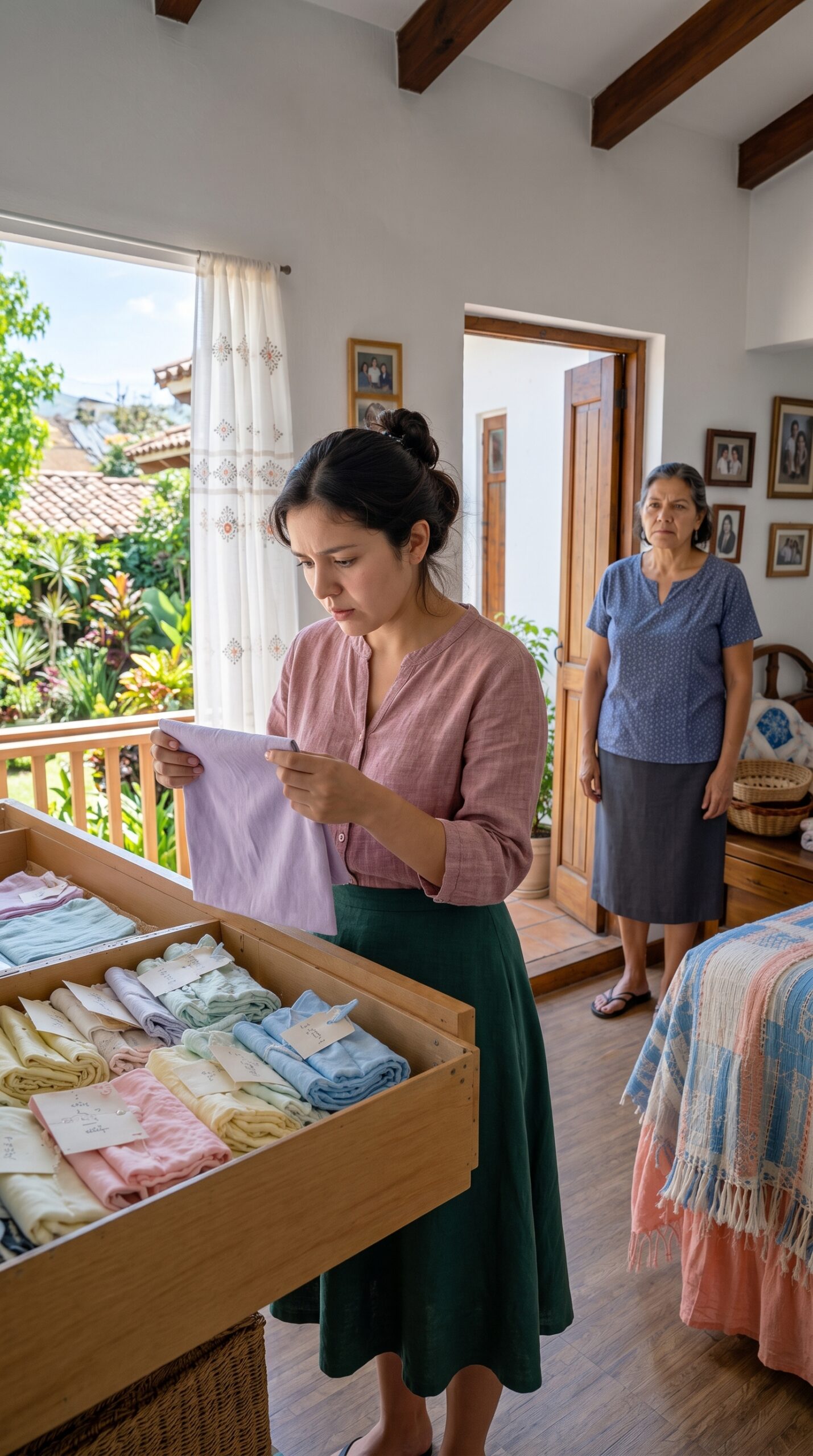
PART 1
The last memory Daniela held of her mother was not of an embrace.
It was a scream.
—“Forgive me!”
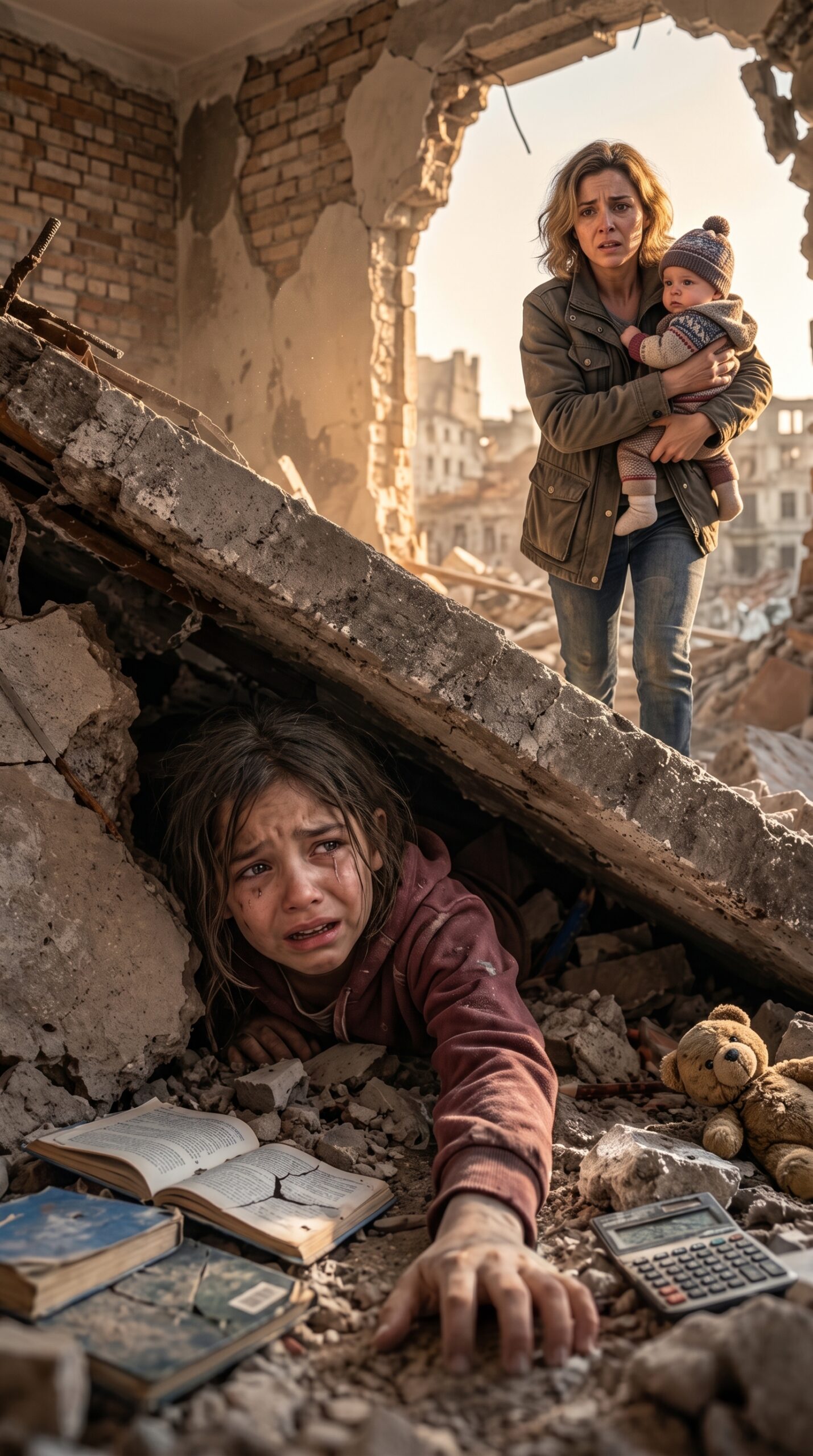
Then she saw Teresa, her mother, running through a cloud of dust with Emiliano, her one-year-old brother, clutched against her chest.
Daniela was 11.
And she was trapped under the rubble of her own house in Puebla.
That morning had started like any other Saturday. The smell of chilaquiles filled the kitchen, the radio played softly, and her father, Armando, was fixing a leak in the yard.
Daniela sat on the floor, coloring a poster for school.
Emiliano crawled over to her and bit into a blue crayon.
—“Mom! Your baby wants to eat colors again!” Daniela complained.
Teresa laughed while flipping the tortillas.
—“He’s not ‘your baby.’ He’s your brother.”
—“Yeah, sure. Your spoiled child.”
Teresa gave her a quick kiss on the head.
—“Oh, Dani, don’t be dramatic.”
Daniela smiled, but inside that word stung.
Dramatic.
That’s what her mother said every time Daniela craved a little extra affection. No one in the house knew that for months she had discovered a hidden paper in a drawer: her adoption certificate.
Her parents had never treated her poorly.
But since then, an idea had lodged itself like a thorn.
“If one day they have to choose, they will choose the blood child.”
She didn’t tell anyone.
She was embarrassed.
She thought it was silly.
Until the ground started to roar.
First, a glass fell off the table. Then the lamp began to shake wildly. The walls cracked with a dry, ugly sound, like bones breaking.
—“It’s shaking!” Armando shouted from the yard.
Teresa scooped up Emiliano.
Daniela stood, but the floor moved so violently she fell to her knees.
—“Mom!”
Teresa tried to move toward her.
Then a concrete beam broke loose and fell between them.
Everything turned to dust.
Daniela felt a terrible blow to her leg, then in her back. She couldn’t scream. She couldn’t breathe. The world went dark for a few seconds.
When she opened her eyes, half her leg was trapped under pieces of the ceiling.
Her throat burned.
There was dust in her mouth.
—“Mom?” she whispered.
On the other side of the rubble, she saw Teresa.
She had blood on her forehead, tears on her face, and Emiliano crying against her chest.
—“Dani!” Teresa screamed.
—“Help me! Mom, help me!”
Teresa took a step toward her.
Daniela saw her outstretched hand.
She watched her try to climb over the stones.
But above, the ceiling creaked again.
Armando shouted from somewhere:
—“Teresa, get out! Everything is coming down!”
Emiliano started crying with a tiny, desperate sound.
Teresa looked at the baby.
Then she looked at Daniela.
Her eyes were not cold.
They were shattered.
—“Forgive me!” Teresa shouted.
And she ran.
She ran with Emiliano in her arms, leaving Daniela trapped.
The girl couldn’t comprehend the reasons.
She didn’t think about structures, or danger, or seconds.
She only heard that poisonous voice inside her.
“See? You weren’t really her daughter.”
Then came another crash.
The house fell again.
Daniela closed her eyes, thinking her mother had just abandoned her forever.
And when an unfamiliar hand appeared among the stones, no one could imagine that the worst was not the collapse... but the truth that family would bury for 12 years.
PART 2
The hand belonged to Don Chava, a neighbor from the back street who had run out when he heard the screams.
—“Hang on, my girl. We see you. Don’t fall asleep, okay?”
Daniela couldn’t move her leg.
Her face was covered in dust and she had a wound on her eyebrow. Every time she breathed, it felt like she was swallowing dirt.
—“My mom left,” she murmured.
Don Chava didn’t respond.
He just pushed his arm deeper into the gaps and held her hand.
—“I’m here. Squeeze me tight.”
It took nearly 2 hours to pull her out.
There weren’t enough ambulances. The neighborhood looked like a horror movie: open walls, people praying, dogs barking, women carrying buckets, men removing stones with bare hands.
When they finally lifted Daniela, she saw the gray sky filled with dust.
She also saw Teresa running toward her.
Without Emiliano.
With a torn blouse and bloodstains on her side.
—“My girl! Dani, my girl!”
Daniela turned her face away.
She didn’t want to be touched.
In the hospital, Armando sat beside her bed. He had a bandage on his head and red eyes from not sleeping.
—“Is Emiliano alive?” Daniela asked.
—“Yes, sweetheart. He’s fine.”
—“Of course,” she replied, flat.
Armando frowned.
—“Daniela, your mom…”
—“I don’t want to see her.”
—“But she came back for you.”
Daniela closed her eyes.
—“After saving him.”
Armando fell silent.
That silence was the worst thing he could do.
For Daniela, it meant confirmation.
Teresa tried to enter many times. She brought gelatin, drawings, a pink blanket that had survived the quake. Daniela accepted nothing.
One day Teresa entered without permission.
She sat next to her and stroked her fingers.
Daniela pulled her hand away as if it burned.
—“Don’t touch me.”
Teresa broke down.
—“My love, listen to me.”
—“Don’t call me that.”
—“You are my daughter.”
Daniela looked at her with rage.
—“No. I’m the adopted one. Emiliano is your real son.”
Teresa turned pale.
Armando stood up suddenly.
—“Who told you that?”
—“I found it. I already knew. And that day I also understood.”
Teresa began to cry.
—“That day didn’t happen like that.”
—“Then tell me you didn’t run with him and left me behind.”
Teresa opened her mouth, but nothing came out.
Daniela smiled with an old sadness, too big for her 11 years.
—“See? You can’t.”
She left the hospital a month later with a scar on her leg and another deeper one in her heart.
The house was uninhabitable, so they moved in with her grandmother in San Pedro Cholula.
Emiliano grew up without remembering the quake.
Daniela remembered it every night.
Teresa did everything to get closer. She made her atole when it was cold, left notes in her backpack, attended her therapy sessions, stood outside the school even when Daniela pretended not to see her.
But Daniela built a wall.
When she turned 15, she didn’t want Teresa to accompany her to mass.
When she entered high school, she wouldn’t let her take pictures with her.
When she went to study architecture in Mexico City, she barely replied to messages.
—“Daughter, you’re punishing your mom for something you don’t understand,” Armando said.
—“I understand perfectly,” Daniela replied.
But she didn’t understand.
It just hurt.
Twelve years passed.
Daniela became a brilliant architect, specializing in structural safety. Her classmates said she was obsessive about checking cracks, columns, and plans.
She never explained why.
The truth was simple: she needed to understand why houses collapse.
Maybe, deep down, she also wanted to understand why her family had fallen apart.
One night, Armando called her.
It was 2:17.
—“Dani,” he said with a broken voice, “your mom is in the hospital.”
Daniela felt her hands grow cold.
—“What’s wrong?”
—“A tumor. It’s advanced.”
She drove to Puebla without stopping.
When she arrived, she found her father sitting in a waiting room, suddenly aged.
—“Why didn’t you tell me earlier?”
Armando looked down.
—“Your mom didn’t want to trouble you.”
That hit her strangely.
For years Daniela had believed her mother hadn’t chosen her.
And still, Teresa kept trying not to be an inconvenience.
She entered the room.
Teresa was sleeping. She was thin, with dry lips and hair stuck to her forehead. She no longer resembled the strong woman who made pozole for 20 people and scolded everyone with a flip-flop in her hand.
She looked small.
Human.
Her mom.
On the bedside table was a metal box, rusted, with painted flowers.
Daniela recognized it.
It was the box where Teresa kept photos, important papers, and memories that no one could touch.
—“She asked me to give this to you,” Armando said from the door.
—“What’s in there?”
He swallowed hard.
—“What you didn’t want to hear.”
Daniela opened the box in the hallway.
Inside were photos of her as a baby, her first lock of hair, a drawing with chewed crayons, the bracelet from the day she was adopted.
Underneath she found a yellow envelope.
Inside were copies of reports from Civil Protection, a medical declaration, and a sheet signed by Don Chava.
Daniela began to read.
And each line shattered the version she had repeated for 12 years.
The report stated that Teresa hadn’t gone out to save herself.
She had first rescued Emiliano because the baby was right beneath a fractured slab that could fall in seconds. She left him in the arms of Doña Lupita, the neighbor.
And she returned.
She returned for Daniela.
But when trying to cross again, another part of the ceiling collapsed. A rebar pierced her side. She lost a lot of blood. Yet, she tried to get back into the house.
Don Chava declared that three men had to stop her because Teresa was trying to crawl in.
The statement read:
“The woman screamed that her daughter was inside. She didn’t say ‘the girl.’ She said ‘my daughter Daniela.’ She kept repeating that if they didn’t let her go, she would go in even if she died.”
Daniela felt the hallway move.
Then she found a letter.
The handwriting was Teresa’s.
“My Dani:
If you are reading this, maybe I could no longer say it to you face to face.
That day I didn’t choose between my blood child and my adopted daughter.
That day I had two children dying and only two arms.
Emiliano couldn’t walk. You were trapped but breathing. He was underneath a slab that was coming down.
I took the baby out to leave him outside and return for you.
I came back, my girl.
I swear to God I came back.
But the house collapsed again and my body couldn’t make it.
Since then, I live with your eyes piercing my soul.
You thought I left you because you weren’t born of me.
But you were born of my decision.
I chose you the day I held you for the first time.
I chose you when you cried at night.
I chose you when you got mad over silly things.
And I chose you that day, too.
Forgive me, not for abandoning you.
Forgive me because I couldn’t save you without breaking your heart.”
Daniela could not stand anymore.
She sat on the hospital floor and cried like that girl who had never finished emerging from the rubble.
She cried for the unanswered Sundays.
For the rejected hugs.
For the years when she turned a wound into a sentence.
Armando sat next to her.
He didn’t say, “I warned you.”
He just held her.
—“Your mom tried to explain to you many times.”
—“I hurt her so much,” Daniela said.
—“You were both hurt, daughter.”
That night, Daniela entered the room and took Teresa’s hand.
—“Mom,” she whispered.
Teresa slowly opened her eyes.
—“Dani…”
—“I read the letter.”
A tear rolled down her temple.
—“I came back.”
Daniela nodded, trembling.
—“I know.”
Teresa weakly squeezed her hand.
—“I never stopped choosing you.”
Daniela leaned in and hugged her carefully.
—“You forgive me too.”
Teresa stroked her hair, just like when she was a child.
—“I have nothing to forgive you for. You were a scared little girl.”
—“I hated you for many years.”
—“I loved you all those years.”
From that day on, Daniela stayed in Puebla.
She took a leave from work and accompanied Teresa to chemotherapies, consultations, and horrible nights. She learned to fix her hair when it fell out. She learned to listen to her without defending herself.
Emiliano, now 13, also carried his own guilt.
One afternoon, Daniela found him crying on the rooftop.
—“Did you hate me because mom saved me first?” he asked.
Daniela hugged him.
—“No, Emi. You were a baby. It wasn’t your fault.”
—“But because of me, you both separated.”
—“No. Fear separated us. Not talking separated us. Believing that pain always tells the truth separated us.”
Emiliano cried against her shoulder.
And Daniela understood that not only she had been trapped that day.
Each one had their own rubble.
Teresa improved a bit.
It was no miracle, but it was a gift.
They had one year.
One year to look at photos, eat cemitas in the living room, laugh at Daniela’s tantrums, and talk about what had once hurt too much.
One Sunday, Teresa asked to go to the land where the house used to be.
Now there was a small community park, with young trees and a plaque for the quake victims.
Teresa walked supported by Daniela.
She stopped where the kitchen used to be.
She pulled a little bag from her purse.
Inside were two chewed crayons: one blue and one red.
—“I found them among the rescued things,” she said. “I could never throw them away.”
Daniela took them.
And this time, she didn’t cry in rage.
She cried in tenderness.
—“Mom,” she said, “you chose me when you adopted me. But I also chose you. It just took me 12 years to remember.”
Teresa smiled.
—“Then we are at peace.”
Three months later, Teresa died at home.
Armando held one hand. Emiliano held the other. Daniela stroked her hair, just as Teresa had done so many times.
Before leaving, she opened her eyes.
Daniela thought she would say once again, “forgive me.”
But Teresa merely whispered:
—“My daughter.”
Daniela responded through tears:
—“My mom.”
Today, Daniela is 30 years old and reviews schools, hospitals, and houses in seismic zones. On her desk, she keeps a family photo and the two chewed crayons.
To anyone, they are trash.
To her, they are proof that a family can be buried under guilt, silence, and pride... and still learn to breathe again.
For years, she believed her mom had left her under the rubble.
The truth was different.
Teresa did come back.
It was Daniela’s pain that kept her from seeing it.