PART 1
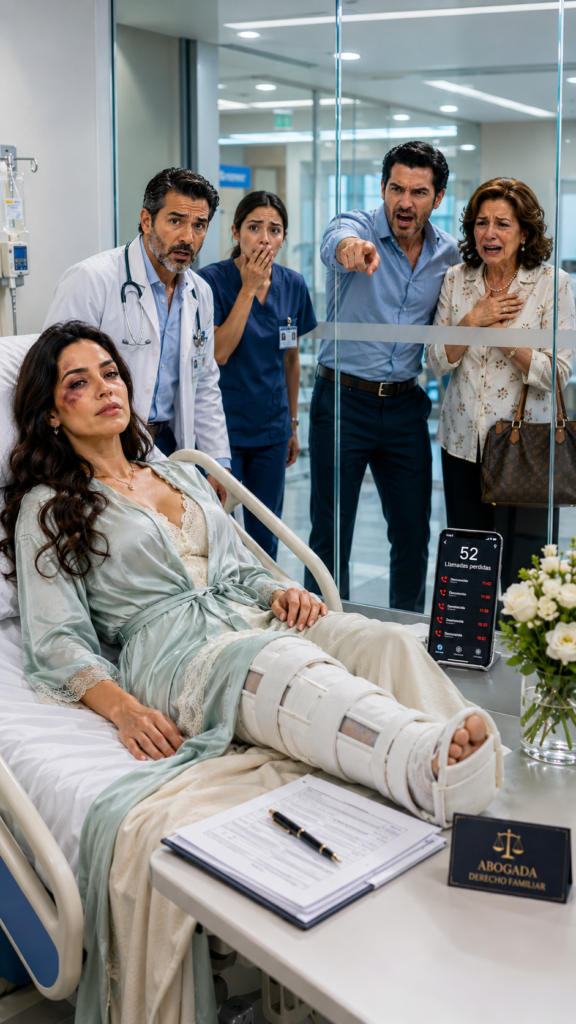
The first thing Mariana Ríos heard upon waking was the beep of a machine counting down the seconds that had nearly run out for her.
Beep.
Silence.
Beep.
The harsh white light of the Civil Hospital in Guadalajara hurt her eyes. Her throat was raw, her lips parched, and her body so weak that lifting a finger felt like carrying a bucket full of stones.
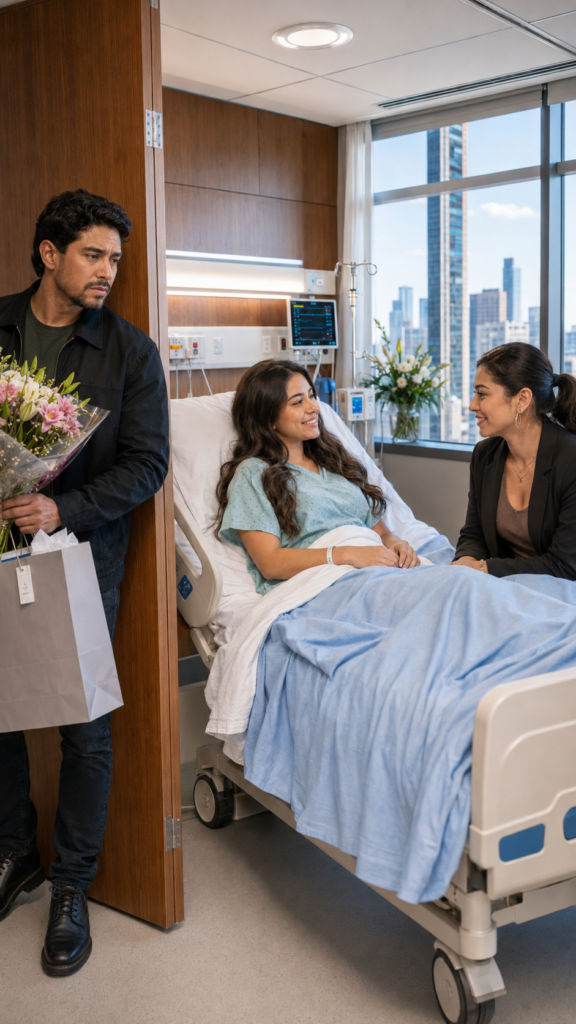
Beside her, Diego, her husband, sat in a blue plastic chair. His shirt was wrinkled, his beard unkempt, and dark circles carved into his face.
When he saw her open her eyes, he broke down.
“Thank God, Mariana… thank God.”
Mariana was 34 years old, working as a payroll manager at a logistics company in Zapopan, and she had spent years believing that being tired was normal when a family depended on you.
The last thing she remembered was being next to the copier, clutching a folder against her chest. Then, the floor had come crashing down on her.
“How long?” she asked, her voice shattered.
Diego squeezed her hand.
“You’ve been in the hospital for 12 days. You were unconscious for 9.”
Mariana glanced toward the window. There were 2 empty chairs.
No flowers from her mom.
No balloon from her dad.
No message from her younger sister.
Just Diego's jacket, a book from Sofía, her coworker, and a cheap bouquet of sunflowers in a plastic jar.
A nurse named Carmen came in to check on her. She spoke with that softness people use when they’ve seen too much pain.
“You gave us quite a scare, honey.”
Mariana blinked.
“Did my family come?”
Diego looked down.
Carmen did too.
That silence answered her before any words could.
“My parents live in Tonalá,” Mariana said. “Brenda lives in Zapopan. Did you notify them?”
Carmen took a deep breath.
“Yes. We called all your emergency contacts.”
“And?”
“Your mom answered twice. Your dad returned 1 call. They said they had several things to take care of and would come when they could.”
Mariana felt the room grow colder.
For years, she had paid her parents’ electricity, property taxes, her mom’s Coppel card, Brenda’s loans, her nephews’ tuition, and even the tires of a truck she didn’t even drive.
Every time someone said “urgent,” Mariana rushed.
But she had been unconscious for 9 days, nearly dying, and no one had crossed that door.
“Don’t tell them I woke up,” she said suddenly.
Diego looked at her, concerned.
“Mariana…”
“I mean it. Don’t tell them anything.”
The nurse left to give them privacy.
Diego hesitated for a few seconds. Then he pulled out his phone and held it in front of her.
“There’s something you need to see.”
Mariana read the messages from her dad sent while she was hooked up to machines.
“Baby, did you make the mortgage transfer?”
“Your sister says her card didn’t go through. Fix it when you can.”
“When you’re done with your drama, call. Your mom is stressed.”
Mariana kept scrolling down the screen, hoping to find even a single phrase.
“Is she alive?”
“Can we see her?”
“Tell her we love her.”
But there was nothing.
Not a single word asked if Mariana was still breathing.
PART 2
The discharge came 6 days later.
Mariana walked out of the hospital leaning on Diego, her legs trembling and a bag full of medications in hand. The sky in Guadalajara was gray, heavy, as if it too were tired.
When they arrived at their house in the Chapalita neighborhood, there was a yellow envelope taped to the door.
Diego peeled it off.
In front, written in her dad’s handwriting, it said:
“MARIA. URGENT.”
For one absurd second, Mariana felt hope.
Maybe it was an apology.
Maybe her parents had been scared.
Maybe her dad, Ramiro, didn’t know how to say “I’m sorry” face to face.
Diego opened the envelope.
Inside was a list of debts.
The mortgage shortfall.
Elvira’s card, her mom.
Brenda’s overdue truck payment.
At the bottom, Ramiro had written an amount and underlined it twice.
$148,600.
Below was a note.
“Pay this before they charge us late fees. Then we’ll talk about your behavior.”
Mariana stood at the entrance of her home, with a hospital bracelet still on her wrist, leaning on her husband to keep from falling.
And her dad wanted to scold her for almost dying at an inconvenient time.
Diego tightened his grip on the paper.
“I’m going to their house.”
“No,” she said.
“Mariana, this is too much.”
“No. Now we know why they actually came here.”
That night, Mariana opened her computer and started reviewing everything.
Automatic transfers.
Additional cards.
Insurance.
Services.
Tuition fees.
Subscriptions.
The total overwhelmed her more than the medications.
Then she noticed a monthly charge she didn’t recognize.
$9,850.
It had been coming out of her account for 23 months.
The description belonged to an automotive finance company.
Mariana called.
An executive explained that the payment corresponded to a loan for a truck.
“What truck?” Mariana asked.
“A 2022 Range Rover Evoque.”
The same white truck that Brenda drove.
Mariana had never signed for that loan.
The registered email was Ramiro’s.
The contact phone number was Brenda’s.
The signature looked like hers because someone had copied it from old documents her parents kept “for safety.”
Diego was stunned.
“That’s identity theft.”
Mariana didn’t cry.
Something inside her had already dried in those empty chairs at the hospital.
The next day, she changed the locks, canceled additional cards, stopped transfers, and made Diego her sole medical contact. She also called a lawyer, Licenciada Natalia Cárdenas.
Natalia reviewed the documents and was direct.
“Don’t answer them. Keep everything. This can turn criminal.”
It turned criminal faster than they imagined.
That afternoon, Mariana received 47 missed calls.
Then an audio from her mom.
“Mariana, your dad knows you’re looking into things. You better stop before you find out something you can’t handle.”
She didn’t sound worried.
She sounded like someone guarding a closed door.
Over the next few days, Brenda wrote from unknown numbers.
“My kids are going to suffer because of you.”
“Dad says you’re accusing us of fraud. What a lousy mother.”
“You signed, don’t play dumb.”
Mariana saved the screenshots.
Then Ramiro finally sent a direct message.
“We need $220,000 for your mother’s surgery. Deposit it before Friday.”
Mariana read the message from the couch, a blanket over her weak legs.
An hour earlier, Elvira had posted a story on Instagram from Tequila, Jalisco.
She was toasting with a glass, wearing a beige coat that Mariana had gifted her for Christmas.
The text read:
“Nothing like escaping to heal the heart.”
Mariana opened Brenda’s stories.
In one, Brenda was inside the Range Rover, complaining about “vultures” calling her for a late payment.
In another, Ramiro’s voice could be heard in the background.
“She’s going to send the money. She always does.”
Brenda murmured:
“And what if this time she doesn’t?”
The overdue amount for the truck was almost equal to the $220,000.
The surgery didn’t exist.
The emergency was Brenda’s luxury truck.
Mariana opened the bank app.
She selected Ramiro’s account.
She typed 1 peso.
In the concept, she wrote:
“Good luck.”
Diego looked at her.
“Are you sure?”
“Yes.”
She pressed send.
Four minutes passed.
The phone began to vibrate.
Ramiro called once.
Then came the audios.
“Do you think this is funny?”
“Your mother could die!”
“You humiliated the family!”
In the third audio, the lie fell apart.
“Brenda is going to lose everything because of your selfishness!”
Mariana saved everything.
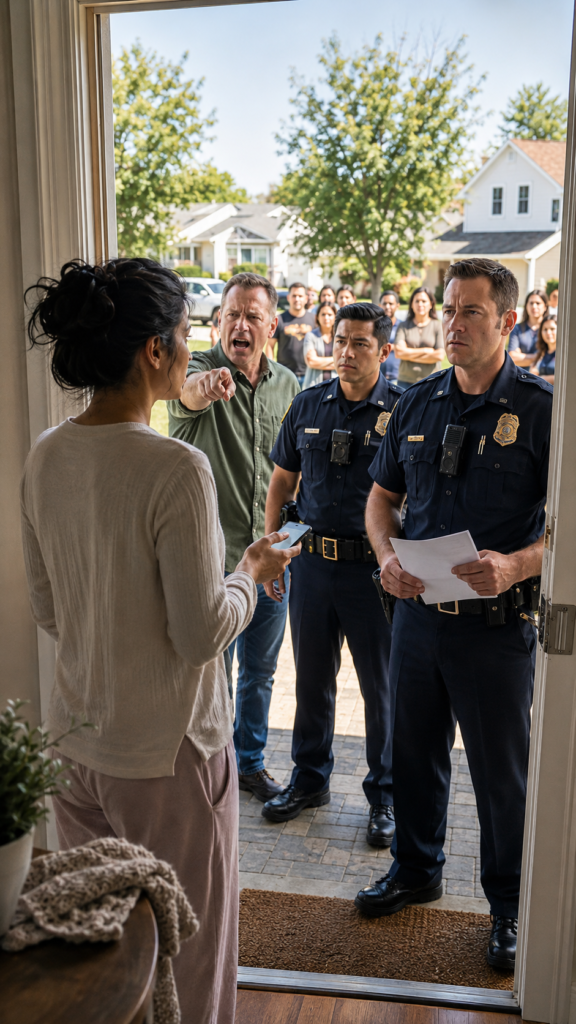
At 5:12 PM, someone knocked on the door with such force that the pictures in the hallway trembled.
On the camera, two municipal police officers were visible.
Diego wanted Mariana to stay seated.
She stood up.
She had spent too many years hiding from fear.
“We’re looking for Mariana Ríos,” one of the officers said.
“That’s me.”
The officer looked at her: pale, thin, with the hospital bracelet still on her wrist.
“We received a report of possible financial abuse against an elderly adult. Your mother, Elvira Ríos.”
Mariana almost laughed, but she had no strength left.
Her mom was 59 years old and sipping tequila on a tour.
“What am I being accused of?”
“They say you took advantage of your mother’s medical crisis to move money from her accounts.”
Diego clenched his jaw.
“That’s false.”
Mariana opened the door.
“Come in. I have documents.”
She showed them her medical discharge, the dates of intensive therapy, the messages, the false loan, the Tequila stories, the audios, and Brenda’s screenshots.
The younger officer stopped writing when he heard Ramiro say that Brenda would lose everything.
“So, the $220,000 was for a truck?” he asked.
“That seems to be the case.”
“And the surgery?”
“Doesn’t exist.”
The police officers went outside to call a superior.
When they returned, they no longer wore the same expression.
“We’re going to add everything to the report. You can also file for a false report.”
Before leaving, an officer said to her:
“Ma’am, talk to your lawyer about a protection order.”
That night, another message arrived from an unknown number.
“Withdraw the report, send the money, and tell the police you were confused.”
Attached was a photo of Diego entering the house with a pharmacy bag.
Someone was watching them.
The security camera captured a dark sedan parked in front of the house.
The license plate wasn’t clearly visible, but Mariana recognized the dent in the fender.
It was her mom’s car.
Natalia filed an urgent protection request and asked to preserve all evidence.
Then Sofía, the coworker who found Mariana passed out in the office, came to support her.
She brought soup, sweet bread, and a look of guilt that Mariana didn’t understand.
“There’s something I didn’t tell you because you were so weak,” Sofía confessed. “When you fell, I called your mom from your cell.”
Mariana froze.
“And what did she say?”
Sofía swallowed hard.
“She said you were always dramatic when people expected things from you. Then she asked if you had made a transfer for your dad yet.”
Diego muttered a curse under his breath.
But Sofía wasn’t done.
“The next day, Brenda came to the company to ask for your laptop. She said your dad needed financial documents you kept there.”
The laptop was secured by systems.
With the help of security, Mariana and her lawyer managed to review a copy of her personal files.
There they found a spreadsheet named “FAMILY PLAN.”
Mariana had never created it.
It came from Ramiro’s computer.
The sheet had columns with her salary, her savings, the approximate value of her house, her life insurance, and her retirement fund.
Next to each figure were names.
Ramiro.
Elvira.
Brenda.
It was as if they were distributing her assets before she died.
In another tab were old passwords, security questions, identification numbers, and banking data.
At the end was a note written by Ramiro.
“If M becomes incapacitated, begin family control before the husband interferes.”
M was Mariana.
Then they found a draft of a legal request to declare her incapable of managing her money.
The proposed guardian was Ramiro.
The creation date was 6 days before Mariana woke up.
The lawyer called the prosecutor’s office.
A financial crimes agent took the case.
The investigation revealed that the truck loan had been requested from Ramiro’s internet network. Brenda had uploaded the identification. Elvira had confirmed data over the phone pretending to be Mariana.
But it wasn’t the first fraud.
There were 3 previous accounts opened with her information.
The oldest was from when Mariana was 20 years old and studying in college.
Her dad wasn’t “helping her build credit.”
He was using her name.
Ramiro tried to enter the house 1 week later, at 1:14 AM.
He entered the old code for the gate.
It failed.
He pulled out a screwdriver.
The police arrived before he could force the lock.
He said he just wanted to “check if his daughter was okay.”
The camera showed something else.
In the hearing, Elvira cried with a black handkerchief in her hand, as if she were the victim.
Ramiro claimed it was all a family misunderstanding.
Natalia asked him:
“What surgery did your wife need?”
Ramiro shifted in his seat.
“It was a possibility.”
“Which hospital?”
“I don’t remember.”
“Which doctor indicated it?”
“I don’t have that information.”
“Was the money to prevent them from taking the truck from Brenda?”
Ramiro’s lawyer protested.
The judge allowed the question.
Ramiro looked at Mariana for the first time.
“You always helped.”
The courtroom fell silent.
He didn’t deny anything.
He merely complained that obedience had ended.
The judge granted the protection order for 1 year. Ramiro and Elvira could not approach Mariana, her home, her work, or send messages through third parties.
Then the consequences came.
Brenda provided information to reduce her responsibility.
She said her parents promised to divide “what’s fair” if Mariana became incapacitated.
She also submitted a box of documents.
On top of a draft of guardianship was a phrase written by Elvira:
“Use if Mariana survives.”
Mariana read those 4 words and understood that her family wasn’t waiting for her to heal.
They were waiting to decide how much they could take from her if she returned weak.
Ramiro accepted a plea deal for identity theft, forgery, and false reporting.
Elvira did too.
Brenda lost the truck, had to pay restitution, and began to claim that her parents manipulated her.
Before her sentencing, she wrote a letter to Mariana.
It said she missed her, remembered when they played as children, and wanted to get her sister back.
Mariana almost broke.
Until she read the last line.
“Please tell the judge that you forgive me.”
Even her apology came with a price tag.
Mariana didn’t respond.
Months later, her credit was cleared. Diego and she began therapy. Not because their marriage was broken, but because for years Diego had been the patient man waiting while Mariana rushed to extinguish fires that her family deliberately lit.
One day, he told her:
“I knew you loved me. But many times I felt like I was last on your list because you trusted I would never leave.”
Mariana cried.
Not out of guilt.
But out of truth.
She returned to work on a reduced schedule. She learned to leave at 5 PM. The first time she saw the sun still up, she sat in her car and cried like a child.
Sofía brought her coffee.
“Why are you crying now, comadre?”
Mariana smiled through tears.
“I didn’t know afternoons existed during the week.”
That November, Mariana and Diego had dinner at home with Sofía, an aunt who truly believed in her, and 2 coworkers.
No one asked for money.
No one insulted the food.
No one measured love by how quickly Mariana solved others’ problems.
After dinner, Diego raised his glass.
“To Mariana, who finally understood that surviving is not the same as living.”
She looked around.
The table was full.
Not of blood.
But of people who stayed.
Over time, Ramiro and Elvira continued telling another version. They claimed Mariana was controlled by her husband, that she was cold, that she abandoned them when they needed her most.
Mariana stopped correcting them.
Those determined to misinterpret her no longer deserved proof.
On the anniversary of her collapse, she returned to the hospital.
Nurse Carmen recognized her and hugged her tightly. Mariana looked at the empty chairs in the room where she had woken up.
They no longer felt like a humiliation.
They felt like space.
Space for the truth.
Space for those who did come.
Space for the life she could build when she stopped begging her own blood to treat her like a human being.
Ramiro called the police because Mariana sent him 1 peso.
He thought fear would make her obey again.
But that report opened the door to all the secrets her family had hidden for years.
Mariana almost died trying to earn their love.
Leaving was the first thing she did solely to save herself.