PART 1
At 2:07 in the morning, Natalia Méndez answered a call that should never have existed.
The number was unknown, but it insisted with a rare desperation, as if someone were banging on a door from the other side of hell.
Natalia hadn’t slept in five days.
Since her daughter Jimena, just four years old, had died, the house in Querétaro had turned into a box of silence. Every corner smelled of wilting flowers, cold coffee, and candles that the neighbors had brought "to let her rest in peace."
But Jimena wasn’t resting.
Not for Natalia.
“Hello?” she whispered, sitting on the edge of the bed.
On the other end, a woman cried softly.
“Natalia… it’s Miss Laura from the daycare. I’m sorry for speaking to you like this, but I couldn’t wait. Your daughter didn’t die because of you. Andrés lied. I sent you a video. You need to see it before he wakes up.”
Natalia felt her cell phone slip between her fingers.
Beside her, Andrés lay sleeping on his back, one hand over his chest, as if the tragedy had exhausted him too. He had cried at the funeral. He had embraced Natalia’s mother. He had welcomed everyone with the face of a broken widower, repeating:
“We don’t know what happened… it was a tragedy.”
In the living room, on a white shelf, sat the small urn of Jimena.
Too small to contain a life.
Too clean for such a dirty death.
It had all started on an ordinary Tuesday.
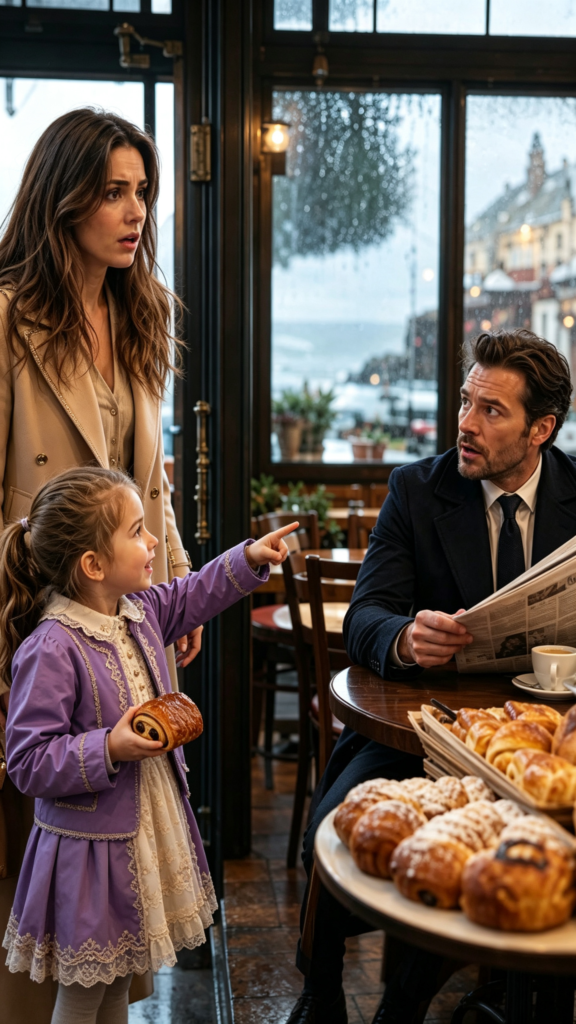
Jimena came out of her room in her yellow dress, her crooked ponytail, and a backpack covered in unicorns. She was happy because at daycare, they would paint flowers for Mother’s Day.
Natalia had to take her, as always.
But that morning, a family court hearing had been moved up. She came out of the bathroom with wet hair, searching for her slippers, her blazer, and her keys all at once.
“I’ll take her, love,” Andrés said from the kitchen. “You go ahead.”
Natalia stopped.
“Remember to check everything. No milk. No yogurt. No cheese. Not even a little.”
Andrés let out a tired laugh.
“Naty, I’m her dad. I’m not an idiot.”
Jimena had a severe dairy allergy. It wasn’t a whim, nor an exaggeration, nor “the intense mom.” In her backpack, there were always two injectors, a laminated medical card, and a list of forbidden foods that Natalia reviewed like a prayer.
Before leaving, Natalia bent down in front of her daughter.
“In the afternoon, we’ll get a popsicle, okay?”
“Lemon,” Jimena said.
“Lemon, princess.”
It was the last promise she made.
At 11:34, the director of the daycare called, screaming.
Jimena wasn’t breathing.
When Natalia arrived at the hospital, Andrés was in the hallway, his shirt wrinkled, crying against the wall. The doctors said “anaphylaxis,” “rapid reaction,” “we did everything.”
But Jimena never came back.
Then came the funeral, the white wreaths, the prayers, the aunts saying horrible things disguised as comfort, and Andrés making decisions for her.
“We need to cremate her quickly, Naty. I can’t see her like this. Let her come home.”
Natalia didn’t have the strength to argue.
In less than 24 hours, her daughter was ash.
Then the guilt began.
Andrés would stroke her hair in the early hours and murmur phrases that felt like hugs but were poison.
“Are you sure she didn’t get contaminated at breakfast?”
“Maybe in the rush, you didn’t see well.”
“I’m not saying you did it on purpose… but you were in such a hurry.”
For five days, Natalia believed she had killed Jimena.
Until that call.
With icy fingers, she opened the video.
The camera showed the entrance of the daycare at 8:19 a.m.
Andrés appeared, holding Jimena’s hand.
But he wasn’t alone.
A tall woman got out of a black SUV, wearing dark glasses, an expensive handbag, and perfect hair. Natalia recognized her immediately: Mónica Salazar, the new sales coordinator at Andrés’s company.
Mónica bent down in front of Jimena and handed her a pink cup with a straw.
A smoothie.
Jimena smiled.
Andrés didn’t stop it.
He didn’t check.
He didn’t ask anything.
He just looked out toward the street, hugged Mónica around the waist, and kissed her quickly on the lips.
Natalia stopped breathing.
Her husband not only had a mistress.
He had allowed that woman to give Jimena the drink that killed her.
PART 2
Natalia stepped barefoot into the patio, her cell phone pressed to her chest.
The cold floor bit at her feet, but she felt nothing. She was afraid that Andrés would wake up, tear the phone from her hands, and bury her alive in that lie again.
She dialed Miss Laura again.
“Tell me everything,” she demanded with a dry voice, almost lifeless.
The teacher breathed unevenly.
“I saved that video on my phone. It doesn’t exist in the system anymore.”
“Who deleted it?”
Laura took a few seconds.
“The director. Or well… she had it erased. Your husband came that same afternoon when you were still at the hospital. He arrived with a lawyer and offered to pay for the patio renovation. He said if it got out that the girl had entered drinking something from the street, everyone would be in trouble.”
Natalia closed her eyes.
Suddenly, she remembered every detail.
Andrés taking her phone in the hospital.
Andrés saying, “I’ll talk to the daycare.”
Andrés signing papers.
Andrés insisting on the cremation.
Andrés hugging her while planting guilt in her mind word by word.
She hadn’t taken care of her.
She had locked her away.
“Did Jimena come in with the cup?” Natalia asked.
“Yes. I saw her. I asked what she was drinking, and she happily said, ‘My dad said it was okay.’ Then she started scratching her neck. Her mouth swelled up. We ran for her backpack, for the injector, for everything… but it was too quick.”
Natalia leaned against the wall.
“My dad said it was okay.”
That phrase opened a new wound within another wound.
For three days, Natalia didn’t confront Andrés.
She observed him.
She saw him delete messages in the kitchen. She saw him answer calls in the bathroom. She saw him cry in front of Jimena’s urn with an act so perfect it was frightening.
She also heard him speaking with his mother.
“Natalia was very stressed that morning,” he said. “Sometimes a distraction changes a life.”
And they all looked at her.
Andrés’s mother.
Andrés’s sisters.
The neighbors.
As if she were the guilty one.
Natalia held on.
Not because she was weak.
But because she wanted the complete truth.
On Friday night, Andrés arrived with a bag of sushi and a soft voice.
“You have to eat, Naty. You can’t keep going like this.”
Natalia was sitting in front of Jimena’s urn. Next to it lay her rag doll, with one lost shoe.
“I saw a video,” she said.
Andrés dropped his keys on the table.
“What video?”
“One where Mónica gives a smoothie to my daughter outside the daycare. One where you kiss her before she goes in.”
Andrés’s face drained of color.
For a moment, he was no longer the grieving husband nor the shattered father.
He was a man caught.
Then he knelt.
“Natalia, listen to me. Mónica arrived unannounced. I didn’t know what was in that cup.”
“Then why didn’t you say that at the hospital?”
“Because I was scared. Because you would have hated me.”
“My daughter died, Andrés.”
“Our daughter,” he corrected, crying. “She was also my daughter.”
Natalia felt something dark rising in her throat.
But she didn’t scream.
She stood up, walked toward him, and touched his cheek with a calmness that confused him.
“It’s okay. I believe you.”
Andrés broke into sobs, relieved.
Natalia felt no compassion.
She felt disgust.
The next day, from a fake account, she arranged to meet Mónica at a café in Juriquilla. She told her she needed a private proposal for a business event.
At 4:30, Mónica arrived in white pants, a beige blouse, and a bag worth more than three paychecks.
She looked nervous.
But not destroyed.
Not like someone who carried a dead child on their conscience.
That changed when she saw Natalia sitting at the back.
“Sit down,” Natalia ordered.
Mónica paled.
“I didn’t know it was you.”
“I knew exactly who you were.”
The young woman slowly sat down, clutching her phone.
“Natalia, Andrés told me you were already emotionally separated. That you slept in different rooms. That you stayed together only for the girl.”
Natalia let out a humorless laugh.
“I didn’t come to discuss your cheap novel.”
Mónica looked down.
“I came for Jimena. For the smoothie you gave her.”
Mónica lifted her face, confused.
“What smoothie?”
“The pink one. The one you gave her outside the daycare.”
The woman opened her mouth.
“It was strawberry banana.”
“With milk and yogurt.”
“No,” Mónica whispered. “No, it can’t be. I asked Andrés.”
Natalia felt a blow to her chest.
“What did you ask him?”
Mónica pulled out her phone with trembling hands.
“I asked if the girl could have milk. I swear. I didn’t know about the allergy.”
At that moment, the café door opened.
Andrés entered, drenched from the rain.
Natalia had texted him from her own phone:
“Mónica wants to talk. Come if you don’t want everything to fall apart.”
When Andrés saw them together, he understood.
“What did you do, Natalia?” he said through clenched teeth.
Mónica stood up.
“Tell me you didn’t tell her I knew.”
Andrés took a deep breath and changed his expression.
“You gave her the smoothie. You wanted to win over my daughter.”
Mónica looked at him as if she were just seeing a stranger.
“Are you blaming me?”
“Tell her the truth,” Andrés insisted. “You were jealous. You wanted to look good.”
Silence fell over the table.
Mónica unlocked her phone and handed it to Natalia.
“Read this.”
The message was from 7:52 a.m.
Mónica: I’m going for coffee. Should I buy something for Jime? Can she have milk or is she allergic?
Andrés: She can. Buy whatever. Hurry, I want to see you before the meeting.
Natalia read the line several times.
She can.
Buy whatever.
It wasn’t an accident at the daycare.
It wasn’t a hurried mom’s oversight.
It wasn’t a cruel mystery of life.
It was a lie written by Andrés because he was in a hurry to kiss his mistress.
Andrés tried to snatch the phone away, but Natalia lifted it.
“Don’t you dare.”
Several people turned to look. A man left his coffee half-finished. A girl started discreetly recording.
“Let’s go home,” Andrés said. “This isn’t something to discuss here.”
Natalia stood up.
“My daughter died surrounded by sirens, doctors, and crying teachers. Your shame can have an audience too.”
“It was a mistake.”
“A mistake is losing your keys, Andrés. You spent four years watching how I checked labels, how I carried her injectors even to the store, how I warned at every party that there was no cream, no cake, no chocolate milk. You knew a sip could kill her.”
Mónica was crying.
“I would have never bought it if he had told me the truth. I swear, never.”
Natalia looked at her with a coldness that hurt.
“You broke my marriage. But he killed the trust that held my life together.”
Mónica lowered her head.
Andrés began to panic.
“We can fix this. We’ll declare it was a misunderstanding. No one wanted to hurt her.”
“Fix it?” Natalia showed the phone. “Like you fixed the cameras? Like you fixed the cremation in less than 24 hours? Like you fixed my mind to make me believe I had killed my daughter?”
Mónica’s eyes widened in horror.
“You made her believe that?”
Andrés didn’t answer.
It didn’t matter.
Natalia sent the screenshots to her email, to her sister Lucía, and to a criminal lawyer. Then she called Miss Laura in front of everyone.
“I need you to testify.”
The teacher cried.
“I’m going to get fired.”
“I lost my daughter,” Natalia said. “And she can’t defend herself anymore.”
On the other end, there was a long silence.
“I’ll testify,” Laura replied.
Andrés collapsed into a chair.
“Naty, think about what you’re doing.”
She looked at him as if she saw trash on the sidewalk.
“I thought for five days that I had killed Jimena. I thought about never getting up again. I thought about locking myself in her room and disappearing. All of that, you put in my head.”
“I lost her too.”
Natalia leaned toward him.
“No. You lost your alibi.”
The complaint was filed on Monday at the Querétaro Prosecutor’s Office.
Natalia submitted the video from Miss Laura, the screenshots from Mónica, the receipts for the supposed donation to the daycare, the messages from Andrés with the director, and the documents for the urgent cremation.
The director denied everything at first.
It lasted two days.
When she learned Laura had a copy of the video and that Mónica was going to testify, she confessed that Andrés had paid to erase the cameras.
She said he didn’t arrive destroyed by his daughter.
He arrived terrified by the scandal.
“He told us that his wife wouldn’t be able to handle knowing more,” she declared. “That it was best to close the topic.”
The case exploded on social media.
“Dad authorized milk for allergic girl and hid video.”
“Daycare erased evidence after child’s death.”
“Mother was blamed for five days due to husband’s lie.”
Andrés’s phrase became a public condemnation.
She can. Buy whatever.
At the company, he was first suspended. Then fired. His friends stopped defending him when the complete screenshots came out because no one could call him “a confused dad” anymore.
It was worse.
He was a man who had used grief as a smokescreen.
Mónica testified in tears. She admitted to the relationship, the encounter outside the daycare, and the smoothie. She also provided conversations where Andrés mocked Natalia.
“She’s excessive about the allergy.”
“Everything scares her.”
“It’s like the girl is made of glass.”
Natalia listened to those phrases sitting in a gray room at the Public Ministry.
She didn’t cry.
She had cried so much that her body sometimes felt dry.
Andrés was charged with criminal negligence, cover-up, evidence tampering, and false declarations. His lawyers tried to paint him as a man in shock, someone who acted out of panic, someone who never meant to harm his daughter.
But Natalia understood something no lawyer could erase.
An accident is confessed.
A lie is managed.
Andrés managed Jimena’s death as if it were a reputation crisis: he paid, erased, rushed, silenced witnesses, and then left the blame to the only person who would have died to protect her.
On the day of the first hearing, Natalia carried Jimena’s rag doll inside her bag.
Not to elicit pity.
Not to put on a show.
She carried it because she needed to feel that a part of her daughter entered that room with her.
Andrés appeared in a dark suit, with unkempt beard and swollen eyes. Upon seeing her, he tried to approach.
“Naty…”
She raised a hand.
“Don’t use my name as if you still had the right to anything of mine.”
He cried.
Maybe for Jimena.
Maybe for himself.
Natalia no longer had the strength to distinguish between the two.
Miss Laura testified with a trembling voice. She recounted how Jimena arrived with the pink cup, how she said, “my dad said it was okay,” how she started scratching her neck, and then couldn’t breathe.
In the room, no one moved.
Natalia closed her eyes.
The phrase broke her again.
But this time, she wasn’t alone with it.
This time, everyone heard her.
Then the director, Mónica, the paramedics, and an employee from the funeral home declared, confirming Andrés’s insistence on creaming the girl quickly.
Each testimony tore away a layer of his lie.
In the end, there was no longer the devastated husband everyone embraced at the funeral.
There was a small man, cornered by a phrase written without thinking that one day it would weigh more than a sentence.
Months later, Natalia’s house continued in silence.
The white urn remained on the shelf, but she no longer sat in front of it to ask for forgiveness.
Now she spoke softly to it in the mornings.
She told it that the lemon tree in the patio had yielded fruit.
That her sister Lucía had painted the room white to let in more light.
That the rag doll still lay on the pillow, waiting like things that don’t understand death.
Some nights, Natalia would wake, believing she heard tiny footsteps in the hallway. Sometimes she bought extra juices. Sometimes she avoided passing in front of the daycare because her body remembered before her mind did.
The pain was still there.
The guilt was gone.
Andrés lost his job, his home, his marriage, and the clean image he fought so hard to protect. The trial continued, and although Natalia wanted justice, she also understood something brutal: no punishment would bring back Jimena’s laughter.
One afternoon, she placed a photo of her daughter eating a lemon popsicle next to the urn. Jimena had green-stained lips and mischievous eyes.
Natalia touched the frame.
“I’m not going to ask for your forgiveness anymore for something I didn’t do, my love.”
The wind barely stirred the curtains.
For the first time in a long time, Natalia breathed without feeling the air betraying her.
She wasn’t okay.
Maybe she would never be completely okay.
But she was no longer the woman trapped in Andrés’s lie.
She was the mother who answered a call at 2:07 in the morning, followed the trail of a deleted video, and pulled the truth from the ashes.
And although Jimena wouldn’t come back, her name would no longer be buried under anyone’s cowardice.