PART 1
—Let him go, Valeria! Get away from that child!
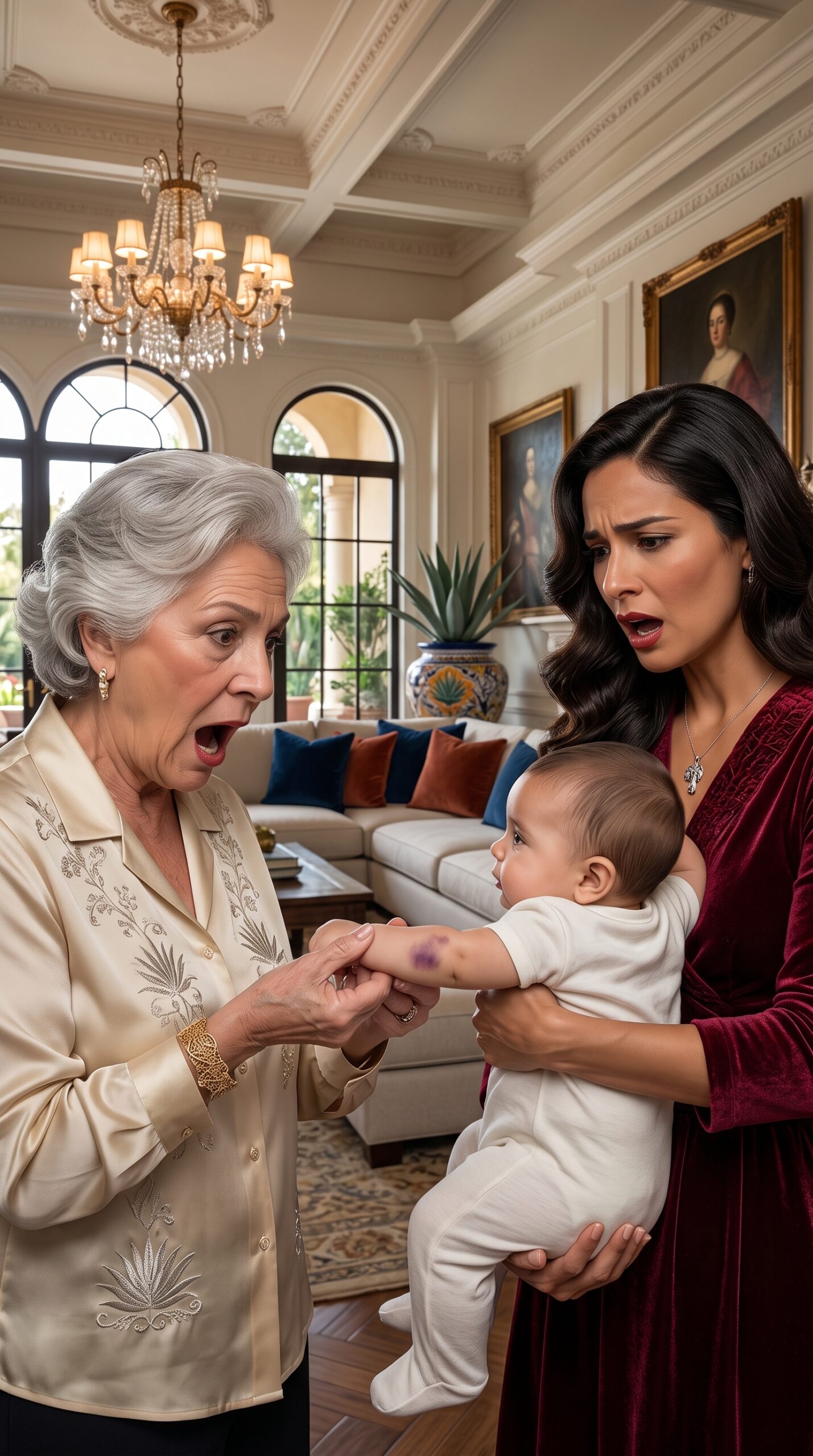
Doña Carmen's scream shattered the room like a plate hitting the floor. Camila froze, her one-year-old son Emiliano clinging to her chest, while her mother stared at the baby’s hand as if it had just touched fire.
Emiliano couldn’t form complete words. He barely made sounds, babbled, and sometimes laughed at cartoons. But that afternoon, feeling his grandmother's fingers on his wrist, he shrank in a way that didn’t seem like ordinary fear.
He covered his little face.
He trembled.
And he cried without throwing a tantrum, a tiny, weary cry, as if he had already learned that crying changed nothing.
—Mom, what’s wrong with you? —Camila said, her face burning with shame—. You’re scaring him.
Doña Carmen's house, in a quiet neighborhood of Puebla, smelled of pot coffee and sweet bread. It was the first time Camila brought Emiliano to meet her, because for months, her mother had been frail, with blood pressure issues and several trips to the clinic.
Plus, Daniel, her husband, always found a reason to delay the visit.
—Your mom meddles in everything.
—She’s sick, don’t stress her out.
—Emiliano needs a routine, not people carrying him around.
Camila, exhausted from working at a pharmacy and sleepless nights, believed him. Daniel worked from home selling insurance. Everyone said it was a blessing that he took care of the child while she went out to work.
But doña Carmen wasn’t just any nosy grandmother. She had been a nursing assistant for over 20 years. She’d seen bruises disguised as falls and silences disguised as obedience.
She took Emiliano’s wrist with a painful delicacy.
—Look closely, daughter.
Camila lowered her eyes.
At first, she only saw her baby’s soft skin. Then, under the light of the window, pale lines appeared around his wrists. They were thin, marked like little rings. They didn’t look like scratches. They looked like traces of something that had held him many times.
—It was probably from a toy —Camila murmured, but her voice cracked.
Doña Carmen shook her head slowly.
—No, honey. And look how he reacts when someone touches his hands.
Emiliano hid his fingers against his chest.
At that moment, Camila’s phone vibrated.
It was Daniel.
“Don’t take long. The baby needs to sleep. You know how he gets if he doesn’t take his nap.”
Camila read the message three times.
Then she remembered the afternoons when she came home and Emiliano was still asleep, heavy, with strange little eyes. Daniel always said the same:
—Leave him. He finally settled down.
Doña Carmen saw her face and squeezed her arm.
—Camila, before defending an adult, defend your son. We’re going to the hospital right now.
Camila wanted to say no. She wanted to believe it was all an exaggeration.
But when her phone vibrated again with Daniel’s name on the screen, Emiliano raised his little hands and covered his face as if expecting a blow.
And Camila understood that her baby had been asking for help for months without being able to speak.
PART 2
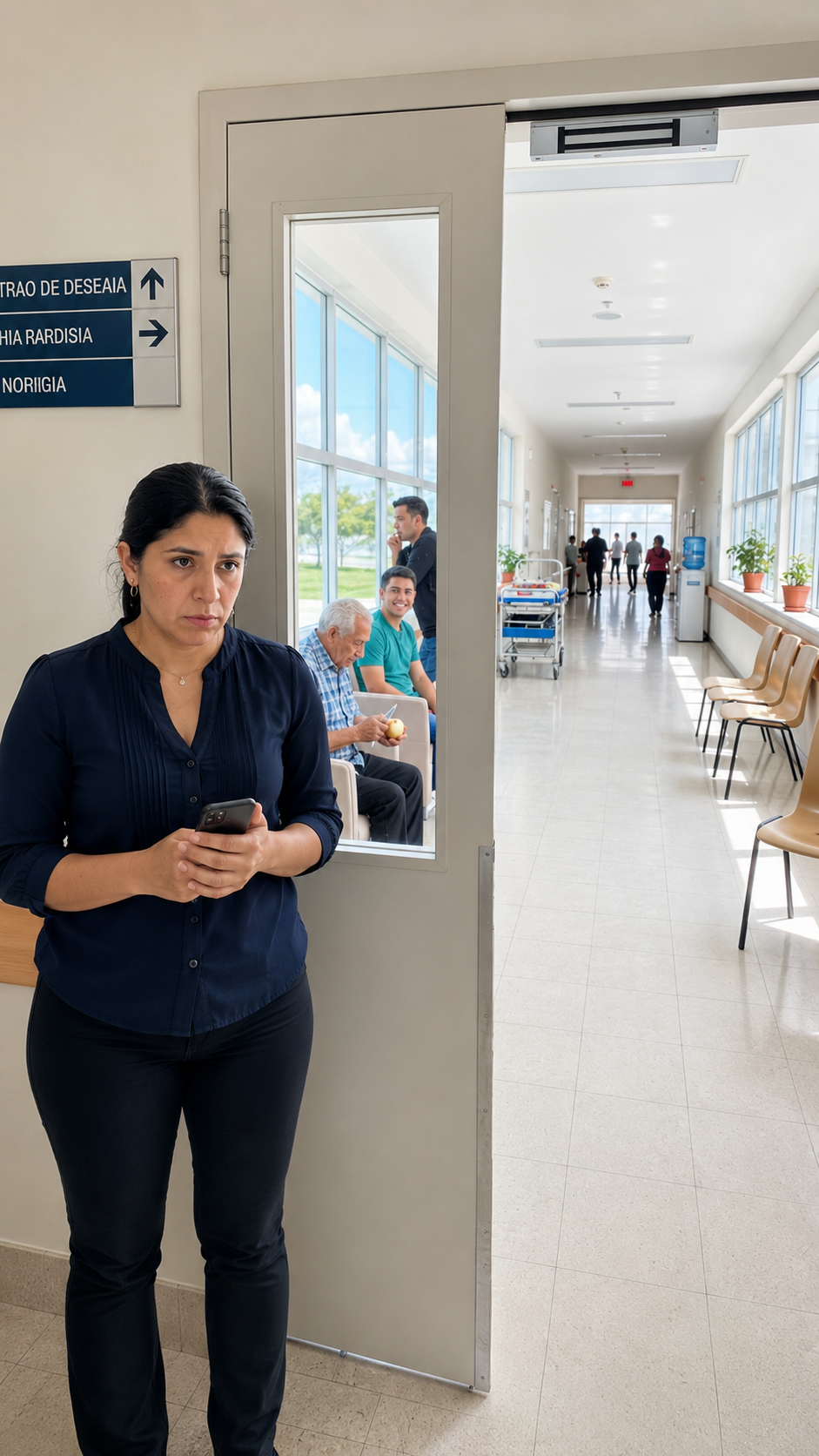
In the hospital's emergency room, Camila felt each minute ripping a bandage from her eyes.
The doctor examined Emiliano with a seriousness that left no room for “it’s probably nothing.” She looked at his pupils, ribs, legs, back, and little arms. A nurse took photos of the marks with a small ruler beside them.
Doña Carmen wouldn’t let go of the baby’s blanket.
Camila answered questions with a tight throat.
—Who spends more time with him?
—My husband, Daniel.
—Have you noticed excessive sleepiness?
Camila swallowed hard.
Yes.
She had noticed.
But Daniel always had an explanation. Teething. Growth. The child was lazy. That she, as a first-time mother, was overreacting.
The doctor ordered blood tests and a toxicology screening. When Camila heard that word, she felt the world split apart.
—Toxicology? Like drugs?
—Sedative substances —the doctor replied—. We need to rule something out.
The phone wouldn’t stop vibrating.
“Where are you?”
“Your mom started her drama, right?”
“Answer, Camila.”
“Bring my son home.”
She didn’t ask if Emiliano was okay.
She didn’t ask what had happened.
She just wrote: “my son.”
A social worker named Marisol approached quietly.
—Are you afraid of your husband?
Camila was going to say no.
Daniel had never hit her.
But he did check her spending. He did tell her that her friends were gossips. He did mock her when she wanted to visit her mother. He did say that without him, she couldn’t take care of Emiliano.
And every time she doubted something, Daniel would say:
—Seriously, Camila, you’re being really intense. You make everything a problem.
So she didn’t answer.
She just cried.
Two hours later, the doctor returned with a harder expression.
—We found traces of sedating antihistamine in a quantity that doesn’t correspond to a one-year-old baby.
Camila felt the air leave her.
—I didn’t give him anything. I swear.
—There’s also an old injury on one rib. It’s healing. It didn’t happen today.
Doña Carmen covered her mouth with her hand.
Camila stared at her son. Emiliano was asleep on the gurney, his eyelashes stuck together with tears. He looked so small that guilt crashed down on her like a stone.
—I should have seen it —she whispered.
Marisol replied firmly:
—The guilty one is the one who hurt him. Not the one who was manipulated.
But Camila couldn’t stop remembering.
She remembered a night when Emiliano cried nonstop, and Daniel came out of the room sweating and annoyed.
—That’s enough. He’s just being a brat.
She remembered a prepared bottle when she came home from work.
She remembered pictures of Emiliano asleep that Daniel sent her with heart emojis.
She remembered that when she wanted to wake him up to bathe him, Daniel said:
—Don’t move him. It took me a hell of a lot to calm him down.
A police officer arrived shortly after. He introduced himself as Hernández and asked to see the messages. Camila showed her phone with trembling hands.
The officer read silently.
—You’re not going back alone for your things —he said—. We’ll accompany you.
Before leaving, doña Carmen remembered something that made everything worse.
—Camila, didn’t Daniel change pediatricians a few months ago?
She nodded, confused.
—Yes. He said the first one was exaggerating.
—And did you get to know the new one well?
Camila opened the message history and searched for the name. Then she saw an old photo Daniel had sent her.
Emiliano was asleep in the crib.
On his wrist, there was a strip of fabric.
Camila had thought it was a toy ribbon.
The nurse enlarged the image.
Officer Hernández clenched his jaw.
—We need to check the house.
Camila didn’t return home as a wife.
She returned as a mother.
Daniel opened the door before they knocked. He was in sweatpants, an old t-shirt, and that calm-man smile he wore in front of the neighbors.
—What’s this fuss? —he said.
Then he saw the police officer.
The smile vanished.
—You brought the cops? Don’t kid around, Camila.
Emiliano, hearing his father’s voice, buried his face in his grandmother’s neck. He went rigid, like a little board.
Daniel noticed.
—Give him to me.
Camila felt a horrible chill.
—No.
He blinked. He wasn’t used to hearing that word from her.
—He’s my son too.
—He’s hurt.
—He fell. Kids fall.
—He has sedative medication in his blood.
Daniel fell silent for just one second.
But that second said everything.
Then he let out a nervous laugh.
—Oh, come on. I gave him a few drops because he wouldn’t stop crying. Nothing serious. All moms do stuff like that.
—I didn’t do that —Camila said.
—Because you’re never around —he spat—. You go to work and leave him screaming. I get tired too, okay? Don’t I matter?
Doña Carmen stepped forward, her eyes filled with rage.
—A baby doesn’t compete with you, Daniel.
He pointed at her.
—You shut up. It’s your fault my family is falling apart.
Camila, trembling, entered Emiliano’s room to gather diapers, clothes, and his dinosaur blanket. The room was the same: stars stuck on the wall, a shelf with stories, a moon lamp.
But it no longer felt cute.
It felt like a crime scene.
As she opened the closet, she found a box behind a bag of old clothes.
Inside were two bottles of children’s antihistamine, a dropper, and several strips of soft Velcro, the kind used to hold cables.
Camila felt nauseous.
—Officer —she managed to say.
Daniel appeared in the doorway like a beast.
—Don’t touch my stuff.
There was no smile now. There was no disguise.
The officer entered and ordered him to back off.
Daniel started speaking rapidly. It was for emergencies. Emiliano was restless. She didn’t know how hard it was to care for a child. He just wanted the baby to sleep.
Every explanation sank him deeper.
—Why? —Camila asked, her voice breaking—. Why did you do this to him?
Daniel looked at her with rage, not remorse.
—Because since he was born, you stopped seeing me. It was all Emiliano. His milk, his diapers, his doctors, his cries. I was locked in with him like it was my punishment.
Camila clutched the baby’s blanket to her chest.
—He was one year old.
—Well, he screamed like he had a demon.
That phrase shattered any love that remained.
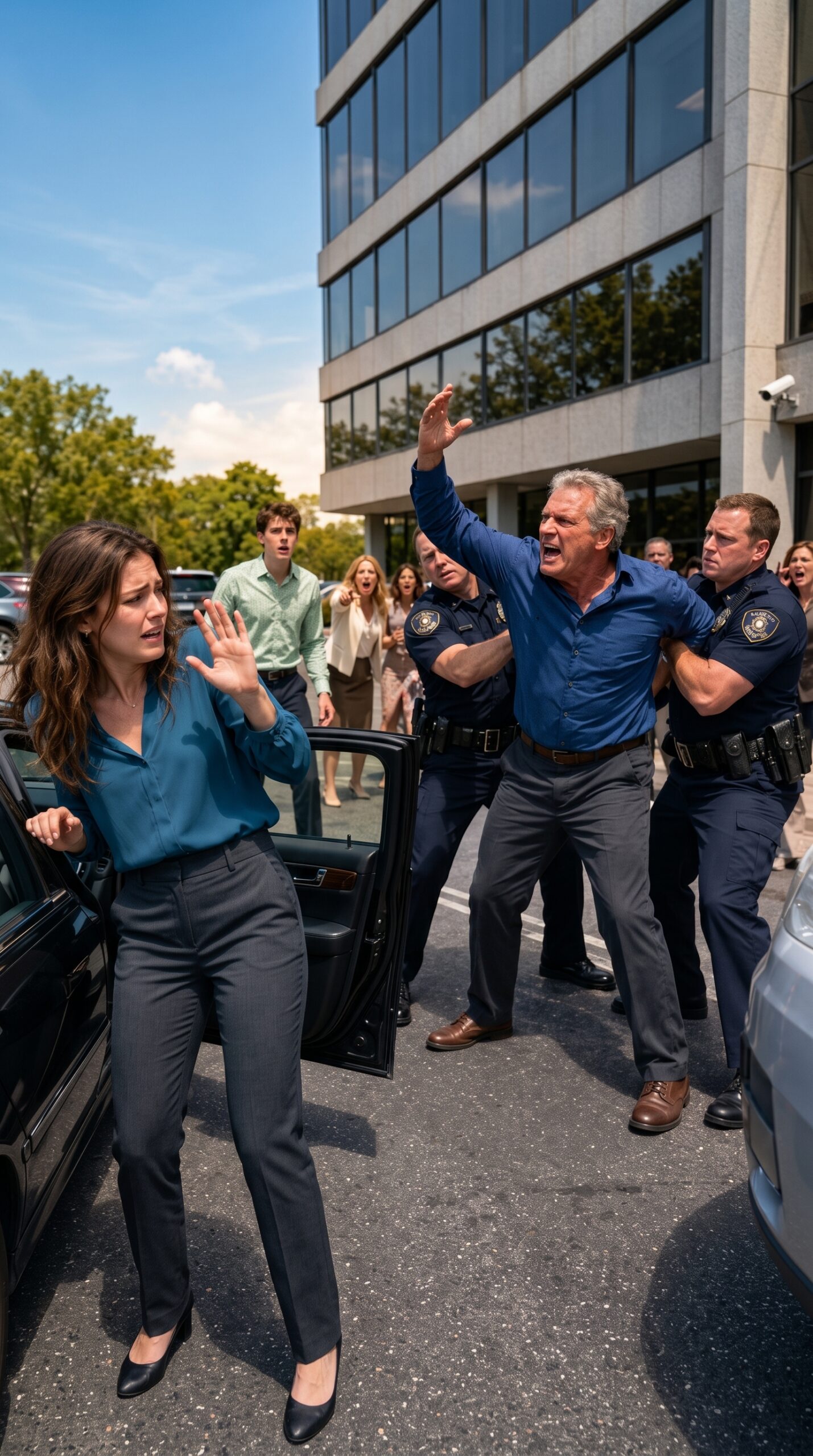
The officer took him from the room. Daniel tried to push him to reach the box. Within seconds, he was handcuffed against the wall while shouting that it was all Camila’s fault, that she had abandoned him, that his mother-in-law had brainwashed him.
Neighbors came out to watch.
A woman murmured:
—But he looked like such a good dad.
Camila heard that.
And that phrase hurt her almost as much as the evidence.
Because yes.
Daniel looked like a good dad.
He posted pictures with Emiliano. He wrote beautiful phrases on Facebook. He said that taking care of his son was “the best job in the world.” Many congratulated him for being a responsible man.
No one saw the hidden box.
No one saw the child’s fear.
That night, Camila and Emiliano slept at doña Carmen’s house. Well, “slept” was putting it lightly. Emiliano woke at any sound. If someone touched his hands, he cried. If he saw a syrup bottle, he hid.
Camila didn’t sleep a wink.
She looked at her wrists under the yellow light and wondered how many times he had cried alone while she attended to customers, sold medicines, and thought her son was safe.
The next day, Camila’s mother-in-law called.
—You’re destroying Daniel’s life over some marks.
—There are medical studies —Camila replied.
—He was always nervous. Since he was a child, he couldn’t stand crying.
Camila fell silent.
Since he was a child.
So someone knew.
Someone had seen that cruelty grow and decided to call it “character.”
The investigation revealed more things. On Daniel’s computer, they found searches about doses to make babies sleep, dangerous forums, and deleted messages with a friend.
“I can’t stand the kid anymore.”
“Give him something to knock him out, dude.”
“I found a way.”
They also discovered that Daniel had canceled two pediatric appointments without telling Camila. He told her that the doctor had changed the date.
It was a lie.
The twist that finally sunk him came days later.
The new pediatrician, the one Daniel chose because “he wasn’t alarmist,” turned out to be friends with his brother. He hadn’t reported signs that were in the file: low weight, strange sleepiness, and defensive reactions when checking arms. In the notes, he wrote “anxious mother” even though Camila hadn’t been present at one of those appointments.
Daniel hadn’t just hurt Emiliano.
He had built a network so that no one would believe her if they ever suspected.
At the family hearing, Daniel arrived groomed, in a white shirt, and with a victim’s face. His lawyer talked about stress, exhaustion, and a father without support.
But when the judge saw the photos of Emiliano’s wrists, the room fell silent.
Doña Carmen testified firmly:
—I didn’t see an accident. I saw fear in a child who didn’t yet know how to ask for help.
Camila cried silently.
The protective measures were firmly established. Daniel lost the right to approach Emiliano as the criminal process advanced. The pediatrician was investigated. And the mother-in-law, who initially defended her son, stopped calling when she understood that the evidence wasn’t gossip.
The recovery was slow.
The marks disappeared before the fear. Emiliano took months to allow anyone to hold his hands. In therapy, he cried if he heard the voice of a strong man. At night, he woke up screaming, as if returning to that room where no one listened to him.
Camila also went to therapy.
She learned that control doesn’t always come with blows. Sometimes it comes with soft phrases. With “I know more than you.” With “your mom is manipulating you.” With “you’re crazy.” With “don’t make a fuss.”
She learned that a tired mother can be deceived, but she can also awaken.
A year later, when Emiliano turned two, they had a simple meal at doña Carmen’s house. There was red rice, mole, mosaic jelly, and a small piñata. They didn’t invite anyone who had justified Daniel.
Emiliano stuck his finger in the cake and laughed with his mouth full of frosting.
Doña Carmen picked him up to help him blow out the candle.
Camila looked at those little hands free, with no marks, and felt her chest break from love and guilt.
—I almost didn’t bring him with you that day —she said softly.
Her mother squeezed her hand.
—But you brought him, honey. And that saved his life.
Camila then understood that danger doesn’t always look like a monster.
Sometimes it smiles in family photos.
Sometimes it changes medical appointments.
Sometimes it prepares bottles.
Sometimes it convinces everyone that he’s a good father while a baby learns to cry in silence.
That’s why, every time someone in the family said “don’t interfere in other people’s marriages,” doña Carmen would reply:
—When there’s a child in fear, it’s necessary to interfere.
And that phrase remained like an open wound for everyone.
Because many tragedies don’t start with a visible blow.
They start when an adult notices something strange, feels their heart tighten, and prefers to remain silent to avoid problems.