PART 1
At 12:17 AM, Andrés called Mariana with a broken voice.
He told her that his father had just suffered a stroke, that they were in a private hospital in Guadalajara, and they needed 300,000 pesos to move him to intensive care.
Then he added something that froze Mariana’s blood:
—Please don’t come. My mom is really nervous. Just transfer the money and stay home.
The money was hers.
Not Andrés’s. Not the family’s. Hers.
It was an investment that Mariana had opened a month ago, with a new key that, according to her, no one knew.
But Andrés recited it back to her over the phone, as if he had written it himself.
Mariana hung up without saying anything.
During five years of marriage, she believed that Andrés was a calm, hardworking man, one of those who still greet the neighbor with a handshake and carry the grocery bags without being asked.
Her mom used to say that Mariana had found gold.
Her dad, on the day of the wedding, cried so much when he handed her over that everyone thought it was emotion.
—Take care of her, son —he told Andrés.
And Andrés replied:
—With my life.
Mariana believed him.
She believed him so much that she left her apartment, added her name to the family business, shared accounts, signed loans, and even put her inherited house as “possible collateral” for a growth that never seemed to come.
The only person in that family who seemed genuine was Doña Celia, her mother-in-law.
She made her soup when she was sick, defended her when Don Ramiro made poisonous comments at the table, and called her “mijita” with a tenderness that felt real.
One afternoon, while they washed dishes in silence, Doña Celia whispered:
—Never give everything away, Mariana. Keep an account, a key, even if you love deeply.
Mariana thought it was just a woman’s advice.
That night, she understood it was a warning.
She didn’t transfer anything.
She grabbed her keys, put on a sweater, and drove to the hospital.
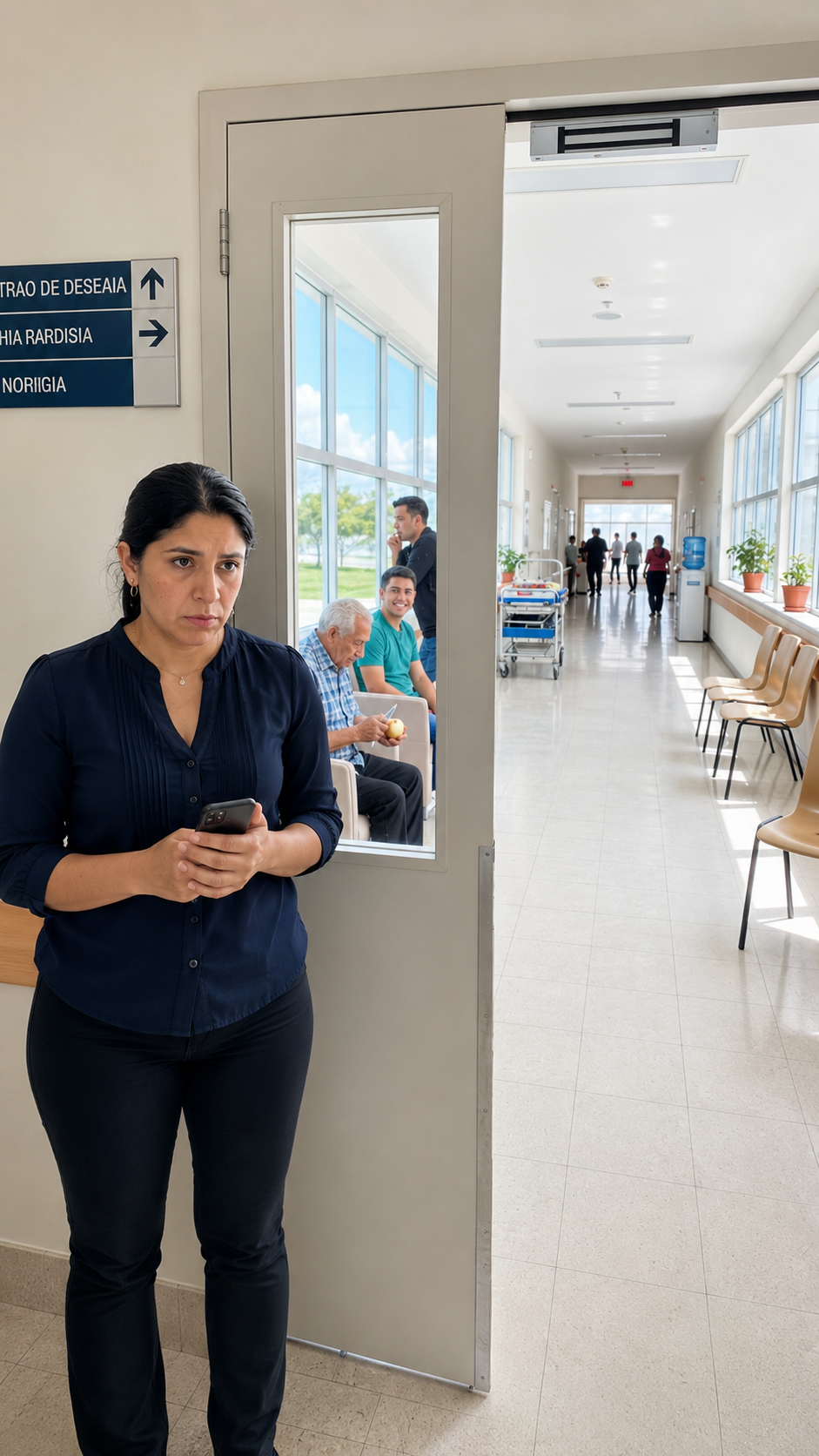
On the fifth floor, the hallway smelled of bleach and cold coffee.
Mariana walked slowly, searching for the room that Andrés had mistakenly mentioned in a message.
The door was ajar.
Inside, there were no machines beeping or doctors rushing.
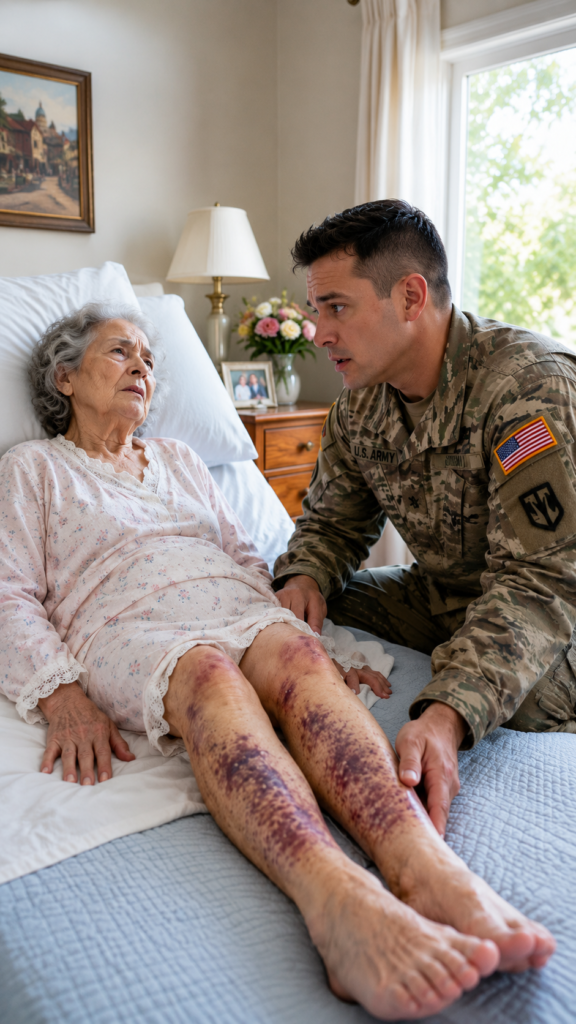
Don Ramiro, the supposedly gravely ill man, sat on the bed, laughing while biting into an apple.
Andrés was by the window.
Her brother-in-law, Chava, played with a lighter.
Doña Celia sat in a chair, pale, her eyes on the floor.
—Seriously, Dad, did you really think she believed the stroke? —Chava asked mockingly.
Don Ramiro let out a laugh.
—That woman believes everything Andrés tells her. All that’s left is for her to sign the mortgage on the house, and we’re set.
Mariana froze.
Then Andrés spoke with a calmness that hurt more than any scream:
—The house is worth almost 3,000,000. I’ll tell her the business is sinking if she doesn’t sign. In two weeks, we’ll convince her.
Don Ramiro looked at his wife.
—And you stay quiet, Celia. Your treatment comes from her money. If this blows up, you’re left without chemo.
Mariana felt the floor open beneath her feet.
She pulled out her phone, froze her accounts, blocked cards, and then wrote to Andrés:
“I just made the transfer, love. Take care of your dad.”
When she walked out to the parking lot, she received a photo from Doña Celia.
It was an oncology prescription with her name on it.
The real patient was her mother-in-law.
And Monday’s chemotherapy depended exactly on the account Mariana had just frozen.
On the screen, she had two options: release that payment alone or let everyone sink.
And no one, not even she, could believe what was about to happen.
PART 2
Mariana didn’t move the money.
She sat in the car, hands clenched against the steering wheel, staring at the prescription as if it were a death sentence.
The paper had Doña Celia’s full name, the diagnosis, the date of the next treatment, and a note written in blue ink:
“Forgive me, mijita.”
Mariana felt rage.
Not sadness.
Rage.
Because for five years, Doña Celia had hugged her, cared for her, called her daughter, but she had also sat at that table listening to how the others planned to take her house away.
When the phone vibrated, Mariana thought it was Andrés.
But it was Doña Celia.
She didn’t answer.
Then an audio message came in.
It lasted six seconds.
—Go down to the chapel, girl. Before you decide, listen to everything.
Mariana could have left.
She had frozen accounts, blocked the business, left the house intact, and had enough evidence to destroy Andrés, Don Ramiro, and Chava.
But she went down.
Not out of compassion.
She went down because she needed to look Doña Celia in the eyes and ask her how long she had been pretending to care.
The chapel was almost empty.
There was one candle lit, wilted flowers, and an image of the Virgin of Guadalupe in a corner.
Doña Celia sat at the back, wrapped in a gray shawl. She looked smaller, as if the illness had been erasing her piece by piece.
—Sit down —she said—. I don’t have the breath to repeat it.
Mariana sat down, but Doña Celia didn’t look at her tenderly.
—Speak.
Doña Celia swallowed hard.
—Your dad owed money to Ramiro.
Mariana looked up.
—What?
—Before your wedding. He owed a lot. The hardware store he had in Tonalá went under. He borrowed money, signed promissory notes, put your house up as collateral without telling you.
Mariana felt a blow to her chest.
Her house.
The house her grandmother had left to her father, and which he had passed down to her “out of love.”
Doña Celia continued:
—Ramiro could take it away. From you. From your parents. From everyone. But he made another deal.
Mariana already knew what was coming, but it still hurt to hear it.
—Say it.
Doña Celia closed her eyes.
—That you marry Andrés.
The silence in the chapel became unbearable.
Mariana remembered the wedding.
Her father crying too much.
Don Ramiro and him shaking hands behind the hall, serious, like men closing a deal.
Andrés smiling in the photos without really looking her in the eyes.
She was 26 and thought the discomfort was just wedding jitters.
It wasn’t jitters.
It was instinct.
—My dad sold me —Mariana whispered.
Doña Celia lowered her head.
—Yes.
Mariana stood up, but her legs trembled.
—And what did you do? Did you pray for me? Did you bring me soup so I wouldn’t notice?
Doña Celia didn’t cry.
That was worse.
—I chose you.
Mariana froze.
—What do you mean you chose me?
—Ramiro wanted any girl with a house. Andrés didn’t want to get married. I told them it should be you. Only daughter. Hardworking. Good. Eager to believe in people.
Mariana let out a dry laugh, devoid of joy.
—What a lovely description for a prey.
—That’s what you were —Doña Celia replied, with brutal honesty—. And that saved me for five years.
Mariana felt nauseated.
Doña Celia touched her chest, trying to breathe better.
—I was already sick before the wedding. Ramiro had no money for my treatments. Your dad couldn’t pay his debt. Andrés had no shame. And you had everything we lacked.
—So why did you warn me in the kitchen?
Doña Celia looked up for the first time.
Her eyes were red, but dry.
—Because a part of me did care about you.
Mariana shook her head.
—No. You don’t love someone you use.
—Maybe not as you should —the woman conceded—. But out of everyone in that house, I was the only one who left you an exit. I built the cage, Mariana. And I also left you the key.
That phrase pierced her.
“I built the cage, and I also left you the key.”
Mariana left the chapel without saying goodbye.
That same night, she went home, packed clothes into two suitcases, and gathered documents: deeds, account statements, records, contracts, promissory notes, printed emails, and old messages.
At 8:00 AM, she was with a lawyer in Zapopan.
She didn’t cry.
She didn’t scream.
She didn’t ask for explanations.
She did something far more dangerous: she began to organize everything.
As the legal representative of the business, she froze the corporate accounts.
As the owner of the house, she revoked any power Andrés could use.
As the holder of the investment, she moved the money to a new account.
As a deceived wife, she filed for divorce and presented evidence of fraud, financial violence, and threats.
Andrés searched for her all day.
He sent sweet messages, then desperate ones, then aggressive ones.
“Mariana, don’t do this.”
“My dad is sick.”
“My mom could die because of you.”
“You’re going to regret this.”
She didn’t respond.
Don Ramiro came to her house that night.
He rang the doorbell 14 times.
He shouted from the sidewalk that she was ungrateful, that this family had made her “someone,” that without Andrés she would still be selling invoices at some desk.
The neighbors came out.
Mariana opened the curtain just to let him see her recording with her phone.
Don Ramiro fell silent.
Chava, on the other hand, called her from another number.
—You think you’re so smart, huh? —he said—. But you signed things too, girl.
Mariana replied for the first time:
—Yes. And that’s why I know exactly where the traps are.
She hung up.
In three days, the business began to collapse.
Not because Mariana destroyed it, but because she stopped covering their gaps.
Duplicated invoices came out, cross loans, fake purchases, payments to nonexistent suppliers.
For years, Andrés and his family had used Mariana’s name as a shield.
Now that shield had flipped.
Monday arrived.
The day of chemotherapy.
The account remained frozen.
Doña Celia didn’t receive the treatment.
Mariana told herself it was justice.
She told herself it wasn’t her obligation to save a woman who had chosen her as a sacrifice.
She told herself that five years of lies couldn’t be paid with another transfer.
And she nearly convinced herself.
Nearly.
Doña Celia died three weeks later.
The wake was at a small funeral home, near a noisy avenue where trucks passed by like nothing.
Mariana wore black.
She didn’t know why she went.
Maybe she wanted to confirm that the end was real too.
Don Ramiro sat next to the coffin.
He no longer looked like the man who mocked with an apple in hand. He looked like a broken old man, his face swollen from crying.
And that confused Mariana.
Because even monsters can love someone.
Andrés approached when she was about to leave.
He had dark circles under his eyes, a days-old beard, and a voice that no longer sounded certain.
—Mariana, I...
She interrupted him.
—The door to the room was open. In the hospital. Did you leave it that way on purpose?
Andrés fell silent.
Mariana needed to know.
If he had let her hear by accident, he was a coward.
But if he did it on purpose, then one tiny piece of humanity remained in the man who had sold her out for five years.
Andrés didn’t answer.
He just looked down.
And that silence pursued her more than any confession.
As she left, a nurse caught up with her at the door.
She handed her an envelope.
—Doña Celia asked me to give this to you only.
Mariana opened it in the car.
The letter was short, written in shaky handwriting.
Doña Celia said she wasn’t going to ask for forgiveness because no forgiveness was enough.
She said that Mariana had done well to keep something of her own.
She said that if she had been in her place, she would have locked the money away too.
And at the end, she wrote:
“I used you to live. You let me go so you could live. Well done, mijita.”
Mariana kept that letter in the drawer where she stored the deeds to her house.
Months passed.
Andrés lost the business.
Don Ramiro faced lawsuits.
Chava disappeared from Guadalajara when they called him to testify.
Mariana’s dad tried to find her, but she didn’t open the door.
Her mom begged her to understand that he did it “out of desperation.”
Mariana replied:
—Desperation asks for help. It doesn’t sell daughters.
Later, she bought a small office and started advising women who had businesses in their names, familial debts, and marriages where love always came with a hidden signature.
On social media, when she shared part of her story without names, people were divided.
Some said she was a brave woman.
Others said she had let a sick woman die.
Her own mother told her one afternoon:
—You could have just paid for the chemo and frozen the rest.
Mariana didn’t respond.
Because that was the most uncomfortable truth.
Yes, she could.
She knew it.
She was an accountant.
She had managed accounts, sub-accounts, scheduled payments, and partial freezes for years.
That night in the parking lot, she didn’t have to choose between saving herself or saving Doña Celia.
She could do both.
She could sink Andrés, protect her house, report Don Ramiro, and still free the treatment for the woman who left her the key.
But she didn’t want to.
That was the part she never said out loud.
She didn’t let Doña Celia die out of ignorance.
She let her die because, for the first time in five years, the power was in her hands.
And after being used as money, as a signature, as a wife, and as payment for a debt, Mariana decided that no one would ever receive from her a single peso unless she wanted to give it.
At night, she sometimes opens the drawer and reads the letter.
“Well done, mijita.”
There are days when that phrase feels like a blessing.
There are others when it sounds like a condemnation.
Because there are revenge stories that seem like justice when one is bleeding.
And there are cages that, even after being opened, continue to live inside the chest.