PART 1
At the IMSS, they told Mariana that her daughter was not sick.
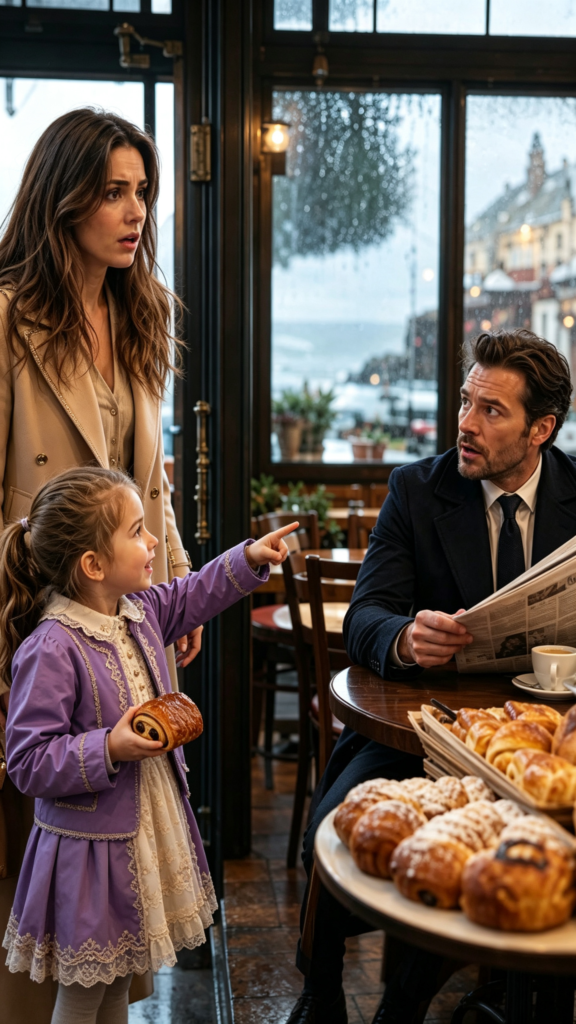
Lucía was 6 years old, with huge eyes, thin braids, and a smile that once lit up the entire apartment. But in recent months, she had been fading like a candle without air.
She ate very little. Or so it seemed.
Mariana served her chicken broth, rice, eggs with beans, whatever was in the fridge. And Lucía would stir her spoon, say she was full, and go to her room with an empty belly.
At first, Mariana thought it was just a tantrum.
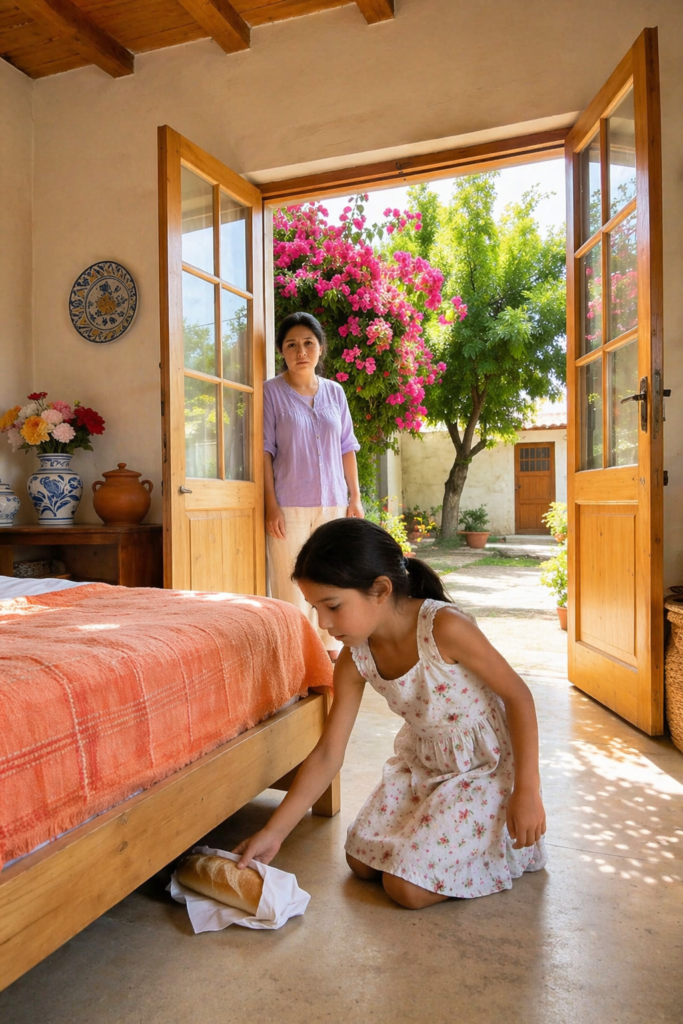
Then she started finding hidden napkins under the bed. Folded tortillas. Bits of bread. A bitten banana.
The strange thing was that by the next day, they were gone.
And Lucía was getting thinner.
Mariana worked double shifts at a pharmacy in the Portales neighborhood. Since Lucía's father had left with another woman, her mother, Doña Matilde, had come to live with them.
Doña Mati was one of those tough women, with a clean apron, a rosary in her pocket, and a gaze that didn’t ask for permission.
She would comb Lucía’s hair, take her to kindergarten, feed her, and look after her while Mariana returned home at night, smelling of alcohol, medicine, and exhaustion.
Mariana trusted her mother with her eyes closed.
Because Doña Mati had raised two daughters on her own. Mariana and Rosario.
Rosario, the youngest, had gone north six years ago. According to Doña Mati, she had gotten mixed up with the wrong crowd and one day simply stopped answering.
In that house, no one spoke of her anymore.
But there were details that, later, would come crashing down on Mariana like stones.
Doña Mati always set four plates on the table even if there were only three.
—Just in case someone arrives —she would say.
Mariana would laugh.
—Oh, Mom, who’s going to arrive if we don’t even have visitors?
The old woman wouldn’t answer. She would just cover the fourth plate with another plate and leave it near the stairs that led up to the rooftop.
Lucía, on the other hand, would look at that plate with a rare seriousness.
One afternoon, at kindergarten, the teacher showed Mariana a drawing by her daughter. There were Mariana, Lucía, and the grandmother.
But in one corner, enclosed in a gray square, was a little boy.
—Who is he, my love? —Mariana asked.
Lucía looked down.
—It’s a secret.
Mariana thought he was an imaginary friend. It made her feel tender.
But then the noises started.
Lucía no longer wanted to sleep in her bed. She would wake up on the floor, pressed against the wall, her ear almost touching the concrete.
—Why are you sleeping there? —Mariana asked.
—Because I can hear better here —the girl said.
—Hear what?
Lucía covered her mouth.
One morning, Mariana woke up thirsty. As she passed by her daughter’s room, she heard her little voice.
—Don’t cry. I’ll give you more tomorrow. I promise.
Mariana opened the door abruptly.
Lucía was alone, sitting in front of the wall with a piece of tortilla in her hand.
—Who are you talking to?
The girl turned pale.
—No one.
The next day, Mariana lifted the mattress to clean and found a gray, dirty, tiny sock.
It wasn’t Lucía’s.
It wasn't new either. It smelled of dampness, of confinement, of something that had been hidden for too long.
A chill ran down Mariana's back.
That night, she checked the hidden food under the bed. There was a bitten roll.
The bite wasn’t from Lucía.
The little marks were much smaller.
Much smaller.
Then she took Lucía by the shoulders, not squeezing her but with her heart pounding in her chest.
—My love, tell me the truth. Who are you giving your food to?
Lucía began to tremble.
—I can’t say.
—Yes, you can. I’m your mom.
The girl cried silently.
—Grandma says that if you know, you take it out to the street… and if you take it out, he dies.
Mariana turned toward the kitchen.
Doña Mati was standing at the door, the key to the rooftop room dangling from her apron.
And for the first time in her life, Mariana felt fear of her own mother.
PART 2
That key had always been there.
Mariana had seen it hundreds of times, swinging from Doña Mati's apron while she washed dishes, while she made tortillas, while she slept on the couch with the TV on.
She never paid it any mind.
The rooftop room, according to her mother, was full of junk, got wet with the rain, and had dangerous wires.
—Don’t you dare go up there, Mariana. There’s nothing good.
But that night, with Lucía crying silently and Doña Mati looking at her as if she had just discovered a tomb, Mariana understood that everything in that house had been a lie.
She waited.
She waited until her mom pretended to fall asleep in the small room. She waited until Lucía fell asleep, curled up, with her hands under the pillow.
Then she walked barefoot.
She entered Doña Mati’s room. Her fingers trembled so much that she almost woke the old woman as she took the key from her apron.
She climbed the stairs to the rooftop with her heart in her throat.
The air smelled of dampness, of hot metal, of old garbage.
She was about to put the key in when she heard a voice behind her.
—Get down from there.
Mariana turned.
Doña Mati was at the foot of the stairs, her white hair loose and a face that Mariana had never seen before.
It wasn’t anger.
It was terror.
—What do you have locked up, Mom?
—Nothing you can fix.
—Who’s up there?
Doña Mati climbed two steps and grabbed her by the arm with a force that left a mark on her skin.
—If you open that door, you’ll kill him.
Mariana pulled away.
—Who, Mom? Tell me who!
The old woman took a deep breath. Her eyes filled with tears, but her voice came out dry.
—A boy who has been alive for six years because no one knows he exists.
Mariana felt the world bend.
She inserted the key.
Doña Mati screamed:
—No, daughter, for the love of everything!
But Mariana had already turned the lock.
The door creaked.
Inside, there was no light.
Only a sliver of moonlight cut through the room and fell on an old mattress lying on the floor.
There was a blanket.
The blanket moved.
Mariana advanced slowly, her legs weak. She knelt. Lifted a corner.
Underneath was a child.
Skinny as a stick. With long, tangled hair, pale skin, and huge, black eyes, just like someone Mariana had tried to forget for six years.
The boy covered his face with his arms.
He didn’t scream.
That was what hurt her the most.
He seemed like a boy used to not making noise.
Mariana cried before touching him.
—I’m not going to hurt you, my life.
The boy opened his eyes.
He looked at her with a hope so old it seemed tired.
And said a single word:
—Rosario.
Mariana froze.
Rosario was her sister.
Rosario was the one who was missing.
Rosario was the one Doña Mati forbade to mention at Christmas, on birthdays, at any meal where there was too much silence.
The boy had said Rosario as if he recognized her.
As if he had spent his whole life waiting for that woman to return.
Mariana didn’t correct him.
She didn’t have the courage.
She carefully picked him up. He weighed less than Lucía.
When they got down to the kitchen, the boy looked at the light bulb like it was a star.
Lucía came out of the room and ran to him.
—Tommy —she whispered.
The boy hugged her desperately.
In that moment, Mariana understood everything.
Lucía wasn’t sick. She was sharing her food.
Doña Mati didn’t set an extra plate out of habit. She was giving it to that boy.
And Rosario hadn’t gotten lost.
Doña Mati sat across from Mariana, suddenly aged.
—His name is Tomás —she said—. Just like your dad.
Mariana clenched her teeth.
—Talk.
Doña Mati spoke.
Rosario had come back six years ago, in the early morning, beaten, eight months pregnant, fleeing from a man in Tamaulipas who was not just any man.
One of those who don’t need to knock on a door to enter.
One of those who ask for someone, and the next day someone turns up in a ditch.
—She came back broken —Doña Mati said—. He had broken her face twice. The third time he would kill her. And if the baby was born, he would take him.
Rosario first knocked on Mariana’s door.
That was what Mariana didn’t want to remember.
But the memory came back whole.
Lucía was barely two months old. Mariana was living alone, with dark circles under her eyes, scared, and broke. That night it rained terribly.
Someone knocked on the door.
Mariana peeked through the window.
It was Rosario.
Soaked. Pregnant. With a swollen face. Shaking.
And in the corner, there was a black truck, turned off, with a cigarette flickering on and off inside.
Mariana didn’t open.
She spoke to her through the window, softly.
—Go to Mom. I can’t. I have the baby.
Rosario knocked again.
Mariana closed the curtain.
And when she heard the truck start slowly, she felt relief.
Relief that the danger was following her sister and not entering her house.
Now, six years later, that relief disgusted her.
Doña Mati looked at her as if she knew exactly what she was thinking.
—She arrived with me afterward —she continued—. I hid her up there. I called a midwife who didn’t ask questions because I paid her with everything I had.
Mariana was already crying.
—And Rosario?
Doña Mati looked down.
—She didn’t survive the birth.
Silence fell over the kitchen.
Tomás was sitting next to Lucía, eating bread with milk, with both hands on the plate as if someone was going to snatch it away.
—She bled out up there —Doña Mati said—. On that mattress.
Mariana covered her mouth.
—Did you bury her?
—In your aunt Chela’s backyard, in Xochimilco. At night. No flowers. No certificate. Nothing.
—Mom!
—What did you want me to do? A wake? An announcement in the neighborhood? For that man to find out there was a birth and come for the boy?
Mariana stood up.
—you locked him up for six years.
—I hid him for six years.
—It’s the same!
—Not for the dead, Mariana.
The phrase hit her like a slap.
Doña Mati wiped her tears with her apron.
—Rosario made me promise two things before she died. That I would take care of the boy. And that I wouldn’t let you near him.
Mariana stopped breathing.
—What?
—She told me: “Don’t give him to my sister. She chose once.”
Mariana wanted to defend herself.
She wanted to say she was scared, that she was alone, that Lucía was a baby, that the truck could have killed them all.
But no excuse would open the door she had closed that night.
Doña Mati didn’t stop there.
—that’s why I didn’t tell you anything. Because I promised my dead daughter that I wouldn’t give him to you.
Mariana slammed her palm on the table.
—And Lucía? Did Rosario also ask you to scare my daughter? Did she also ask you to let her starve to feed Tomás?
Doña Mati bowed her head.
For the first time, she had no answer.
Lucía had been listening.
She was standing behind the chair, her face wet.
—Grandma said that if I spoke, Mom would take him out —the girl said—. And that once Mom didn’t open the door, and that’s why someone died.
Mariana felt something break inside her.
Not for herself.
For Lucía.
Her 6-year-old daughter had carried a guilt that wasn’t hers. She had divided her dinner, had slept on the floor to listen if Tomás cried, had learned to distrust her own mother.
All for a rotten truth that the adults buried poorly.
Mariana knelt in front of Lucía.
—I’m sorry.
The girl didn’t understand.
—Are you going to take him out?
—No.
—Even if he’s not yours?
Mariana looked at Tomás.
He was still eating, but his eyes were fixed on her.
Waiting for judgment.
—He’s family —Mariana said—. And no one is going to lock him up again.
Doña Mati let out a sob.
—If you speak, they’ll find him.
Mariana closed her eyes.
There was the trap.
Reporting meant opening files, questions, names, a clandestine grave, a midwife, a dead sister, and a dangerous father who might still be looking for blood.
Silence meant continuing to inherit the same lie.
Mariana spent the night sitting in the kitchen.
At dawn, she set out four plates.
She didn’t put them on the stairs.
She put them on the table.
In full light.
She served eggs, beans, hot tortillas, and a glass of milk for each child.
Tomás ate as if he couldn’t believe the food was his. Lucía watched him smile with a sad happiness, like a girl who could finally rest.
Doña Mati cried in silence.
Mariana made a decision that no one was going to applaud.
She didn’t go to the police that morning.
She didn’t return Tomás to the room.
She called an acquaintance who worked with paperwork. She said she had an orphaned nephew, arrived from afar, without clear papers.
She lied.
She lied with the same mouth that had condemned her mother.
That afternoon, she brought down from the rooftop room the mattress, the old blanket, the hidden plates, and the gray clothes.
She burned everything in a barrel, behind a neighbor's house.
But she didn’t burn the truth.
The truth stayed with Lucía, who still asked if her mom was going to close another door.
It stayed with Tomás, who would get scared every time someone rang the doorbell.
It stayed with Doña Mati, who saved a grandson by locking him up as a secret.
And it stayed with Mariana, who one day didn’t open out of fear… and six years later kept silent out of love.
A month later, the two children entered kindergarten.
Lucía with her yellow bows.
Tomás with new shoes, a dinosaur backpack, and a last name that wasn’t his.
Mariana took them by the hand.
From the corner, Doña Mati watched them without approaching.
Because Mariana had set a condition: she could see them, she could love them, she could pray for them, but she would never again use fear to control a child.
—You saved Tomás —Mariana said—. But you broke Lucía.
Doña Mati did not argue.
She only replied:
—And you broke Rosario.
Neither of them lied.
That’s why it hurt so much.
That night, Mariana opened the door to the rooftop room for the last time. There was nothing inside anymore, just damp walls and a small window where barely the sky entered.
Lucía stood next to her.
—Are you going to close it?
Mariana looked at the lock.
She thought of Rosario knocking in the rain.
She thought of Tomás breathing in the dark.
She thought of her mother, burying a daughter alone to save a grandson.
Then she took the door off completely.
The next day, she sold it for scrap metal.
Because maybe she couldn’t tell the whole truth yet.
Maybe she was still lying.
But in that house, no child would ever live behind a closed door again.