PART 1
When Diego Roldán married Doña Elena Barragán, half the neighborhood in Santa Tere, Guadalajara, whispered the same thing:
"That kid doesn’t love her… he’s using her."
And they weren’t wrong.
Diego was 25, drowning in debt to dangerous people, with two changes of clothes in a backpack and countless nights spent sleeping in a beat-up truck parked outside an Oxxo.
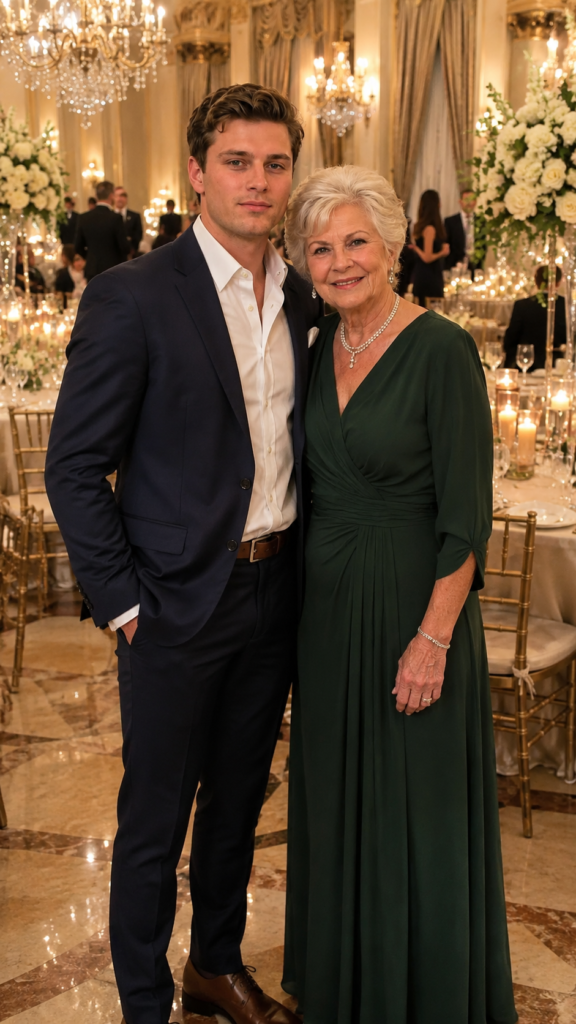
Doña Elena was 71, a widow, living alone in a yellow house with bougainvilleas at the entrance and a calm that seemed from another world.
She spoke softly, brewed pot coffee every morning, and still set two plates on the table, as if her deceased husband would return at any moment.
Diego met her when he came to fix a water leak.
She overpaid him.
He returned the next day under the pretext of checking the plumbing.
Then he came back for coffee.
Then for dinner.
And when Doña Elena told him, with a shy smile, that the house felt less cold when he was there, Diego saw an escape.
He didn’t see love.
He saw a roof.
He saw warm food.
He saw a clean bed.
He saw a house that could someday be his.
His friends mocked him.
"You’re nuts, man. Just hold on a bit longer and you’re set."
Diego didn’t reply, but inside he thought the same.
He agreed to marry her in a small ceremony, with six people, a simple meal, and the disgusted gaze of Elena’s niece, Mariana.
Mariana didn’t take her eyes off him for a second.
"My aunt isn’t stupid," she whispered in his ear after the toast.
Diego smiled.
"I don’t know what you’re talking about."
But he did.
From the first month, he began counting the days.
Every doctor’s appointment for Doña Elena interested him more than any conversation with her.
Every bottle of pills in the kitchen made him envision deeds, bank accounts, keys, silence.
Meanwhile, Doña Elena cooked him dinner, bought him new boots when she saw his were torn, left a jacket on the chair when it was cold, and asked if he’d slept well.
Diego responded with fake kisses on the forehead.
With measured hugs.
With words that sounded nice but carried no weight.
Until one morning, Doña Elena collapsed on the kitchen floor.
Three days later, she died in the hospital.
At the funeral, everyone looked at him as if they already knew the truth.
And when the lawyer placed a shoebox with his name written by Doña Elena in front of him, Diego felt for the first time that the deceased was her… but the buried one could be him.
PART 2
The office of Licenciado Salvatierra was in downtown Guadalajara, in an old building with cantera stairs, tall windows, and the smell of paper stored for years.
Diego arrived dressed in black, but not in mourning.
He was nervous, yes, but he also felt confident.
In his mind, he had already done the math.
The house in Santa Tere could sell for a good price. With that, he would pay off his debts, buy another truck, and maybe head to Puerto Vallarta to start anew, far from collectors and people who knew too much about him.
Mariana, Doña Elena’s niece, sat across the table.
She wasn’t crying.
She only looked at him with a sadness that made Diego more uncomfortable than hatred.
The lawyer opened the will calmly.
He read the smaller items first.
An antique watch for a neighbor.
A silver rosary for Mrs. Lupita, the church friend.
A photo album for Mariana.
Diego clenched his jaw.
He wanted to get to the important part.
Then the lawyer cleared his throat.
"The property located at José Clemente Orozco Street is to be named after Mariana Barragán, niece of Mrs. Elena."
Diego blinked.
He thought he had heard wrong.
"What do you mean the house?" he asked.
The lawyer didn’t raise his voice.
"The house was not inherited to you."
Mariana lowered her gaze.
Diego felt a horrible heat rise up his neck.
"I was her husband."
"Legally, yes," replied the lawyer.
"Then it’s mine."
"Elena decided otherwise."
Diego let out a dry laugh, one of those that come when someone is about to lose control.
"And the money?"
"Most was donated to a foundation for abandoned senior citizens."
The word abandoned fell on the table like a slap.
Diego looked at the lawyer, then at Mariana.
"This is a joke."
"No," said the lawyer, pushing an old shoebox, taped up, toward him. "This was the only thing Doña Elena asked to be delivered to you personally."
On the lid was written:
For Diego.
The handwriting was shaky but clear. The same handwriting with which she left him notes next to the coffee.
Diego swallowed hard.
"What is it?"
The lawyer looked him straight in the eye.
"She said: 'Give him this. It’s what he really wanted.'"
Diego opened the box with clumsy hands.
On top was a key.
An old, rusty key, tied with a blue ribbon.
Below, a photograph.
It was of the old truck where Diego slept before meeting her.
The image was taken from afar. You could see the gray blanket on the back seat, a water bottle on the floor, and his old boots sticking out of the half-closed door.
Diego felt blood drain from his face.
He didn’t understand.
He pulled out another thing.
A pawn receipt in his name.
Then a copy of a medical bill.
Then a sheet written by Doña Elena.
The first line read:
"I knew from the beginning that you didn’t love me."
Diego stopped breathing for a second.
Mariana covered her mouth.
The lawyer remained still.
Diego wanted to act strong, but his eyes raced over the letter without permission.
"I knew you came to my house out of need, not love. I knew you looked at my pills more than my eyes. I knew you secretly asked how much the house was worth. I knew once you said over the phone: 'Just let the old lady hold on a bit longer.'"
Diego clenched the sheet.
"That doesn’t prove anything," he murmured.
No one replied.
He kept reading.
"I also knew you slept in your truck because you had nowhere to go. I knew you were in debt because your father taught you to gamble before working. I knew your mother kicked you out not because you were bad, but because she didn’t know how to save you anymore."
Diego lifted his gaze, furious.
"Who told her that?"
Mariana answered for the first time.
"She asked about you. Not to attack you. To understand you."
Diego wanted to laugh, but he couldn’t.
Inside the box were more papers.
Account statements.
Receipts.
Proofs.
Each one had a handwritten note from Elena.
"Work boots: because no one should walk with wet feet."
"Winter jacket: because that day you were shivering and pretended you weren’t cold."
"Dentist: because you covered your mouth when you laughed."
"Plumbing course: paid for, but you never went."
Diego remembered that white envelope she had left on the table.
He had opened it, saw the course brochure, and tossed it in a drawer.
"So you have something of your own," Elena had said.
He replied:
"I’ll look at that later."
He never did.
He pulled out another paper.
It was a deed.
Not for the house.
For a small room in a remodeled boarding house near the Atemajac market.
A humble space, but clean. With its own bathroom. Rent paid for 12 months.
Diego frowned.
The lawyer spoke.
"Doña Elena left that place in your name. You cannot sell it for 3 years. You can only live there. If you leave, it automatically goes to the foundation."
Diego felt his eyes burning, but he turned it into anger.
"A room? That’s what she left me? After marrying her?"
Mariana jumped up.
"You didn’t marry her, Diego! You barged into her life like it was a piggy bank!"
He also stood up.
"What do you know!"
"I know my aunt cried silently when you left without saying where you were going."
Diego froze.
Mariana continued, her voice breaking.
"I know she saved your plate even if you came home at dawn smelling of beer. I know she defended your name when we all told her you were using her. I know she said: 'Maybe no one has loved him well.'"
Diego lowered his gaze.
The phrase hit him where he least expected.
Because it was true.
No one had loved him well.
But that didn’t justify what he had done.
The lawyer pulled out a yellow envelope.
"There’s still something left."
Diego shook his head.
"That’s enough."
"She requested that it be read."
The lawyer opened the envelope.
Inside was a recording on a USB drive and another letter.
The lawyer connected the USB to his computer.
Doña Elena’s voice filled the office.
It was soft.
Tired.
But firm.
"Diego, if you’re listening to this, it’s because I’m gone. And I’m sure you’re angry. You probably think I took something from you. But no, mijo. I didn’t take anything from you. The house was never yours. The money was never yours. My life wasn’t yours either."
Diego clenched his fists.
But he didn’t move.
"The only thing that was yours was the chance to be someone different within that house. I gave you that many times. When I waited for you with food. When I pretended not to hear your calls. When I forgave lies you never even apologized for."
The voice paused.
A weak breath was heard.
"I wasn’t a foolish woman in love, Diego. I was a lonely woman. And yes, I also wanted company. But not just any company. I wanted to believe I could still help someone before I died."
Diego felt something break inside his chest.
It wasn’t love yet.
It was shame.
A heavy, unbearable shame.
"That’s why I leave you the room. Not to reward you. So you don’t sleep in a truck anymore. I leave you the receipts so you know there was someone who invested in you. I leave you the key so you understand what you truly wanted wasn’t my house. It was a place where no one would kick you out."
Diego closed his eyes.
His breathing began to falter.
Mariana was crying silently.
The lawyer said nothing.
The recording continued.
"And I also leave you one last thing. The truth."
The lawyer stopped the audio and handed him a red folder.
Diego opened it slowly.
Inside was a complaint.
But not against him.
Against his stepfather.
A man Diego never mentioned.
There were documents, old photographs, school reports, a letter from his mother, and a statement signed by Doña Elena.
Diego read one line and froze.
"I, Elena Barragán, attest that Diego Roldán was a victim of abandonment and violence since childhood, and I request that this information be delivered to legal services so he can initiate the corresponding process if he so decides."
Diego felt nausea.
His past was there.
Not as gossip.
Not as a weapon.
As proof.
As if Elena had gathered pieces of his life that he had left to rot.
"She got you a lawyer," Salvatierra said. "She paid for the first consultation. It’s covered."
Diego let out a broken laugh.
"Why would she do that?"
Mariana wiped her tears.
"Because my aunt was like that, even if you didn’t deserve her."
Diego wanted to respond with something cruel.
Something that would save him.
Something like: "She wasn’t a saint either."
But he found nothing.
Because he remembered Elena sitting in the kitchen, peeling apples with trembling hands.
He remembered when she asked him:
"What did you want to be as a child?"
He answered without thinking:
"Someone with a house."
She smiled sadly.
"No, mijo. That’s not being. That’s having."
At that moment, Diego didn’t understand.
Now he did.
The box wasn’t a punishment.
It was a mirror.
And in that mirror, Diego saw the man he had been: a guy capable of sleeping next to a good woman while waiting for her to die.
But he also saw something worse.
He saw that Elena had loved him without confusion.
She had loved him knowing exactly who he was.
That hurt more.
Because when someone loves you believing your lies, you can still hide.
But when someone loves you with the truth in hand, there’s nowhere left to go.
Diego left the office without claiming the house.
Without shouting.
Without threatening.
He held the box tightly against his chest as if it weighed more than all his years of debt.
Mariana caught up with him on the sidewalk.
"Diego."
He stopped.
She hesitated before speaking.
"My aunt said that if you ever changed for real, you could go leave her flowers. But not before."
Diego nodded.
He couldn't say thank you.
Not yet.
For two weeks, he didn’t show up anywhere.
His acquaintances said he had probably sold the key, that he was probably drunk, that he was probably up to something else.
But one morning, Licenciado Salvatierra received a call.
It was Diego.
The voice sounded different.
Lower.
Tired.
"Lawyer… is the lawyer still available?"
Then he went to the room in Atemajac.
It was small, yes.
The walls smelled of fresh paint.
There was a single bed, a table, two chairs, and a window overlooking a noisy street.
On the table, he found another envelope.
This time it didn’t say "For Diego."
It said:
"For when you start anew."
Inside was a photo of Elena smiling in front of her bougainvilleas.
And a final note.
"Do something good with the life you fought so hard to keep."
Diego sat on the bed and cried like he had never cried even at the funeral.
He cried for Elena.
For his mother.
For the child he had been.
For the miserable man he chose to be.
And for the opportunity a 71-year-old woman left him, not in the form of a mansion, but in the form of truth.
Months later, the neighbors of Santa Tere saw Diego arrive at the cemetery with white flowers.
He didn’t wear a suit.
He didn’t give a speech.
He came with his work boots, the same ones Elena bought him.
He stood in front of the grave for a long time.
Then he said a single phrase:
"I’m sorry, Elena. Now I understand."
No one knows if a late apology is enough to cleanse so much damage.
Some will say Diego deserved nothing.
Others will say Elena was too good.
But perhaps the hardest question isn’t whether he deserved that second chance.
The question is how many people receive true love and only understand it when they’re faced with a box that can’t be returned.