PART 1
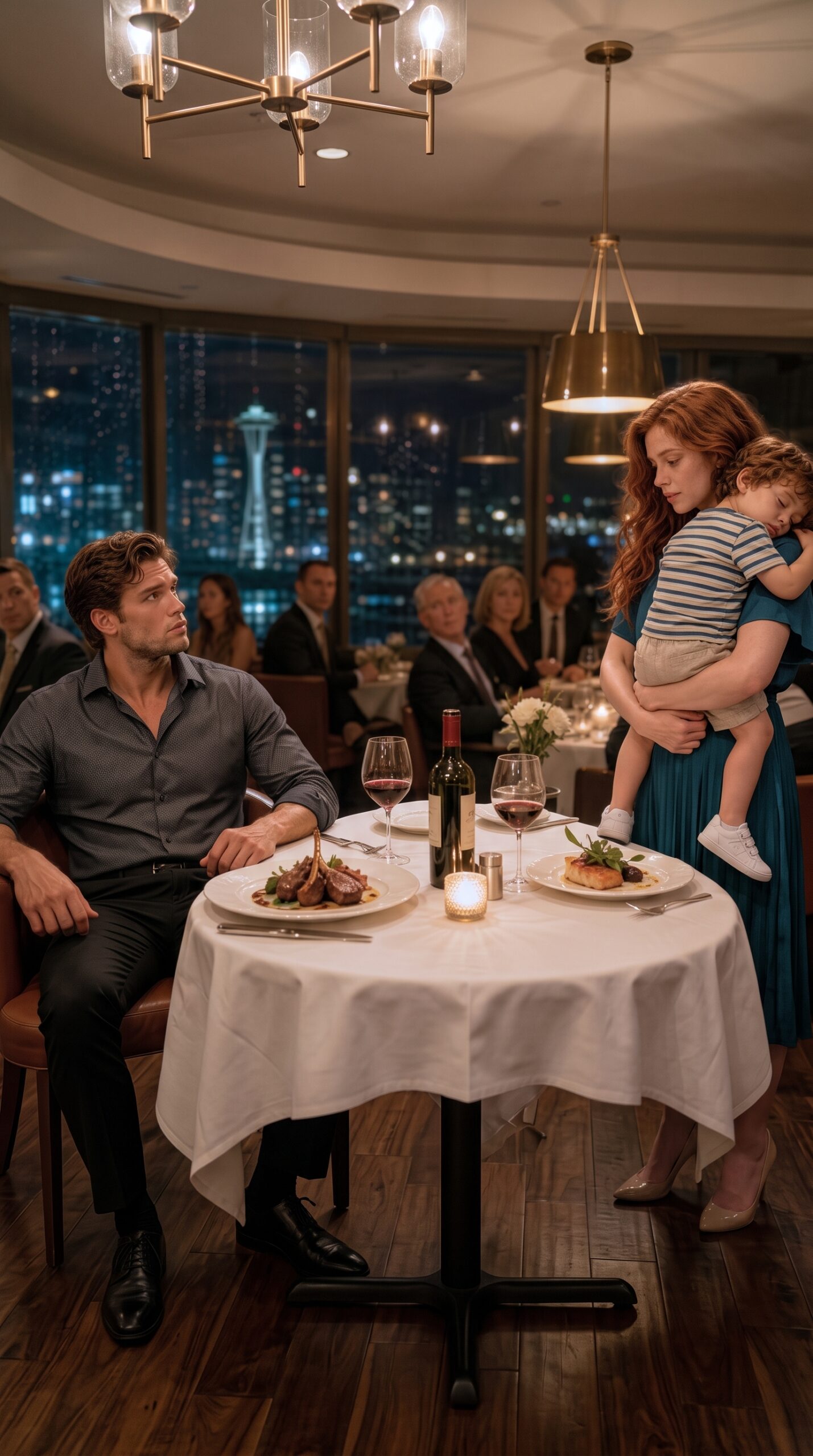
—You were the one who wanted that baby, Mariana. So you raise it.
Rodrigo spat the words from the doorway of the bedroom, his hair still tousled, phone in hand, as their newborn son cried like he was gasping for air.
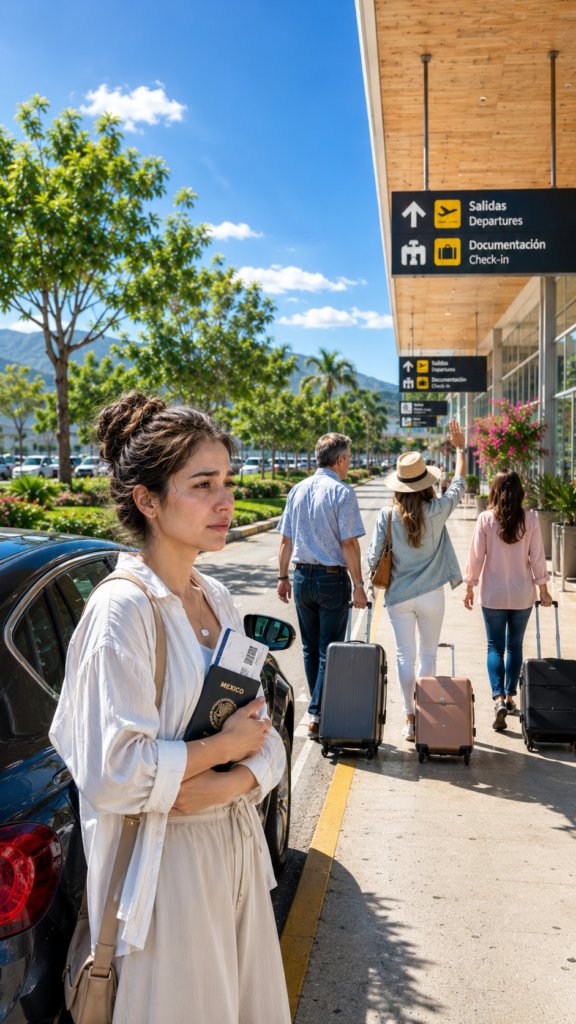
It had barely been five days since Mariana left the hospital in Mexico City, recovering from a cesarean that still burned with every movement, her breasts swollen, her back shattered, and her eyes so tired she could no longer cry properly.
The baby was named Emiliano.
He had a red little face, clenched fists, and that fragility that forces any decent adult to lower their voice. But in that house in the Narvarte neighborhood, his cries seemed to annoy more than they moved anyone.
Rodrigo had spent the whole night tossing in bed.
Every time Emiliano cried, he sighed loudly, covered his head with the pillow, and murmured:
—Not again, come on.
Mariana had been holding him since 2 a.m. She had breastfed him, changed his diaper, rocked him while walking slowly down the hallway, enduring a sharp pain in her belly with every step.
By 6:20, she could take it no more.
—Rodrigo, please —she pleaded, her voice breaking—. Hold him for 10 minutes. I just need to take a shower. I feel awful.
He didn’t even stretch out his arms.
—I have a meeting in Polanco. I can’t show up sleep-deprived just because you don’t know how to organize yourself.
From the kitchen came a low laugh.
It was Doña Leticia, Rodrigo’s mother.
She had arrived the same day Mariana came back from the hospital, with two large suitcases, red nails, a strong perfume, and an attitude of ownership. She didn’t bring broth, didn’t wash clothes, didn’t ask if Mariana needed anything.
She just settled in.
She sipped coffee from a porcelain cup that Mariana had bought with her first salary, scrolling through Facebook as if her daughter-in-law’s suffering was merely a fashionable exaggeration.
—In my day, women didn’t make such a fuss —Doña Leticia said—. We gave birth, and the next day we were already mopping the floor. Now they think they’re queens just for having a baby.
Mariana swallowed hard.
—I’m not asking to be a queen. I’m asking for help with your grandson.
Rodrigo tensed.
—Don’t talk to my mom like that.
—Your mom has been in my house for five days and hasn’t changed a single diaper.
Doña Leticia appeared in the doorway of the bedroom with a venomous smile.
—Oh, honey, that’s what happens when one tries to tie a man down with a baby.
Mariana lifted her gaze.
For a second, the room fell silent.
Even Emiliano stopped crying for a moment, as if he too felt the cruelty of those words.
—What did you just say? —Mariana asked.
Rodrigo calmly took his watch from the nightstand and put it on.
—Here you go again with your drama.
—He’s your son, Rodrigo.
—Then act like his mother.
Doña Leticia added:
—And when you stop being hysterical, you can apologize for disrespecting me.
They were waiting for Mariana to break down.
They knew her like this: explaining, enduring, justifying everything so the family wouldn’t talk, so her parents wouldn’t worry, so Rodrigo wouldn’t get angry.
But that morning, something inside her went dark.
It wasn’t rage.
It was a chilling calm.
A wicked calm.
Mariana left Emiliano in the bassinet for a few seconds, walked slowly to the closet, and pulled out a large diaper bag. She stuffed it with diapers, blankets, onesies, her ID, the provisional birth certificate, her medical records, and a blue folder she had kept hidden behind some maternity bags for weeks.
Rodrigo frowned.
—What are you doing?
Mariana carefully lifted Emiliano.
—I’m going to my dad’s house.
Doña Leticia let out a laugh.
—You’ll be back before lunch. No woman with a newborn can do it alone. Especially not an overdramatic one like you.
Mariana looked at her one last time in her kitchen, with her cup in hand and that triumphant smile.
She didn’t respond.
Because before being the exhausted wife they thought they could humiliate, Mariana had been a financial auditor at a firm in Reforma.
She knew how to read contracts, trace transfers, and find forged signatures where others only saw boring papers.
Rodrigo thought she was kicking him out.
He had no idea he had just pushed her to open the folder that could destroy him.
PART 2
Mariana’s dad opened the door before she could ring the bell.
Don Ernesto lived in a simple house in the Portales neighborhood, with pots of basil by the entrance, the smell of freshly brewed coffee, and a calm that always seemed to hold the walls together.
Seeing his daughter pale, with Emiliano sleeping against her chest and the diaper bag hanging from one shoulder, he didn’t ask anything.
He simply said:
—Come in, daughter. No one is going to kick you out here.
Mariana walked in and finally felt her legs give way.
Don Ernesto took the baby with firm hands, as if holding something sacred. He didn’t carry him like a burden. He carried him like his grandson.
Then he made her tea, toast, and brought her a blanket.
When Mariana stopped trembling, he sat in front of her.
—Did he hit you?
—No.
—Did he threaten you?
Mariana looked at the diaper bag.
—Not yet. But he will.
Then she pulled out the blue folder.
Don Ernesto wasn’t a lawyer, but he had worked for 35 years as an administrator at a construction company and knew how to recognize a lie when it came dressed as a receipt.
Inside the folder were bank statements, screenshots, duplicate invoices, odd contracts, printed emails, and transactions from Rodrigo’s company: Armenta Design and Remodeling.
To his clients, Rodrigo was the successful architect who remodeled apartments in Roma, offices in Santa Fe, and houses in Lomas Verdes.
To Mariana, for months, he had been a man moving money as if no one would ever check.
—Since when do you know this? —Don Ernesto asked.
—Since I was seven months pregnant.
—And you stayed?
Mariana lowered her gaze.
—I needed Emiliano to be born healthy. I needed proof. And I needed Rodrigo to keep believing I was too sensitive to realize.
Don Ernesto took a deep breath.
—Your mom would be proud of you.
That phrase hurt beautifully.
Mariana’s mother had died three years earlier, but the house still held her photos, her embroidered tablecloths, and that silent way of caring that didn’t need to make noise.
Rodrigo’s messages started the next day.
“It’s enough. Come back.”
Then:
“My mom is very offended.”
Later:
“If you don’t come back today, I’ll say you abandoned the home and stole my son.”
Mariana read everything while Emiliano slept on her chest.
For the first time, she didn’t want to explain anything.
She just took screenshots.
The first twist came on the third day.
Doña Leticia uploaded a photo to Facebook from Mariana’s kitchen. She appeared with a glass of wine, standing by the refrigerator, smiling like the queen of the palace.
The caption read:
“Finally, my son regained peace in his home.”
Mariana showed the post to Don Ernesto.
He didn’t get angry.
He just smiled to the side.
—What a fool.
—Why?
—Because she just left evidence that she’s occupying a house that doesn’t belong to her son.
Rodrigo never quite understood one thing: the house in Narvarte wasn’t his.
It had been bought by Mariana’s mother before she died, and it was within a family trust in Mariana’s name. Rodrigo lived there because he was her husband, not because he had any right over a single wall.
That same day, lawyer Salgado, the family attorney, sent the first notification.
Rodrigo called furious that night.
Mariana put the phone on speaker over the dining table. Don Ernesto was rocking Emiliano near the window.
—What the hell are you doing? —Rodrigo shouted—. Are you crazy now?
Mariana spoke softly.
—I’m not crazy. I’m setting boundaries.
—You’ll come back tomorrow, apologize to my mom, and we’ll drop this ridiculousness. If not, I’m going for custody. You’re not even working right now.
—You said that I wanted the baby and that I would raise him.
There was silence.
—Don’t take it out of context.
—You also said in a message that you’d use custody to force me to come back. It’s already with my lawyer.
In the background, Doña Leticia’s voice could be heard:
—Tell her to stop playing the victim!
Mariana opened the folder.
—And another thing, Rodrigo. The bank has frozen a credit line for your company. There are duplicate invoices, payments to an account linked to your mom, and a loan where my signature appears.
Rodrigo stopped breathing for a second.
—What signature?
—One that I supposedly signed the day I was hospitalized giving birth.
Something fell on the other side of the call. Maybe a glass. Maybe pride.
Doña Leticia screamed:
—That woman is making things up!
Mariana replied without raising her voice:
—Then explain it with documents.
Rodrigo changed his tone.
—Mariana, don’t do this. We can fix it. My mom can leave for a few days.
She looked at Emiliano.
He slept peacefully in his grandfather’s arms, without screams, without a television drowning out his cries, without a woman mocking from the kitchen.
—You’ve already shown me who you are —she replied—. You showed it when we needed help the most.
And she hung up.
Two days later, Rodrigo and Doña Leticia had to leave the house.
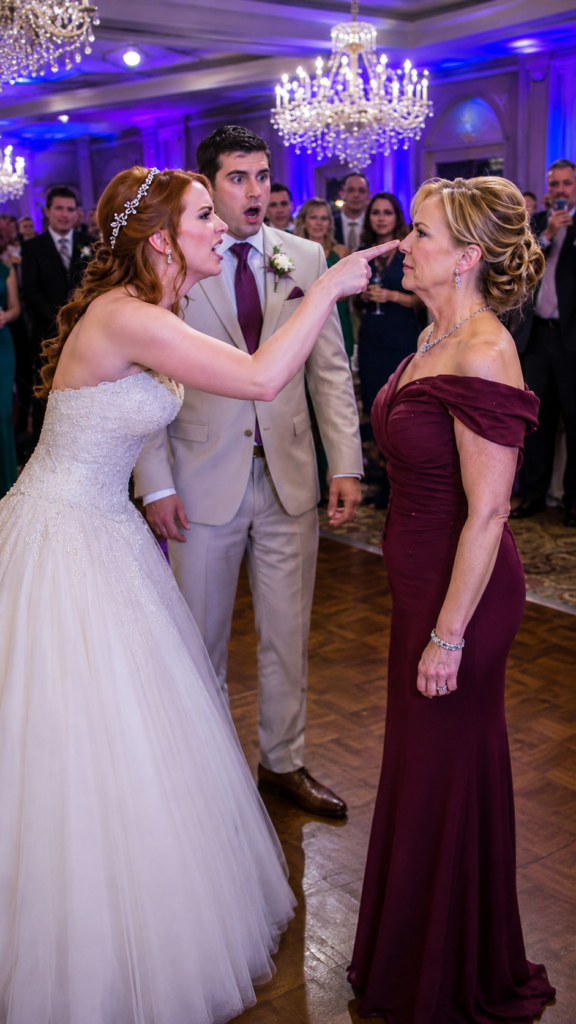
The notification was clear: exclusive use for Mariana and her son while the family process progressed. Doña Leticia made a scene on the sidewalk. She shouted that Mariana was ungrateful, that no decent woman would kick her husband out after giving birth, that daughters-in-law nowadays can’t endure anything.
Neighbors watched from their windows.
Mariana didn’t go.
She didn’t need to be there to reclaim what was hers.
The lawyer was there. So were two private security personnel. Doña Leticia’s Facebook photo, the one where she boasted about “my son’s house,” ended up in the file.
But the real blow came three weeks later.
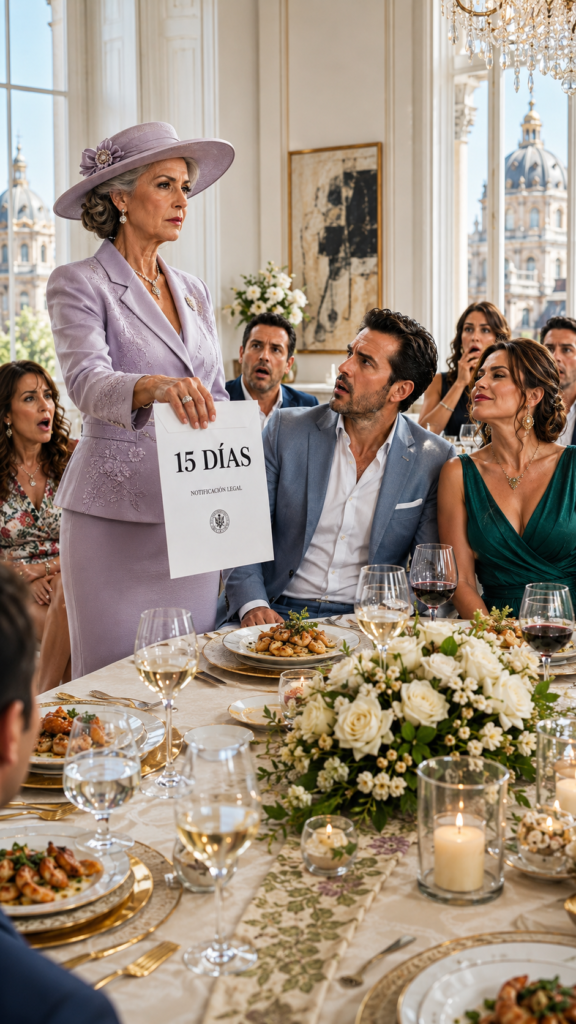
In family court, Rodrigo appeared in a navy blue suit, well-groomed beard, and the face of an offended man. Doña Leticia sat behind him, wearing dark glasses, as if she were at a funeral.
The judge reviewed the messages, the audio, the medical documents, the property of the house, and the evidence of emotional abandonment during the postpartum period.
There were no shouts.
No soap opera.
Just papers.
And sometimes papers speak louder than any cry.
Mariana sat next to lawyer Salgado. Her body still hurt, she still slept little, she was still learning to be a mother amidst diapers, milk, and fear.
But she no longer looked broken.
Rodrigo glanced at her several times, as if wondering when that soft woman had become someone impossible to trample.
What he never understood was that Mariana had always been strong.
She had only used her strength to save the wrong marriage.
The judge granted provisional custody to Mariana. Rodrigo’s visits were supervised. Doña Leticia received a restriction from approaching the house or Mariana without authorization.
Rodrigo lowered his head.
Doña Leticia cried, but not out of remorse. She cried like some people do when they lose control and call it injustice.
The financial investigation continued separately.
Rodrigo’s partners quickly distanced themselves. Several clients canceled projects. The bank reviewed the signature on the loan and opened a file for possible forgery. Transfers to the account linked to Doña Leticia began to be traced.
Rodrigo started with threats.
Then reproaches.
Then pleas.
“Let me see my son without supervision.”
“My mom is in poor health because of you.”
“We can try again.”
Mariana didn’t respond to anything without consulting.
She learned that not every message deserves tears.
Some only deserve to be archived.
Six months passed.
One rainy morning, Emiliano let out his first laugh in Don Ernesto’s living room. The grandfather was making silly faces with a napkin on his head, and the baby moved his feet as if he had just discovered that the world could also be kind.
Mariana cried.
But not out of fear.
She cried because she understood she had survived.
By then, she was already working from home as a financial compliance consultant. Her first client was a small company looking to organize contracts before an audit.
Life, sometimes, has a fine sense of humor.
The house in Narvarte smelled again of soup, clean clothes, and coffee in the mornings. There was no longer a television competing with the baby’s cries. There was no longer a mother-in-law opening other people’s drawers. There was no longer a husband making a woman feel guilty for needing 10 minutes to shower.
One day, Mariana found in the pantry the porcelain cup Doña Leticia had used that morning.
She held it in silence.
She remembered the smile.
She remembered the phrase.
“You were the one who wanted that baby. So you raise it.”
She washed it, dried it, and put it away.
Not because everything was forgiven.
But because that cup no longer held power over her.
When the story was half-told, many people had opinions.
That Mariana was too harsh.
That a baby needs its father.
That she should think of family.
That women used to endure more.
She never argued.
Because yes, a baby needs its father, but not at any cost.
It needs love, arms, respect, and a home where its cries are not treated as a nuisance.
And a mother also needs something: to remember that protecting her child starts with not allowing herself to be destroyed.
Mariana didn’t leave screaming.
She didn’t break plates.
She didn’t make indirect posts.
She left in silence, with her baby pressed against her chest, a folder hidden in the diaper bag, and a dignity so wounded it seemed about to break.
But it didn’t break.
In the end, Rodrigo lost the house he boasted about, the company he painted over, and the family he never knew how to care for.
And it all started with a phrase he said believing himself powerful.
The question that lingered was the same one that ignited comments all over Facebook:
Should a mother endure humiliation so her child can have a “family,” or leaving in time is also a way to save him?