PART 1
—Don't let Claudia hold him too much... if she looks closely, she'll notice he has the same gaze as Alejandro.
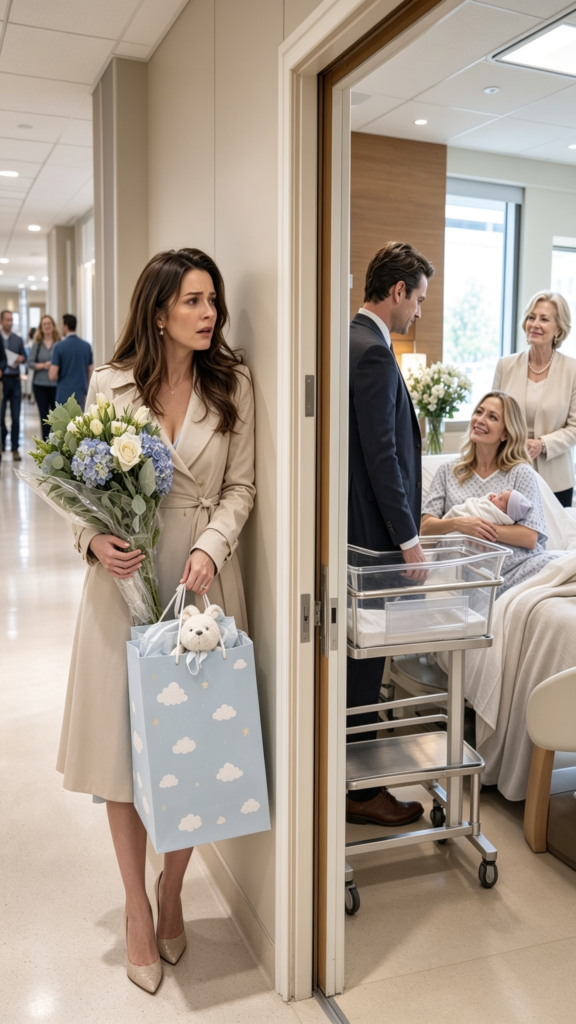
Claudia Mendoza froze in front of the ajar door of room 418, in the maternity ward of San Javier Hospital, in Guadalajara.
She had a white bag hanging from her arm, a bouquet of small sunflowers, and a hand-knitted blanket she had custom-made with the baby's name stitched in blue.
She had arrived excited.
Not like any ordinary aunt.
Like a woman who, after four years of trying to be a mother, still had room in her heart to celebrate her younger sister's child.
Ximena had just given birth that morning. No one knew who the father was. Or so they told her.
Her mother, Rosalba, had repeated for months that Ximena was “very sensitive” and shouldn’t be pressured. Alejandro, Claudia's husband, had feigned surprise every time they talked about the pregnancy.
—Poor Xime —he would say—. She must be going through something really heavy.
Claudia believed him.
She believed him because when someone truly loves, they sometimes confuse lies with exhaustion.
That morning, Alejandro left home at 7:40, in a pressed shirt, an expensive watch, and a quick kiss on the forehead.
—I won’t be able to join you, love. I have a meeting with the folks from Zapopan. But send your sister a hug.
Claudia smiled.
—Of course. I’ll tell her you’re asking about her.
He took the keys, paused for a second, and added:
—And tell her the baby is beautiful… well, I’m sure he’s beautiful.
Claudia thought it was sweet.
Hours later, hearing his voice inside room 418, that phrase fell on her like a stone.
—Claudia still thinks I’m still paying for fertility consultations —said Alejandro, with a low laugh—. The poor thing even deposited again last week.
Claudia felt the bag slipping from her arm.
Then Rosalba spoke.
—Well, let her be. As long as she stays calm, we’re all better off. Ximena already has a child of yours. Claudia could never give you that.
There was silence.
Then, Ximena’s voice, soft, almost coddled.
—Mom, don’t say that.
—It’s the truth —replied Rosalba—. Claudia was always good at resolving, at paying, at enduring. But you did give Alejandro a family.
Claudia held her breath.
She didn’t cry.
She didn’t open the door.
She stood there, clutching the bouquet against her chest, listening to the three people she loved most discuss her pain as if it were a mere formality.
Alejandro let out a small chuckle.
—The kid has my chin. Once it’s known, there’s no denying it.
Ximena whispered:
—What if Claudia goes crazy?
Rosalba replied with a cruel calm:
—Your sister never makes scenes. She swallows it all. That’s how it’s always been.
Claudia slowly lowered her gaze to the bag.
Inside was the blanket, the baby clothes, a wooden rattle, and a handwritten letter promising her nephew that he would always have an aunt to take care of him.
Just a few steps away was a trash bin.
She tossed the sunflowers in there.
Then pulled out the letter, ripped it into four pieces, and put the blanket back.
She didn’t go in.
She didn’t scream.
She didn’t make a scene in the hallway.
She turned around with trembling legs, while a nurse asked if she was looking for a room.
Claudia shook her head.
—I already found what I came to see.
Before reaching the elevator, she reached into her bag and touched the small recorder she used to take work notes.
She had accidentally turned it on since leaving the parking lot.
And then she understood something that chilled her blood: the betrayal had not only just broken her… it had also just confessed itself.
PART 2
Claudia drove back home to Providencia without remembering a single traffic light.
Guadalajara remained the same: the stalls selling tortas ahogadas, the medians filled with jacarandas, the usual honks, people crossing in a hurry.
But to her, everything sounded distant.
As if life were happening behind glass.
Upon arrival, she left the white bag on the dining table. She didn’t open it. Didn’t touch it.
She stared at it for several minutes, until the pain stopped being a cry and turned into something colder.
Order.
Claudia went up to her study and opened her online banking.
For four years, she and Alejandro had been saving money for assisted reproduction treatments at a private clinic. Claudia, who worked as a freelance architect, had taken on projects at dawn, endless remodels, and stubborn clients who changed everything at the last minute.
She had sold the car her father left her.
Canceled trips.
Stopped buying herself little things because every peso, according to her, was for “her baby.”
The account was at 0.
Not low.
Not paused.
At 0.
Claudia felt a buzzing in her ears.
She opened the history.
Transfers made to Ximena Mendoza.
Payments for ultrasounds.
Medical fees.
Deposit for private delivery.
Designer crib purchase.
Diaper bag.
Newborn photographer.
A charge of 38,600 pesos at a baby store in Plaza Andares.
Every peso Claudia had saved to try to become a mother had financed her sister’s pregnancy with her own husband.
For a moment, she wanted to smash the laptop against the wall.
But she didn’t.
She downloaded bank statements. Printed transactions. Took screenshots. Saved receipts. Crossed dates.
Then she opened the family computer.
Alejandro never set a password. Not because he trusted her, but because he underestimated her.
And there it was, everything.
Messages with Ximena.
Pregnancy photos.
Half-deleted audio.
A conversation with Rosalba where her mother organized schedules so Claudia would never coincide with consultations, tests, or purchases.
The message that hurt her most wasn’t from Alejandro.
It was from her mother.
“Your older sister has already lost too many years. At least let this child be born well.”
Claudia printed that phrase.
Read it three times.
Then she stopped trembling.
At 8:10 p.m., Alejandro arrived with birria from his favorite place.
He walked in as if nothing were wrong, taking off his jacket, with that smile of a man who thinks he has life perfectly under control.
—How’s Ximena? —he asked—. Did you get to meet the baby?
Claudia was pouring lemonade.
—No. She was asleep.
Alejandro glanced at her for barely one second.
—Oh, well. She must be exhausted. Poor thing.
Poor thing.
The word burned Claudia’s tongue.
But she smiled.
—Yeah. Poor thing.
For three weeks, Claudia acted.
She brewed coffee in the mornings. Responded to her mother’s messages. Congratulated Ximena on her baby.
When Ximena sent her baby photos, Claudia noticed the edits: a male hand never appeared, no reflections, no shadows.
But she no longer needed to guess.
She had proof.
Her best friend, Regina Cárdenas, was a family lawyer in CDMX and had a reputation for not letting go of a case until it was clean.
When Claudia told her everything over a video call, Regina didn’t say “poor thing.”
Didn’t say “hang in there.”
She said:
—Don’t confront them from pain. Confront them from the evidence.
And Claudia obeyed.
She gathered bank statements.
Messages.
Audio.
Invoices.
Dates.
Transfers.
Clinic receipts.
She even found something worse: Alejandro had used a company card to pay for flights to Puerto Vallarta on the same days he said he was auditing a project in León.
In those bookings were two adults.
Alejandro Rivas.
Ximena Mendoza.
Claudia printed that too.
Then she looked for the marriage contract.
Before they got married, Alejandro’s family had insisted on a separation of assets. At that moment, Claudia felt humiliated, as if they were saying she was after money.
Now, that same paper could save her home, her studio, and half her life.
Regina reviewed it and raised an eyebrow.
—How nice when pride signs itself.
Claudia didn’t laugh.
She couldn’t yet.
The next step was the hardest.
Her father, Octavio Mendoza, lived between Guadalajara and Colima for work. He had been an absent man, not cruel, but one of those who believe that bringing money home is enough to be a father.
Claudia arranged to meet him at a café near Chapalita.
Octavio arrived wearing a hat, a white shirt, and road-weary eyes.
—What happened, daughter? You scared me.
Claudia placed her phone on the table and played the audio from the hospital.
Alejandro’s voice filled the room at a low volume.
Then Rosalba’s.
Then Ximena’s.
Octavio didn’t interrupt.
When it finished, his eyes were red, and his hands were clenched around the cup.
—Did your mother know from the beginning?
Claudia took a deep breath.
—My mother organized it.
Octavio stared out the window.
Old guilt appeared on his face, from years of lost Sundays, of unspoken conversations, of a house he left too long in the hands of a resentful woman.
—I didn’t see anything —he murmured.
—I don’t need you to destroy yourself —Claudia said—. I need you to be standing when I can’t anymore.
Octavio looked at her.
—Tell me where and when.
Claudia pulled out a printed invitation.
—Saturday. At my place. Family dinner.
Octavio read the address.
—Is everyone coming?
—Everyone.
—And the baby?
Claudia lowered her gaze.
—Also.
On Saturday, Claudia set the table as if it were a celebration.
White tablecloth.
Blue dishes.
Swiss enchiladas, rice, salad, and hibiscus water.
Not because she wanted to please them.
But because some truths hurt more when they appear on a pretty table.
Rosalba arrived first, carrying the diaper bag as if she were the owner of the house.
—Oh, daughter, it’s good to see you’re finally more relaxed. Ximena needs a lot of support. You know that motherhood is heavy.
Claudia opened the door calmly.
—Yes, mom. Motherhood weighs differently for everyone.
Rosalba didn’t understand the edge in her tone.
Ximena arrived next, holding the baby. She looked pale, tired, beautiful in that way where fatigue can evoke pity even if the person doesn’t deserve it.
Claudia looked at the child.
She couldn’t hate him.
That was another pain.
The baby was not to blame for being born amidst a betrayal.
Alejandro arrived last, with a bottle of wine and the face of a busy man.
Seeing the child, his face lit up.
Not as an uncle.
Not as a brother-in-law.
As a father.
He approached too quickly.
—How’s my champ?
The room froze.
Ximena lowered her eyes.
Rosalba pretended to adjust a blanket.
Claudia watched Alejandro.
—Your champ?
He blinked.
—Well… you know. It’s just a way of saying.
—Of course —Claudia said—. Just a way.
Octavio arrived ten minutes later. He didn’t kiss Rosalba. Didn’t hug Ximena.
He sat next to Claudia.
That was enough to make Rosalba uncomfortable.
Dinner began with awkward phrases.
That the baby slept little.
That the milk didn’t sit right.
That the pediatrician said everything was perfect.
Alejandro asked too much.
Ximena answered too softly.
Rosalba spoke too loudly.
Claudia hardly said anything.
Until Alejandro, nervous, blurted out:
—And why are you so serious, love?
Claudia set her glass down on the table.
—Because I’m tired of being the only one not invited to my own life.
No one spoke.
Claudia took a coffee envelope next to her chair and placed it in front of Alejandro.
—Open it.
He smiled, but the smile twisted.
—What is this?
—What you all thought I would never find.
Alejandro opened the envelope.
Saw the divorce papers.
The bank statements.
The transfers.
The hospital bills.
The photos of the messages.
The zero balance in the fertility account.
The blood drained from his face.
—Claudia…
She raised her phone.
—Not yet.
Pressed play.
Alejandro’s voice came out clear, brutal, impossible to deny.
—Claudia still thinks I’m paying for fertility consultations. The poor thing even deposited again last week.
Ximena began to cry.
Rosalba jumped up abruptly.
—Turn that off. There’s a baby here.
Octavio slammed his palm on the table.
—The baby doesn’t understand. But we do.
The audio continued.
—Claudia was always good at resolving, at paying, at enduring —said Rosalba’s voice—. But you did give Alejandro a family.
Silence fell heavily.
Claudia looked at her mother.
—Was that all I was to you? The daughter who served?
Rosalba pressed her lips together.
—You don’t understand. Ximena has always been more fragile. You always managed on your own.
Claudia let out a dry laugh.
—How convenient to call a daughter strong to never care for her.
Ximena cried, holding the baby.
—I didn’t want it to happen this way.
—But you wanted it to happen —Claudia replied.
Alejandro attempted to regain authority.
—Look, enough. This is to be discussed privately. You’re making a scene.
Claudia stared at him without blinking.
—No. A scene was pretending you wanted a child with me while paying for the child you had with my sister.
He lowered his voice.
—Be careful. You know me. This can get ugly.
At that moment, Regina stepped out of the hallway with a black folder.
Alejandro froze.
—What is she doing here?
—She works for me —Claudia said.
Regina placed the folder on the table.
—Mr. Rivas, the unauthorized transfers from the joint account have already been documented. There are also indications of property fraud, concealment of resources, and misuse of a company card. The lawsuit will be filed Monday morning, along with a request for restitution and financial protection measures.
Rosalba tried to intervene.
—This is an exaggeration. Ximena just gave birth. Aren’t you ashamed?
Octavio slowly stood up.
—You should be ashamed, Rosalba. You took one daughter from her to buy a lie for the other.
Ximena cried louder.
Alejandro left the envelope on the table.
—That money was mine too.
Regina replied:
—A part. Not all. And certainly not to finance a hidden relationship with your wife’s sister.
Claudia pulled out another sheet.
—Besides, I already spoke with the clinic. Several authorizations have my forged signature.
Alejandro’s eyes widened.
Ximena lifted her head, confused.
—What?
There came the twist no one expected.
Claudia looked at her sister.
—Did you know Alejandro used my documents to justify medical payments as if they were part of our treatment?
Ximena slowly shook her head.
—No… he told me it was his money.
Rosalba turned to Alejandro.
For the first time, the alliance between them shattered.
Alejandro swallowed hard.
—Don’t exaggerate. It was a way to move resources.
Regina smiled wryly.
—In plain Spanish: forgery.
Ximena looked at Alejandro with disgust and fear.
—Did you lie to me too?
Claudia felt a strange pang.
It wasn’t compassion.
It was the bitter certainty that betrayal always demands a toll from both sides.
Weeks later, the hearing was a disaster for Alejandro.
The judge ordered part of his accounts frozen, investigated the transactions tied to his company, and reviewed the signatures used at the clinic. The construction company where he worked initiated an internal audit for false travel expenses.
Alejandro lost his position before the month ended.
Rosalba had to declare that she knew about the relationship and helped conceal the medical appointments. When she signed, she cried with rage, not remorse.
Octavio didn’t console her.
—Not today —he told her—. Today, it’s Claudia’s turn to be the daughter, not the solution.
Ximena separated from Alejandro shortly after. Not because she suddenly became good, but because she understood that a man capable of robbing a wife could sell any tale to the next.
One day, she waited for Claudia outside the courthouse with the baby sleeping in the stroller.
—I know I don’t deserve forgiveness —she said.
Claudia looked at her.
—Then don’t ask for it to feel less guilty.
Ximena cried silently.
—My son is not to blame.
—No —Claudia replied—. But you will have to teach him not to destroy others to feel chosen.
That phrase hung between the two like a closed door.
The divorce was finalized six months later.
Alejandro returned the money from the fertility account, took on medical debts he had incurred irregularly, and waived any claim to the house.
Claudia didn’t celebrate.
There were victories that didn’t taste like glory but like rest.
With part of the recovered money, she opened a small office in Guadalajara to help women sort their finances before love emptied their accounts and lives.
On the wall of her office, she didn’t put up diplomas.
She put a simple phrase:
“Believing is not a fault. Staying silent is not an obligation.”
Octavio visited her every Sunday with coffee from the pot. He no longer lived with Rosalba.
Rosalba called many times, but Claudia only answered once.
—I’m your mother —she said.
Claudia closed her eyes.
—No, mom. You were a witness. And you chose sides.
Then she hung up.
A year later, Ximena sent her a photo of the boy walking. Below it, she wrote:
“I’m teaching him to tell the truth, even if it hurts.”
Claudia took a long time to respond.
In the end, she wrote:
“Then maybe one day he’ll be better than all of us.”
That afternoon, as she left her office, Claudia passed by a flower shop.
She saw sunflowers.
For a second, she returned to the hospital hallway, to the ajar door, to the white bag, to that version of herself that still believed her family would never use her as currency.
She bought three.
Not for Ximena.
Not for Rosalba.
Not for the baby.
She placed them on her desk, next to the closed case folder.
And as Guadalajara burned in traffic and noise outside, Claudia finally understood that the truth hadn’t taken away a family from her.
It had shown her who never was.





