PART 1
—If you lower that box before I see my son, you’ll have to bury me with him.
Doña Amalia Rentería's voice sliced through the murmurs in the Guadalajara mausoleum. At 68, her shawl askew and her shoes caked in dust from a night’s journey from a nearby town near Tepatitlán, she stood resolute.
No one had warned her that Julián, her only son, was dead.
She found out because a neighbor showed her a Facebook post: a photograph of Julián, a crown of white flowers, and the words “Rest in peace.”
Doña Amalia had called 23 times.
To Julián.
To her daughter-in-law, Lorena.
To the real estate development company where her son was a partner.
No one answered.
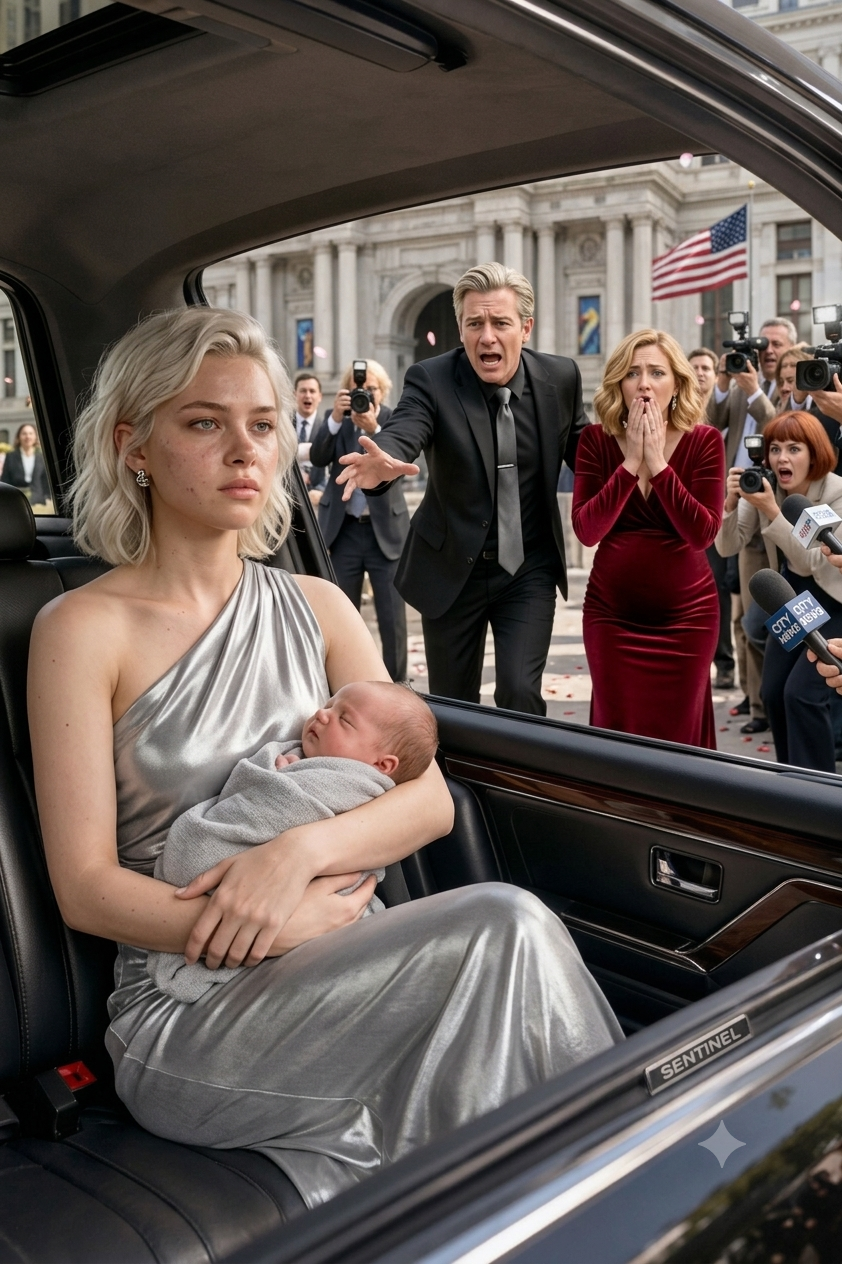
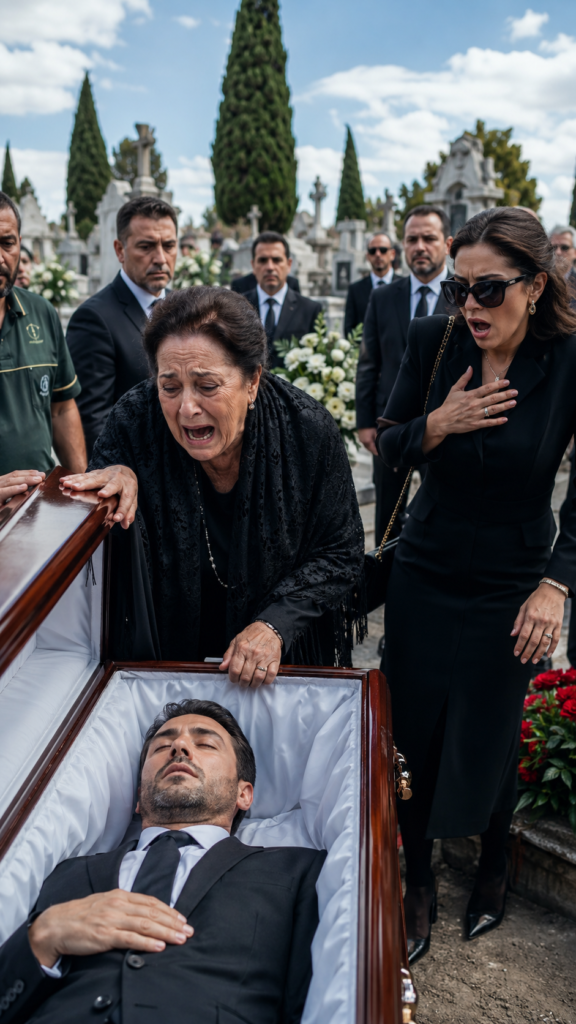
When she arrived at the cemetery, the coffin was already suspended over the grave. Lorena stood next to it in a pristine black dress, dark glasses perched on her nose, her expression one of annoyance more fitting for a delayed meeting than for her husband’s funeral.
—Ma’am, this is about to end —Lorena said—. Julián requested something private.
Doña Amalia clutched the photograph she held in her hand.
—My son asked me for the bean recipe even at 40. Don’t tell me he decided to leave without saying goodbye.
Some employees cast their eyes downward. Mateo, Julián's partner since university, wiped the sweat from his forehead.
Lorena positioned herself in front of the coffin.
—You two had been distant for months. Don’t make a scene now.
It was true that Julián had distanced himself since his marriage. Lorena repeatedly told him his mother was manipulating him, that a woman from the countryside couldn’t understand his new life, and that to grow, he had to leave behind “that mentality of poverty.”
Doña Amalia had endured empty Sundays, unanswered messages, and family gatherings to which she was never invited.
But she wouldn’t allow them to rob her of the final goodbye.
—Open the coffin.
—No.
—Open it, Lorena.
—The body is in bad shape.
Doña Amalia stared at her unblinking.
—A mother recognizes her child even if the whole world wants to hide him.
Lorena lost her color. She ordered the gravediggers to continue and threatened to call the police.
Doña Amalia shoved a man, clung to the lid, and lifted it.
Julián lay pale, lips dark, with a small mark behind his ear.
She leaned down to kiss him.
Then she felt a warm breeze brush against her cheek.
She looked at his chest.
It rose, just barely.
—He’s alive —she whispered.
Lorena recoiled.
Doña Amalia screamed with all the strength she had left:
—My son is breathing!
And Lorena, forgetting that everyone could hear her, murmured in terror:
—That can’t be… they gave him enough.
PART 2
The silence lasted less than three seconds, but to Doña Amalia, it felt like an eternity.
Then, everything exploded.
Mateo pulled out his phone and called 911. The gravediggers let go of the ropes. Two employees blocked the exit when Lorena tried to walk to her truck.
—Get out of the way —she ordered—. You’re committing a crime.
—The crime is in that coffin —Mateo shot back.
Doña Amalia leaned over Julián, holding his face in her hands.
—Son, listen to my voice. Don’t leave me. Your mother is here.
The paramedics arrived nine minutes later. They found a weak pulse, shallow breathing, and signs of deep sedation. One asked who had certified the death.
Lorena pointed to a folder.
—Dr. Barragán. My husband suffered a heart attack at home.
The paramedic checked the document.
—It says here there were no resuscitation efforts.
—He had advance directives.
—Where is that document?
Lorena didn’t answer.
Julián was taken to the Civil Hospital. Doña Amalia climbed into the ambulance without asking for permission, stroking his hair the whole way.
—Forgive me for not coming for you sooner —she murmured—. I thought respecting your silence was loving you.
In the emergency room, the doctors confirmed that Julián had not suffered any cardiac arrest.
He was severely intoxicated from a hospital sedative combined with another medication that had slowed his heart rate to almost imperceptible.
He had been minutes away from being buried alive.
The police arrived before noon. Commander Saúl Cárdenas separated those present and ordered that no one leave the hospital.
Lorena regained her composure.
—It was a medical error. I’m a victim too.
—A victim doesn’t say “they gave him enough” when her husband is breathing —the commander replied.
—I was in shock. I don’t even know what I said.
Mateo approached with a gray backpack.
—I know what Julián said before he “died.”
He pulled out a USB drive, a set of keys, and a sealed envelope with Doña Amalia’s name on it.
—He gave it to me four days ago. He asked me to find his mother if something happened to him.
Doña Amalia felt her legs weaken.
Mateo confessed he hadn’t followed through because Lorena had assured him the woman was sick, suffering episodes of confusion, and could show up to invent accusations.
—I was a coward —he admitted.
Inside the envelope was a handwritten letter.
Julián acknowledged he had distanced himself out of pride. He wrote that Lorena made him believe his humble origins were a shame, but he finally understood she was isolating him to control his decisions.
There were also accounting documents.
For two years, Lorena had diverted more than 18,000,000 pesos to ghost construction companies registered in her brother Rodrigo's name.
Moreover, she forged Julián’s signature to prepare for an automatic transfer of his shares if he died or became incapacitated.
The commander connected the USB drive.
The first file was an audio.
“Mateo, tomorrow I’m going to report Lorena and Rodrigo. I know about the fake invoices. If I don’t make the meeting, find my mom. Tell her I tried to call her and I’m sorry for letting them convince me she was a burden.”
Doña Amalia clutched the letter to her chest.
She didn’t cry out loud.
She cried inwardly, as if each tear dragged with it one of the months she waited for a call that never came.
Lorena observed the scene with disdain.
—An audio doesn’t prove I wanted to kill him.
—No —the commander replied—. But it shows you had 18,000,000 reasons.
At 2:40 PM, Dr. Ernesto Barragán, a 57-year-old private physician, arrived. He claimed Julián had no vital signs when he reached his home.
—I checked for pulse, pupils, and breathing.
—Why didn’t you notify the Public Ministry if it was a sudden death? —the commander asked.
—The wife showed me cardiac history.
The hospital doctors reviewed the file.
Julián had never suffered from heart issues.
Barragán began to sweat.
Then Mariana, Julián’s administrative assistant, appeared, pale-faced with a cellphone in her hands.
—I recorded something last night —she said—. I didn’t know if I should hand it over because I have two kids and those people know where I live.
She explained she returned to the office for some plans. From the hallway, she overheard an argument inside Julián’s office and activated the camera.
In the video, Julián accused Lorena of stealing money.
—Tomorrow I’ll hand everything to the prosecutor. It’s over.
Lorena approached with a cup.
—Calm down. You’re shaking. Have coffee, and let’s talk like adults.
Julián took two sips.
Minutes later, he was clutching the desk and fell to the floor.
Lorena didn’t call an ambulance.
She dialed another number.
—He’s unconscious now —she could be heard saying—. Come for him. And make sure this time he doesn’t wake up.
The recording ended as Mariana, terrified, fled the building.
The commander looked at Barragán.
—Do you want to change your statement?
The doctor shook his head, but his hands began to tremble.
Lorena let out a dry laugh.
—That video is manipulated.
—Seriously, ma’am —Mariana replied—. Your husband was on the floor, and you were only asking if the burial could take place before noon.
Lorena tried to approach, but two agents stopped her.
—Don’t touch me. I’m a lawyer.
—Then you understand perfectly what attempted homicide means —the commander shot back.
Doña Amalia stood by the door, listening to every word with a calm that terrified more than any scream.
Lorena saw her.
—This is all because of you. Julián could never move forward because he was always looking back at that ranch, feeling guilty for leaving you alone.
Doña Amalia stepped closer slowly.
—No, dear. He moved forward because I pushed him from below. You only climbed on when the road was already paved.
Lorena smiled cruelly.
—Your son was ashamed of you.
The phrase struck Doña Amalia, but it didn’t knock her down.
—Perhaps. But when he stopped breathing, I was still the one who could hear him.
The commander ordered Lorena and Barragán’s arrest. Before they were taken away, a nurse emerged from intensive care.
—The family of Julián Rentería.
Doña Amalia ran.
The doctor explained they had stabilized him, but there was renal damage and neurological risk. The next 48 hours would be critical.
—Can you hear me? —she asked.
—We don’t know.
—Then tell him we’re waiting for him. That boy was always stubborn.
For two nights, Doña Amalia didn’t leave the hospital. She slept sitting up, holding her son’s backpack. At times she prayed. At times she told him stories through the glass.
Meanwhile, the prosecutor's office searched Lorena's house.
They found vials of the sedative, receipts for transfers to Dr. Barragán, and messages sent to Rodrigo.
One read:
“As soon as I sign the certificate, we activate the transfer. The old lady won’t even know.”
Another:
“Closed burial. No wake. Before anyone asks questions.”
Rodrigo tried to flee through Puerto Vallarta airport but was stopped before boarding a flight to Panama.
Dr. Barragán eventually confessed.
Lorena offered him 450,000 pesos to declare Julián dead without taking him to a hospital. She assured him the medication would cause a definitive arrest and no one would check the body because he would be cremated.
But the crematory refused to take him due to inconsistency in the certificate.
Lorena had to change the plan and organized an immediate burial.
The haste meant to hide the crime ended up saving his life.
On the third day, Julián opened his eyes.
The first thing he saw was his mother asleep by the bed, with a rosary tangled between her fingers.
—Mom —he whispered.
Doña Amalia woke up with a start.
For a moment, she thought she was dreaming. Then she rested her forehead against his, careful of the wires.
—I’m here, son.
Julián cried.
—I heard your voice.
—Of course. I screamed like a crazy person all over the mausoleum.
—I couldn’t move. I felt like I was sinking.
She squeezed his hand.
—it’s over.
—No, mom. It’s not over. I left you alone.
Julián recounted how Lorena would check his phone, block numbers, and delete messages. Every time Doña Amalia called, she said it was only to seek money or wanted to separate them.
He admitted he chose to believe her because acknowledging the manipulation meant recognizing he had treated badly the woman who raised him alone.
—I was a coward.
—You were a confused man.
—I denied you in front of people who wouldn’t have lifted a stone for me.
Doña Amalia took a deep breath.
—Forgiveness doesn’t erase what happened. But it can prevent us from continuing to lose time.
The most painful twist came when Julián asked about his father.
Lorena had assured him that his biological father, whom he had never met, had returned and wanted to claim a property in Nayarit.
It was all a lie.
The letters, the private investigation, and the documents of a supposed inheritance had been forged by Rodrigo.
They wanted Julián to distrust his mother and sign a power to “recover” non-existent assets.
That power was used to divert another 6,000,000 pesos.
Julián closed his eyes, devastated.
—She made me fight with you over a man who never returned.
—And you called me a liar —she recalled.
—Yes.
—That hurt me more than all the empty Sundays.
Julián didn’t ask for comfort. He just cried and accepted the weight of his decisions.
Weeks later, the case captivated news outlets across Mexico. The image of Doña Amalia opening the coffin became a symbol of a mother who refused to obey when everyone asked her to be silent.
In the trial, the prosecution presented the videos, the audios, the vials, the transfers, and the doctor’s confession.
Lorena insisted she loved Julián.
—I built his social life, his image, and his contacts. Without me, he would have remained a provincial engineer.
Julián, still leaning on a cane, looked at her from the stand.
—Without you, I would have saved money. But more importantly, I would have saved my mother.
Lorena lost her composure.
—She was always between us!
Doña Amalia replied from her seat:
—No, ma’am. I was here before you. Being here first doesn’t mean being in the way.
When it was her turn to testify, she adjusted her shawl and looked at the judge.
—I don’t know how to talk about trusts or corporations. I know how to sell food, count coins, and work sick. I know what it costs to buy school shoes when there’s only enough for beans.
The room fell silent.
—That man didn’t come from an elegant office. He came from a leaky house where he studied under a borrowed bulb. I didn’t give him millions. I gave him discipline, food, and a place to return to.
Doña Amalia pointed at Lorena.
—The worst part wasn’t that she tried to kill him. The worst was that she convinced him to be ashamed of his own roots.
For the first time, Lorena looked down.
Not out of regret.
But out of defeat.
The sentence was 21 years in prison for Lorena for attempted homicide, fraud, forgery, and conspiracy.
Rodrigo received 14 years. Dr. Barragán was sentenced to 9 years and lost his license.
Julián took 7 months to return to the company. He audited every contract, expelled the accomplices, and sold his stake in several projects.
With that money, he created a foundation to support single mothers working in informal commerce who wanted to keep their children in school.
He named it “Amalia's Roots.”
At the inauguration, Doña Amalia protested.
—Don’t make me a saint because I have my own character.
Julián smiled.
—It’s for your character that I’m alive.
From then on, he visited her every Sunday. Sometimes they ate birria. Sometimes fresh tortillas with cheese. Sometimes they sat in silence.
Repairing a relationship doesn’t happen with one hug or an apology in front of cameras.
There were days when Doña Amalia recalled the insults and pulled away.
There were days when Julián grew desperate because she couldn’t forget so quickly.
But they kept trying.
One afternoon, sitting outside the house, Julián asked:
—How did you know I was still alive?
Doña Amalia looked down the dirt road.
—Because everyone was looking at a corpse, and I was looking at my son.
He lowered his head.
—I thought distancing myself from you made me strong.
—Strong isn’t the one who cuts their roots —she replied—. Strong is the one who recognizes when they were wrong and returns before it’s too late.
The story was shared thousands of times, but not just because of the open coffin.
It resonated because many mothers recognized the silence of a distanced child.
Because many children understood that a partner demanding isolation isn’t always asking for love, but for control.
And because Doña Amalia arrived late to the funeral, but just in time to prevent them from burying alive the man she had raised with her own hands.