PART 1
Rebeca Montiel was 48 years old, and everyone in León swore that her husband, Arturo Cárdenas, was a gentleman.
They had been married for 24 years.
He owned a fine furniture company, sponsored church raffles, greeted the neighborhood watchmen, and spoke of Rebeca as "the woman who had given him everything."
And yes.
Rebeca had given him everything.
Years, patience, two children, her unpaid work in the office, early mornings checking invoices, and even the calm to endure his silences.
That Friday night, the house smelled of noodle soup, bleach, and freshly bought sweet bread.
Her children no longer lived there. Diego, 25, worked in Saltillo. Fernanda, 20, had just moved to Guadalajara to study design.
For the first time, the house felt too big.
Arturo had dinner almost without seeing her.
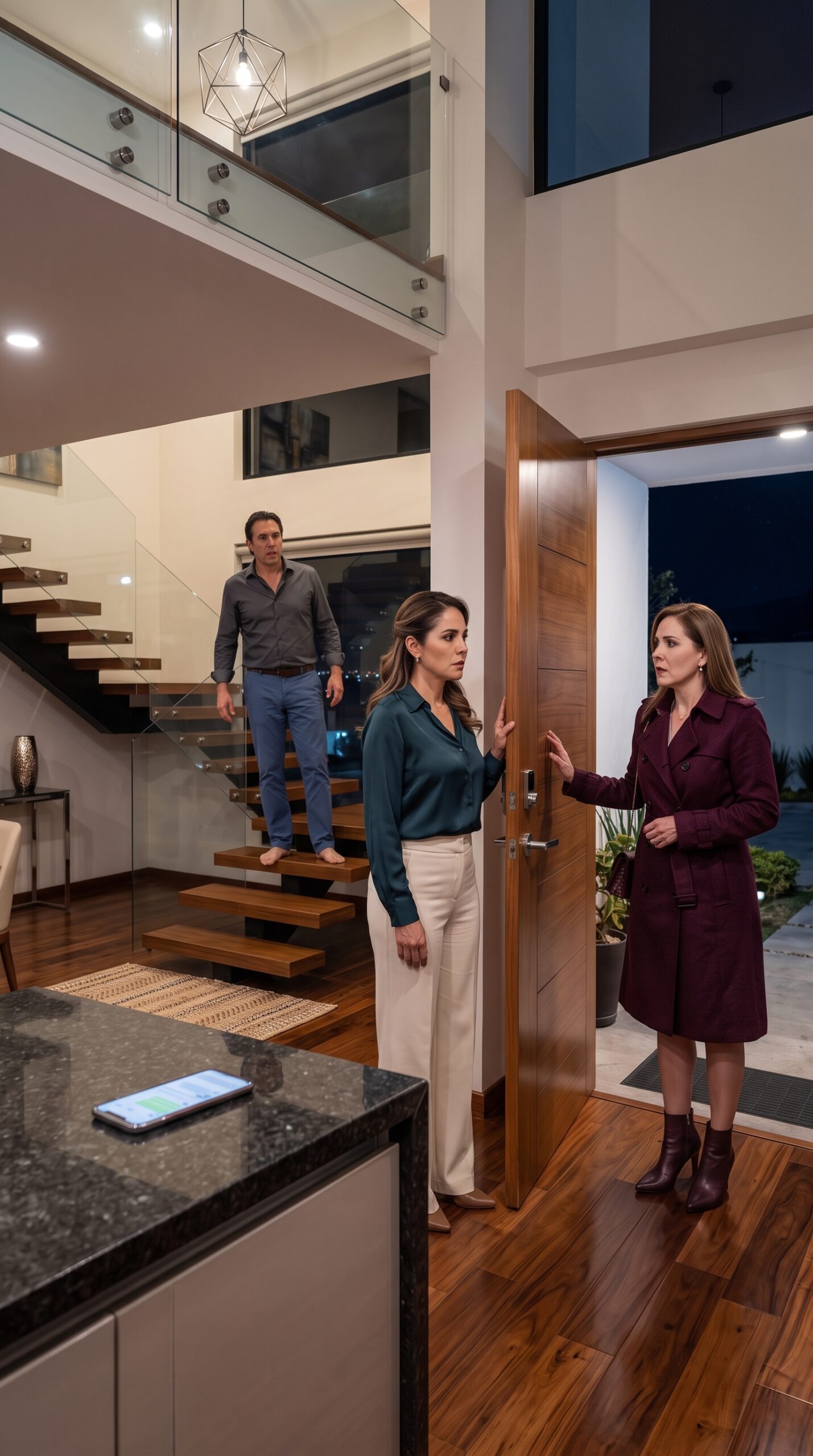
Then he went upstairs to shower, leaving his phone on the kitchen counter, next to a cup of coffee he hadn't even finished.
Rebeca wasn’t one to check phones.
She never wanted to become that wife who seeks pain where she still believes there is love.
But the screen lit up.
"I shouldn’t have left so quickly last night. I miss you."
The message came from a number saved as "Supplier North."
Rebeca felt the floor shifting beneath her.
She didn’t scream.
She didn’t cry.
She just stared at the screen as if it had opened a door to another life.
The phone vibrated again.
"Is she asleep yet?"
The shower was still running upstairs.
Rebeca took the phone with cold hands. The passcode was still Fernanda's birthday.
That hurt more.
He didn’t even bother to hide well for his betrayal.
She opened the conversation.
There were photos from restaurants in San Miguel de Allende, hotel reservations, half-deleted messages, and phrases Arturo hadn’t said in years.
"My love."
"My queen."
"It won’t be long now."
Rebeca took a deep breath.
Then she typed from Arturo’s phone:
"Come over now. Rebeca isn’t here."
She sent the message, wiped the screen with the edge of her sweater, and left the phone exactly where it was.
Twelve minutes later, the doorbell rang.
Rebeca walked to the door without running.
When she opened it, she found Mónica Vidal.
She was 46, in a dark green dress, with a designer bag and that sweet perfume Rebeca had smelled several times on Arturo’s shirts.
Mónica was the image consultant for the company.
The elegant woman who organized dinners, campaigns, donations, and smiled alongside Arturo in every public photo.
Seeing her, Rebeca felt her face go blank.
"Is Arturo home?" she asked, her voice broken.
Rebeca stepped aside.
"Come in. You got here so quickly."
Mónica swallowed hard, but walked in.
Her heels clicked on the wooden floor.
At that moment, Arturo came down the stairs with wet hair and a white t-shirt.
He froze.
He looked at Rebeca.
He looked at Mónica.
And the worst part was that he didn’t seem surprised.
He seemed caught.
"Rebeca..." he murmured.
She didn’t answer.
Mónica searched Arturo’s eyes as if hoping for an order, a lie, an escape.
Then Rebeca understood something worse than infidelity.
They already had a script.
"We can talk like mature people," Mónica said, adjusting her necklace.
Rebeca let out a low laugh.
"How strange. Arturo uses that same phrase when he wants to lie to me."
Mónica tried to leave.
She walked to the door with feigned dignity, but as she took out her keys, a cream-colored envelope fell from her bag.
She didn’t notice.
When she left, Rebeca picked it up.
Inside were copies of a department in Chapala, under a company named Vidal Estrategias.
Arturo reached for it.
"Give me that."
Rebeca held the envelope against her chest.
"No."
He softened his voice.
"You’re upset. Don’t ruin 24 years over a misunderstanding."
Rebeca stared at him without blinking.
"A misunderstanding doesn’t come to my house in high heels after 12 minutes, Arturo."
And when he tried to approach, Rebeca saw another sheet inside the envelope: a draft of a separation where she was labeled as "emotionally unstable."
PART 2
The next morning, Rebeca made coffee as if her heart wasn’t shattered.
Arturo came down in a blue shirt, dark circles under his eyes, and that false smile he used with difficult clients.
"Good morning," he said, attempting to kiss her on the forehead.
Rebeca barely turned her face.
He pretended not to notice.
"Last night got out of control. Mónica came for work-related matters. You misunderstood."
Rebeca poured coffee into two cups.
"Sure."
Arturo watched her.
He expected tears.
He expected screams.
He expected a desperate wife begging for explanations.
But Rebeca just added sugar to her cup and asked:
"Are you going to the factory today?"
"Yes. I have a meeting with the partners."
"Hope it goes well."
Arturo relaxed.
He thought she was defeated.
He didn’t understand that sometimes a woman stops shouting when she’s no longer asking for love.
She’s gathering evidence.
As soon as Arturo left, Rebeca opened the family laptop.
She checked emails, accounts, old folders, and bank statements she had kept for years with a trust that now embarrassed her.
At first, everything seemed normal.
Then the payments appeared.
$22,000 for "visual consulting."
$35,500 for "commercial strategy."
$18,900 for "private event."
All going to Vidal Estrategias.
All coming from accounts that also held Rebeca’s money.
For almost two years, Arturo had financed his new life using the family’s assets.
Rebeca took screenshots.
She printed bank statements.
She saved emails.
Then she went upstairs to Arturo’s office.
She opened drawers, checked folders, file boxes, old receipts, and supplier contracts.
In the last drawer, she found a gray folder without a label.
Inside was a copy of the department in Chapala, a renovation budget, a list of furniture, a draft of a divorce, and a handwritten note.
"Wait until Fernanda settles in Guadalajara. Rebeca will resist, but if she has a nervous breakdown, the kids will understand."
Rebeca sat in the chair.
She didn’t cry.
Her eyes burned, yes.
But she didn’t cry.
Because the pain turned into clarity.
Arturo didn’t just have a mistress.
He was preparing to get rid of her without appearing as the villain.
That afternoon, she called Fernanda.
"Mom, are you okay? Dad wrote me something strange. He said maybe you need to go stay with Aunt Lourdes in Aguascalientes for a few weeks. That you’ve been very sensitive since I left."
Rebeca closed her eyes.
There it was.
He had already started planting the story.
The unstable wife.
The sad mom.
The woman who needed to leave so that everyone could "rest."
"I’m fine, sweetheart," Rebeca replied. "You don’t worry about grown-up problems."
"Mom, did something happen?"
Rebeca looked at the gray folder on the table.
"Yes. But this time I won’t stay silent."
She hung up and called Patricia, her lifelong friend, a divorced accountant who had survived an abusive husband and a meddling family.
Patricia listened to everything without interrupting.
"Don’t leave the house," she said firmly. "Not even if he begs you. Not even if he says you’re exaggerating. Keep everything. And go see lawyer Mariela Ponce."
Mariela had a small office near the Arco de la Calzada.
She wasn’t loud.
She didn’t promise to destroy anyone.
She just listened, organized papers, and asked scary questions.
When Rebeca showed her the envelope, the transfers, the note, and the messages, Mariela took off her glasses.
"This is not just infidelity. There’s possible financial abuse and family manipulation."
"I want to protect my home," Rebeca said.
"Then don’t move from there. And don’t argue without recording, without witnesses, or without documents."
In the following days, Rebeca acted as if nothing was wrong.
She served food.
She asked about the factory.
She received some calla lilies that Arturo sent with a card included: "To start anew."
She put them in water.
Not because she forgave him.
But because she wanted him to believe that she could still be managed.
Arturo grew complacent.
One night he said in the living room:
"I don’t want this to turn into a war, Rebe. We’re grown. We need to act maturely."
She arranged the flowers.
"Maturity isn’t about hiding knives and then asking for peace."
Arturo looked at her nervously.
He didn’t know if it was fatigue or a threat.
Meanwhile, Rebeca found more things.
An old tablet of Fernanda’s was still synced with the family account.
Deleted emails appeared.
Reservations at boutique hotels.
Jewelry invoices.
Messages where Mónica advised Arturo:
"When she leaves, don’t let her come back. If she cries, tell the kids she needs help."
Rebeca felt nauseous.
Mónica didn’t want to be the other woman.
She wanted to sit at her table.
Sleep in her bed.
Use the house Rebeca had cared for over 24 years.
But the worst evidence appeared three days later.
Arturo received an invitation to the company’s 30th anniversary.
It would be in an elegant hall at Poliforum, with partners, suppliers, local press, parish friends, and family.
Rebeca checked an email forwarded by mistake to the family account.
Mónica had written the speech to Arturo.
It said:
"Sometimes love changes form. What matters is to close cycles with respect, gratitude, and honesty."
Rebeca understood everything.
Arturo planned to use the event to announce a "dignified" separation.
He wanted everyone to see him as a decent man.
And he wanted her to appear as the broken wife who couldn’t accept change.
On the night of the event, Rebeca dressed in a simple black suit, small pearls, and the shoes she had worn on their 20th anniversary.
She didn’t choose sparkle.
She chose firmness.
Diego arrived from Saltillo.
Fernanda traveled from Guadalajara.
Both noticed something strange about their mother, but she just took their hands.
"Today listen before you judge," she told them.
The hall was filled with warm lights, tall glasses, and arrangements of white flowers.
Arturo walked among the tables like the king of a patronal feast.
Mónica was near the stage, in a dark red dress, greeting as if she were already part of the family.
Rebeca saw her and felt no jealousy.
She felt disgust.
Arturo climbed onto the stage.
He took the microphone with the confidence of a man used to being believed.
"Thirty years of business are not built alone," he began. "By my side was Rebeca, my wife, the mother of my children, a companion in difficult times."
The crowd applauded.
Rebeca didn’t move her hands.
"But life changes," Arturo continued. "And there are cycles that must be closed with respect, gratitude, and honesty."
Some tables stopped smiling.
Fernanda looked at her mother.
Diego furrowed his brow.
Mónica lowered her gaze, but smiled slightly.
Then Rebeca stood up.
Her chair barely scraped the floor.
Arturo lost his rhythm.
"Rebe, please," he whispered from the stage.
She walked to the microphone.
She didn’t shake.
"Before my husband continues talking about honesty," she said, "I believe everyone deserves to know who wrote that speech."
The hall fell silent.
Arturo tried to take the microphone from her.
Rebeca pulled out a sheet from her bag.
"These are transfers from our family accounts to Vidal Estrategias, Mónica Vidal’s company."
A murmur spread like wildfire.
Mónica turned pale.
Rebeca pulled out another sheet.
"This is the department in Chapala that Arturo and Mónica planned to occupy together."
Diego stood up.
"What the hell is this, Dad?"
Fernanda started to cry.
Rebeca pulled out the third sheet.
"And this note says: 'Wait until Fernanda settles in Guadalajara. If she presents a nervous crisis, the kids will understand.'"
Fernanda covered her mouth.
"Did you want to do this to Mom?"
Arturo grabbed the microphone desperately.
"Rebeca is going through a delicate time. This confirms what I’m telling you. She’s confused, hurt, doesn’t understand what she’s doing."
Rebeca looked directly at him.
"I was hurt when I discovered you. Today I am documented."
The phrase fell like a stone.
Some guests pulled out their cell phones.
Others looked down.
Arturo’s partners began to glance at each other.
Then something happened that Rebeca didn’t expect.
An older man, Don Ramiro Ledesma, the founding partner of the factory, stood up with difficulty.
"Arturo," he said loudly, "four months ago you asked me to approve a loan secured by the family house. You said Rebeca had already signed."
Rebeca froze.
That wasn’t in her papers.
Mariela, the lawyer, who was sitting at the back with Patricia, immediately lifted her gaze.
Don Ramiro pulled out his cell phone.
"I have the email with the scanned authorization. It came with her signature."
Arturo stopped breathing properly.
Mónica looked toward the exit.
Arturo’s silence was a complete confession.
Rebeca understood the magnitude of the betrayal.
He didn’t just want to replace her with another woman.
He didn’t just want to evict her.
He also used her name to move money and put the house at risk.
Fernanda cried with rage.
"Were you going to leave Mom with nothing?"
Diego walked up to Rebeca and stood beside her.
"Mom, you’re not alone."
Arturo tried to speak.
"Son, this isn’t what it seems."
Diego interrupted him.
"Don’t call me son right now. Not after trying to make her look crazy."
The phrase shattered something in the hall.
Several older women wiped their tears.
A supplier murmured:
"What a piece of work."
Mónica tried to exit through a side corridor.
Patricia stood in front of her, without touching her.
"Seriously, Mónica, did you really think you’d walk in through the front door after this?"
Mónica lowered her head.
Rebeca returned to the microphone.
"I didn’t come to seek pity. I came to prevent them from stealing my story. My marriage didn’t end because I was sick, tired, or crazy. It ended because my husband and his mistress planned to remove me from my home while I still shared a bed with him."
No one applauded at first.
It wasn’t necessary.
The silence weighed more.
Then an old employee of the company stood up and started to applaud.
Then another.
Then another.
Until half the hall was on their feet.
Arturo came down from the stage with a destroyed face.
But not from remorse.
From public shame.
The divorce lasted months.
The forged signature was investigated.
The transfers were included in the division of assets.
The loan was under review.
Arturo lost partners, contracts, and that image of the exemplary husband he had protected more than his own family.
Mónica disappeared from events where she once walked as an important lady.
The house remained with Rebeca.
One afternoon, Arturo came for his last boxes.
He stood at the entrance, thinner, older, smaller.
"You didn’t have to humiliate me in front of everyone," he said.
Rebeca looked at him without anger.
"You chose the stage. I just spoke the truth with the microphone on."
Then she closed the door.
For the first time in years, the house didn’t feel empty.
It felt clean.
Months later, Diego and Fernanda organized a simple dinner in the kitchen.
They made noodle soup and sweet bread, just like that night.
Rebeca thought the smell would break her.
But it didn’t.
It reminded her that a house can also heal when lies are removed.
Fernanda raised her glass.
"To my mom. For not leaving when they wanted to erase her."
Diego smiled with teary eyes.
"And for teaching us that being calm doesn’t mean being weak."
Rebeca looked at her children, the walls, the table, the new flowers on the counter.
For years, she believed that caring for a family meant enduring in silence.
Now she knew that sometimes caring means telling the truth even if everything trembles.
Because a lie doesn’t destroy a house all at once.
It burns it from within.
And the truth, though painful, is the only way to extinguish the fire.





