PART 1
"Don’t let her show up, because with her around, we can’t enjoy ourselves."
The message appeared on Mauricio’s phone just as his mother was clearing the dirty plates from the table. He, his wife, and their son were already settled in the living room, as if lunch had cleaned up itself.
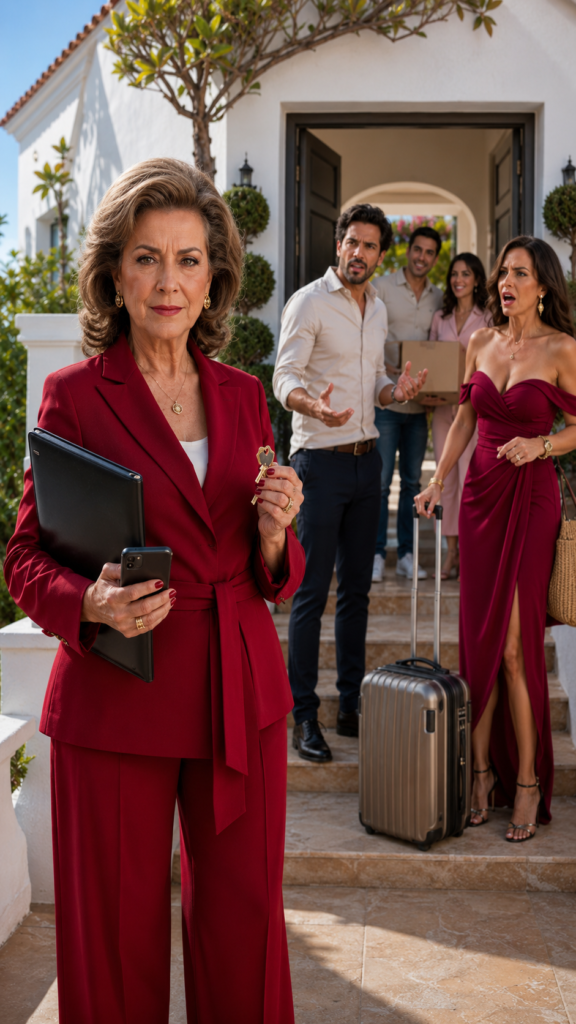
Elena Cárdenas was 69 years old and lived in the Portales neighborhood of Mexico City. Since becoming a widow six years ago, she had turned Sundays into a family ritual.
She would wake up early, go to the market, prepare food, and wait for her only son with the table set.
That Sunday, she cooked carnitas, rice, nopales, beans, and salsa de molcajete. Mauricio arrived 40 minutes late, without an apology. His wife, Lorena, walked in talking on her phone while Emiliano, their 15-year-old son, headed straight for the couch without greeting anyone.
"Everything is such a drag, Mom," Mauricio complained. "We need to get out of the city. We’re thinking of spending the bridge at the house in Cuernavaca."
Elena looked up.
That house had been purchased by her and her husband, Arturo, after 18 years of saving. It wasn’t a mansion, but it had a garden, a small pool, and a terrace filled with bougainvilleas.
Arturo used to say that they would grow old together there.
"I could go with you," Elena proposed. "I haven’t been in almost a year. I can open up early, bring clean sheets, and prepare something for the road."
Lorena put down her fork.
"Oh, Elena, better not. We’ll be in and out. Plus, with the heat, it might lower your blood pressure."
Elena had never suffered from the heat.
Mauricio avoided looking at her.
"Yeah, Mom. Just rest here. We just want to spend time with family."
Elena smiled, though that phrase felt like a door slamming in her face.
Was she no longer family?
When they finished eating, the three of them stood up without clearing anything. Elena began to take the plates to the kitchen while she listened to their laughter from the living room.
Mauricio's phone vibrated next to a basket of tortillas.
The screen lit up.
Group: "Bridge Without the Old Lady."
Elena didn’t touch it. The messages appeared by themselves.
"I’ll bring 3 speakers."
"My parents have already confirmed."
"My sister, the kids, and the 2 dogs are also coming."
Then came a message from Lorena:
"She totally bought it. We told her the heat is bad for her. House, pool, and free lodging for everyone."
Another member responded:
"How cool to have a mother-in-law with property."
Lorena sent a laughing emoji.
Elena stood frozen with a plate in her hands.
She remembered all the Sundays cooking since 6:00 AM. The loans Mauricio never paid back. The times she cared for Emiliano while they traveled. The keys she gave them to “keep an eye on” the house.
She didn’t cry.
She dried the plate, put away the silverware, and served coffee as if she hadn’t seen anything.
Before leaving, Mauricio quickly kissed her on the forehead.
"I’ll pick up the keys on Thursday, Mom."
"Sure, son," Elena replied. "They’ll be here."
As soon as she closed the door, she searched for a blue folder that Arturo had left in the closet.
There were the deeds, the receipts, and a document her son had never bothered to read.
Then she called Cuernavaca.
"Mr. Ramiro, I need a locksmith, a real estate agent, and your help to move some boxes."
"Did something happen, Mrs. Elena?"
She looked at her husband’s photograph on the shelf.
"My son confused my love with permission."
On Thursday, Mauricio received the old keys and smiled with satisfaction.
But by then, a new family was already preparing for their move.
And when he arrived with 10 people, suitcases, dogs, and speakers, he would discover that no key could open a house whose respect he had lost.
PART 2
On Friday at 5:18 PM, Elena was drinking coffee in her dining room when her phone began to ring.
She saw Mauricio’s name and let it ring three times.
When she finally answered, there was no greeting.
"Mom! What the hell did you do?"
Behind him, there were barking dogs, crying children, truck doors slamming shut, and several people shouting at the same time.
"Good afternoon, son. Did you arrive safely?"
"There are people inside the house! A man came out and said he lives here. They changed the locks. My keys don’t work."
"They work," Elena replied. "They just don’t work on that door anymore."
Mauricio fell silent for a few seconds.
"What does that mean?"
"It means the house is rented."
"Rented? Don’t be ridiculous, Mom! We’re outside with Lorena’s whole family. We brought food for 3 days, coolers, mattresses, and even the dogs."
"I didn’t invite anyone."
Lorena snatched the phone away.
"Elena, stop throwing this tantrum. There are kids in the sun and my parents came from Toluca. Tell those people to leave and we’ll sort out the contract tomorrow."
"This isn’t a tantrum, Lorena. It’s a decision by the owner."
"That house is family property!"
"No. That house is mine."
Lorena let out an incredulous laugh.
"Why do you want a house you barely use? We make the most of it."
Elena looked at Arturo’s photograph. He was on the terrace in Cuernavaca, a paintbrush in hand and white paint on his shirt.
"I don’t need to justify why I want something I paid for with my labor."
"Mauricio has rights too. It was his dad’s."
"The property is solely in my name. Arturo left it that way so that no one could take my house while I’m alive."
Lorena stopped laughing.
In the background, a male voice asked:
"So, did they lie to us? They said the house was available."
Another woman complained that she had brought food for 12 people.
Mauricio got the phone back.
"Mom, listen to me. Maybe there was a misunderstanding, but we’re here. Tell the tenants to go to a hotel. I’ll pay for the night."
"They have a one-year contract, a deposit paid, and legal possession since this morning."
"Who are they?"
"Rosa and Gabriel. She works as a nurse at the general hospital. He has a mechanic shop. They have 2 daughters and lost the house they rented because the owner decided to sell it."
"And what does that have to do with me?"
"Nothing. Just like your vacation had nothing to do with me until you decided to use my property without asking me."
Mauricio lowered his voice.
"I did ask you for the keys."
"You told me it would be just you, Lorena, and Emiliano traveling."
"In the end, more people joined."
"How many?"
"Mom, it doesn’t matter."
"How many, Mauricio?"
He exhaled.
"Lorena’s parents, her sister, her brother-in-law, 2 nephews, and a friend."
"Plus you three, that’s 10 adults and kids, not to mention the dogs."
"We weren’t going to destroy anything."
"Mr. Ramiro told me what happened last time."
Mauricio fell silent.
Elena had traveled to Cuernavaca on Monday. In front of the house lived Mr. Ramiro, an old friend of Arturo’s, who tended to the garden and checked the plumbing.
When she arrived, he showed her pictures.
One showed a mountain of bottles next to the pool. Another, a broken chair. There were also grease stains on the floor, a battered door, and several destroyed pots.
The neighbor from the corner told her that during the last visit, a guest had urinated in front of her garage. The dogs had entered her yard, and Lorena responded that she wasn’t being exaggerative.
Elena had never found out.
Mauricio and Lorena cleaned just enough to hide the disaster and then returned the keys as if nothing had happened.
"The door repair cost 8,700 pesos," Elena said. "The pool maintenance was 3,200. And the neighbor’s pots I paid for today because you never showed your faces."
"We could have sorted it out."
"You didn’t because you thought I’d never find out."
"Mom, you’re making a drama over a party."
"It wasn’t a party. It was years of treating me like I was a useful lady when I cooked, lent money, or handed over keys, but uncomfortable when I wanted to join you."
Lorena shouted from the back:
"Tell her to stop playing the victim!"
Then Elena spoke the words she had held back all week.
"I saw the group 'Bridge Without the Old Lady.'"
The noise behind Mauricio seemed to mute.
"What group?"
"Your phone was on my table. The screen lit up while I was gathering the plates you left behind. I saw the messages about the speakers, the dogs, and the free house. I also saw Lorena’s message saying I ‘had already fallen for it.’"
"It was a joke, Mom."
"What part was the joke? Lying to me about my health? Inviting people without notifying me? Laughing at me? Or calling me old while I was washing your plates?"
Mauricio tried to respond but found no words.
"It wasn’t meant with bad intention."
"People always say that when the bad intention gets discovered."
Emiliano spoke from somewhere nearby.
"Dad, did they really name the group that?"
His voice didn’t sound angry, but embarrassed.
"Don’t get involved, Emiliano," Mauricio replied.
"But she’s my grandmother."
Elena closed her eyes. Those four words hurt and comforted her at the same time.
Lorena approached again.
"This won’t end like this. We’ll talk to a lawyer. A woman your age can’t impulsively sign contracts. Maybe you’re no longer fit to manage your properties."
Elena felt a chill.
Not out of surprise, but because those words confirmed the reason she had also visited the bank and a notary.
"Thanks for saying it out loud," she replied. "My lawyer advised me to record this call."
"What?"
"I also removed Mauricio as an authorized person on my accounts. I canceled the additional card you used for 'emergencies,' changed all my passwords, and handed my original documents to the notary."
Mauricio reacted immediately.
"I managed those things to help you!"
"Then explain to me why, when I set a limit, your wife threatened to declare me incapable."
"She’s upset."
"No. She’s revealing the plan you had already prepared."
Elena had found something else inside the blue folder.
During her visit to the bank, the executive showed her monthly transactions she didn’t recognize. For 14 months, small amounts had been charged to the additional card: meals, gas, online purchases, and payments for a membership.
In total, it was 94,600 pesos.
Mauricio had trusted that his mother would never check the account statements.
"I also found the charges on the card," Elena said. "I have each charge printed out."
"We’d pay it back later."
"There’s no deposit back."
"Sometimes we bought things for you."
"Is my gym membership in Lorena’s name?"
No one responded.
Elena heard her daughter-in-law mumble something, then a discussion between them.
"I didn’t know she was using the card," Mauricio said.
"The card was under your responsibility."
"I’ll pay you back."
"You will. The lawyer is already preparing an agreement. If you don’t sign, the corresponding complaint will be filed."
"Are you going to sue your own son?"
"Were you going to declare your own mother incapable?"
The silence was brutal.
For the first time, Mauricio understood he wasn’t facing the woman who always forgave before receiving an apology. In front of him stood Elena Cárdenas, a widow, owner, and legal master of her decisions.
"Dad would be very disappointed," he said desperately.
Elena tightened her grip on her cup.
That phrase aimed to pierce her right where it hurt the most.
"Your father would be sad," she replied, "but not because of the lock change. He used to say that unlimited love ends up raising abusers. For years, I thought he was exaggerating. Now I know he was seeing something I didn’t want to accept."
"I’m not an abuser."
"You entered my house without greeting. You let your wife mock me. You used my card. You lent out my property as if you had already inherited it. And when I put a stop to it, you threatened to control my accounts. How would you call that?"
Mauricio breathed heavily.
Outside the house, Gabriel asked that they move the trucks as they were blocking the garage. One of Lorena’s relatives began to complain to her for having promised them lodging.
The big party was crumbling before everyone’s eyes.
"What do you want us to do?" Mauricio asked.
"Today, leave without bothering the tenants. Afterward, pay what you owe. And if you ever want to see me again, you will come with respect."
"Can’t we enter your house anymore?"
"You can enter when you knock on the door, greet, and understand that I’m not your servant."
"And Emiliano?"
"He will always have a place with me. But he also needs to learn that at a table, people greet, help, and put away their phones."
The grandson spoke again:
"I’m sorry, Grandma."
Elena felt her throat tighten.
"I love you, my boy. This isn’t your fault. But watch closely what happened and learn something: no one has the right to humiliate a person just because they think they will always forgive them."
Mauricio fell silent.
"And me?" he finally asked.
"You also have a door. But you must return as a son, not as an owner."
Elena ended the call.
That night, she didn’t cook for anyone. She didn’t leave the hallway light on or check her phone waiting for another message.
She put on a comfortable robe, warmed up sweet bread, and sat in front of the television. The house was quiet, but for the first time, that silence didn’t feel like abandonment.
It felt like peace.
The next morning, Mr. Ramiro sent her a photograph from Cuernavaca.
Rosa had placed flowers on the table. Gabriel repaired a lock in the garden. The girls were sweeping the leaves from the terrace while the youngest hugged a pot so it wouldn’t fall.
"They say they’ll take care of the house as if it were theirs," Mr. Ramiro wrote.
Elena replied:
"Let them take care of it knowing it’s someone else’s. That is worth much more."
Then she cried.
She cried for Arturo, for the years of sacrifice, and for all the times she confused patience with love. She also cried in relief, for her memories were now in the hands of a grateful family, not of people who considered them part of a free vacation package.
Lorena blocked her.
Mauricio didn’t call for 26 days.
The first Sundays were strange. Elena woke up early and calculated how much meat she needed to buy, until she remembered she no longer had to feed people who arrived late and left without a thank you.
She started walking in the park. She signed up for a gardening workshop and met Teresa, a 71-year-old woman who had also learned late to set boundaries.
One Wednesday, she received a message from Emiliano.
"Grandma, can I come on Saturday? I want to properly apologize and help you with whatever you need."
Elena smiled.
"You can come. There will be chocolate here. But you’ll wash your cup."
The boy responded with a heart emoji.
On Saturday, he arrived on time, greeted her, and left his phone in his backpack. After breakfast, he washed the dishes without her asking.
He also told her that his parents had been arguing since the trip. Lorena blamed Mauricio for not controlling his mother. Mauricio was beginning to understand that his marriage was supported by debts, appearances, and privileges paid for by others.
Elena didn’t speak ill of either of them.
"Your parents’ problems belong to them," she explained. "Just make sure you don’t repeat what you saw."
Two weeks later, Mauricio appeared at her door.
He arrived alone, with a bag of conchas, and without the keys he used to carry as a symbol of authority.
He rang the doorbell.
When Elena opened it, he didn’t try to step inside.
"May I come in?"
"What do you want?"
"To apologize. No excuses."
She left him at the entrance for several seconds before stepping aside.
Mauricio sat in the same chair where for years he waited to be served. This time he brought the cups to the table and prepared the coffee.
He confessed that Lorena had used the card, but that he knew. He admitted he intended to pay back the money "someday." He acknowledged that he allowed the mockery because facing his wife seemed harder than hurting his mother.
"I chose the person who made the most noise," he said, "because I knew you’d always forgive me."
Elena didn’t console him.
"That’s not love, Mauricio. It’s cowardice."
He nodded, tears in his eyes.
He signed the agreement to return the 94,600 pesos in installments. He also agreed to pay for the previous damages to the house.
He didn’t ask for keys.
Before leaving, he washed his cup and cleaned the crumbs off the table.
It was a small gesture, but for Elena, it marked the beginning of something different.
The relationship didn’t repair immediately. There were awkward days, arguments, and boundaries Mauricio still tried to negotiate. Lorena never apologized and stopped visiting Elena.
But Emiliano began to spend two Saturdays a month with her. He learned to cook rice, care for the plants, and listen to his grandfather’s stories.
The house in Cuernavaca remained rented.
Rosa sent photographs of the bougainvilleas, the clean garden, and the girls doing homework on the terrace. Each month, the payment arrived on time.
One day she wrote:
"Mrs. Elena, this house feels full of peace."
Elena replied:
"Peace doesn’t come from the walls. It comes from the people who know how to enter with respect."
Since then, she never handed over keys out of guilt, fear, or habit.
She understood that a mother can love deeply without giving away her dignity. That being family doesn’t grant rights over anyone’s money, time, or property. And that an older person doesn’t lose authority over their life just because their children start seeing them as an anticipated inheritance.
Elena continued to be a mother and grandmother.
But she also returned to being Elena: owner of her house, her Sundays, her decisions, and her peace.
Because women like her don’t always scream when they discover a betrayal.
Sometimes they check the deeds, protect their accounts, and wait in silence.
And when everyone arrives believing they can still use her, they find that the locks have already changed.





