PART 1
Four days before her 25th birthday, Camila Robles realized that her mother hadn’t forgotten her birthday.
She had simply changed its owner.
The dinner Camila had paid for with months of savings, at an elegant restaurant in Zapopan, would no longer be for her. It would now be a party for Valeria, her younger sister, because "she needed to smile again" after her boyfriend dumped her.
It wasn’t a mistake by the restaurant.
It wasn’t a family confusion.
It was the humiliation that shattered her life once and for all.
Camila had grown up in Guadalajara, in a spacious house in Chapalita, one of those homes that looked perfect from the street: bougainvilleas at the entrance, a clean SUV, framed family photos and a mom who greeted everyone like a respectable lady.
But inside that house, love had a favorite.
Beatriz, her mother, was elegant, cold, and an expert at turning any complaint into guilt. Ernesto, her father, was a good man only when he didn’t have to defend anyone. And Valeria was the sick princess of the family, though her illness was usually just not getting her way.
If Valeria cried because a friend didn’t invite her for coffee, Beatriz would shut down the world.
If Camila won something, worked hard, studied, or got sick, the answer was always the same:
—You can manage alone, dear. You’re strong.
At 12, Camila won a science contest in middle school. She had built a model with recycled water, old tubes, and a pump she found at a flea market.
Her parents promised to pick her up and take her for pizza.
They never showed up.
Camila waited for two hours under a horrible rain, clutching her plastic trophy as her model disintegrated on the sidewalk.
When she called home, Beatriz answered, annoyed.
—Don’t start, Camila. Valeria had a meltdown because her bangs were cut wrong. Take a bus or walk. You’re not a useless child.
Camila walked almost four kilometers, soaked.
When she arrived, she found everyone watching a movie. Valeria wore a new headband and claimed it had been "the worst day of her life."
No one asked about the contest.
From then on, Camila stopped waiting.
At 16, she started working. By 22, she was renting a room in Tlaquepaque, keeping track of small business accounts at night, and working at a hardware store in the mornings.
But when she turned 25, she wanted to grant herself a silly permission.
She wanted to feel loved.
She saved $10,000 pesos, booked a private room at a fine dining restaurant, and sent invitations to her parents, Valeria, and three coworkers.
She didn’t ask for gifts.
She just asked them to arrive by 7:00 PM.
On Thursday, while organizing boxes of screws, she received a call.
—Miss Camila, we confirm the changes for your event. Your mom requested to change the banner. Now it will say: "Congratulations, Valeria, for shining again."
Camila felt her chest close up.
—My mom did what?
The manager hesitated.
—She also indicated that you would waive your deposit for the champagne toast.
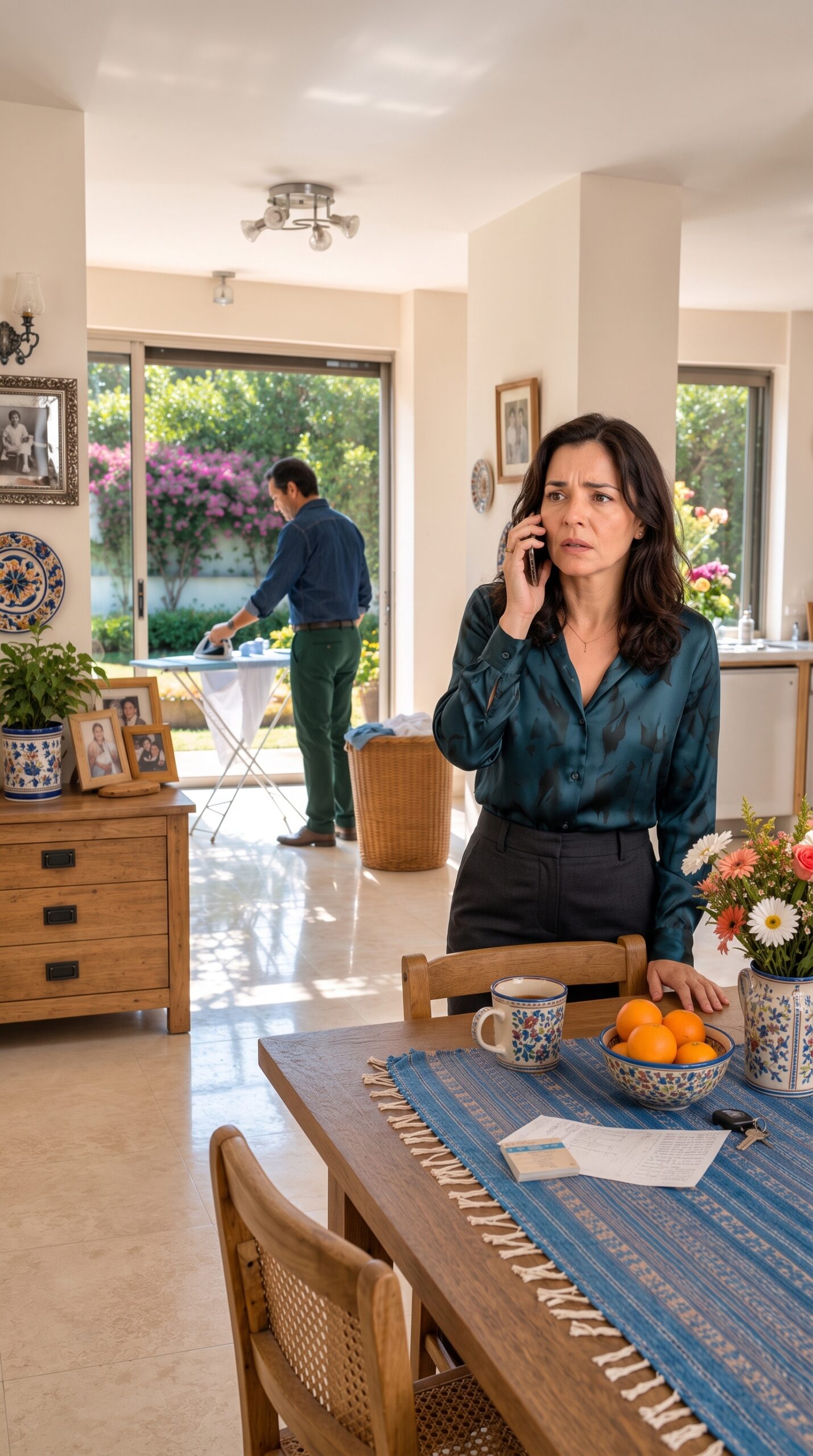
Camila left work without warning and drove to the family home. She entered the kitchen and found Beatriz writing names on golden cards. Valeria was testing lipsticks in front of the dining room mirror.
—Why did you change my dinner? —Camila asked.
Beatriz didn’t even look up.
—Oh, don’t make drama. Valeria is devastated. She was dumped by text, imagine the horror. You’re turning 25, it’s not such a big deal.
Valeria pouted.
—Seriously, Cami, don’t be a downer. You always take everything. Let me have this joy.
Ernesto stood by the fridge, silent, staring at the floor.
Camila looked at all three of them.
She didn’t shout.
She didn’t cry.
She just nodded.
—You’re right. I’m the strong one.
She walked out, called the restaurant, and canceled everything. She asked them to keep the deposit so no one would use the room.
That night she packed clothes, boots, and her few savings in an old suitcase.
At 10:30, she drove to San Blas, Nayarit, where the only person who ever looked at her like she was worth something lived: her grandfather, Julián Robles.
Camila thought she was running away.
She didn’t know she was heading straight into a family war lasting nine years.
PART 2
She arrived at Don Julián’s shipyard at 3:00 AM.
The iron gate creaked as if waking from an old dream. The rusty sign read: Robles Nautical Restoration. Below, a warped board clattered in the salty wind coming from the lagoon.
Camila turned off the car and sat for a few seconds.
Everything smelled of humidity, rotting wood, old oil, and the sea.
The main workshop was sagging on one side. The office had a broken window covered with cardboard. Tall weeds grew between the trailers, and next to the dock, there were abandoned boats covered with torn tarps.
The porch light turned on.
Don Julián appeared in a flannel robe, with a cane, white hair, and a face marked by years in the sun. He was 72 and walked slowly, but his eyes remained sharp.
He didn’t ask why she arrived crying.
He didn’t ask what had happened.
He just opened his arms.
—That’s enough, dear. Come in. There are hot beans.
Camila dropped the suitcase and cried against his chest like she hadn’t cried in years.
She slept 14 hours on a cot beside the office. When she woke up, she found her grandfather sanding an old boat, breathing heavily but as stubborn as a mule.
While looking for coffee, she moved some papers on the desk, and an envelope fell to the floor.
Inside was a loan contract secured by the shipyard's land.
Don Julián’s signature was marked with a red arrow.
And above it was a note written in Beatriz’s perfect handwriting.
“Dad, don’t be selfish. Sign where I marked. Valeria needs new therapy and a down payment for a car because driving makes her anxious. The family needs you.”
Camila felt sick.
They hadn’t just used her her whole life.
They were also squeezing the old man dry.
She went out to the workshop with the papers in hand.
—Were you going to sign this?
Don Julián set the sander on a table.
—Your mom calls every day. She says Valeria is unwell, that she has no support, that I’m an old fool. I don’t have cash anymore, dear. I only have land, boats, and debts. Sometimes you sign just to make the phone stop ringing.
Camila ripped the contract into pieces and tossed it into the sawdust bin.
—Then the phone’s going to stop ringing. You’re not giving them another peso. I’m staying. We’re going to rebuild this place.
Don Julián looked at her for a long time.
Then he took some old leather gloves, hard and stained with varnish, and tossed them to her.
—Put them on. At first, they’re going to hurt. When your hands bleed enough, they’ll fit.
That was day one.
Camila didn’t know how to restore boats. She couldn’t tell a keel from a deck. She didn’t know what wood was right for the sea or how to listen for a motor before it failed.
But she knew how to work.
For three years, she woke up at 4:00 AM. She did the accounts, answered customers, cleaned engines, sanded wood until her fingers burned, carried planks, painted hulls, and learned to varnish without leaving marks.
At first, they repaired fishermen’s pangas, small motors, and old boats for modest payments. Sometimes they got paid in cash, sometimes in fish, sometimes with promises.
But Camila didn’t back down.
Don Julián taught her to look at wood as if it had memory.
—A broken boat isn’t always dead —he would say—. Sometimes it just needs someone not to give up on it.
Camila never said anything, but she understood he wasn’t just talking about boats.
One day, La Carmelita arrived.
It was a classic mahogany boat from 1964, abandoned on a ranch near Tepic. It was eaten by humidity, full of rust, and the motor was almost dead. Anyone would have sold it for scrap.
Camila bought it for $15,000 pesos, using almost everything she had left.
Don Julián crossed himself when he saw it come in.
—You’re crazy, dear.
—Maybe so —she replied—, but this thing still wants to live.
For 14 months, she restored it piece by piece. She worked early in the morning, at night, with a fever, with split fingers and broken nails. Raúl, the port captain, began to stop by every week with spare parts, papers, and bad coffee from Oxxo.
He was a quiet man, dark-skinned, hard-working, one of those who don’t promise much but deliver everything.
At first, Camila distrusted him.
Then she started to look forward to his visits.
When La Carmelita sold at a private auction in Puerto Vallarta for $1,700,000 pesos, the shipyard changed forever.
Camila paid off debts, fixed the roof, paved the patio, hired four mechanics, and put up a new sign.
Robles Nautical Restoration was back in business.
Clients from Vallarta, Mazatlán, and Los Cabos began to call. Entrepreneurs, fishermen, collectors, and even politicians wanted “the girl Robles” to restore their boats.
But toxic families smell success like vultures.
One early morning, inspectors arrived with a suspension order. There was an anonymous complaint: the shipyard was dumping oil and solvents into the mangrove.
Camila felt the air leave her.
Behind the workshop, they found empty barrels and a black stain on the ground.
Someone had planted them there.
The suspension could destroy everything.
Raúl remembered that the municipality had installed cameras near the back road to catch people dumping trash. The next day, they got the video.
At 2:13 AM, a silver truck entered without lights. A woman got out, carried barrels, and emptied dark liquid into the mangrove.
When the woman turned to the camera, Camila froze.
It was Gloria, Beatriz’s sister.
It wasn’t a complaint.
It was sabotage.
Beatriz had discovered that Camila hadn’t returned defeated. She had found out that her grandfather’s land was still out of her control and that her forgotten daughter was building something enormous.
Camila didn’t call to confront her.
She handed the video to the authorities.
The suspension was lifted. The fine fell on Gloria so hard that she had to sell a house in Tonalá. Beatriz called 18 times in one afternoon. Camila answered none.
By year five, the shipyard had new warehouses, an office with large windows, a reinforced dock, and an 18-month waiting list. Don Julián laughed again. Raúl became Camila’s partner but also her calm.
Then Beatriz called from an unknown number.
—Daughter, we want to see you. Your dad and I are proud of your little business. Let’s have dinner as a family, without grudges.
Camila knew it was a trap.
But a part of her still wanted to hear an apology.
She accepted.
They met at an Italian restaurant in Guadalajara. Beatriz arrived perfumed, with an expensive handbag and a photo smile. Ernesto hugged her too late, as if that gesture could erase years.
For 45 minutes, they acted like normal parents. They asked about the shipyard, Don Julián, Raúl. They toasted to “the family.”
Then Beatriz pulled out a folder.
—Valeria found her true passion. She wants to launch a brand of organic cosmetics. She needs a loan of $4,000,000 pesos, but the bank requires collateral. You just have to put the shipyard as a guarantee.
Camila looked at the documents.
—You want to mortgage my grandfather’s land so Valeria can sell creams?
Beatriz pushed a silver pen toward her.
—It’s the least after all we’ve done for you.
Camila took her glass of sparkling water and threw it on her.
The silk blouse, the documents, and the fake smile were soaked.
The whole restaurant went silent.
—You’re crazy! —Beatriz shouted.
Camila stood up slowly.
—No, mom. I’m just sane. If you want an ATM, go find a bank. You’re not using me again.
She left $500 pesos on the table and walked out.
She thought the war ended there.
She was wrong.
Three years later, Don Julián fell ill with heart problems. His strength slowly faded. Camila set up a hospital bed in the living room so he could see the dock. Raúl moved into the shipyard. Employees stopped by every afternoon with broth, sweet bread, and bad jokes.
Then the vultures appeared.
Beatriz, Ernesto, and Valeria arrived in a new truck, dressed in black, even though Don Julián was still alive. They hadn’t visited in years, but now they sensed inheritance.
Beatriz started moving furniture and giving orders to the nurses. Valeria took selfies crying by the window. Ernesto walked behind, silently carrying bags, as always.
On the third day, Camila overheard Beatriz speaking with a medical administrator.
—I’m his only daughter and heir. Any insurance, support, or pending balance must be deposited into my account. I’m paying for these expensive care.
Camila entered with a thick folder and dropped it on the table.
—Every bill is paid by me. The bed, the oxygen, the nurses, and the medication. If you change one detail for what this lady says, my lawyer will report you today.
Beatriz gritted her teeth.
—Enjoy playing nurse. When my dad dies, you’ll have 30 days to get out of my property.
Camila leaned toward her.
—You have no idea what’s coming.
Two nights later, Don Julián pointed to the old gloves on the table.
—Put them on.
Camila obeyed.
The gloves no longer hurt her. They fit perfectly.
Don Julián smiled.
—They fit you now, dear.
He closed his eyes and stopped breathing.
The funeral was on a clear Friday. Fishermen, mechanics, neighbors, wealthy clients, and people Don Julián had helped without charge came. Everyone respected him.
Beatriz ruined the moment.
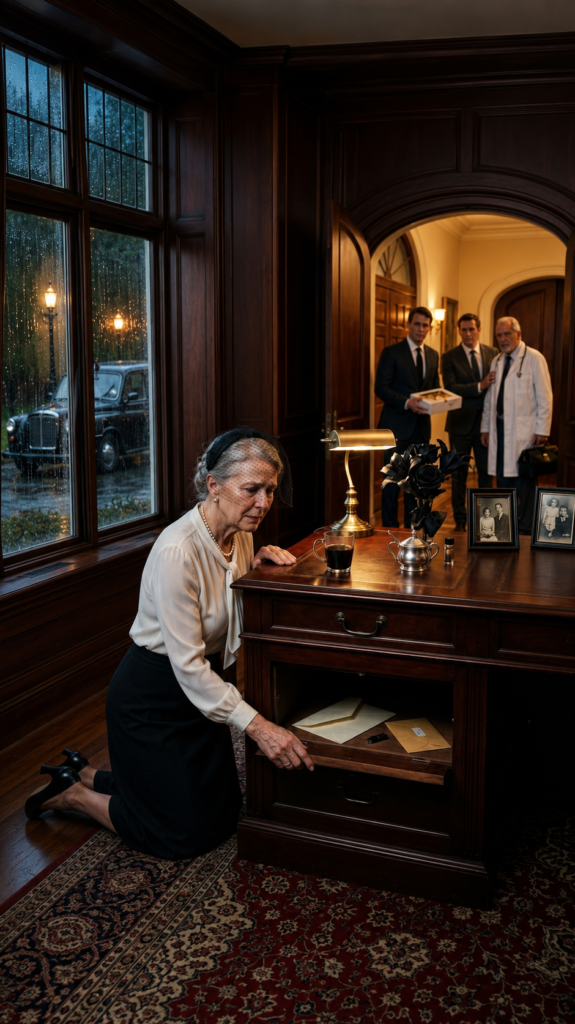
With an exaggerated black veil, she whispered that she would soon sell “a nautical portfolio by the sea.” Valeria feigned a faint at the exit of the mass. This time, almost no one looked back.
As they left the cemetery, Beatriz stopped Camila.
—Tomorrow at 11:00, I’ll go to the shipyard with my lawyer and a real estate broker. We’ll read the updated will.
Camila heard the word “updated.”
She understood everything.
They had forged something.
She smiled.
—Perfect. Bring everyone. I’ll have people waiting too.
That night, she made three calls.
To Don Julián’s real lawyer.
To Raúl.
And to a corporate contact in Mexico City.
The next day, the shipyard woke up impeccable. In the yard, there was coffee, sweet bread, and 35 people: employees, neighbors, clients, cousin Clara, and Regina Montemayor, a yacht collector from Puerto Vallarta whom Beatriz had been wanting to impress at social events for 20 years.
Beatriz arrived at 11:00 in a black suit, Valeria recording with her cell phone, Ernesto with a briefcase, and two men: a nervous lawyer and a tanned real estate broker.
Beatriz positioned herself at the front.
—As the only daughter of Julián Robles, I announce that the shipyard and its lands will be sold. My father wanted his estate to reach its maximum value. Camila will be able to remove her personal tools by the end of the month.
Valeria smiled behind the cellphone.
They expected to see her cry.
Camila sipped coffee.
—Nice speech, Beatriz. There’s just one little problem: you can’t sell what isn’t yours.
Lawyer Paredes, Don Julián’s real attorney, stood up with a sealed folder.
—Don Julián legally transferred the land, the workshops, the dock, and the commercial assets to Camila Robles three years ago. Everything was registered, paid for, and validated by a notary. Upon his death, Don Julián was no longer the owner of this property.
Beatriz turned pale.
The fake lawyer stepped back.
—That’s fraud! —she shouted—. You manipulated my dad!
Lawyer Paredes adjusted her glasses.
—we have medical certificates, witnesses, and a recording of the signature. And if you insist on that updated will, we’ll investigate forgery and attempted fraud.
Beatriz turned to the broker.
—You gave me $900,000 pesos in advance! Tell them there’s a contract!
The man swallowed hard.
—I can’t, ma’am.
—What do you mean you can’t?
The broker looked at Camila.
—My signature was acquired six months ago by Grupo Marea Norte. The majority shareholder is Camila Robles. You tried to sell Camila’s shipyard… to a company owned by Camila.
The silence filled with murmurs.
Regina Montemayor let out a dry laugh.
Valeria lowered her cellphone.
Then she did the only thing she knew how to do.
She clutched her chest, screamed, and threw herself to the floor, pretending to have a crisis.
No one ran.
No one hugged her.
No one stopped the world for her.
For the first time, Valeria discovered that outside that family, her tears didn’t command.
Ernesto approached Camila with teary eyes.
—Dear, please. I’m your father. I made a mistake. Let me explain.
Camila raised her hand.
—You’re not my father. You’re the man who watched me walk in the rain and chose to stay silent. You’re the coward who let me get broken and then came for my house.
Ernesto lowered his head.
Camila looked at Beatriz.
—My grandfather left you one last chance. He wanted to see if you would show any decency. You failed. Now you owe $900,000 pesos to my group for breaching a fraudulent contract. If you don’t pay by Monday, my lawyers are coming for your house.
Beatriz had no response.
She no longer had a stage.
She no longer had power.
Camila pointed to the gate.
—Pick Valeria up. Get in your truck. And don’t step foot on my property again.
As they left, Camila walked behind them. She closed the iron gate and locked it.
The metallic slam sounded like a sentence.
One year later, the shipyard grew even more. Camila opened a small nautical museum named after Don Julián. She married Raúl under an arch of mahogany built by her mechanics.
There were no fake fainting spells.
There were no blackmail attempts.
There were no family members stealing joy.
Beatriz sold her club membership to cover debts. Valeria ended up working in a clothing store, claiming that Camila had stolen her destiny. Ernesto calls once a month and leaves messages crying, asking for coffee, forgiveness, and a chance.
Camila listens to the first 10 seconds.
Then she deletes the message.
Some say she should forgive him because he’s getting old.
But Camila looks at her calloused hands and remembers the 12-year-old girl walking alone in the rain with a wet trophy.
Then she understands something many people don’t want to accept: forgiving doesn’t mean opening the door to someone who stood by while you were destroyed.
That’s why she leaves the gate closed.
And lets silence be her final answer.