PART 1
The first time Leticia saw her husband carrying the second baby of his secretary, she smiled so calmly that several guests thought something inside her had died.
But no.
Leticia was not dead.
She was counting.
Ricardo Salvatierra was the kind of man who mistook applause for respect. The owner of Grupo Salvatierra, a builder of towers, shopping centers, and false promises, he entered a hotel ballroom in Polanco as if he were a presidential candidate.
Beside him was Jéssica Duarte, his executive secretary, in a red dress too expensive for her salary. A boy of nearly three was tugging at Ricardo’s jacket, while a newborn slept against his chest.
Flashes lit up the room.
Ricardo lifted the baby proudly and announced, in front of businessmen, politicians, and women with double surnames:
—My legacy continues to grow.
The crowd clapped, uncomfortable but curious.
Jéssica glanced at Leticia from the other side of the room with a soft smile, the kind that doesn’t scream but cuts.
Leticia had been married to Ricardo for nine years.
She was also the woman he had called “too fragile” to bear children.
When the female guests approached to console her, Leticia graciously thanked them.
When Doña Carmela, Ricardo’s mother, squeezed her hand and whispered in her ear:
—Hold on, dear. A man of his status needs heirs.
Leticia simply nodded.
And when Ricardo approached her, wearing expensive cologne, a false smile, and a low voice, he said:
—Don’t make a scene today. Don’t humiliate me.
Leticia looked at the two children, then back at him, and replied:
—I wouldn’t dream of it.
Ricardo thought her silence was defeat.
What a fool.
Five years earlier, in a fertility clinic in Santa Fe, Ricardo had stood up in the middle of an appointment because the doctor requested more comprehensive tests.
—My wife looks at those things —he said, adjusting his watch—. I don’t have time for bad news.
The doctor called Leticia that very afternoon.
The diagnosis was clear.
Permanent infertility.
Not low probability. Not stress. Not “just try harder.” A childhood surgery had permanently damaged his ability to conceive.
Leticia cried that day, but not because of the result.
She cried because she called Ricardo fourteen times and he never answered.
That night, she found him in social media photos, drunk in a bar in Roma, with Jéssica, his new assistant, sitting too close.
Two years later, Jéssica appeared pregnant.
Ricardo came home with a cruel smile.
—See? —he said—. The problem was never me.
Leticia stared at him.
Handsome, arrogant, ignorant.
And she understood something chilling: if she screamed the truth, no one would believe her.
He would say she was bitter.
Jéssica would say she was a sterile, jealous wife.
His family would say she was desperate.
So Leticia stayed silent.
But she began to keep everything.
Invoices for “client accommodations” that paid for Jéssica’s apartment in Del Valle.
Disguised transfers labeled as bonuses.
Emails where Ricardo promised shares of the company for “our children.”
Gifts, tuition, cards, insurance.
And she also called the lawyer who had drafted her prenuptial agreement.
The same lawyer Ricardo had forgotten existed before turning her into a decorative wife.
That lawyer was Leticia.
One Monday morning, Ricardo forced her to accompany him to his executive medical check-up. The company board required spouses to be present at the final consultation.
Ricardo sat like a king, smiling.
The doctor opened the file, frowned, looked at Ricardo, and asked:
—Has your wife not told you yet?
Ricardo’s smile vanished.
PART 2
The silence in the office weighed heavier than any scream.
Ricardo blinked, as if the doctor had spoken in another language.
—What do you mean? —he asked, trying to laugh—. Doctor, don’t start with mysteries. I have a meeting in forty minutes.
Leticia didn’t move.
She sat by the window, hands crossed over her black purse, just like at the gala, just like at family dinners, just like in every public humiliation where everyone expected to see her break.
The doctor looked at her first.
—I thought you had discussed this as a couple.
Ricardo turned to Leticia.
—Discuss what?
She held his gaze.
—What you should have heard five years ago.
Ricardo let out a dry laugh.
—I have no idea what you’re talking about.
The doctor reviewed the file again, uncomfortable.
—Mr. Salvatierra, your current tests confirm the previous diagnosis. You have permanent infertility. There is no viable sperm production. And due to your surgical history, this is not recent. You’ve been like this since childhood.
Ricardo froze.
For the first time in many years, no one was applauding him.
—No —he said—. You’re mistaken.
—The tests are conclusive.
—I have two children.
The doctor fell silent.
And that silence did more damage than any phrase.
Ricardo stood up so fast that the chair hit the wall.
—I have two children! —he repeated—. Everyone knows it. They’re registered under my name.
Leticia took a deep breath.
—Registered, yes.
Ricardo looked at her as if he were seeing her for the first time.
—You knew.
—Yes.
—Since when?
—Since before Jéssica’s first pregnancy.
Ricardo’s face turned a nasty, humiliating shade of red.
—And you stayed silent?
Leticia tilted her head slightly.
—Like you asked me so many times. Quiet. Decent. Without making a scene.
Ricardo clenched his fists.
—You little…
The doctor stood up.
—Sir, I ask for respect.
But Ricardo no longer listened. He paced back and forth, trapped in an invisible cage. His empire, his surname, his “legacy,” everything he had boasted about at galas and on covers, had just collapsed around him.
He pulled out his cellphone and dialed.
Jéssica answered on the second ring.
—Love, is everything okay?
The word “love” echoed through the speaker because Ricardo, trembling with rage, did not notice he had activated speakerphone.
Leticia closed her eyes for a moment.
The doctor lowered his gaze.
—Whose are they? —Ricardo asked.
On the other end, there was silence.
—What?
—Whose are the children, Jéssica?
She hung up.
Ricardo dialed six times.
Nothing.
Then he stormed out of the office without waiting for Leticia.
But Leticia followed him.
Not because she wanted to console him.
But because that morning, the most important part was still missing.
In the elevator, Ricardo confronted her.
—You did this.
—No, Ricardo. You did this. I just let time speak.
—You ruined me.
—Not yet.
The doors opened in the parking lot.
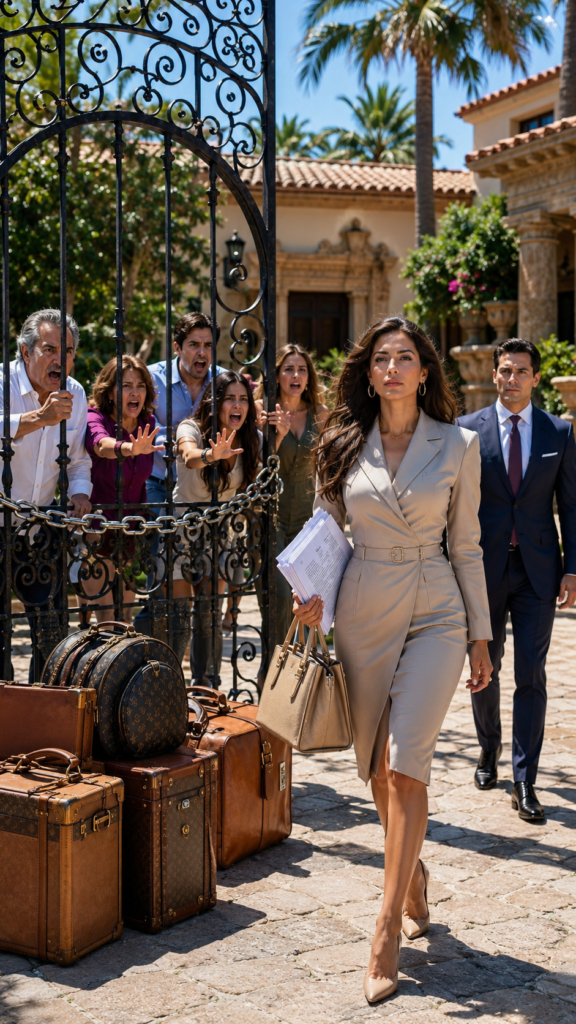
There awaited his driver, but also two board members from Grupo Salvatierra and a public notary.
Ricardo stopped.
—What the hell is this?
Leticia pulled a blue folder from her purse.
—The meeting you were so anxious for.
Ricardo looked at the board members.
—This is disrespectful.
One of them, Don Ernesto Cárdenas, an old and cold man, replied:
—The disrespect was using company money to support your mistress and two minors you presented as corporate heirs.
Ricardo turned to Leticia.
—What did you give them?
—Invoices. Emails. Transfers. Promissory contracts for shares. Payments for Jéssica’s apartment disguised as travel expenses. Also copies of the trust you tried to modify to include the children without board approval.
Ricardo tried to smile, but it didn’t come out.
—My private life doesn’t concern them.
—When you pay for it with company money, yes —Leticia said.
The notary opened another folder.
—Additionally, Mrs. Salvatierra, as the original legal representative of the marital agreement, has presented evidence of serious violations of the property clauses.
Ricardo let out a bitter laugh.
—Legal representative? Don’t make this up, Leticia.
She looked at him without blinking.
—Before I married you, I was a corporate lawyer. You asked me to leave the courtroom because you said a wife of yours shouldn’t be fighting with strangers. See? I never stopped knowing how to fight.
Ricardo attempted to snatch the folder from her.
The driver took a nervous step forward.
Don Ernesto raised his hand.
—Don’t make this any worse.
But Ricardo was already lost.
—You were my wife! You should have defended me!
Leticia felt something ancient break, but it didn’t hurt. Instead, it felt like a release.
—I defended you for nine years. I defended you when your mother called me useless at the dinner table. I defended you when you came home smelling like Jéssica’s perfume. I defended you when you presented her first child as proof that I was the problem. I defended you when you carried the second baby in front of half of Mexico to humiliate me.
Her voice didn’t rise.
And that’s why everyone listened better.
—But you never wanted a wife. You wanted a mute witness.
Ricardo swallowed hard.
—What do you want?
—What you signed.
He paled.
The prenuptial agreement did not protect Ricardo if he used common property or corporate resources to maintain a public extramarital relationship that damaged the family estate’s reputation.
And that’s exactly what he had done.
Leticia could not only divorce him.
She could take half of what he thought was untouchable.
But the story was not over yet.
Because while Ricardo was trying to call his lawyers, Jéssica appeared in the parking lot, wearing dark glasses, with the older child in hand and the baby in a stroller.
She came pale, with not enough makeup to hide her fear.
—Ricardo —she said—, we need to talk.
He lunged at her.
—Whose are they?
Jéssica hugged the child.
—Don’t do this here.
—Whose are they!
The child began to cry.
Leticia felt a blow to her chest. Not for Ricardo. For the little ones, used as medals by cowardly adults.
Jéssica looked at the board members, the doctor who had come down behind them, the notary, and Leticia.
And then she said it.
—They’re Mauricio’s.
Ricardo stepped back.
—Which Mauricio?
But his face already knew.
Mauricio Salvatierra.
His cousin.
The CFO of the company.
The same one who had approved invoices for years, moved payments, disguised expenses, and accompanied Ricardo to all the galas with a saintly smile.
Don Ernesto closed his eyes.
—No wonder the numbers didn’t add up.
Ricardo looked ready to vomit.
—Lies.
Jéssica cried.
—The first pregnancy was Mauricio’s. You were so obsessed with proving Leticia was the problem that you didn’t even ask. You offered me an apartment, insurance, a surname, everything. Mauricio said it was convenient. That if the kids carried your last name, they’d one day have a share of the group.
The blow was brutal.
Ricardo hadn’t just been unfaithful.
He had also been used.
His mistress and cousin had turned his arrogance into a business.
—And the second? —Leticia asked, though she already imagined the answer.
Jéssica lowered her head.
—Also.
Ricardo lunged at her, but the driver and Don Ernesto held him back.
—You played me for a fool! —he shouted.
Leticia stepped forward.
—No, Ricardo. You closed your eyes because it suited you to blame me.
That phrase left him still.
More than Jéssica's betrayal.
More than the diagnosis.
More than the fraud.
Because it was true.
In the following days, the news exploded like a firecracker at a festival.
“Scandal at Grupo Salvatierra.”
“Businessman boasts children that aren’t his.”
“Lover and cousin implicated in resource misappropriation.”
The same guests who had clapped at the gala for the “legacy” now shared notes.
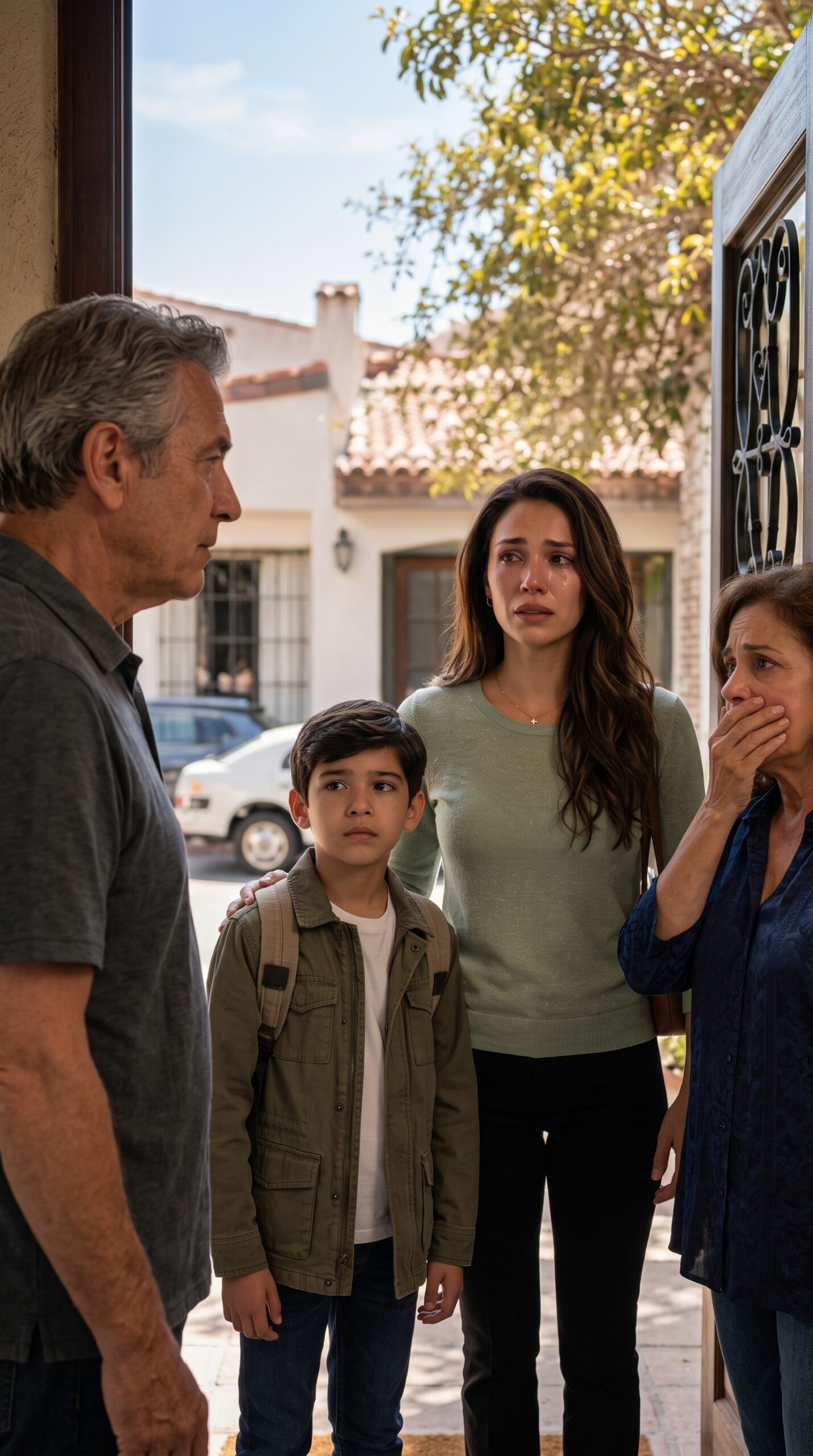
Doña Carmela went to Leticia’s house unannounced.
She arrived dressed in black, as if someone had died.
—Dear —she said, her voice breaking—, we need to protect the surname.
Leticia received her in the living room, without coffee.
—The surname was soiled by your son.
The woman tightened her purse.
—I didn’t know about the illness.
—But you knew about the humiliation.
Doña Carmela looked down.
For the first time, she had no elegant phrase or advice disguised as counsel.
—I’m sorry.
Leticia took time to respond.
Not because she hesitated.
But because she wanted that silence to educate as well.
—Not everything can be fixed with forgiveness. Sometimes it’s fixed with consequences.
And there were consequences.
Mauricio tried to flee to Monterrey, but was detained for fraudulent operations and falsifying internal reports.
Jéssica agreed to testify in exchange for protection for her children. She lost the luxuries, the apartment, and the security of being “the chosen one,” but at least she stopped lying about the kids' identities.
Ricardo was temporarily removed from the general management. His lawyers tried to present Leticia as a scorned woman, but she brought in such clean evidence that even the judge asked her why she had waited so long.
Leticia replied:
—Because when a wounded woman speaks too soon, they call her crazy. When she comes with documents, they listen to her.
The courtroom fell silent.
The divorce was quick, but not smooth.
Ricardo had to cede properties, shares, and a public compensation for reputational damage and psychological violence. He also had to legally remove his name from trusts built on lies.
But the most intense moment occurred outside the courthouse.
Ricardo waited on the sidewalk, thinner, without bodyguards, without a smile.
He saw Leticia descend the stairs with her blue folder under her arm.
—Leticia —he said.
She stopped.
—What?
Ricardo swallowed hard.
—Did you ever think about telling me? Before all this.
Leticia looked at him for a long time.
Not with hate.
That would have been easier for him.
She looked at him with a calm that no longer belonged to her.
—Yes. The day of the diagnosis. I called you fourteen times. That night you were with Jéssica.
Ricardo lowered his head.
—I was an idiot.
—No, Ricardo. An idiot makes mistakes. You built an entire life to make me feel less.
He cried.
A strange, clumsy, late cry.
—I’m left without children, without a company, without family.
Leticia shook her head slowly.
—You didn’t lose everything. You were left with the truth. Many see it as punishment because they never learned to live with it.
Ricardo didn’t answer.
At that moment, Jéssica’s older child came out of the building with a social worker. Upon seeing Ricardo, he let go of the woman’s hand and ran towards him.
—Dad.
Everyone froze.
Ricardo instinctively opened his arms but stopped halfway through the motion.
The boy didn’t understand DNA, companies, or lies.
He only knew that for almost three years this man had carried him in front of cameras, had sat him on his lap, had taught him to say “Salvatierra.”
Ricardo looked at Leticia as if she had the answer.
She felt a deep sadness.
Not for him.
But for that child, a victim of a war he never asked for.
—Blood doesn’t make you a father —Leticia said softly—. But now your actions will decide whether you ever were.
Ricardo cried harder.
And for the first time in his life, there were no photographers.
Leticia walked away without looking back.
Months later, she opened an office in Roma, specializing in women who signed agreements without understanding the price of silence. On the wall of her office, she didn’t hang magazine photos or social recognition.
She hung a simple phrase:
“Dignity is also defended with evidence.”
Doña Carmela asked to see her one last time. She brought a box with letters, family jewels, and a handwritten apology.
Leticia accepted the letter.
Not the jewels.
Jéssica found a job far from the spotlight. Mauricio continued his process from preventive detention. Ricardo lost the presidency of the board and had to learn to visit the children without using them as trophies, if the authority allowed it.
Some said Leticia was cruel for staying silent for so long.
Others said she was a queen for waiting for the exact moment.
On Facebook, the ladies debated fiercely:
“She should have told the truth from the beginning.”
“No, he deserved to swallow his pride.”
“And what about the kids? What blame did they have?”
“A woman is not obligated to save the man who destroys her.”
Leticia never responded to any comment.
One afternoon, as she left her office, she saw her reflection in the glass of a café. She no longer looked like the impeccable wife who smiled at galas while her soul was torn apart.
She looked like a whole woman.
With scars, yes.
But standing tall.
Because sometimes silence is not weakness.
Sometimes it’s a demand preparing its final blow.
And when the truth arrives with documents, even the most powerful man in Mexico cannot buy another round of applause.