PART 1
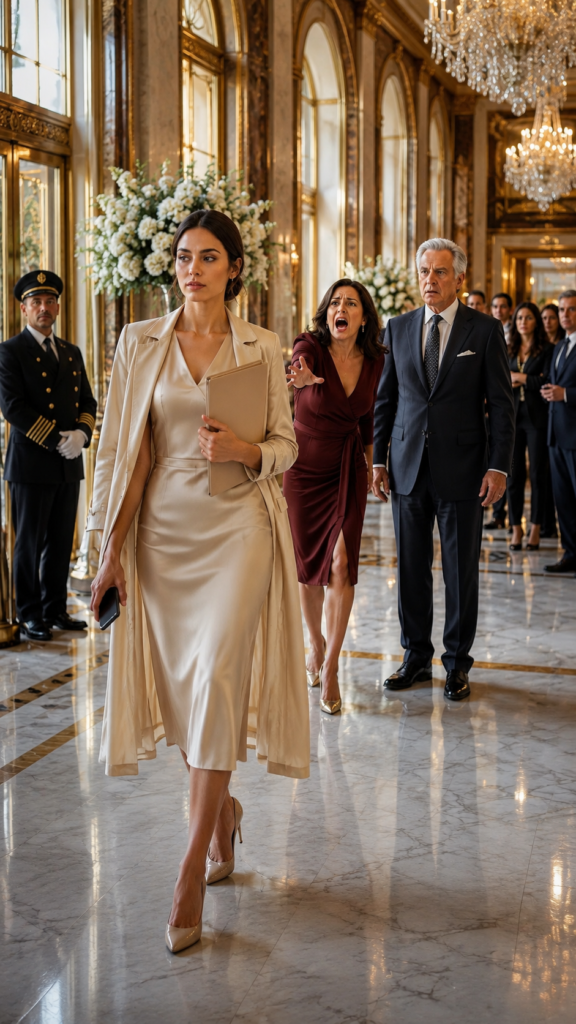
The first time Ricardo Haro heard Isabel Benítez say she needed a boyfriend before dawn, he was barefoot in the marble hallway of his penthouse in Polanco, holding investment contracts in his hand.
They were papers worth millions of pesos.
And yet, for the first time in years, his money meant nothing.
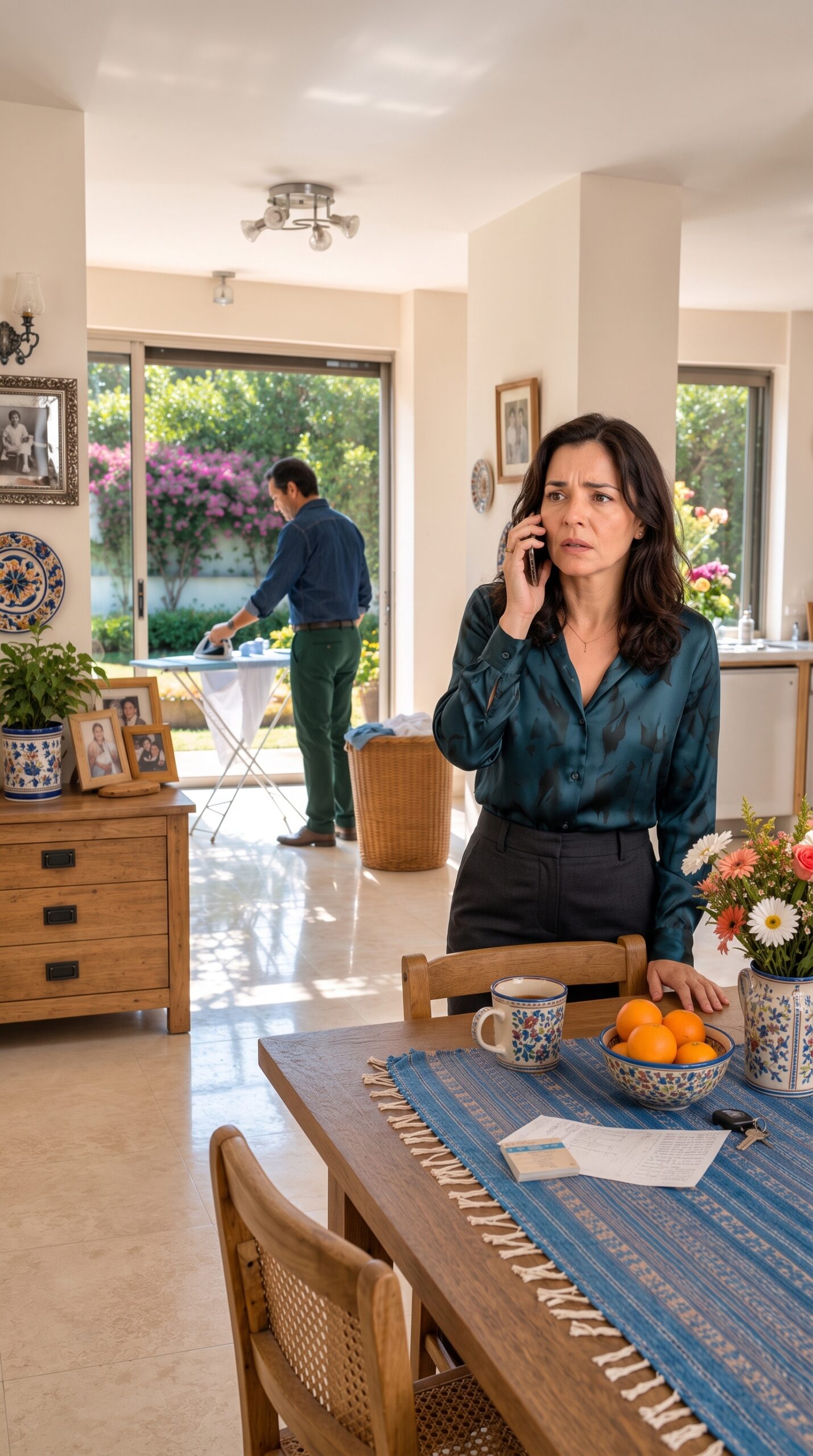
—I'm not joking, Lucy —Isabel whispered from the kitchen—. I need a boyfriend by tomorrow, or I can't go back to my hometown.
Ricardo froze.
He was not the kind of man to listen in on other people's conversations. At 45, the owner of a hotel chain in Mexico and the United States, he had built his life on silence, distance, and control.
But that voice didn't sound like drama.
It sounded like someone breaking.
—I already asked Marcos, from the building —Isabel said, trying to laugh—. He said he doesn't get involved in family trouble. And the guy from the laundry thought I was seriously inviting him. I have no one, Lucy. No one.
Then came silence.
Followed by a small sob, as if even crying embarrassed her.
—My mom says she just wants to meet the man who will take care of me when she's no longer here —she murmured—. How do I tell a dying woman that no one is coming for me?
Ricardo tightened his grip on the contracts.
Isabel had been working in his home for three years. She arrived before 6, brewed coffee, cleaned the large windows, organized the suits, left everything perfect, and disappeared without a sound.
He paid her well.
But he never asked himself if that was enough.
—Sofia's wedding is tomorrow —Isabel continued—. My dad has already told all of San Miguel de la Sierra that I'm coming with my boyfriend from the capital. My Aunt Rebeca even bought an extra chair at the main table. And mom... mom was so happy.
The call ended.
Ricardo should have gone to his office.
But he heard another muffled cry.
So he walked toward the kitchen.
Isabel came out, wiping her face with her white apron. When she saw him, she paled.
—Mr. Haro... I'm sorry. I didn't know you were here. I shouldn't have taken a personal call during work hours.
—Isabel.
She lowered her gaze, expecting a reprimand.
—You don't have to apologize.
Isabel stood still.
—I heard enough to understand that you're in trouble —he said—. It wasn't my intention, but I heard.
Shame filled her eyes.
—It's nothing. Family stuff.
—It didn't sound like nothing.
She took a deep breath.
—My younger sister is getting married tomorrow. My mom has heart failure. The doctors say it could be a matter of weeks. My dad is one of those men who believes that a 35-year-old woman, without a husband or children, is just a walking sadness.
Ricardo said nothing.
—I’ve sent money all these years —Isabel continued—. For medicine, for Sofia's education, to fix up the house. But there, that doesn’t count. If I show up alone, they'll look at her with pity and at me as a failure.
—And do they think you have a boyfriend?
Isabel pressed her lips together.
—My dad made it up. I didn’t correct him in time. Then mom got excited. She asked if he ate mole, if he danced, if he was a good man. She made me promise to bring him early to meet her before the wedding.
Ricardo looked at his rough hands, dried out from years of work.
He had never noticed them before.
—I thought I could find someone to pretend for one day —Isabel said—. A decent man, nothing more. But desperation scares people, right?
Ricardo could have offered her money.
He could have sent a driver.
He could have hired an actor.
But something in his chest, something that had been sleeping for years, spoke before his head could catch up.
—Get some sleep for a few hours.
Isabel blinked.
—Excuse me?
—You leave early, don’t you?
—At 7.
Ricardo set the contracts on the counter.
—Then I'll pick you up at 6.
She opened her mouth, not understanding.
—For what?
He looked at her with a calmness that scared her more than any shout.
—To go with you as your boyfriend.
Isabel stepped back.
—No, sir. You can't be serious.
—I can be.
—You are my boss.
—Not tomorrow.
—My family isn't like the people you hang out with. They're from the village, they ask everything, they have opinions about everything, they meddle where they shouldn’t. My dad can be really heavy.
—I’ve negotiated with banks worse than your dad.
For the first time, Isabel let out a nervous laugh.
But that laughter died when the phone rang again.
On the screen, it said “Dad.”
Isabel accidentally answered on speaker.
—You better show up with that man, Isabel —the voice thundered—. Your mom is excited, and I don't want you to kill her with another one of your embarrassments.
Ricardo tightened his jaw.
And before Isabel could respond, he took the phone.
—Mr. Benítez —he said firmly—. Tomorrow, you will meet the man who is going with your daughter.
On the other end, there was a silence so heavy that Isabel stopped breathing.
PART 2
At 6 on the dot, a black truck stopped in front of the building where Isabel lived, in the Doctores neighborhood.
She came down with an old suitcase, a blue dress covered by a plastic bag, and swollen eyes from lack of sleep.
Ricardo wasn't wearing an expensive suit or a shiny watch.
He wore a white shirt, a simple jacket, and clean boots.
Even so, it was clear he didn't belong to that world.
—You can still back out —Isabel said as she got in.
—I already promised your dad I’d go.
—You don’t know what that means.
Ricardo started the engine.
—Then explain it to me on the way.
For three hours, Isabel talked like never before.
She told him that San Miguel de la Sierra was nestled between hills, on the outskirts of Puebla. That her father, Don Aurelio, had been a rural teacher and now thought of himself as the judge of everyone. That her mother, Doña Mercedes, sold tamales before falling ill.
She recounted that Sofia, her younger sister, had always been “the pretty one,” “the one who would marry well,” “the one who didn’t go to the capital to clean other people’s houses.”
Ricardo listened without interrupting.
When they arrived, the house was adorned with papel picado, cempasúchil flowers even though it wasn’t the season, and long tables under a white tarp.
The sound of banda music filled the air from early on.
Several aunts turned at the same time.
—Look at that! —whispered one—. She brought a man.
—And he’s not ugly, the bastard.
Isabel turned red.
Don Aurelio came out to the patio wearing a hat, a pressed shirt, and a grumpy face. He looked Ricardo up and down.
—So you are the famous boyfriend.
—Ricardo Haro. Nice to meet you.
Don Aurelio didn’t shake his hand right away.
—What do you do?
—I own hotels.
A cousin let out a giggle.
—Receptionist or owner?
Ricardo looked at her calmly.
—Owner.
Silence fell like a bucket of cold water.
Isabel wanted to disappear.
Don Aurelio, however, squinted.
—Well then, it is even more surprising. A man like that with my daughter, and she didn’t say a word.
—Isabel doesn’t brag about her worth —Ricardo replied—. That’s a flaw of those who don’t know how to see her.
Several aunts fell silent.
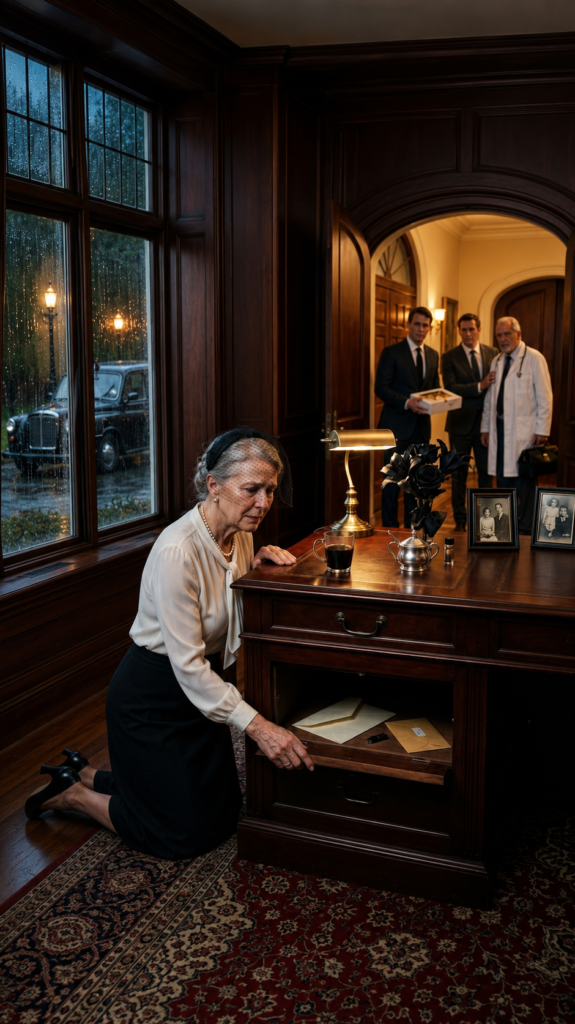
At that moment, Doña Mercedes appeared, sitting in a wheelchair, with a blanket over her legs and portable oxygen. Her face was thin, but her eyes sparkled.
—Is he? —she asked in a weak voice.
Isabel knelt beside her.
—Yes, mom.
Doña Mercedes took Ricardo's hand.
—Take care of her, young man. She always acts strong, but she has a heart of bread.
Ricardo felt a blow to his chest.
—I know, ma’am.
Isabel looked at him in surprise.
Because he didn’t say it as a lie.
The morning went on amid uncomfortable questions.
When did they meet?
Were they already thinking of getting married?
Why didn’t Isabel wear a ring?
Ricardo answered with elegance but didn’t allow anyone to humiliate her.
When an aunt said that Isabel “was already running out of time,” he set his glass down on the table.
—Curious —he said—. I thought a woman who has supported her family for 10 years doesn’t run out of time. Rather, she holds everyone up.
The aunt choked on her hibiscus water.
But the real blow came during lunch.
Sofia, dressed as a bride, arrived on the arm of her fiancé, Ernesto. He was handsome, smiling, and overly confident.
Upon seeing Ricardo, his smile vanished.
Ricardo also froze.
Isabel noticed it.
—What’s wrong? —she whispered.
—Nothing.
But it was not nothing.
Ernesto approached with his glass raised.
—Brother-in-law, what a pleasure. Sofia didn’t tell us you were coming with someone so important.
Ricardo fixed his gaze on him.
—The pleasure is mine, Ernesto Salgado.
The groom paled.
—You know each other? —Sofia asked.
Ricardo took two seconds to respond.
—Your name appeared six months ago in an audit of my company.
Don Aurelio frowned.
—Audit?
Ernesto let out a dry laugh.
—It’s probably a misunderstanding. There are many Ernests, man.
—Not many with the same signature on fake supplier invoices in Puebla —Ricardo said.
Isabel felt the ground shift beneath her.
Sofia clenched her bouquet.
—Ernesto, tell me it’s not true.
—Don’t start with the drama —he said, sweating—. Today is our wedding.
Don Aurelio slammed the table.
—Explain that.
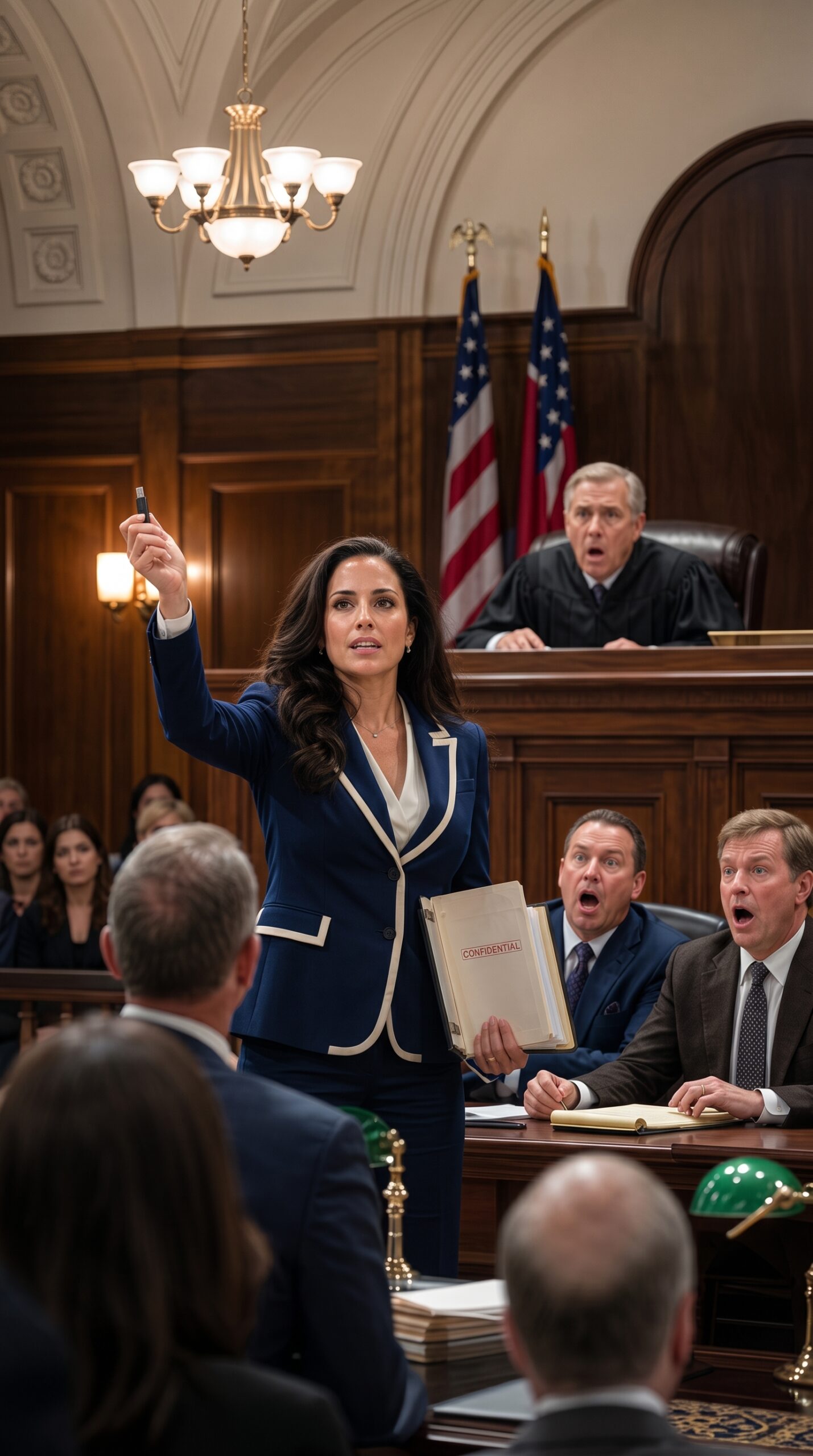
Ricardo pulled out his phone and showed a document.
—Months ago, we detected discrepancies in a hotel project. I didn’t report it yet because I needed to locate the local contact. But now I understand why the name Benítez sounded familiar.
Isabel looked at her father.
Don Aurelio lowered his gaze.
—Dad... what does my last name have to do with this?
Doña Mercedes began to breathe heavily.
An aunt ran for water.
Don Aurelio stood up slowly.
—I signed some papers.
—What papers? —Isabel asked.
Sofia started to cry.
Ernesto stepped back, but Ricardo stopped him with a single phrase.
—Don’t leave.
Then came the real twist.
Don Aurelio hadn’t just signed.
He had used Isabel’s name.
Ricardo showed a copy of documents where her forged signature appeared as the responsible party for a small ghost company registered in Puebla.
Isabel was frozen.
—No... I never signed that.
—I know —Ricardo said—. I compared your signature last night when I saw your payment receipt in the personnel file. It doesn’t match.
Don Aurelio clutched his head.
—Ernesto told me it was to help Sofia. That he just needed a clean name for a procedure. I didn’t know it was fraud.
—You used my name? —Isabel asked, her voice breaking.
Don Aurelio couldn’t look at her.
—You were far away. You always took care of everything. I thought nothing would happen.
That phrase was worse than a slap.
Isabel, the daughter who sent money.
The daughter who broke her back cleaning other people's floors.
The daughter who carried medicine, debts, and guilt.
Had also been used as a shield.
Sofia removed her veil with trembling hands.
—Ernesto, tell me the truth.
He changed his face.
He stopped being the kind fiancé and became the man he had always hidden.
—Come on, don’t play saints —he spat—. Everyone wanted a wedding, a house, a party, and respect. Where did you think the money came from? From your mom’s tamales?
The entire patio fell silent.
Doña Mercedes began to cry silently.
Sofia slapped him.
—The wedding is canceled.
Ernesto grabbed her arm.
—You’re not canceling anything. It’s already paid for.
Ricardo stepped in.
—Let her go.
—And who are you? The fake boyfriend of the maid?
The word fell like poison.
Isabel closed her eyes.
Everyone had thought it.
He had said it.
Ricardo didn’t raise his voice.
—I’m the man who just sent all these documents to my lawyer and the prosecutor’s office.
Ernesto let go of Sofia.
—You don’t have enough proof.
—I have invoices, transfers, forged signatures, and your confession recorded from three minutes ago.
He showed his phone.
Ernesto lost color.
Don Aurelio sat down as if aging twenty years in an instant.
—Isabel... daughter...
She stepped back.
—Don’t call me daughter right now.
The celebration turned into chaos.
The musicians stopped playing. The guests whispered. Some defended Don Aurelio, saying he had been "tricked". Others said Isabel shouldn’t forgive so easily.
But Isabel didn’t hear anyone.
She only looked at her mother.
Doña Mercedes extended a weak hand.
—Forgive me, my girl.
Isabel ran to her.
—You didn’t do anything, mom.
—I did —she whispered—. I let your dad believe your life was worth less because you didn’t have a husband. I made you feel alone too.
Isabel broke down in tears.
Ricardo, for the first time in years, didn’t know where to put his hands. Then he slowly approached and placed one on her shoulder.
Not as a boss.
Not as a millionaire.
As someone who had also lived years without anyone waiting for him at home.
Hours later, the police arrived for Ernesto.
The wedding was canceled.
Sofia, without makeup and without a veil, embraced Isabel in the empty patio.
—I was unfair to you too —she admitted—. I liked that everyone said I had achieved something. But you were the one keeping us standing.
Isabel didn’t respond right away.
Then she said:
—I don’t want to be admired when everything falls apart. I wanted to be respected before.
That night, Ricardo took Isabel and Doña Mercedes to a private clinic in Puebla. Not to show off money, but because the lady needed urgent care.
Don Aurelio wanted to get in the truck, but Isabel stopped him.
—You will go tomorrow with a lawyer. You will tell the truth. And you will clear my name.
—But I’m your father.
—And I’m your daughter, not your insurance against mistakes.
Ricardo looked at her with silent admiration.
A week later, Ernesto was charged with fraud and forgery.
Don Aurelio confessed everything.
Sofia sold the dress to pay part of her mother’s debts.
Isabel resigned from the penthouse, not out of anger, but because she understood she didn’t want to remain invisible any longer.
Ricardo offered her to manage the hospitality area of one of his smaller hotels in Puebla.
—I don’t need charity —she said.
—It’s not charity. You’ve been running my house better than many managers run a hotel for three years.
Isabel only accepted after demanding a contract, fair pay, and decent hours.
—You’re really tough in negotiations —Ricardo said.
—I learned cleaning rich people's houses.
He smiled.
Six months passed before Ricardo invited her to dinner for real.
No lies.
No family watching.
No need to pretend.
Isabel accepted but warned him:
—I don’t need a man to take care of me like I’m weak.
Ricardo replied:
—I don’t need a woman to admire me for my money.
She looked at him.
—So what do you need?
He thought about that night in the hallway when he heard her cry and realized he had lived surrounded by luxury but empty.
—Someone who doesn’t let me hide from life.
Isabel didn’t say yes immediately.
Because she was no longer the woman who accepted any place at the table.
Months later, Doña Mercedes passed away peacefully, knowing the truth: her daughter was not alone, but she was not complete just for having a partner.
She was complete because she had finally chosen herself.
In San Miguel de la Sierra, they still debated the case.
Some said Isabel was too hard on her dad.
Others said finally someone put a stop to a family that confused sacrifice with obligation.
But every time someone said a woman was “running out of time,” Sofia replied loudly, so the whole town could hear:
—It’s not the one who arrives alone that runs out of time. It’s the one who doesn’t know how to see her that gets left behind.