PART 1
—You said my mom would be paid today. So why did you lie?
The question came from the lips of a 9-year-old girl, standing in the middle of a mansion's foyer in Bosques de las Lomas, Mexico City.
Her primary school uniform was wrinkled, two loose braids framed her face, her knees were dusty, and a pink backpack hung off one shoulder.
She didn’t seem rude.
She seemed tired of watching her mother suffer.
Rodrigo Salazar, owner of a construction company with offices in Santa Fe and Monterrey, froze with his suit jacket draped over one arm.
He had just finished a video call with foreign investors. He had been discussing colossal figures, land deals, contracts, and profits.
But that girl looked at him as if all that money meant nothing.
—Are you talking to me? —he asked.
—Yes. You.
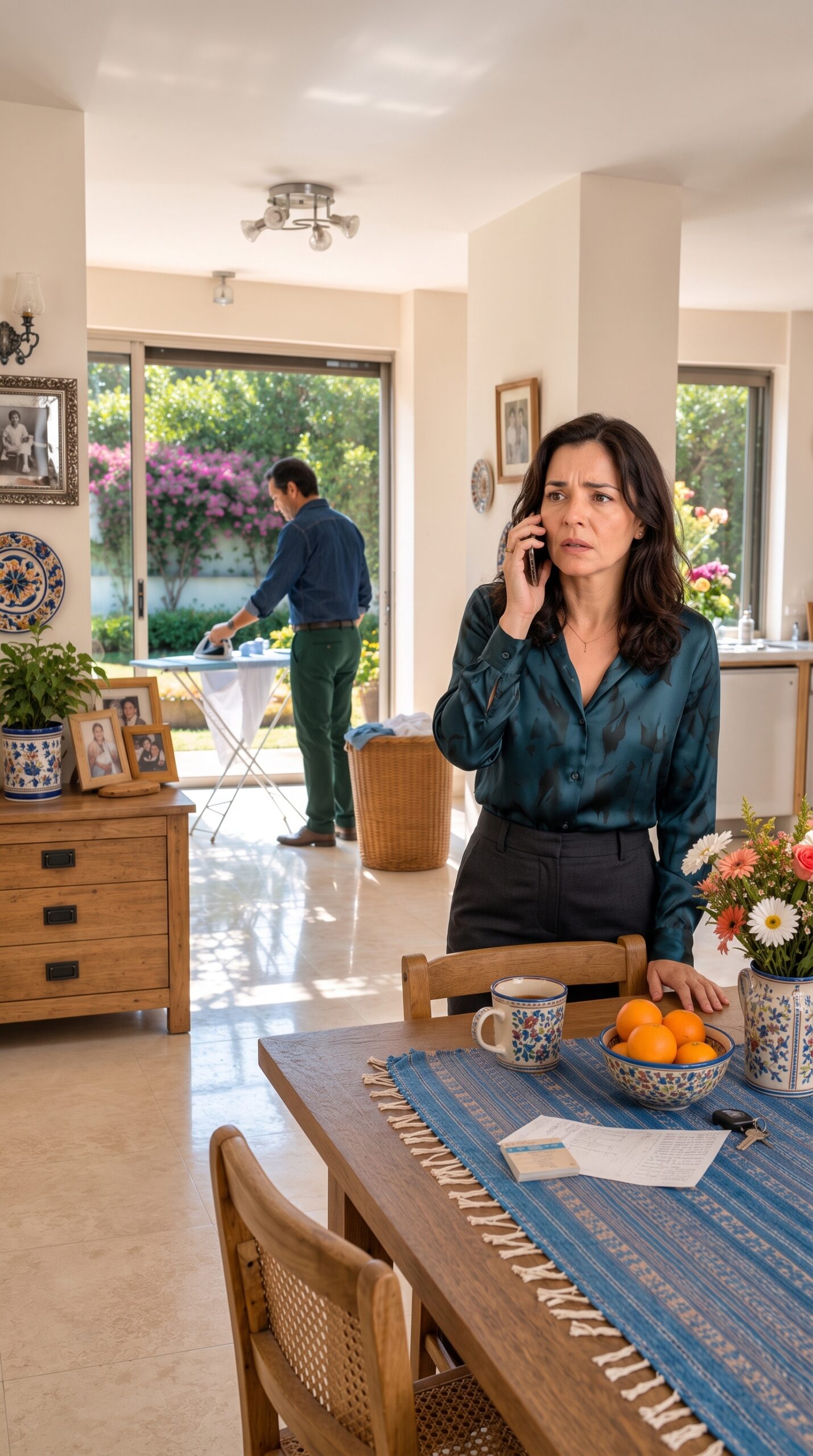
From the service door, Rosa Martínez ran toward her daughter. She wore a gray apron, her hands raw from bleach, and her eyes red from holding back tears.
—Camila, please be quiet. Don’t talk to the gentleman like that.
But Camila didn’t lower her gaze.
—My mom has been working here since before sunrise. She cleans your bedrooms, washes your clothes, serves your meals, and stays late when you host dinners with rich people. There are nights she comes home and can’t even bend her fingers.
Rodrigo frowned.
—Who is your mom?
Rosa looked down, defeated.
—I am, sir. Rosa Martínez. I apologize for her. She’s just a child; she doesn’t understand.
—I do understand —Camila replied—. I understand that my mom hasn’t been paid in 3 months.
A heavy silence fell.
From the kitchen, someone dropped a spoon.
Rodrigo looked at Rosa.
—Is that true?
She pressed her hands against her apron.
—Yes, sir… but Mr. Ernesto, the manager, said it was a bank problem. He promised it would be resolved today.
—I didn’t know anything about this.
Camila stepped forward.
—Well, my mom did know. Because every week they promise her the same thing. “Tomorrow.” “Monday.” “Almost.” But the money never arrives.
At that moment, Rosa's phone began to ring.
The woman glanced at the screen and paled.
—It’s Mr. Eusebio, the landlord of the room we live in.
Camila took a breath.
—Answer, Mom. Let him hear.
Rosa shook her head.
—No, daughter.
—Let him hear why we’re here since 7 in the morning.
The phone continued ringing.
Rodrigo didn’t move.
Rosa answered and put it on speaker with trembling hands.
—Hello?
—Rosa! —a man shouted—. I told you today was the last day. You owe me 3 months' rent. If you don’t bring the money, I’ll change the locks tomorrow.
—Mr. Eusebio, please. I’m at work. They promised me I’d be paid today.
—You said that last week. I have another family waiting. I don’t care about your boss or your problems.
—I have my daughter with me. We have nowhere to go.
—That’s no longer my concern.
The call ended.
Rosa lowered the phone as if it weighed a ton.
Camila looked at Rodrigo with tears in her eyes.
—Did you hear? My mom didn’t want to come. I told her we should, because she still believed in you.
Rodrigo felt a bitter shame.
He looked at the staircase, the expensive paintings, the imported vases, the shiny marble.
Suddenly, that house felt foreign.
—Don’t move from here —he said firmly—. I’m going to check on this right now.
But as he took his first step toward his office, his wife Verónica descended the stairs in an ivory dress, dark glasses, and a designer handbag.
She looked at Rosa with annoyance and said:
—Rodrigo, don’t make a scene. That woman signed that she has already been paid.
And in that instant, everyone understood that the worst was yet to come.
PART 2
Rodrigo stared at Verónica as if he hadn’t heard correctly.
For years, he had watched her enter charity dinners, smile in front of cameras, talk about supporting working women, and pose alongside foundations.
But now she stood there, in front of a desperate employee and a hungry child, telling him not to make a scene.
—What did you just say? —Rodrigo asked.
Verónica sighed, annoyed.
—Don’t let yourself be manipulated. Staff always exaggerates. Rosa signed her receipts. If she says she hasn’t been paid, that’s her problem.
Rosa’s eyes widened, wounded.
—Ma’am, I never signed anything.
—Oh, please —Verónica said—. Don’t start with your little act.
Camila clenched her fists.
—My mom doesn’t act. My mom works.
Rodrigo turned to the girl.
—Camila, come with your mom. You don’t need to say anything else for now.
Then he looked at Verónica.
—to my office.
—Rodrigo, I have a lunch in Polanco.
—The lunch can wait.
His voice was so cold that even the chauffeur, standing by the door, lowered his gaze.
Inside the office, Rodrigo called for Ernesto, the manager of the residence.
The man appeared 10 minutes later. He was nearly 60, impeccably dressed, and wearing a nervous smile.
—Engineer, did you need me?
Rodrigo pointed to the chairs.
—Sit down. And bring me the payroll for the domestic staff for the last 6 months.
Ernesto swallowed hard.
—Sir, there may have been a misunderstanding.
—I didn’t ask if there was a misunderstanding. I asked for the payroll.
Verónica crossed her arms.
—Rodrigo, you’re humiliating Ernesto in front of an employee.
—I’m not. I’m trying to find out who humiliated Rosa for 3 months.
Ernesto took out a black leather folder. He placed it on the desk as if it were a bomb.
Rodrigo opened it.
The first receipt read:
Rosa Martínez.
Salary paid.
Overtime paid.
Support bonus paid.
A signature appeared at the bottom.
Rosa, who was at the door with Camila, caught a glimpse of it and immediately shook her head.
—That’s not my signature.
Rodrigo lifted another receipt.
Then another.
All had similar signatures.
Too similar.
—Ernesto —he said quietly—. Since when has this been happening?
The manager looked at Verónica.
She shot him a hard look.
—Answer —Rodrigo ordered.
—For the last 3 months.
Rosa shut her eyes.
Camila pressed against her.
Rodrigo took a deep breath.
—Who authorized it?
Ernesto didn’t speak.
—I’m asking you who ordered the falsification of payroll receipts.
Verónica slammed her hand on the desk.
—No one falsified anything! It was a temporary adjustment. The house had absurd expenses.
Rodrigo stared at her in disbelief.
—You call the salary of the people who clean your mess absurd?
Verónica tensed.
—Don’t talk to me like that.
—Then explain why Rosa can’t afford rent while you come home with bags worth 80,000 pesos.
The silence hurt.
Ernesto lowered his head.
—It was Mrs. Verónica. She ordered the payments to be delayed. Then she ordered them to appear as paid so you wouldn’t ask.
Rodrigo felt something breaking inside him.
—How many employees?
Ernesto opened another section of the folder.
—16.
—16?
—Cooks, gardeners, drivers, cleaning staff, maintenance, and 2 girls who already resigned.
Rosa covered her mouth.
Camila murmured:
—So it wasn’t just my mom.
Rodrigo flipped through the pages one by one.
Each name was a life.
Each forged signature was a table without food, overdue rent, medicine not bought, a child waiting.
—How much money is missing?
Ernesto closed his eyes.
—1,850,000 pesos.
Verónica let out a nervous laugh.
—Don’t be ridiculous, Rodrigo. That’s nothing to you.
—To Rosa, it was her rent. To Camila, it was her food. To 16 families, it was survival.
Verónica hardened her face.
—I keep this house running while you play the perfect businessman. You’re never here. You don’t know what it costs to uphold your name.
—My name doesn’t stand by robbing from workers.
At that moment, Verónica's phone vibrated on the desk.
She tried to grab it, but Rodrigo saw the name on the screen.
Mauricio.
A message appeared below:
“I just moved another 3,000,000. If he discovers the payroll, you stay calm. See you in Cancun.”
The office froze.
Verónica turned pale.
Rodrigo took the phone.
—Who is Mauricio?
—Nobody.
—Well, “nobody” just texted you that he moved 3,000,000.
Verónica attempted to snatch the phone.
—Give it to me! It’s mine.
Rodrigo raised his hand.
—Ernesto, go out and call my lawyer. Now.
—Rodrigo, you’re overreacting.
—No. I’m just getting started.
He opened the conversation.
There were messages from weeks ago.
Photos of Verónica with a man in luxury restaurants.
Audios.
Screenshots of transfers.
But what shattered the silence was a photo taken inside the Salazar family’s private vault.
In the image, Verónica and Mauricio were holding corporate folders.
Folders that could only leave there with direct authorization.
Rodrigo swiped the screen and found an audio.
He played it.
Verónica’s voice rang clear:
“First we use the staff’s money. No one believes the maids. Then we move the big stuff before Rodrigo checks.”
Rosa felt short of breath.
Camila squeezed her mother’s hand.
The girl didn’t understand all the terms, but she understood the wickedness.
—You knew my mom was crying —Camila said—. And yet you let her come every day.
Verónica looked at her with disdain.
—Child, shut up.
Rodrigo slammed his hand on the desk.
—You will not speak to her like that again.
For the first time, Verónica completely lost her mask.
—Are you going to defend an employee over your wife?
—I’m going to defend the truth.
—You left me alone for years! —she screamed—. I was a decoration in this house. Everyone saw me smile, but no one asked what I wanted.
Rosa looked at her with tears held back.
—And that’s why you left people without pay who needed to eat?
Verónica opened her mouth but found no answer.
That question couldn’t be masked with jewels.
Rodrigo called his lawyer, the corporate accountant, and a notary.
Then he asked all the employees to gather in the main dining room.
Verónica tried to stop him.
—You’re not going to do this in front of the staff.
Rodrigo paused.
—They are not “the staff.” They are people. And you robbed them.
In less than an hour, 16 workers were seated around the table where politicians, businessmen, and Verónica’s friends usually dined.
Some looked scared.
Others looked angry.
Rosa wouldn’t let go of Camila.
Rodrigo stood before them all.
—Today I discovered that for 3 months, wages were withheld, receipts were falsified, and this house’s name was used to commit fraud. I apologize. Not because that repairs what happened, but because I should have checked sooner.
No one applauded.
No one smiled.
And that was worse.
Because the apology, when it arrives late, doesn’t always deserve an immediate response.
The lawyer began to review each case.
Full payments were ordered, overtime, pending bonuses, and additional compensation.
Rosa was paid her 3 months' salary, plus overdue rent, and support to move to a safe place.
But she looked up and said:
—Sir, I don’t want my daughter to think you have to cry for payment. I want a contract, insurance, and respect.
Rodrigo nodded.
—You will have it. You and everyone.
Camila looked at her mom with pride.
That girl, who had arrived hungry, seemed larger than all the adults in the room.
Then the twist no one expected happened.
The corporate accountant entered the dining room with a laptop.
—Engineer, we found something else.
Rodrigo approached.
—What?
—Mauricio didn’t just receive money from Mrs. Verónica. He also emptied an account in her name 20 minutes ago.
Verónica jumped up.
—That’s a lie.
The accountant turned the screen around.
There were the transactions.
3,000,000.
2,400,000.
750,000.
All transferred to new accounts.
Mauricio had used her.
Rodrigo looked at Verónica.
She pulled out her cell phone and called once.
Nothing.
Called again.
Nothing.
Then a message arrived.
“Mauricio: Don’t look for me. I’m not going down with you.”
Verónica dropped her phone.
Her face crumbled.
The woman who had treated Rosa as if she were worthless had just discovered that to Mauricio, she was worth nothing as well.
Rosa didn’t celebrate.
Camila didn’t either.
Because watching someone fall doesn’t always bring joy.
Sometimes it just confirms how much damage was done before the fall.
That same night, Verónica was taken in for questioning for fraud, forgery, and breach of trust.
Mauricio was located days later in Playa del Carmen, trying to sell corporate information to a competitor.
Ernesto provided emails, audios, and forged receipts to lessen his responsibility.
The story came to light when one of the cooks posted on Facebook that a 9-year-old girl had spent 8 hours waiting in a mansion to defend her mother’s salary.
In a matter of hours, thousands of people commented.
Some said Rodrigo was also guilty for not checking his own house.
Others said Verónica was the perfect example of people who smile at charity events while crushing those in front of them.
But the most shared comment was from a primary school teacher:
“When a child has to demand justice for their mother, we aren’t seeing a lack of education. We’re witnessing an excess of abandonment from the adults.”
Days later, Rosa and Camila left Mr. Eusebio’s room.
They moved to a small apartment in Iztapalapa, with a window where the sun came in in the morning.
It wasn’t luxurious.
It didn’t have marble.
But that night, Camila ate peacefully.
Rosa watched her eat and cried silently.
—Why are you crying, Mom?
—Because you shouldn’t have to carry my problems.
Camila came closer and hugged her.
—They weren’t your problems. They were injustices.
Rosa closed her eyes.
That phrase hurt and healed her at the same time.
In the mansion, Rodrigo changed the entire payroll system. Each worker received a formal contract, social security, digital receipts, and direct access to the company’s legal area.
But even though he tried to repair the damage, there was something he could never erase:
The image of a girl standing in his foyer, hungry, exhausted, and dignified, asking him why he had lied to her mother.
Because sometimes the truth doesn’t come with lawyers or documents.
Sometimes it arrives with a girl who is tired of watching the woman she loves most cry.
And the question that lingered was the one that ignited the entire debate:
How many Rosas are still working in enormous houses, waiting for a salary that someone powerful decided to hide?