PART 1
The Easter meal at Don Arturo Mendoza's home began with the aroma of mole, red rice, and freshly warmed tortillas, but in the air hung something heavier than the kitchen smoke.
The entire family was gathered in that house in Coyoacán that Don Arturo had bought after 38 years working in his auto parts shop. At the table were his brothers, two nephews, trusted neighbors, and even Father Julián, a family friend.
At the head of the table, Don Arturo seemed like a different man.
He was 69 years old, but in recent months, he had faded like a forgotten candle. His gaze was distant, his hands trembled, his voice slow. Many said it was just old age. Others echoed what his wife said: “Arturo isn’t right in the head anymore.”
His wife, Rebeca, was a pristine woman, a daily churchgoer with manicured nails and the smile of a respectable lady. Beside her was Bruno, their 28-year-old son, lazy, in debt, and always ready to humiliate anyone who couldn’t defend themselves.
Across from them sat Mariana, Don Arturo's daughter, a nurse at a public hospital. She had returned to her father’s house after divorcing a controlling man. She arrived with her daughter, Sofía, 6 years old, and the weariness of someone who had already survived too much.
“What a coincidence you came back just as your dad started to get worse,” Rebeca raised her voice for everyone to hear. “Honestly, Mariana, there are things even God doesn’t forgive.”
Bruno let out a dry laugh.
“My mom takes care of him day and night, and you come here playing the victim. You must want the house, the shop, and whatever’s left in the bank.”
Mariana gripped her utensils tightly. She didn’t respond. She had learned that in this family, silence sometimes hurt less than defending herself.
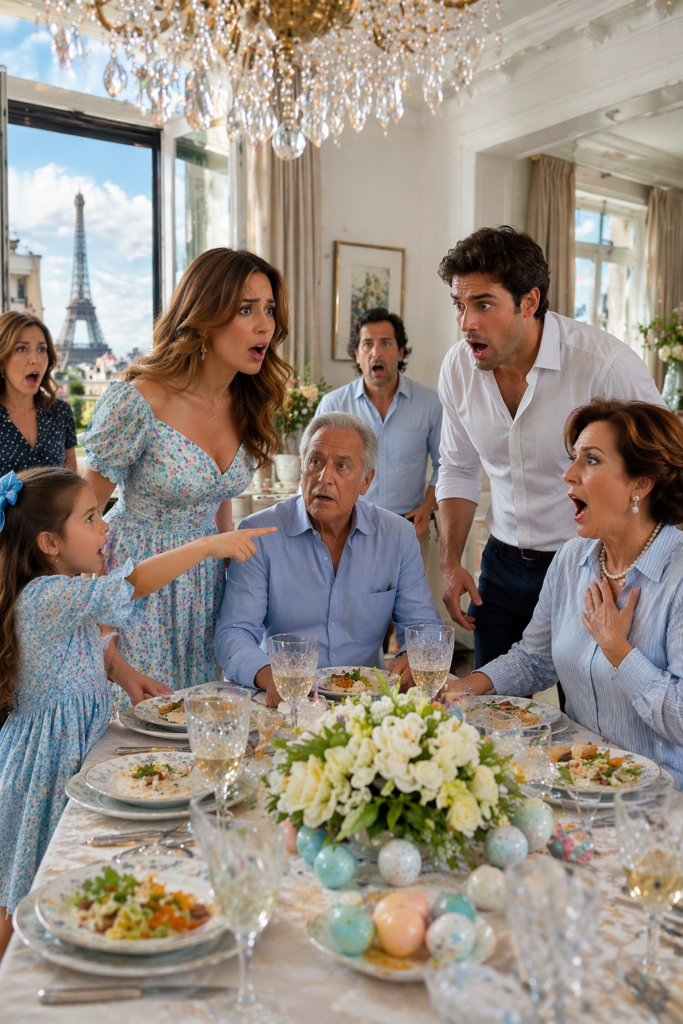
Sofía ate slowly, in her light blue dress and white shoes. She watched her grandfather with worry. Don Arturo tried to smile at her, but his eyelids were heavy.
“Look at him,” Rebeca said. “He gets like this when she’s around. She makes him anxious.”
Then Sofía set her spoon down on her plate.
“My grandpa isn’t tired,” she said.
No one spoke.
The little girl stood on her chair, her voice trembling but clear.
“They’re putting him to sleep.”
Rebeca froze.
Bruno paled.
Mariana looked up as if her chest had just been split open.
“What did you say, sweetheart?”
Sofía pointed down the hallway.
“I saw when Grandma Rebeca and Bruno switched the pink pills for white ones. They said that way Grandpa wouldn’t fight over the papers.”
Bruno slammed the table.
“Shut up, lying brat!”
Sofía began to cry, but she didn’t back down.
“They also said ‘power of attorney.’ Bruno said it slowly because he thought I wouldn’t understand. But I can read.”
Don Arturo lifted his head with great effort.
“Mariana… check my medications.”
Rebeca stood up, furious.
“This is disrespectful! That girl is being manipulated!”
But Sofía let slip the phrase that froze even Father Julián:
“I didn’t say anything before because Rebeca told me that if I talked, my mom would never see Grandpa again.”
And in that second, everyone understood that this meal wasn’t a family discussion.
It was the beginning of something no one could stop.
PART 2
Mariana climbed to her father’s bathroom with wobbly legs but a clear head. She was a nurse. She had seen poisonings, overdoses, medical mistakes, and elderly people manipulated by smiling relatives in front of doctors.
The weekly pill organizer was inside the cabinet, next to a muscle pain cream and a rosary. Monday, Tuesday, Wednesday. In each compartment, there were white pills where the pink heart medication should have been.
Mariana opened the original bottle.
It was nearly empty.
She felt a dry rage, the kind that doesn’t scream because it’s too busy understanding.
She took out her phone, snapped photos, placed four pills in a clean bag, and headed back downstairs.
Downstairs, Bruno was talking nonstop.
“Dad, you can’t believe a little girl. Mariana trained her. Ever since she divorced, she’s been looking for a way to get something.”
Rebeca was crying, but not out of pain. She cried like someone who feels the theater was taken away midway through a performance.
“I’ve only taken care of Arturo. She abandoned him years ago. Now she accuses me because she needs money.”
Mariana placed the bag on the table.
“These aren’t my dad’s medications.”
Father Julián stood up.
“What do you mean?”
“They’re strong sedatives. If mixed with his heart medications, they can cause excessive sleepiness, confusion, low blood pressure, falls, and even arrhythmia.”
Aunt Elena covered her mouth.
“That’s why he fell asleep while praying…”
Sofía stepped down from her chair and approached her grandfather.
“They also said a notary was coming on Wednesday. That Grandpa was going to sign even if he didn’t understand because he would be calm.”
Don Arturo closed his eyes.
Wednesday.
Rebeca had been talking for weeks about a “simple procedure.” She said it was to pay bills, manage accounts, and spare her husband worries. Mariana had asked, but Rebeca always replied, “Stay out of adult matters.”
“Since when?” Don Arturo asked, looking at his wife. “Since when do you give me those things?”
Rebeca didn’t answer.
Sofía squeezed her mom’s hand.
“Since January. I heard them after New Year’s. Bruno said that in three months, they would have everything changed.”
Bruno stood up with wild eyes.
“I told you to shut up, brat!”
Cousin Diego stepped in.
“You don’t touch the girl, dude.”
Mariana called 911.
“I need an ambulance and a police unit. Possible medication poisoning and abuse against an elderly person.”
Rebeca lunged for the table trying to grab the bag, but Mariana pushed her aside with a coldness no one had ever seen in her.
“Don’t you dare.”
At that moment, neighbor Doña Chela, who had been invited to family meals for years, pulled out her cellphone.
“I recorded it from the moment the girl started talking. And I also recorded when Rebeca tried to take the pills.”
Bruno pointed at her.
“Nosy old bat!”
Doña Chela didn’t budge.
“Nosy? No. Witness.”
The sirens arrived 12 minutes later.
The paramedics checked Don Arturo and took him to the hospital immediately. Rebeca tried to get in the ambulance.
“I’m his wife. I’m going with him.”
Don Arturo, with a weak voice, said:
“No. Mariana is coming with me.”
That phrase broke something in the house.
For months, Rebeca had answered Arturo’s phone, canceled visits, hidden letters, and told everyone that Mariana only showed up when she needed money. The family believed her because it was more comfortable to believe the churchgoing woman than to listen to the divorced daughter.
At the hospital, tests confirmed the worst. Don Arturo had sedatives in his bloodstream in amounts dangerous for his age and heart condition. The doctor explained it wasn’t an accident. It wasn’t confusion. It was repeated administration.
Mariana felt her stomach turn to stone.
While her father slept connected to monitors, Sofía sat in the chair by the bed, still with her braids undone.
“Is Grandpa going to die?” she asked.
Mariana hugged her.
“No, sweetheart. We got here in time.”
But the truth was just beginning.
The next day, the police searched the house with Don Arturo’s authorization. In Rebeca’s room, they found prescription-less bottles, envelopes with documents, and a folder hidden under the mattress.
Inside were copies of deeds, bank statements, auto parts paperwork, and a draft of a power of attorney allowing the sale of properties, movement of money, and changing beneficiaries.
There were also printed messages between Rebeca and Bruno.
One read: “If he signs on Wednesday, we empty Bancomer first and then sort out the shop.”
Another, from Rebeca, said: “We just need to keep him asleep. Everyone thinks it’s old age.”
But the message that changed everything was one from Bruno:
“If he dies before signing, we’ll make it look like it was his heart. He’s too old; no one will ask.”
When Mariana read that, she didn’t cry.
She stared at the screen with a calm so cold it scared even her own aunt.
Don Arturo woke up more lucid two days later. The first thing he asked was to see Sofía.
The little girl approached slowly, as if she feared she had done something wrong.
“I’m sorry, Grandpa. I was scared.”
Don Arturo began to cry.
“No, little one. You saved my life.”
Sofía carefully climbed onto the bed and hugged him.
“Rebeca said that if I talked, my mom would be left alone.”
“Rebeca lied,” he said. “And no adult should have put that fear on you.”
The investigation moved quickly. Bruno was the first to crack. Not out of guilt, but out of fear. He confessed he was in debt from gambling and that Rebeca promised to help him once she controlled Arturo’s accounts.
He said it all started when Don Arturo announced he wanted to change his will.
Not to leave everything to Mariana, as Rebeca repeatedly claimed.
But to create an educational fund for Sofía, secure the family home, and prevent the shop from being sold to the first opportunist who showed up.
That was the twist that left everyone speechless.
Rebeca wasn’t protecting a sick husband. She was trying to rob him before he legally protected his granddaughter.
The family that had judged Mariana began to crumble in shame.
Aunt Elena went to the hospital with a bag of sweet bread and puffy eyes.
“Forgive me, daughter. I believed what they said about you.”
Mariana didn’t respond immediately.
“It didn’t hurt me that Rebeca lied. It hurt me that you all believed her so easily.”
The aunt lowered her head.
“We were afraid of the scandal.”
“And by avoiding the scandal, you left a 6-year-old alone with a secret that almost killed her grandfather.”
That phrase spread through the family like a slap.
Rebeca tried to defend herself, saying Sofía had been manipulated. But Doña Chela’s recordings, the tests, the messages, the pills, and the documents were stronger than her church tears.
Bruno accepted some charges. Rebeca denied everything until the last minute, even when the judge read the messages where she talked about “keeping him manageable.”
Don Arturo requested a divorce from his hospital bed.
He also revoked any proceedings initiated by Rebeca and named Mariana as temporary legal support while he recovered his health. He didn’t do it out of revenge. He did it because he finally understood that loving someone also means setting boundaries.
When he returned home, the first thing he asked was to open all the windows.
“This house smells of lies,” he said.
They removed the heavy curtains Rebeca had bought. They took out boxes full of trinkets she used to feign elegance. In the closet, they found drawings from Sofía that never reached her grandfather. All had a note written by Rebeca: “Do not deliver.”
Mariana held those drawings and finally cried.
Not for the medications. Not for the papers. Not for the money.
She cried because she understood her daughter had tried to maintain a family bond while the adults were too busy judging.
In time, Don Arturo regained strength. He began walking around the yard again, reading the newspaper, and checking the auto parts shop from a chair by the register. Sofía accompanied him in the afternoons, sticking stickers in the inventory notebooks.
The table where that meal almost ended in tragedy became the place where everyone had to speak plainly.
One Sunday, Don Arturo gathered the family.
There was no mole or cake. Just coffee, bread, and truth.
“In this house, no one will ever be silent again out of fear of what others will say,” he stated. “If someone sees something wrong, speak up. Even if it’s uncomfortable. Even if it hurts. Even if it breaks the pretty picture of a perfect family.”
Sofía, sitting next to him, raised her hand.
“Even if it’s an adult secret?”
Don Arturo kissed her forehead.
“Especially if it’s a secret that hurts you.”
Mariana looked at her daughter and understood something she would never forget: sometimes children don’t make up stories. Sometimes they just say out loud what adults don’t want to see.
Rebeca had repeated that Mariana would destroy the family.
But it wasn’t Mariana who destroyed it.
The family had already been rotting in silence, between appearances, fear, and comfort.
What a 6-year-old did was open the window.
And since then, whenever someone in that house tries to say, “let’s not make trouble,” Don Arturo responds the same:
“Trouble starts when the truth stays silent.