PART 1
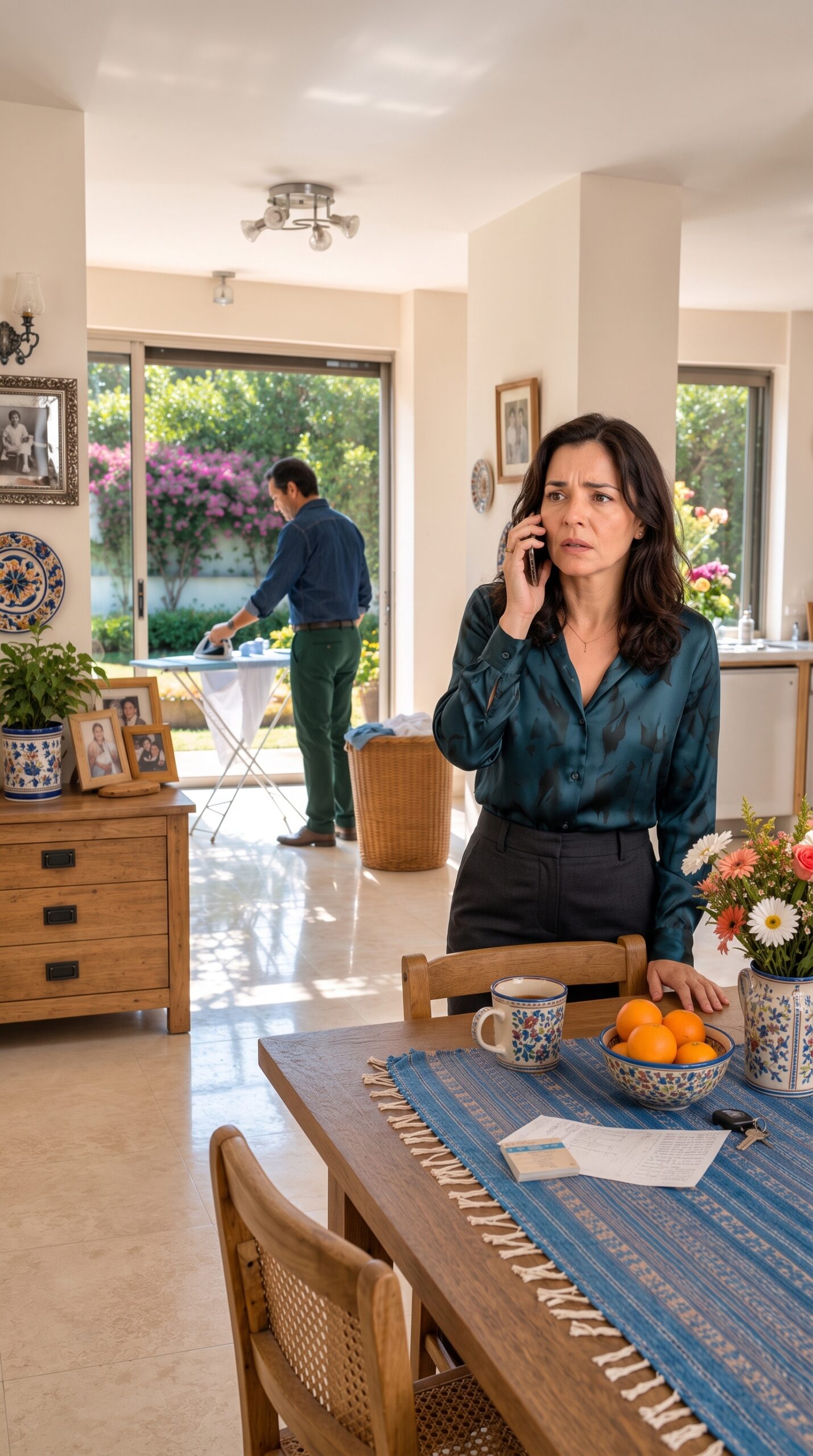
—Put on the apron, Camila. Don’t start with your faces; important people are coming today.
Beatriz Alcocer said it without even looking at her, while she arranged crystal glasses in the dining room of their home in San Pedro Garza García. For her, a perfect table had always been more important than a hurt daughter.
Her husband, Octavio Cárdenas, had invited 24 relatives to celebrate Thanksgiving. He said it was a tradition "to give thanks for what they had," although in that house, giving thanks meant smiling, showing off, and not mentioning debts.
Camila had arrived in a dark green dress with her hair done. Beatriz took less than 3 minutes to hand her a beige apron.
—You know where everything is. Help me out and don’t make a scene.
By 7 PM, the house smelled of turkey, sweet potato mash, cornbread, and romeritos. Her sister Ximena appeared with her husband, her 2 kids, and a designer bag. Her brother Rodrigo arrived 40 minutes late, talking on the phone about a business that, like the previous 4, had been financed by their father.
Everyone received hugs.
Camila received orders.
Since she was 18, she had been “the responsible one.” She had dropped out of architecture school when the family construction company was on the verge of bankruptcy. She organized payments, negotiated with suppliers, and cared for her grandmother during surgery. She had never received a fixed salary.
Ximena studied fashion in Madrid because “she had the world.”
Rodrigo lost millions because “men learn by taking risks.”
Camila, on the other hand, had to be grateful for being allowed to help.
During dinner, she served dishes, refilled glasses, and cleaned up spilled gravy. Each time she entered the dining room, she heard Beatriz bragging about her other children.
—Ximena has always been so refined.
—Rodrigo was born with a nose for business.
No one mentioned that Camila had saved 2 projects from a labor lawsuit.
No one noticed there was no chair for her.
At 9 PM, while scraping a burnt tray, the doorbell rang. The conversation gradually faded away.
A man crossed the foyer in a pristine black suit with his coat damp from the rain. He was tall, serene, and had that kind of presence that made others straighten their backs.
Octavio immediately stood up.
—Mr. Ferrer, what a surprise. We didn’t know you would accept the invitation.
Santiago Ferrer, president of Grupo Altura, had been negotiating the purchase of a stake in Octavio’s construction firm for 7 months. Without that agreement, the family business would hardly survive the next quarter.
But Santiago didn’t look at Octavio.
He looked at Camila in the kitchen, with wet hands and a gravy stain on her sleeve.
He walked toward her, took her hand gently, and kissed her knuckles.
—Sorry, my love. The flight was delayed.
The silence was brutal.
Beatriz paled. Ximena dropped her fork. Rodrigo murmured:
—No way...
Octavio looked at his daughter as if he had just discovered a stranger.
—Camila, what does this mean?
Santiago observed the apron, the full sink, and the table where everyone was eating except her.
Then he intertwined his fingers with Camila’s.
—It means she is my fiancée —he said—. And it also means I need to know why the woman who will lead the Altura Foundation with me is serving you as an employee.
No one had a chance to respond.
Because Santiago opened his portfolio, pulled out a red folder, and placed it on the table.
—But before we leave, we should talk about the false invoices someone here put in Camila’s name.
And no one in that family could imagine what was about to happen.
PART 2
Beatriz was the first to react.
—That’s absurd. Camila has always managed the administration. She must have made a mistake.
Camila felt a familiar chill. For years she had heard the same version: when something went well, it was Octavio’s merit; when it went wrong, her signature appeared at the bottom.
Santiago opened the folder. On the tablecloth lay invoices for nonexistent machinery, duplicate payments, and transfers to Servicios del Norte RB.
Rodrigo stopped smiling.
The initials were his.
—Don’t come here to put on a show in someone else’s house, dude —he said—. Those papers may have been manipulated.
—Two firms reviewed them, and the bank confirmed the accounts —Santiago replied.
Octavio approached with a tense smile.
—This should be discussed privately. Let’s not allow a family misunderstanding to ruin a deal worth hundreds of millions.
Camila looked at him and understood something painful: her father wasn’t horrified by the fraud or by seeing her humiliated. He was terrified of losing the contract.
—When did you know? —she asked.
He didn’t want to know if she was okay. He just wanted to measure the fire.
Camila took off the apron.
—Three weeks ago.
Ximena stood up.
—And you didn’t say anything? Dad could have fixed it.
—That’s what I did for 12 years: fix everything before you felt the consequences.
Octavio slammed the table.
—Lower your voice!
Santiago stepped forward, but Camila squeezed his hand. That night, she wanted to speak for herself.
She explained that the invoices had her digital signature, even though they had been issued while she was out of Monterrey. One was recorded while she accompanied her grandmother Elena in Houston.
—I remember that trip —the elderly woman said.
Rodrigo filled his glass with trembling hands.
—Anyone could have copied a signature.
Santiago showed another sheet.
—Access was used from your office computer. We also found messages from you to the accountant.
Beatriz placed a hand on her chest.
—This can’t leave this house.
That phrase broke something in Camila.
Her mother didn’t say it couldn’t be true. She said it shouldn’t be known.
Octavio collected the documents.
—Camila will declare that she authorized the operations. We’ll correct it internally later.
—Are you asking her to confess to a crime? —Santiago asked.
—I’m asking her to protect her family.
Camila recalled how many times that word had been a chain: when she sold her car to pay Rodrigo’s debt, when she turned down a scholarship, and when she agreed to appear as a representative of a company she never controlled.
Whenever someone said “family,” she lost something.
—I’m not signing anything.
Beatriz grabbed her arm.
—Don’t be ungrateful. Everything you have came from this house.
Camila looked at her mother’s fingers.
—What I have, I built while you made me believe I was worthless.
Ximena crossed her arms.
—How convenient. Now that you’re marrying a millionaire, we’re all monsters.
—I don’t need to marry anyone to recognize how I was treated.
—He put those ideas in your head —Rodrigo said.
Santiago let out a dry laugh.
—Camila thought this way before she met me. She just needed a place to speak without being punished.
Octavio pointed to the door.
—This conversation is over.
—For me, it is —Camila replied.
Beatriz followed her to the foyer.
—If you leave, don’t come back when that man tires of playing the hero.
Camila waited for an apology, a doubt, a “honey, let’s talk.” Nothing came.
—Santiago doesn’t rescue me. He just came for me. I chose to leave.
Octavio appeared behind her.
—The agreement supports 600 jobs.
—And my silence sustained this family for 12 years. No one cared how much it cost me.
Before crossing the door, Camila looked at Elena. The grandmother, with tears in her eyes, nodded slightly.
In the truck, under the rain, Camila confessed she had hidden the worst. She didn’t mention that Beatriz forced her to serve at Ximena’s son’s baptism, nor that Octavio put her name on the company to protect himself, nor that Rodrigo had asked her for access codes to the system.
—Why did you agree to go today? —Santiago asked.
—Because a part of her still hoped they would set a place for her.
Santiago understood she wasn’t only talking about dinner.
In her apartment, doña Meche heated chicken soup.
—First eat, mija. Tragedies on an empty stomach feel twice as bad.
Camila almost smiled. Then she saw her dress under the coat, the one no one had noticed because her mother had covered it with an apron.
Santiago looked at her.
—You look beautiful.
—I smell like turkey and soap.
—You smell like someone who worked while others pretended.
Camila cried for the young woman who dropped out of university, for the daughter who confused obedience with love, and for the woman who thought being necessary was the same as being loved.
Santiago didn’t ask her to calm down. He just stayed.
The next morning there were 38 calls and 64 messages.
Beatriz said she ruined dinner. Ximena swore it was all a planned humiliation. Rodrigo called the documents fake.
Octavio wrote:
“Call me before you ruin something important.”
Camila read the message twice.
Something important.
Not her. The business.
At 9 AM, Octavio called Santiago. Camila allowed him to activate the speaker.
—We can resolve this like adults —Octavio said—. Rodrigo made mistakes, but involving lawyers would be crazy.
—There are 27 irregular operations worth over 48 million pesos —Santiago replied—. Grupo Altura will not invest in your company.
—You can’t cancel over a personal problem.
—It’s not personal. There are incomplete payrolls, unpaid suppliers, and materials reported at double. Also, someone prepared Camila to bear the legal responsibility.
Santiago placed a document in front of her that she hadn’t seen.
—There’s something else. Octavio’s digital signature authorized the creation of Servicios del Norte RB.
Camila lifted her head.
—Did my father know?
On the other side, there was silence.
—You don’t understand how a business works —Octavio replied.
That was a confession.
Rodrigo hadn’t acted alone. Octavio had used his son to take money and his daughter to bear the blame.
—Did you think you would let me go to jail? —Camila asked.
—No one was going to jail. I would have fixed it. I used your name because you were the only one I could trust.
Even in admitting betrayal, he was trying to turn it into a compliment.
—No. You used me because you knew I would always protect you.
Octavio spoke of the employees, of Elena’s legacy, and of the scandal that Beatriz wouldn’t be able to bear.
Guilt knocked on the door again, but Camila didn’t let it in.
—The workers are in danger because of what you did. I didn’t cause the fraud by stopping to hide it.
That day, Grupo Altura delivered the audit to the authorities and created a temporary fund to cover back wages. They also hired 73 workers for new projects. Camila insisted on protecting those who were not at fault.
The family spread another version. Beatriz said her daughter had seduced Santiago to take revenge. Ximena called her jealous. Rodrigo posted: “Blood weighs more than money.”
He deleted it when someone responded: “But the fake invoices weigh more than blood.”
The only honest call was from Elena.
—Forgive me, my dear. I saw how they loaded everything onto you and stayed silent.
—Why?
—Because we were taught that a good woman endured. Then we inherited our cowardice as if it were values.
3 months later, Octavio was removed from management, and Rodrigo faced charges for fraud. Beatriz sold the house to cover debts but continued saying Camila destroyed the family.
Ximena only wrote to ask her to convince Santiago to withdraw the complaint.
Camila responded:
—There’s nothing to withdraw. There are facts to face.
Then she blocked her number.
6 months later, Camila and Santiago got married in a hacienda in Nuevo León. There were bougainvilleas, soft norteña music, mole, cabrito, and people who knew how to look her in the eye.
Elena was in the front row. Doña Meche cried more than anyone.
As dinner began, Camila stood still.
There was a chair for her in the center.
Not near the kitchen.
Not at the end.
Not for after serving.
Santiago took her hand and kissed her knuckles like that night.
—Sorry, my love. I arrived late.
Camila smiled.
—You arrived when she was finally ready to stop abandoning herself.
He understood she was speaking of the woman she had been.
No one asked her for more sauce. No one called her dramatic. No one turned her tears into a spectacle.
Camila understood that a family is not always who shares blood or last name.
Sometimes it’s who notices you’ve been standing for hours.
Who asks why you haven’t eaten.
Who saves you a chair without making you earn it.
And sometimes, the first person who needs to make a place for you is yourself.
Because forgiving can be love, but returning to a table where you were used isn’t always noble.
Sometimes, the most dignified thing is to stand up, take off the apron, and let those who treated you like a servant learn to live without everything you did for them.