PART 1
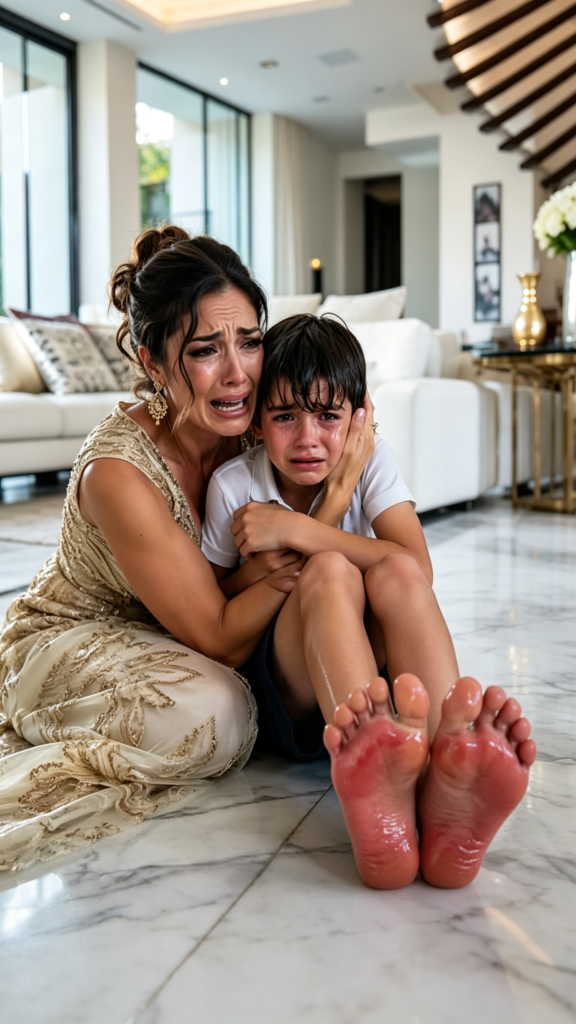
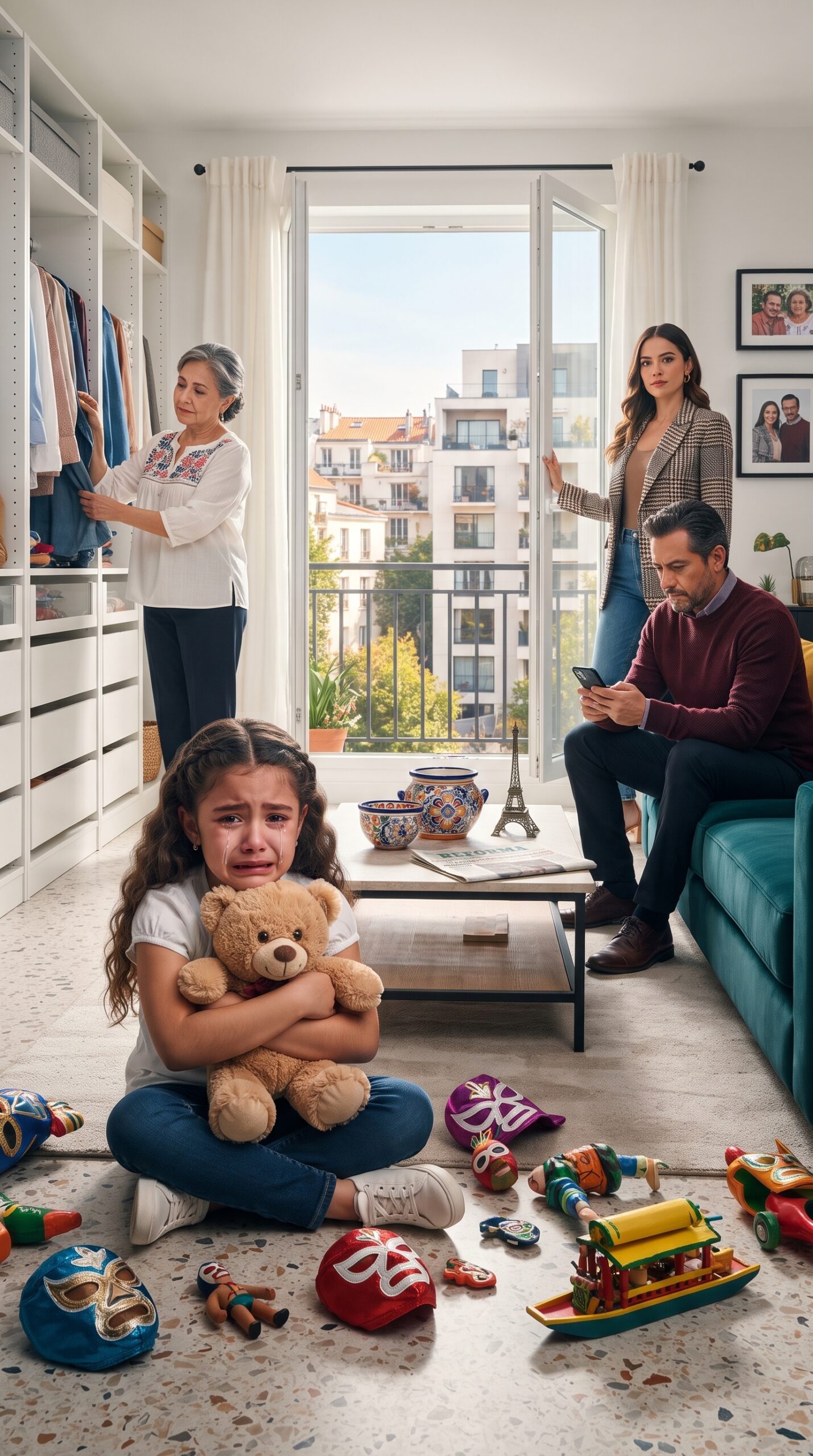
When Mariana arrived at her apartment in Iztapalapa at 6 PM, the first thing she heard was her daughter's crying.
This wasn't a normal tantrum from a three-year-old. It was a choked, scared sobbing, as if someone had touched something they shouldn't have.
Little Valeria was sitting in the living room, clutching her doll, staring down the hallway as if she feared going back to her room.
On the couch sat Julián, her husband, with his cell phone in hand and the face of someone who already knew a fight was coming.
—What happened here? —Mariana asked.
Before he could respond, doña Consuelo walked out of the kitchen.
Her mother-in-law was wearing one of Mariana's aprons tied around her waist and a calm smile, as if she had come to rescue the house from disaster.
—Honey, I just organized a few things. Seriously, you had everything so poorly arranged.
Mariana froze.
In the kitchen, the pots were no longer where they always were. The glasses were on a different shelf. The Tupperware, Valeria's dishes, the coffee—everything had changed places.
Then she entered her bedroom.
Her underwear was laid out on the bed, folded into little piles, exposed as if it wasn't something intimate.
She opened the closet and felt a blow to her chest.
There hung doña Consuelo's clothes. Not two outfits. Not a jacket. All her clothes.
Blouses, skirts, sweaters, shopping bags, an old robe, and even a box of medicines.
Mariana turned to Julián.
—What does this mean?
He didn't look up.
—My mom needs to stay for a few days. She fought with my brother and had nowhere to go.
—And that's why you gave her my key?
Julián pressed his lips together.
Doña Consuelo approached as if nothing was wrong.
—Oh, honey, don't make a fuss. I also changed Valeria's laundry soap. The one you use gives her rashes. With the years, you learn.
That was what finally broke Mariana's patience.
She didn't scream. She didn't slam doors.
She went to the room, took her mother-in-law's medium suitcase, and started packing the clothes, one item after another.
Doña Consuelo stopped smiling.
—What are you doing?
—I called a taxi —Mariana said—. It arrives in 8 minutes.
Julián stood up.
—Mariana, don’t do this…
She stared at him without blinking.
—This is my house. No one enters without my permission. No one touches my daughter's clothes. No one decides for me.
Doña Consuelo took her suitcase with trembling hands.
Before leaving, she said something softly, almost broken:
—I thought there was enough room here.
Mariana heard that as manipulation.
But three nights later, that phrase would haunt her like a curse.
PART 2
Julián walked his mother to the taxi without saying a word.
Mariana stayed in the kitchen, returning each glass, each plate, and each pot to its original place, with a dry rage lodged in her chest.
She felt like she had defended her territory.
Her apartment wasn't big, but they had paid for it with eight years of sacrifices. She worked double shifts at a pharmacy near the Metro Ermita, Julián drove a delivery truck, and together they had saved for the down payment.
It wasn't fair for someone to come in with someone else's key and change everything.
That night, when Julián returned, he was furious.
—You humiliated my mom.
—Your mom came in without permission.
—She just wanted to help.
—Helping isn't touching my underwear, Julián.
He didn't respond.
Mariana asked if his brother knew where doña Consuelo was.
—Yeah —he lied—. I left her with a cousin in Neza.
Mariana wanted to believe him.
For three days, she tried to convince herself that she had done the right thing. Valeria slept soundly again. The kitchen regained its order. The room stopped smelling of mothballs.
But something was gnawing at her inside.
Doña Consuelo's phrase wouldn't leave her mind.
“I thought there was enough room here.”
On the fourth day, while Valeria colored at the table, Mariana picked up her phone and called the supposed cousin.
A woman answered.
—Good afternoon, is doña Consuelo there?
There was silence.
—No Consuelo lives here, ma'am.
Mariana thought she had dialed wrong. She checked the number. Called again.
The answer was the same.
Then she looked for Brenda, Julián's brother's wife. The woman answered, confused.
—Are you fighting with me? No, Mariana. I haven’t seen your mother-in-law in almost a month.
The floor shifted beneath her.
Mariana went straight to the living room, where Julián was watching TV, oblivious to her.
—There was no fight with your brother —she said—. There was no cousin. Where's your mom?
Julián turned off the TV.
His face crumbled.
—Tell me where she is.
He covered his face with both hands.
—At the TAPO.
Mariana felt her throat close.
—What?
—She’s been sleeping at the bus terminal.
The silence that fell over the apartment was worse than any scream.
The TAPO. Cold benches. Noise from buses. Smells of diesel, public restrooms, and burnt coffee. People guarding bags with their feet, waiting for early morning departures.
Doña Consuelo had slept there.
With her suitcase between her legs.
Three nights.
Mariana couldn't sit down.
—Why, Julián? Why didn't you tell me?
He began to cry.
Not like an angry man. He cried like a defeated child, breath hitching, shoulders trembling.
—She has cancer —he finally blurted—. Pancreas. It has spread.
Mariana felt the air leave the room.
—Since when do you know?
—For three weeks.
Anger, guilt, and fear mixed so quickly that Mariana had to lean against the wall.
—And you brought her here without telling me anything?
—She asked me not to say. She made me promise she didn't want pity.
Julián explained, between sobs, that doña Consuelo had sold a few things, left her brother's house in the early morning, and taken a bus to the city.
She didn't want to die in anyone's house.
She didn't want her daughters-in-law whispering in front of her.
She didn't want her children to see her wither away.
But there was one thing she did want before leaving.
To get to know Valeria well.
Her granddaughter.
That's why she had come with all her clothes.
That's why she had organized the kitchen as if she needed to feel useful.
That's why she had changed the soap.
That's why she had put an old blanket on the girl's bed.
Mariana remembered that blanket.
Thick, cream-colored, with the smell of an old closet. She had yanked it off Valeria's bed in anger and stuffed it into the suitcase as if it were trash.
—Where is she now? —Mariana asked.
Julián looked down.
—At the IMSS.
Mariana's hands went cold.
The day before, doña Consuelo had fainted on a bench at the terminal. A cleaning lady found her pale, sweating cold, still clutching her suitcase.
The ambulance took her to the hospital.
Julián had known since noon but hadn't dared to say it.
Mariana grabbed the keys.
—Let’s go.
They arrived at the IMSS just before 2 AM.
The hallway was filled with people sleeping in plastic chairs, family members with blankets, children coughing, and nurses walking quickly with weary faces.
Doña Consuelo was at the back, in a narrow bed.
She looked small.
So small.
The woman who days earlier had filled the apartment with her voice, her bags, and her smell of mothballs was now barely able to lift her hand.
When she saw Mariana, she tried to fix her hair.
—Honey… I’m sorry.
That word shattered Mariana's soul.
She wanted to speak, but couldn't.
—I shouldn't have moved your things —doña Consuelo whispered—. This is your home. You were right.
Mariana shook her head, crying.
—Don't say that.
—The soap wasn’t to criticize you. Julián had the same rashes when he was little. On his cheeks. I just thought… it could help the girl too.
Julián was crying in a corner, hand over his mouth.
Doña Consuelo breathed slowly.
—I arranged the kitchen like my mom had it. So when you came home tired, everything would be close at hand. I wanted to leave you something well done.
Mariana gripped the bed railing.
Then the mother-in-law glanced at the suitcase underneath.
—And the blanket… I made it when I knew Valeria was coming. I knit it myself. I stored it with mothballs so it wouldn’t get damaged. I wanted to give it to you in my hands, but time got away from me.
Mariana covered her mouth.
—I put it on her bed so she could sleep with something of mine when I’m no longer here.
There was no accusation.
No “I told you so.”
No venom.
Just a sick woman asking for forgiveness for wanting to be of service before she died.
Mariana understood then how cruel a truth can be when it arrives late.
Doña Consuelo hadn’t invaded her home to take charge.
She had come to say goodbye.
That very morning, Mariana spoke with the doctor, signed papers, and took her home.
She didn’t know how to care for a terminally ill patient. She didn’t know how to give injections. She didn’t know how to measure pain or hide her fear.
But she knew one thing: this woman wasn’t going to sleep on a bench again.
They settled doña Consuelo in Valeria's room.
Before looking for pillows, Mariana opened the suitcase, took out the mothball blanket, and spread it over her mother-in-law with both hands.
The same blanket she had scorned.
Doña Consuelo touched it and smiled a little.
—Thank you, honey.
She lived for five more weeks.
They were five difficult, strange, and beautiful weeks.
Valeria would climb onto the bed with her dolls and tell her nonsensical stories. Doña Consuelo listened as if each word was important.
She taught her songs from when she was a girl in Michoacán. She told her how Julián would hide under the table to avoid baths. She asked Mariana not to put so much chili in the girl’s beans.
Mariana, who had previously been exasperated by every comment, now learned to listen for the intention behind the words.
Sometimes doña Consuelo would overstep.
Sometimes Mariana would bite her tongue.
Sometimes they would look at each other and laugh, because they both knew they had started late.
One afternoon, doña Consuelo asked her not to change the glasses' places.
—They fit better there, honey.
Mariana laughed through her tears.
—Alright. They’ll stay there.
And they did.
Doña Consuelo died on a Tuesday, at dawn, with Valeria asleep beside her and the blanket over her chest.
Julián held one hand.
Mariana held the other.
She couldn’t apologize for everything. Not with all the words stuck in her throat.
She could only say:
—Thank you for loving my daughter.
Doña Consuelo barely opened her eyes.
—You left her in good hands.
After the funeral, Brenda sought out Mariana outside the cemetery.
She told her doña Consuelo had left a message.
Mariana thought it would be a complaint, a sadness, something that would hurt even more.
But Brenda took a deep breath and said:
—She told me you took her out of the apartment that night. And she said that made her peaceful.
Mariana didn’t understand.
—Peaceful?
Brenda nodded.
—She said: “That girl protects what’s hers like a lioness. She doesn’t let anyone touch her daughter’s things. My granddaughter will be fine.”
Mariana broke down right there.
What she had done out of anger, doña Consuelo had turned into comfort.
What for Mariana was an expulsion, for her mother-in-law was a testament of maternal love.
That was the hardest part.
Sometimes people don't need us to understand them perfectly. Sometimes they just need us not to arrive too late.
The blanket remains on Valeria's bed.
It hardly smells of mothballs anymore, but Mariana never washes it completely. She only cleans the corners when necessary, carefully, like someone touching a relic.
Valeria drags it through the living room and says:
—It’s my blanket from Grandma Consuelo.
Sometimes Mariana watches her and feels a lump in her throat.
Because that woman entered her home without permission, rearranged her kitchen, touched her drawers, and made her furious.
But she also left a gentler soap, a more practical kitchen, a hand-knitted blanket, and a lesson that no family should learn late:
Not every invasion stems from disrespect.
Sometimes someone arrives making noise because they don't know how to say they're saying goodbye.