PART 1
—That woman never served Mexico —Carmen Robles said, hand on the Bible, eyes brimming with fake tears—. My daughter invented her wounds, bought her medals, and deceived her own father to take over the company.
The courtroom in Mexico City fell so silent that even the air seemed to stop.
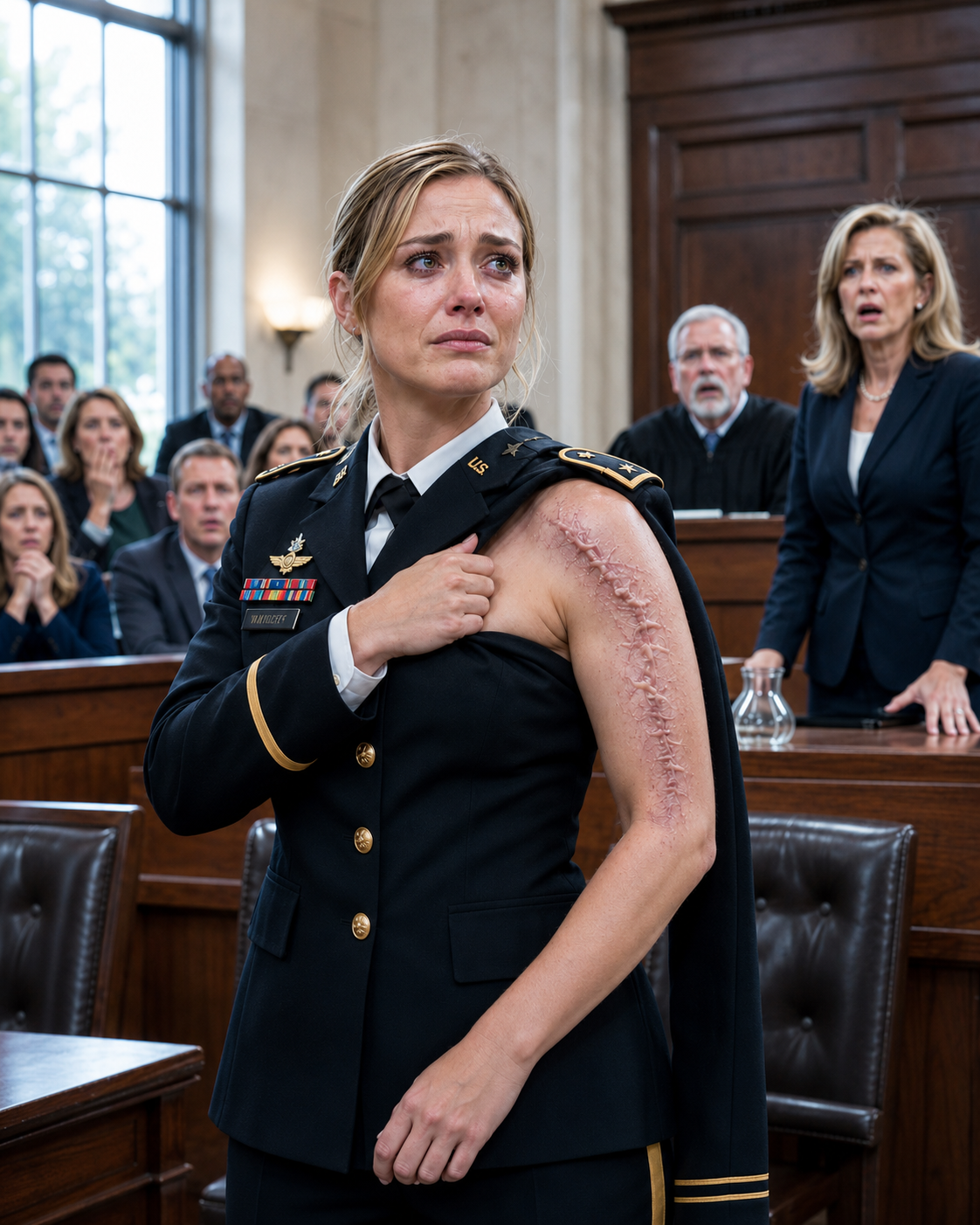
Valeria Robles sat next to her lawyer, dressed in a dark blue suit, hair pulled back, with a fine scar peeking near her neck. She didn't lower her gaze. She didn’t cry.
That infuriated her mother even more.
Carmen had always hated Valeria's calmness. From a young age, she told her that an obedient woman didn’t walk like a soldier or stare men in the eye. But Valeria never learned to bow her head.
In the front row, Iván, her younger brother, crossed his leg with a twisted smile. He wore a luxury watch, an Italian suit, and had the face of someone who already felt like he owned everything.
It all began one month after the death of Don Arturo Robles, founder of Blindajes Robles, a company providing vests, vehicles, and security equipment used by municipal police and private escorts.
The original will left Valeria as the CEO and majority shareholder. Iván received houses, money, and a smaller share. Carmen kept properties and an enormous pension.
But Iván appeared with another document.
One where he inherited total control.
When Valeria contested that supposed will, they attacked her where it hurt the most: her past.
They accused her of forging military papers, wearing uniforms without right, fabricating missions, and manipulating her sick father with tales of a heroine.
The press made a spectacle. Outside the courthouse were cameras, reporters, and family members who had previously embraced her at Christmas but now whispered: “Who knows, in these rich families, anything goes.”
Iván’s lawyer placed a wooden box on the table. Inside were three medals, a burned plaque, and a blurry photo showing Valeria covered in dust, blood on her forehead.
—Mrs. Carmen, do you recognize these items?
Carmen sighed as if her soul was being torn away.
—Yes. They are part of my daughter's lie. She used them to impress Arturo when he was already weak. My husband was sick, confused, vulnerable.
Valeria felt a burn beneath her ribs. Not from shame. From memory.
She recalled a dirt road, a wrecked truck, the smell of gasoline, and a voice screaming over the radio that two comrades were missing.
But she couldn’t say anything.
Her file remained sealed.
Don Arturo had been the only one in the family who knew almost the whole truth. Before dying, with his voice broken by cancer, he took her hand and said:
—Mija, don’t fight with anger. Fight with proof. Your mother and brother are stealing more than you can imagine.
Valeria promised to protect the company.
Now Carmen was using her official silence to destroy her.
—Did your daughter receive any legitimate honors? —the lawyer asked.
—No —Carmen replied—. It was all theater.
Some attendees chuckled softly.
Iván murmured:
—Captain of lies.
Valeria glanced at the courthouse clock.
11:51.
Nine minutes remained.
Her lawyer, Licenciado Armenta, whispered:
—Don’t react.
—I won’t give them that —she replied.
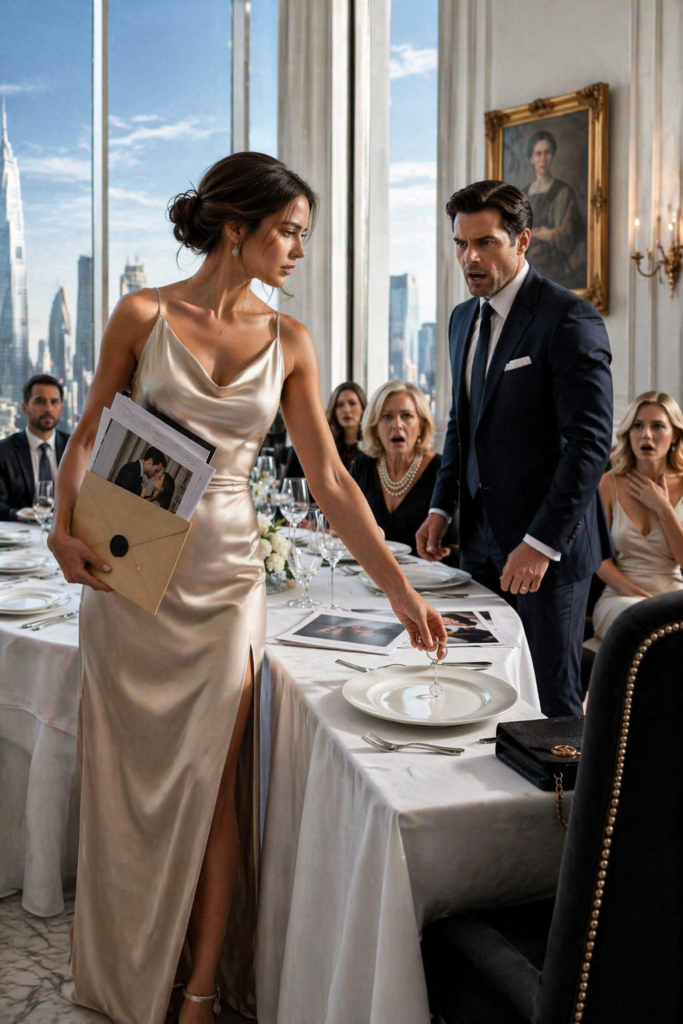
Then Iván took the stand. He swore to tell the truth and claimed to have found a letter from their father inside the family office's safe.
According to that letter, Don Arturo regretted leaving the company to Valeria because she had manipulated him with “war stories.”
—I opened the safe myself —Iván said—. No one touched anything before I did.
Valeria’s lawyer held up a photograph.
—Curious. This image was taken on March 4, after the fire in Don Arturo's office. The safe was destroyed 12 days before the date you say you found that letter.
Iván turned pale.
Carmen pressed the Bible to her chest.
And just as the judge was about to speak, firm footsteps echoed from the other side of the door.
These weren’t lawyer’s shoes.
They were military boots.
The doors slowly opened, and Carmen stopped smiling as if she had just seen a ghost.
PART 2
The man who entered the courtroom wore a formal uniform and had a deep scar crossing his left eyebrow. Accompanying him were two federal agents and a lawyer from the Secretariat of National Defense.
People rose from their seats to get a better look.
Iván leaned toward his mother.
—Who is that?
Carmen didn’t answer. Her mouth was dry, and her fingers were so rigid on the Bible that it seemed she wanted to break it.
The judge banged the gavel.
—Identify yourself before this court.
The man advanced calmly.
—Retired Colonel Mateo Ledesma. I appear with limited authorization to testify regarding Valeria Robles' sealed file.
The murmur exploded.
Iván’s lawyer stood up immediately.
—I object, Your Honor. This witness was not announced.
The military lawyer placed a sealed envelope on the desk.
—The authorization was released today at 12:00 hours. Prior to that moment, the information could not be shared without violating national security protocols.
The judge opened the envelope. He read for a few seconds, and his expression changed completely.
Valeria remained still, but inside she felt something loosen. For years she had carried a truth locked away, watching her own family mock her scars at family dinners.
Carmen said they were marks from a botched surgery.
Iván said Valeria had watched too many soldier series on Netflix.
And Don Arturo, though he knew the truth, could never defend her publicly without putting her at risk.
Now the truth finally had permission to speak.
The judge authorized the testimony.
—Do you know Valeria Robles? —asked lawyer Armenta.
—Yes —the colonel replied—. I have known her for 11 years. She was a captain assigned to a special unit. Part of her history was classified for security reasons.
The audience was frozen.
—Are the medals presented here authentic?
—Yes.
—Are her wounds authentic?
Mateo Ledesma looked at Valeria with respect.
—Yes. She sustained them during an ambush in a joint operation. I cannot reveal details, but I can confirm that Captain Robles rescued several wounded individuals under fire. She refused to evacuate until the last man was out alive.
The room fell silent.
Iván swallowed hard.
—Mom… you knew, didn’t you?
The colonel didn’t wait for Carmen to respond.
—Mrs. Carmen knew.
The judge looked up.
—Explain that.
—Seven years ago, I visited Don Arturo Robles' house to deliver Valeria's personal items after a mission. Carmen was present. She heard when I informed her husband that their daughter had risked her life for other Mexicans.
Carmen tried to cry.
But this time the tears didn’t come.
—That’s a lie —she said in a low voice.
—No, ma'am —the colonel responded—. You didn’t cry for your daughter that night. You cried because you understood that Arturo would never see Iván as the main heir again.
Iván leapt up in fury.
—That’s defamation!
—Sit down —the judge ordered.
But the hardest blow was yet to come.
Lawyer Armenta requested permission to play several audio recordings provided by Julia Mendoza, former personal assistant to Don Arturo.
Julia had worked for 19 years at Blindajes Robles. She knew where the contracts, accounts, and the names the family preferred to keep buried were located.
The first audio played in the courtroom.
Iván's voice was clear:
—Make the letter with my dad's signature. Make it say Valeria pressured him. Something sentimental, so the judge swallows it.
Then Carmen's voice appeared.
—I’ll take care of crying. People always believe a mother more than a cold daughter.
Valeria closed her eyes for a moment.
Not out of surprise.
But out of exhaustion.
The second audio was worse.
Iván said:
—When they put Valeria in prison, we’ll sell the company before she can appeal.
Carmen replied:
—And if she insists, we’ll plant fake medal receipts in her apartment. That girl never knew when to give up.
The judge slammed the papers down on the table with a sharp thud.
The prosecutor, who until then had treated Valeria as a suspect, stood up.
—Your Honor, the prosecution requests to review possible crimes committed by the complainants.
Iván looked toward the side door.
A guard positioned himself in front of him.
Carmen, pale as chalk, turned to Valeria. For the first time, she wasn’t pretending tenderness. Her eyes held nothing but hatred.
Then Armenta presented the final evidence: a video recorded by Don Arturo five days before he died.
On the screen appeared Valeria's father, thin, bald, sitting in a hospital bed at his home in Lomas de Chapultepec.
—If you’re watching this —he said in a weak voice—, it’s because Carmen and Iván did exactly what I feared.
Valeria felt her chest breaking.
She didn’t know that video existed.
—For two years —Don Arturo continued—, they diverted money from Blindajes Robles to ghost suppliers. But then I discovered something worse.
The judge leaned forward.
—One of those suppliers delivered defective plates for ballistic vests. Cheap material, false certifications, altered tests. They weren’t just stealing money. They were playing with the lives of police officers, escorts, and soldiers.
Carmen gasped.
Iván shook his head.
—That proves nothing —he murmured.
In the video, Don Arturo lifted a red folder.
—Here are the transfers, the emails, the laboratories, and the signatures. Iván approved purchases. Carmen moved money from private accounts. And when I confronted them, they told me Valeria was crazy, that her wounds were fabricated, that I wasn’t thinking straight anymore.
Valeria covered her mouth with a hand.
Her father continued:
—I leave the company to Valeria because she understands something that they never understood: a protective covering isn’t a metal business. It’s a lifesaving business. Iván wants money. Carmen wants power. Valeria wants responsibility.
The recording ended.
For several seconds, no one spoke.
Then the prosecutor requested to drop all charges against Valeria and initiate proceedings against Carmen and Iván for procedural fraud, document forgery, perjury, money laundering, and criminal conspiracy.
Iván exploded.
—It was her idea! —he shouted, pointing at his mother—. She said Valeria couldn’t defend herself because her file was closed!
Carmen turned to him.
—Shut up, idiot!
—You said that as long as Valeria was alive, Dad would never leave me the company!
The phrase fell like a bomb.
Valeria lifted her gaze.
The judge did too.
—As long as she was alive? —the prosecutor repeated.
Iván fell silent.
Armenta opened another folder.
—Your Honor, Don Arturo also left a private assessment regarding the accident Valeria suffered three months before changing the will.
Valeria recalled the road to Cuernavaca, the rain, the brake pedal sinking without response, the car spinning towards the concrete barrier.
She always believed it was a mechanical failure.
The prosecutor read the document in silence.
—It indicates manipulation of the brake system.
Carmen whispered, almost unconsciously:
—They can’t prove it was us.
She didn’t deny the accident.
She only doubted the evidence.
That was the phrase that sunk her completely.
Valeria felt the weight of betrayal shift inside her. It was no longer just about a company, or a will, or a lie in front of the judge.
Her mother not only wanted to see her humiliated.
Maybe she also wanted to see her dead.
Federal agents approached Iván.
—Iván Robles, you are under arrest.
—No, no, wait —he stammered—. Valeria, say something. We’re brothers, really, this got out of control.
Valeria looked at him as if she finally saw the stranger who had always lived in her house.
—A brother doesn’t fabricate evidence to destroy his sister.
Then an agent stood in front of Carmen.
—Carmen Robles, please come with us.
Carmen tried to hold her ground until the end. She walked slowly, chin held high, but when she felt the handcuffs on her wrists, she broke.
—Valeria —she said in a trembling voice—. Don’t let them take me out like this. I’m your mother.
The entire room awaited her response.
For a second, Valeria was a child again. She remembered Carmen telling her that Iván needed more affection because he was a boy. That she should be docile. That a daughter does not contradict her mother.
Then she recalled her father taking her hand in the hospital.
And the comrades she rescued from a burning truck.
And the nights she had to stay silent while they called her a fraud.
Valeria stood up.
—A mother is not the one who gives you life and then tries to bury you in a lie —she said with a calmness that hurt more than a scream—. A mother is the one who protects. You only protected your ambition.
Carmen lowered her head.
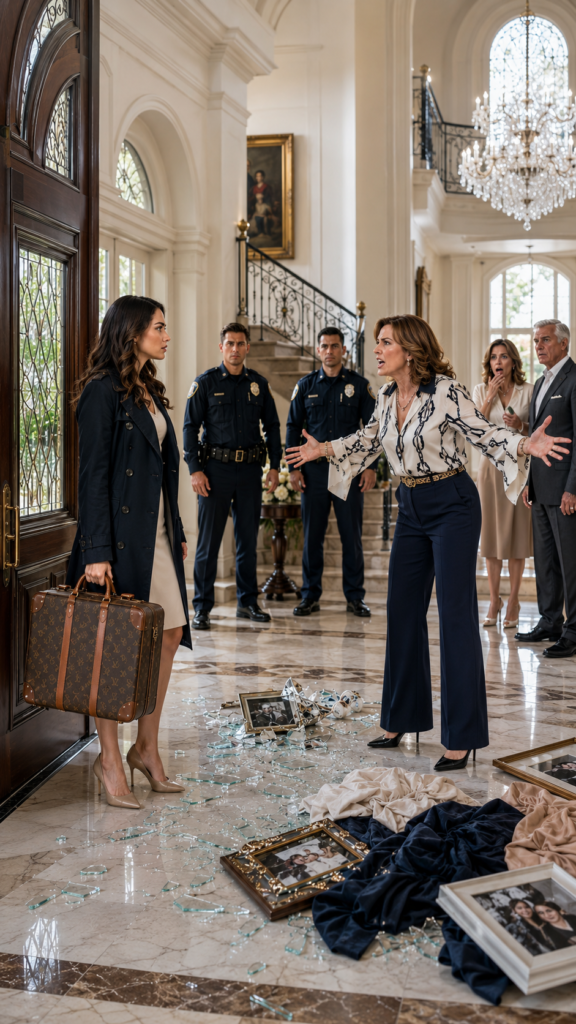
When they led her out of the courtroom, the press began shouting questions. Iván tried to cover his face. Carmen no longer cried. The theater had come to an end.
The judge acquitted Valeria of all charges and validated Don Arturo's original will. He also ordered accounts frozen, contracts reviewed, and documents from Blindajes Robles secured.
Months later, Iván received a nine-year prison sentence after accepting several charges. Carmen was sentenced to seven years. The investigation into the accident remained open, but the fake suppliers fell one by one.
Valeria could sell the company and leave far away.
She didn’t.
She changed the name of an entire division and created the Arturo Robles Foundation, dedicated to supporting military personnel, police officers, and families of fallen elements who had been neglected by bureaucracy.
She also ordered a review of every vest, every plate, and every contract signed during Iván's administration.
—We don’t sell cheap metal here —she said on reopening day—. We protect lives.
Colonel Mateo Ledesma attended with a restored box. Inside were Valeria’s medals, the burned plaque, and a photo of Don Arturo smiling.
—Your father asked me to give you this when the truth came to light —he said.
Valeria held the box with both hands.
She didn’t need to prove anything to anyone.
She hung the medals behind her desk, not out of empty pride, but as a reminder that there are silences that seem like defeat, until the day comes when the truth walks through the door and doesn’t ask permission from anyone.
Since then, those who came seeking help saw that wooden box and asked about it.
Valeria hardly ever told the whole story.
She only said:
—Sometimes those who call you a liar the most are the ones who fear the world discovering the truth.