PART 1
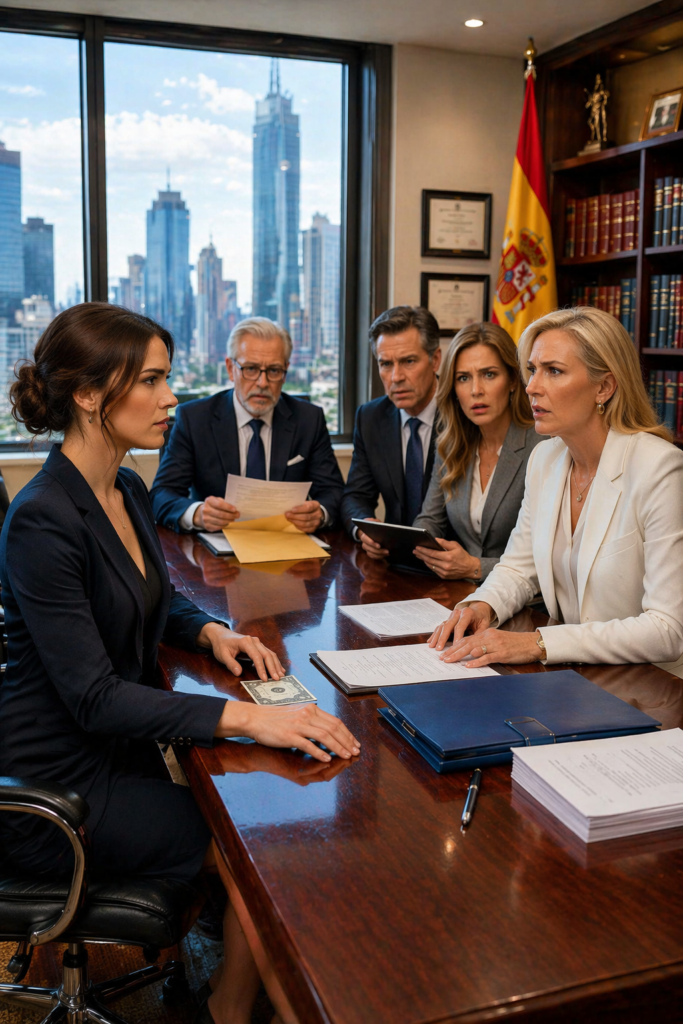
Mariana's mother smiled when the notary announced that she was entitled to just $1.
It wasn’t a loud laugh.
It was worse.
It was that sharp, cutting smirk of a lady who pretends to be all piety on Sundays but relishes in seeing someone fall in silence.
Mariana sat in a notary office on Avenida Chapultepec in Guadalajara, wearing the same black dress she had donned two days earlier to bury her grandfather Ernesto.
She hadn’t slept well since the funeral.
Her eyes were swollen, her hands cold, and an old folder rested on her lap, filled with hospital papers, medication receipts, and notes her grandfather had left stuck to the refrigerator.
In front of her were her parents, Álvaro and Patricia.
They had arrived as if for an awards ceremony, not to read the will of the man who had supported them for years.
Beside them was Renata, Mariana's younger sister, immaculate, made up, carrying an expensive handbag, with an innocent girl expression that no one should believe anymore, yet everyone in the family still bought.
Notary Cárdenas adjusted his glasses and read in a serious voice:
"To Renata Villaseñor Álvarez, don Ernesto Villaseñor leaves the main house located in Puerta de Hierro, two bank accounts, and a liquid fund estimated at $8,400,000."
Renata lowered her gaze as if embarrassed.
Patricia squeezed her hand proudly.
Álvaro murmured:
"Your grandfather always knew who had a future."
Mariana said nothing.
Then the notary turned the page.
"To Mariana Villaseñor Álvarez, his eldest granddaughter, don Ernesto Villaseñor leaves the symbolic amount of $1."
The silence lasted mere moments.
Patricia let out a chuckle.
Renata covered her mouth, but not out of sadness.
Álvaro leaned back in his chair, satisfied, as if finally someone had put Mariana in her place.
She felt her chest tighten.
For years, she had been the granddaughter who took don Ernesto to the hospital, the one who changed his bandages, the one who picked up his medications when Renata was “in Pilates class” and her parents were “busy.”
But in that room, it seemed as if none of that had ever existed.
Patricia adjusted her gold necklace and said quietly, though everyone heard her:
"Some people are born to care, not to inherit."
Álvaro added:
"You see, Mariana. Your grandfather also understood that Renata knows how to navigate."
Renata lowered her head.
But Mariana caught a glimpse of the smile at the corner of her lips.
That smile hurt her more than the $1.
Because as a child, when Renata broke something, Mariana was blamed for not taking care of her.
When Renata failed, the family said she was sensitive.
When Mariana got good grades, Patricia told her not to get too full of herself.
Renata received a car, trips, clothes, a furnished apartment.
Mariana received responsibilities.
And still, Mariana thought her grandfather saw her.
He had taken her since she was 15 to check out venues at the Mercado de Abastos. He taught her how to collect rent without humiliation, to read contracts, to not trust overly sweet smiles.
That’s why the $1 felt like a slap from the grave.
The notary stopped reading.
His expression changed.
He pulled out a sealed envelope from a brown folder, with Mariana's name written in handwriting.
"Before concluding this reading," he said, "don Ernesto left a precise instruction. This letter must be read in front of everyone present."
Patricia stopped smiling.
Renata looked up.
Álvaro leaned forward.
The notary opened the envelope and read the first line:
"The $1 is not a mockery. It is a key. And whoever laughed just demonstrated why they should never receive the most important thing."
PART 2
No one spoke.
The room, with its overly cold air conditioning and windows overlooking a busy street, hung suspended in thick embarrassment.
Patricia clutched her handbag tightly against her legs.
Renata lost color in her face.
Álvaro looked at the notary as if he could force him into silence.
But Notary Cárdenas continued reading.
"During my last 18 months, I observed my family with more clarity than ever. The illness robbed me of strength, but it gave me time. And time, when one is near the end, serves to see who approaches out of love and who approaches out of convenience."
Mariana felt a knot in her throat.
She remembered her grandfather seated in the living room, with his portable oxygen tank, asking her if she had eaten.
She recalled his trembling hands pointing to receipts.
She remembered how Renata would come, take one selfie with him, say "I adore you, Grandpa" and leave before the coffee even cooled.
The notary turned to the next page.
"I left Mariana $1 in the visible will because I needed everyone to believe that was all. I needed to hear what they would say when they thought she no longer had value to you."
Patricia looked down.
Álvaro shifted in his chair.
Renata crossed her arms.
"This is theater," she murmured.
The notary barely glanced at her.
Then he continued.
"Four years ago, I established a private trust with nine commercial properties, three warehouses, and two apartments located between Santa Tere, Mexicaltzingo, and the Mercado de Abastos. Its current approximate value is $57,000,000."
Renata let out a dry noise.
Patricia opened her mouth.
Álvaro slammed his palm on the table.
"What the hell is he reading?"
The notary remained unflustered.
"That trust has one sole beneficiary: Mariana Villaseñor Álvarez."
Mariana remained motionless.
The words entered slowly, as if coming from far away.
Nine properties.
Three warehouses.
Two apartments.
$57,000,000.
All of that was from the times spent with her grandfather.
From the mornings when he would tell her that wealth wasn't in marble, but in the metal shutters that lifted before seven.
She thought he was just telling her stories about merchants.
She didn’t know he was preparing her.
The notary continued:
"The rents have been managed by Ortega and Associates. After taxes, repairs, and reserves, the protected account has a balance of $4,280,000 available."
Renata jumped up abruptly.
"No. This cannot be valid. She manipulated him."
Mariana looked at her for the first time since the meeting began.
There was no anger in her eyes.
There was exhaustion.
An old exhaustion.
The notary pulled out another folder.
"Don Ernesto anticipated that accusation. Here are three medical evaluations, two psychological reports, and four notarial recordings made over the last 14 months. All confirm full capacity to decide."
Álvaro clenched his jaw.
"My father was sick."
"Sick does not mean incapable," the notary replied.
The phrase fell heavily.
Patricia tried to touch Renata's arm, but she pulled away.
Then the notary returned to the letter.
"Álvaro, I know you’re going to shout. You did that your whole life when you were wrong. You confused being the oldest son with being the owner. But you never built what you now wanted to distribute."
Álvaro turned red.
Mariana had never seen her father so small.
He had always been the man who decided at the table, the one who spoke loudly, the one who told her not to be confrontational.
Now he didn’t know where to put his hands.
The notary continued:
"Patricia, you always said Mariana was tough, cold, difficult. You called her exaggerated when she got tired. You called her envious when she asked for fair treatment. You made her feel like an employee of her own family. But the truth is simple: Mariana wasn’t the one in the way. She was the only one who stayed when all of you left."
Mariana closed her eyes.
That phrase broke something inside her.
But it also set straight something that had been twisted for years.
Renata let out a bitter laugh.
"How lovely. Now it turns out that by playing the martyr, she got it all."
Mariana took a deep breath.
"You were left with $8,400,000 and a house."
"It’s not the same!" Renata shouted.
And with that, she said it all.
It didn't hurt her to lose.
It hurt her not to be the only winner.
Patricia whispered:
"Renata, calm down."
But the notary lifted another envelope.
"There is an additional statement. Don Ernesto indicated that it should only be read if someone accused Mariana of manipulation."
Renata froze.
Álvaro blinked rapidly.
Patricia put a hand on her chest.
The notary opened the envelope.
"Seven months ago, Renata entered my house while Mariana was out buying medications. She asked me to change my will. She said Mariana lacked vision, that she would surely sell properties poorly, and that my assets should remain in the hands of a person with 'better social presence.'"
Renata swallowed hard.
"That’s taken out of context."
The notary continued:
"After that conversation, I reviewed the cameras in my office. It was also recorded when Renata took photographs of private documents and then tried to open the drawer where I kept the deeds."
Álvaro turned to his favorite daughter.
"Did you do that?"
Renata opened her mouth but couldn’t sustain the lie.
Mariana felt nauseated.
Not from the money.
But from realizing that her sister not only despised her.
She had tried to erase her before their grandfather died.
The notary placed a USB drive on the table.
"Don Ernesto provided copies of those videos to this notary. If the family attempts to contest the trust with false accusations, the recording will be used legally."
Renata sat down slowly.
Her perfect nails tapped nervously on the table.
Patricia changed her tone instantly.
"Mariana, my love… look, this caught us off guard. We are family. There’s no need to escalate to fights."
Mariana let out a minimal laugh.
It wasn’t mockery.
It was disbelief.
For 36 years, "family" meant for her carrying guilt, lending money, caring for the sick, solving problems, and staying silent.
Now, "family" meant negotiating.
"Family?" she asked.
Patricia didn’t know how to answer.
Álvaro cleared his throat.
"Daughter, don’t make a scene. No one laughed with bad intentions."
Mariana looked at her mother.
Then at Renata.
Then at the $1 bill next to the will.
"You didn’t laugh out of nerves," she said. "You laughed because you thought you had finally left me with nothing."
Silence returned.
But now it didn’t crush her.
Now it protected her.
The notary read the last paragraph.
"Mariana, if this reading hurts you, forgive me. I didn’t mean to humiliate you. I wanted to protect you. There are truths that need witnesses because in families like this, everyone later changes the story. I leave you these assets not to show off, but because you know how to work without applause. Do not sell out of anger. Do not forgive out of blackmail. And never ask for permission to take your place again."
Mariana lowered her head.
A tear fell onto her hand.
It wasn’t one of defeat.
It was one of release.
As if her grandfather, from wherever he was, had just sat down next to her to say: "I did see you, my girl. I always saw you."
Then came the legalities.
Signatures.
Copies.
Clauses.
Details about the firm.
Lease contracts.
Account statements.
Pending payments.
Maintenance.
Mariana listened as if she were walking inside a dream.
Patricia didn’t lift her gaze again.
Álvaro was checking his phone without unlocking it.
Renata cried in silence, but Mariana could distinguish the tears of pain from the tears of anger.
When it ended, the notary handed her the $1 bill inside a transparent envelope.
"Your grandfather asked that you keep it physically," he explained. "He said you would understand."
Mariana took it carefully.
That bill wasn’t humiliation.
It was a trap for the arrogant.
And a test for those who only love when it’s convenient.
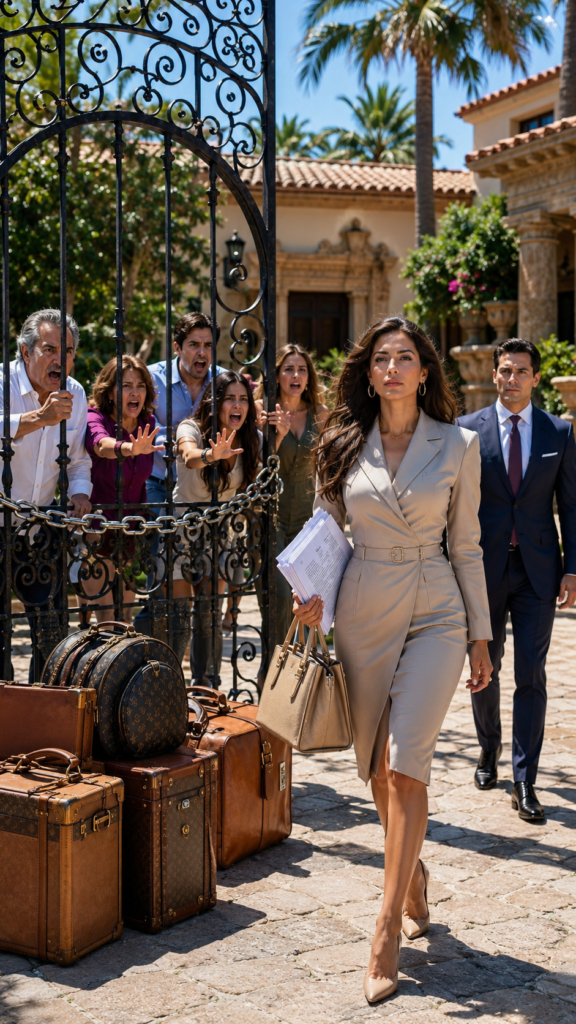
In the elevator, Patricia tried to speak.
"Mariana, please don’t close the door on us."
Mariana raised her hand.
"Not today."
Just that.
She didn’t shout.
She didn’t claim.
She didn’t cry in front of them.
And that’s precisely why it hurt them more.
On the ground floor, life went on as usual.
A man was selling tamales on the corner.
A truck passed, spewing smoke.
A delivery person argued with a guard.
Guadalajara continued moving as if a 36-year family lie hadn’t just fallen from above.
Mariana walked to her old car with the folder against her chest.
Before reaching it, her phone vibrated.
It was Renata.
"Don’t get too excited. This is just the beginning."
Mariana read the message and blocked the number.
Some wars aren’t won by responding.
They’re won by choosing not to participate.
That night, in her apartment in Colonia Americana, she laid all the documents on the table. She lived in a small place, with a narrow kitchen, two half-dry plants, and a window overlooking a faded building.
There, where she had so many times dined on cold quesadillas after taking her grandfather to appointments, lay the papers that named her the beneficiary of a legacy she had never imagined.
She read every page.
Every signature.
Every date.
And she understood something that hurt beautifully.
Her grandfather hadn’t left her out.
He had been training her.
She remembered his strange questions over coffee.
"Would you raise the rent on a punctual lady just because the area became fashionable?"
"What’s worth more, a show-off tenant or one who pays on time and takes care of the space?"
"How do you know when a warehouse needs paint and when it needs patience?"
Mariana thought they were just old man talks.
They were lessons.
The following week, she visited the properties with Laura Ortega, the trust administrator, a serious woman who had worked with don Ernesto for 12 years.
"Your grandfather said you wouldn’t see numbers," she told her. "You would see people."
Mariana walked the streets.
She saw a tortilla shop, a beauty salon, a stationery store, a refrigerator workshop, a fruit warehouse, a small restaurant, and two apartments where families greeted her by name.
She didn’t see millions.
She saw lives.
She saw metal shutters lifting early, children in uniforms, ladies sweeping the sidewalk, workers loading boxes, a man watering a broken pot with the same patience as every day.
Then she understood.
Grandpa hadn’t left her wealth for revenge.
He had left her responsibility to not become like them.
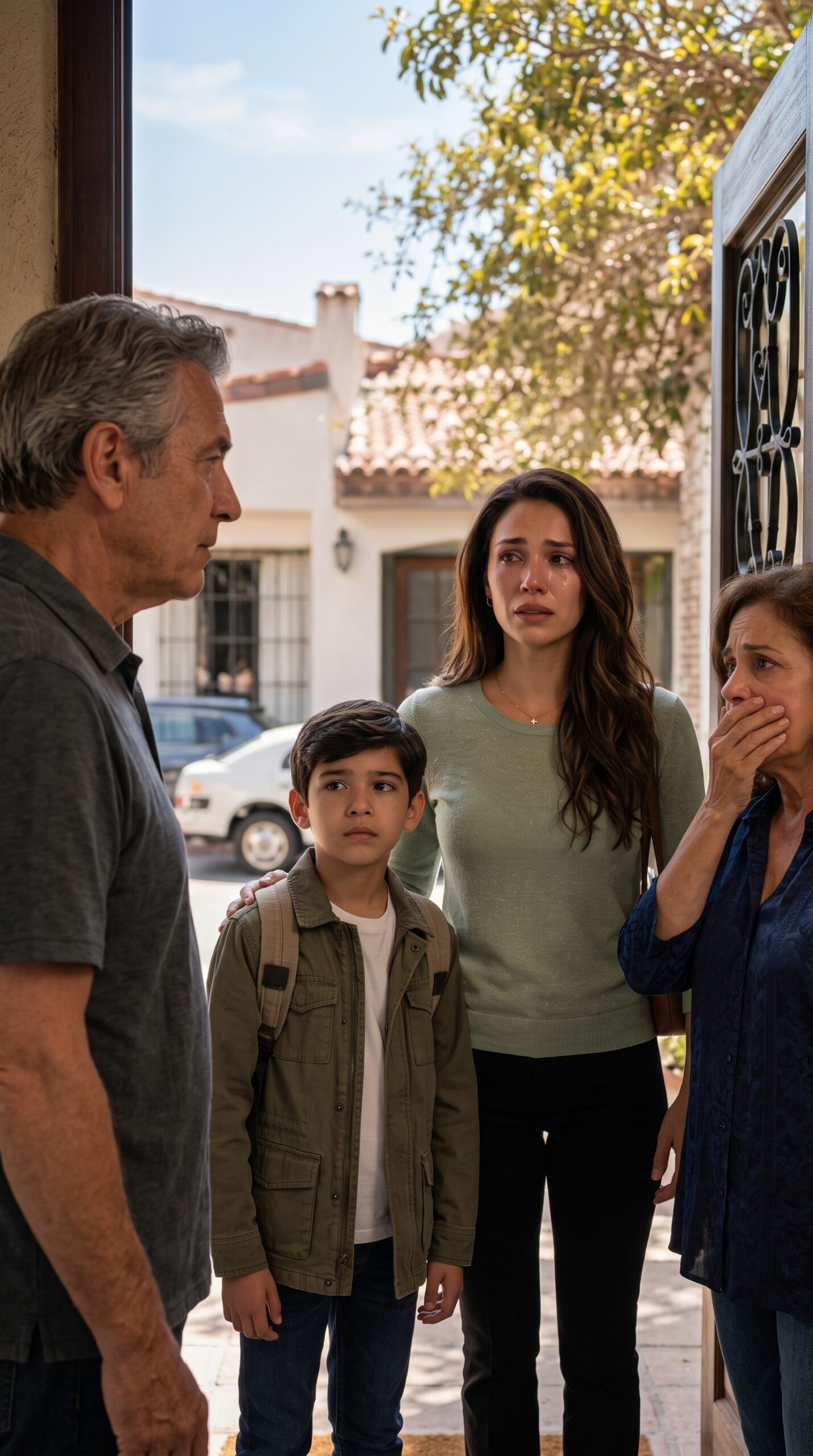
Months later, Álvaro and Patricia tried to reach out.
First with terse messages.
Then with long calls.
Afterward with invitations to dinner "to settle the family matter."
Mariana accepted once.
It was at a restaurant near Tlaquepaque, where her grandfather used to take her as a child.
Renata didn’t go.
Patricia arrived without flashy jewelry.
Álvaro spoke little.
During the meal, Patricia said:
"Your grandfather always believed in you."
Mariana set her glass down on the table.
"Yes. He did."
Patricia lowered her gaze.
She didn’t apologize.
Álvaro didn’t either.
And Mariana understood something hard: there are people who do not regret hurting you, but rather because they can no longer deny what they did.
But even that was justice.
In time, she had the $1 bill framed.
It hung next to a photo of her at nine years old, sitting on don Ernesto's lap, eating sweet bread in her backyard.
When someone asked why she kept something so cruel, Mariana replied:
"Because that dollar told the whole truth."
It told who laughed.
Who remained silent.
Who tried to take her place away.
And who, even dead, was still defending her.
Mariana didn’t become arrogant.
She kept working.
She kept driving the same old car.
She kept reviewing contracts at night and walking the properties every Friday.
But something changed.
She no longer entered any place feeling she had to prove her worth.
Because sometimes the greatest inheritance isn’t a house, or an account, or a trust.
Sometimes it’s a test that strips the masks off those who claimed to be family.
And a letter that arrives late, but just in time, to remind you that you were never insignificant.
You were just surrounded by people incapable of seeing you shine.