PART 1
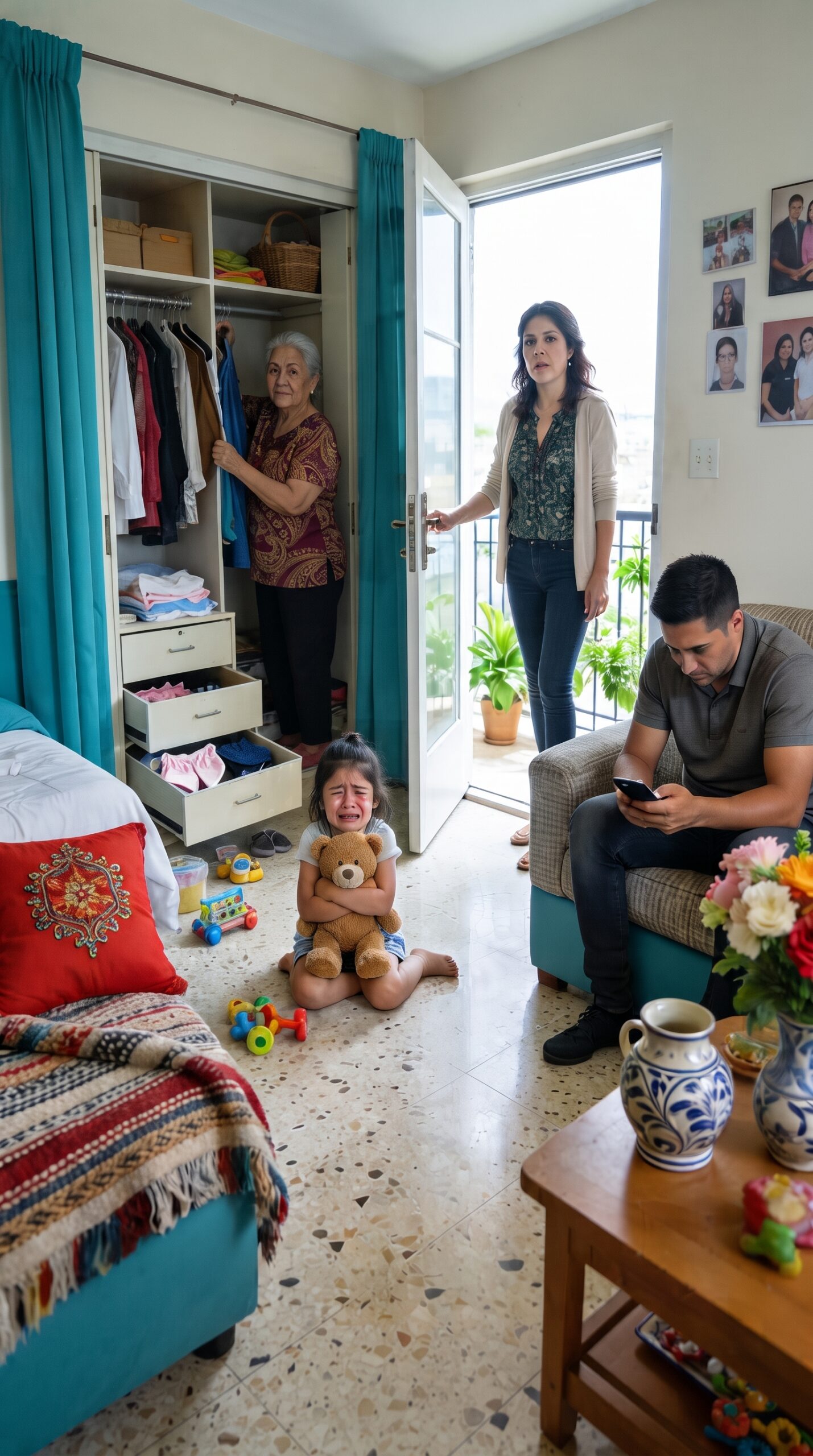
At 6:17 PM, Mariana opened the door to her apartment in Iztapalapa and felt like she had stepped into a stranger's home.
The smell of mothballs hit her first.
Then she heard the crying of Sofi, her three-year-old daughter, curled up next to the couch, clutching a doll to her chest.
And in the back, Rogelio, her husband, stared at his phone as if nothing was wrong.
—What happened here? —Mariana asked.
Before he could respond, Doña Elvira emerged from the kitchen, a calm smile on her face.
—Honey, I just tidied up a bit. You had everything piled up.
Mariana walked toward the kitchen.
The pots were in a different cabinet. The glasses were on a high shelf. The jars of chili, coffee, and sugar had been moved.
She opened three drawers before finally finding the utensils she used every day.
Then she entered her bedroom.
Her underwear was piled on the bed.
In the closet, Doña Elvira's blouses, skirts, and sweaters took up half the space.
It didn’t look like the luggage of someone who planned to stay “a few days.”
It looked like a move.
That morning, Rogelio had called her at work to let her know that his mother had argued with Brenda, his brother's wife, and needed a place to calm down.
He had also confessed that he gave her the spare key.
—Please, don’t make a scene —he pleaded.
Mariana took a deep breath because the apartment had cost them years of double shifts, late payments, and stretched paychecks.
It was small, yes.
But it was theirs.
In Sofi's room, she found an old blanket on the toddler bed. Thick, handwoven, smelling like a closet closed for decades.
—I also changed the detergent —Doña Elvira said behind her—. The one you buy irritates the girl's skin. After years, you learn.
That lit a fire in Mariana.
She looked to Rogelio, hoping he would set a boundary.
He lowered his gaze.
So she picked up Sofi, soothed her, and laid her down to sleep.
Then she returned to the bedroom, took her mother-in-law's medium suitcase, and packed all her clothes with a calmness that was more terrifying than a scream.
She called a taxi.
It would arrive in eight minutes.
—Doña Elvira, you came in without my permission, moved my things, and scared my daughter —she said, leaving the suitcase by the door—. I respect you, but this is my house.
The woman's smile vanished.
—I thought it fit here —she murmured.
Mariana believed it was manipulation.
Rogelio jumped up.
—You’re humiliating my mom.
—You brought her in without asking me. You can leave with her, but no one comes in here like that again.
Doña Elvira took the suitcase with trembling hands and went down to the taxi without saying another word.
For three days, Mariana thought she had defended her family.
Until she called the supposed cousin where Rogelio said his mother was staying.
The woman who answered didn’t know any Doña Elvira.
There was no cousin.
There was no fight with Brenda.
That night, Rogelio finally confessed where his mother had slept since Mariana kicked her out:
—On a bench at the Central Bus Station… for three nights.
PART 2
Mariana felt the floor tilt beneath her.
She still held the phone when Rogelio covered his face and began to cry.
It wasn’t a discreet cry.
It was the cry of a broken man, hunched over on the couch, gasping for air to explain the lie he had been swallowing for weeks.
—Why didn’t you tell me she had nowhere to go? —Mariana asked—. Where is she now?
Rogelio lifted his head.
His eyes were swollen.
—In the hospital.
Mariana dropped her phone.
Doña Elvira had collapsed that afternoon at the terminal. A cleaning worker found her next to her suitcase and called an ambulance.
They took her to IMSS.
But that wasn’t the whole truth.
—My mom has pancreatic cancer —Rogelio said—. It’s already spread. The doctors gave her a few months.
Mariana stopped breathing for a moment.
Rogelio had known for three weeks.
Doña Elvira had demanded that he not tell anyone. She didn’t want pity, obligatory care, or to become a burden to her children.
She had left her eldest son’s house in the early morning.
There was no argument with Brenda.
She simply left.
—So why did she come to us? —Mariana asked, her voice breaking.
Rogelio took time to respond.
—She said she needed to get to know Sofi better.
Guilt hit Mariana like a truck.
She remembered the clothes hanging.
The reorganized kitchen.
The blanket on the bed.
And that phrase she had interpreted as blackmail: “I thought it fit here.”
At 2 AM, Mariana forced Rogelio to take her to the hospital.
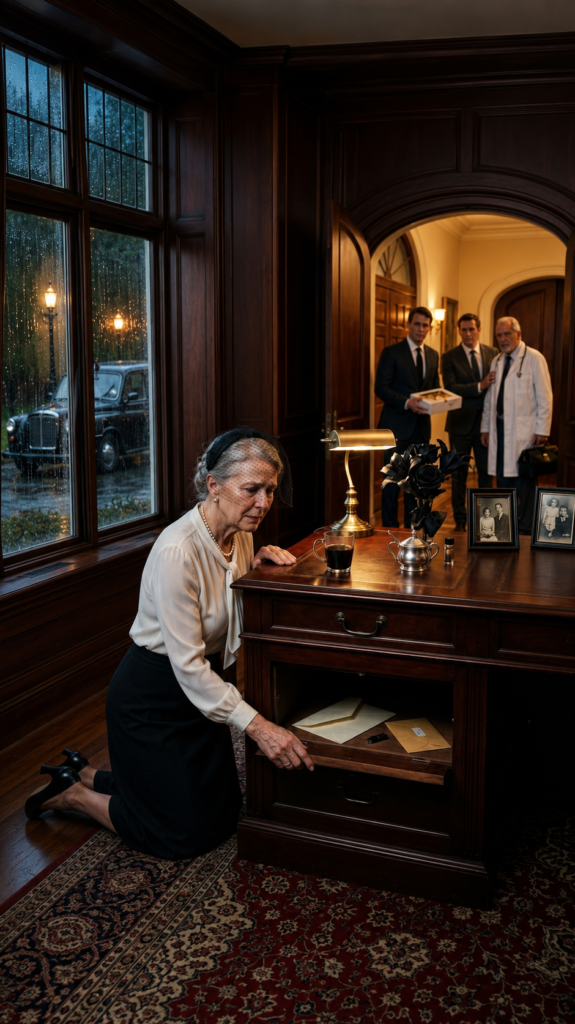
They arrived at the emergency room under a freezing rain. The hallway smelled of bleach, medicine, and reheated coffee.
Doña Elvira lay in a bed at the end.
She looked tiny.
The woman who always filled any room with her voice now seemed to disappear among the sheets.
Her suitcase remained under the bed, strapped to the railing so no one could take it.
When she opened her eyes and saw Mariana in her pajamas, she tried to fix her hair.
—Honey… forgive me —she whispered.
That apology hurt more than any insult.
—No, Doña Elvira. I’m the one who should apologize.
The woman slowly shook her head.
—I shouldn’t have touched your things. It’s your house. You were right.
Mariana gripped the railing.
Doña Elvira breathed heavily and continued speaking.
She explained that she changed the detergent because Rogelio, as a child, suffered the same rashes that Sofi had on her cheeks.
She wasn’t questioning Mariana as a mother.
She was simply recognizing something she had seen before.
She also confessed why she rearranged the kitchen.
She set it up like her own mother had, keeping the most used items near the stove, so Mariana and Rogelio could find everything quickly after work.
—I wanted to leave the house ready for you —she said—. Even if just once.
Then she asked about the blanket.
Mariana felt a knot in her stomach.
She had folded it with anger and stuffed it into the suitcase as if it were an old rag.
—I knitted it when I found out Sofi was coming —Doña Elvira explained—. I stored it with mothballs so the moths wouldn’t eat it. I wanted to give it to her with my hands.
She paused to catch her breath.
—I put it on her bed so she could sleep with something of mine when I was no longer here.
Mariana let out a sob.
In one single night, every gesture she had considered an invasion turned into a farewell.
Doña Elvira hadn’t come to dominate her home.
She had come to leave a piece of herself before dying.
Rogelio cried against the wall.
His mother looked at him with tenderness.
—I didn’t want to be taken care of out of pity —she murmured—. I wanted to still be useful for something.
Then Mariana also understood her husband’s silence.
Rogelio had failed, yes.
He had lied to her, allowed his mother to enter without permission, and froze when everything exploded.
But he was caught between a promise made to a dying woman and the truth he needed to share with his wife.
Rather than making a choice, he had become paralyzed.
And that cowardice left his mother sleeping on a bench for three nights.
Mariana asked to speak with the doctor.
The disease was advanced. There was no treatment that could cure her. They could only manage pain and provide comfort.
—We’re taking her home —Mariana said.
Rogelio looked at her, surprised.
—Are you sure?
—I won’t let her sleep on a bench again.
That morning, they signed the documents and returned to the apartment.
Mariana prepared Sofi’s room.
Before looking for pillows or medicine, she opened the suitcase, pulled out the mothball blanket, and laid it over Doña Elvira.
The same blanket she had rejected.
The same one that now seemed to hold everything they hadn’t known how to say to each other.
Doña Elvira lived for five more weeks.
Sofi slept next to her almost every night.
She brought her dolls, crooked drawings, and made-up stories about princesses driving buses.
Doña Elvira listened as if every word was a treasure.
Sometimes she couldn’t get up, but she still found the strength to braid the girl’s hair, teach her old songs, and ask her not to leave her shoes lying around.
Mariana listened to them laugh from the kitchen.
She never moved the glasses or pots again.
For her anger, the damned woman was right.
Everything was more accessible.
During those weeks, Mariana learned things she had avoided knowing for five years.
She discovered that Doña Elvira made jokes when she felt pain so as not to worry anyone.
That she hated lumpy atole.
That she had worked cleaning offices at dawn so Rogelio could finish high school.
And that she kept in her wallet a photo of Mariana on her wedding day, even though they barely tolerated each other.
One afternoon, while Sofi was asleep, Doña Elvira called for Mariana.
—I know I never got along with you —she said without preamble.
Mariana lowered her gaze.
—I was unfair to you.
—We were both stubborn, honey. You defended your place. I didn’t know how to come in without wanting to take charge.
They didn’t absolve each other with pretty phrases.
They talked about the uncomfortable comments, unannounced visits, the way Doña Elvira had opinions on parenting, and how Mariana smiled out of politeness while wishing she would leave.
For the first time, they were honest.
And in that belated honesty, the affection they had never allowed to grow was born.
Doña Elvira died on a Tuesday at dawn.
Sofi slept hugging her arm.
Mariana was on the other side of the bed, holding her hand.
Rogelio managed to hear her last words:
—Take care of each other without hurting yourselves.
After the burial, Brenda sought out Mariana.
She expected reproaches, but Brenda only wanted to deliver a message.
Days before her death, Doña Elvira had spoken to her about the night of the taxi.
—She said you did well in kicking her out —Brenda recounted.
Mariana looked at her, confused.
—What do you mean I did well?
Brenda took a deep breath.
—She said: “That girl protects her home like a lioness. She won’t let anyone scare her daughter or move her things. My granddaughter will be fine with her. I can go in peace now.”
Mariana stood still.
The woman she had kicked out without asking where she would sleep had transformed that humiliation into a testament of love.
She hadn’t cursed her.
She hadn’t blamed her.
She had blessed her for protecting Sofi.
That was what finally broke her.
Mariana had arrived three weeks late to the truth, three nights late to seek it, and almost five years late to love her.
But Doña Elvira chose not to die holding onto resentment.
The blanket remains on Sofi’s bed.
The girl drags it around the apartment, uses it to cover her dolls, and calls it “Grandma’s blanket.”
Mariana doesn’t allow anyone to store it in the closet.
She doesn’t wash it frequently, either.
Sometimes, when the house is silent, she brings the fabric to her face, searching for the last trace of mothballs.
That smell she once wanted to expel from her home is now all she has left of the woman who entered without permission, moved everything around, and was, unbeknownst to anyone, preparing the house for goodbye.
Since then, Mariana learned that setting boundaries is not cruelty, but judging without asking can become a wound that’s impossible to erase.
And Rogelio learned something even harder: a promise that forces a lie can destroy precisely the family it intends to protect.
Some say Mariana wasn’t to blame because no one told her the truth.
Others say she should have asked where an older woman would go before closing the door.
She no longer argues either point.
She only watches Sofi sleep under that blanket and understands that, sometimes, a person can be completely right… and still carry regret for a lifetime.