PART 1
Five minutes after the judge declared the marriage over, Ernesto took his daughter by the arm and spoke softly, as if a storm was brewing.
—Block all the cards. Right now.
Mariana Solís still held the divorce decree in her hand.
She was leaving the Family Court in Mexico City, her eyes dry, but her heart shattered into pieces. Nine years of marriage with Andrés Luján, nine years of enduring disdain, silence, lies, and that elegant way he had of making her feel guilty for everything.
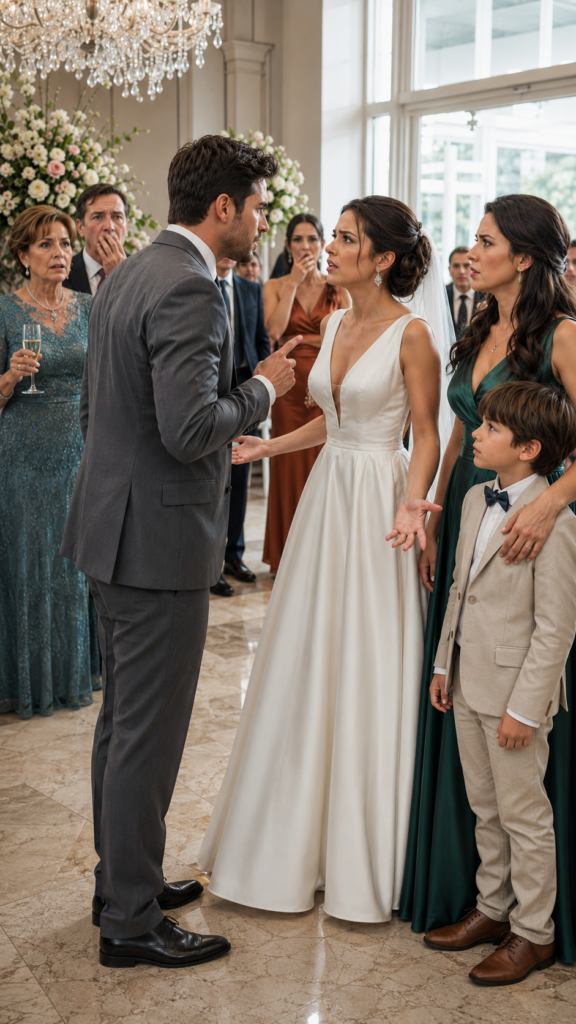
Across the hallway, Andrés walked happily with Camila Rivas.
Camila wore dark glasses, an expensive handbag, and a smile that didn't ask for permission to humiliate.
—Take care, Mariana —Andrés said, barely turning his head—. I hope you finally learn how to live without me.
Mariana didn’t respond.
Ernesto did look at him, but said nothing.
That silence weighed heavier than any insult.
For 32 years, Ernesto had worked reviewing bank fraud. He had seen partners rob entire companies, husbands drain accounts before divorce, and families destroyed by a poorly placed signature.
He wasn’t a paranoid man.
He was a man who understood ambition all too well.
—Dad, it’s all signed —Mariana murmured—. Andrés can’t touch anything.
—That’s what the paper says —he replied—. But the shameless never wait for the paper. They wait for carelessness.
Mariana felt a knot in her throat.
They sat on a bench in front of the courthouse. As people passed by with folders, crying children, and lawyers talking on the phone, she opened her banking apps.
Ernesto didn’t rush her.
He simply instructed her, one by one, what she had to close.
Passwords.
Corporate cards.
Shared access.
Company accounts.
Automatic payments.
Authorized devices.
Security codes.
Even the permissions for a card that Andrés swore he had returned three months earlier.
Mariana obeyed, her hands trembling.
She had built an interior design company from scratch. She started by fixing small apartments in Narvarte, then offices in Santa Fe, and later houses for clients who paid millions without blinking.
Andrés arrived when she was just starting.
At first, he said he admired her.
Then he began to present himself as the “strategic partner,” even though he had never signed a complete project.
Over time, he took company trucks, company cards, and even the company credit to impress people who didn’t even know Mariana’s name.
—Done —she said at last.
Ernesto checked the screen.
—Now it’s done.
—Do you really think he was going to do anything today?
He looked toward the street.
Andrés and Camila were getting into a black SUV. She kissed him on the cheek as if they had won a war.
—When a person loses control over someone —Ernesto said—, the first thing they try to do is keep what they can still spend.
Mariana didn’t answer.
That phrase lodged in her chest.
That night, she tried to distract herself unpacking boxes in her new apartment in Del Valle.
It wasn’t huge or luxurious, but it was hers.
No shouting.
No foreign perfumes on shirts.
No strange calls at midnight.
At 8:47, her phone rang.
It was the manager of a private restaurant in Polanco, one of those places where the bottles cost more than the rent for an entire family.
—Ms. Solís, sorry to bother you. We want to confirm if you authorized several charges to your company.
Mariana dropped a box on the floor.
—What charges?
The man breathed uncomfortably.
—A private room for 40 people, 12 bottles of French champagne, a tasting menu, jewelry delivered to the table, and a subsequent reservation at a boutique hotel.
Mariana’s back went cold.
—How much do they have?
—So far, 918,000 pesos, ma’am.
She closed her eyes.
Andrés.
She wanted to laugh, but a tear slipped out.
—I didn’t authorize anything. Suspend everything.
Across the city, Andrés Luján smiled in front of 40 guests, with Camila linked to his arm.
The dinner was to celebrate “his new life.”
But when the waiter returned with the terminal in hand, the screen said only one thing:
Transaction declined.
Andrés tried another card.
Then another.
And another.
All declined.
Then the manager approached the table, lowered his voice, and said a phrase that left everyone frozen.
—Mr. Luján, these accounts no longer belong to you.
PART 2
Silence fell over the room like a bucket of cold water.
Camila, who just minutes before had been flaunting her new ring in front of the wives of several businessmen, slowly lowered her hand. The stone shone brightly, but suddenly seemed fake, like the whole night.
Andrés tried to smile.
—It must be a bank error, young man. Try it again.
The manager maintained his composure.
—We’ve already done it five times, sir. We also tried with the corporate account of Solís Diseño Integral. The system indicates that you were removed as an authorized user today at 2:16 PM.
Someone at the table coughed to disguise a laugh.
Another guest lowered their gaze.
Camila clenched her jaw.
—Andrés, what’s going on?
He spoke through clenched teeth.
—Nothing, my love. An administrative problem.
But the administrative problem already had a name, date, and signature.
Mariana.
In her apartment, Mariana stood next to the boxes when she received another call.
This time it was from a jewelry store on Masaryk.
—Ms. Solís, we have a piece set aside with a corporate card. Mr. Andrés Luján just requested that it be charged to your business line. The amount is 326,000 pesos.
Mariana looked at her father, who was sitting at the table with a cup of coffee.
Ernesto raised his eyebrows slightly.
—Don’t authorize anything —she said—. And please send me the attempted charge by email.
She hung up.
Three minutes later, the hotel called.
Then a watch store.
Then the luxury car rental agency.
Andrés hadn’t just planned a dinner.
He had planned to spend almost 1 million pesos in one night, using the company Mariana built with sleepless nights, loans, client reprimands, and years without vacations.
Ernesto wasn’t surprised.
That was what hurt Mariana the most.
Her dad already knew.
Or at least suspected.
—Since when did you think he could do this? —she asked.
Ernesto set the cup down on the table.
—Since the hearing when he asked to keep temporary access to the cards “to close pending matters.”
Mariana remembered the scene.
Andrés had spoken softly in front of the judge.
He said he just needed 15 days to finish paying suppliers.
He said it was for the good of the company.
He said he didn’t want to harm her.
And she, tired of fighting, was about to agree.
But her lawyer, Licenciada Robles, stopped her.
—I also suspected it —Ernesto continued— when I discovered that last month he tried to raise the credit limit on two cards without telling you.
Mariana felt the floor shift beneath her.
—What?
—I didn’t want to tell you before the signing. I needed you to not arrive vulnerable at the courthouse. But yes, daughter, Andrés was already preparing something.
Mariana sat down.
For years she thought Andrés was just unfaithful.
Cruel, yes.
Selfish, too.
But she never imagined he could drain her like this, with a smile, on the very day he legally stopped being her husband.
In Polanco, the manager was no longer speaking in a low voice.
The guests began to listen.
—Sir, we need to settle this table’s bill. If you don’t have another means of payment, we will have to proceed according to protocol.
—Protocol? —Andrés stood up indignantly—. Do you know who I am?
The manager looked at him with a calmness that humiliated him even more.
—Yes, sir. That’s why we verified with the account holder.
Camila’s eyes widened.
—With Mariana?
Several guests turned.
That name was enough for Andrés’s mask to crack.
Camila stood up.
—You told me the company was practically yours.
Andrés tried to take her hand, but she pulled away.
—Camila, don’t make a scene.
—Scene? —she let out a bitter laugh—. You brought me here using your ex-wife’s cards.
A woman at the table murmured:
—How embarrassing, seriously.
Andrés heard her.
His face turned red.
He pulled out his personal card and handed it over brusquely.
—Try this.
The waiter returned one minute later.
—Declined as well, sir.
That was when everything broke.
Someone recorded with their phone.
First, it was a discreet video, from underneath the table.
Then another from the entrance of the room.
Andrés, the man who mocked Mariana in court, was in front of 40 guests unable to pay for the very dinner he organized to show off his mistress.
Camila grabbed her bag.
—I’m not paying for this.
—No one’s asking you to pay —Andrés whispered.
—Of course not. You wanted Mariana to pay.
That phrase was heard clearly.
And someone uploaded it to social media before midnight.
But the real blow came later.
At 11:23, Mariana received an email from her lawyer.
Subject: “Urgent. Review of previous movements.”
Licenciada Robles had requested access to the last 18 months of corporate expenses because the attempts that night demonstrated bad faith.
What they found was not simple abuse.
It was plundering.
Andrés had charged trips to Tulum with Camila as “site visits.”
He had paid for jewelry as “decorative material.”
He had registered romantic dinners as “meetings with investors.”
He even bought furniture for an apartment in Reforma using invoices from a supposed temporary office.
The total was 4,700,000 pesos.
Mariana read the figure three times.
She didn’t cry.
She didn’t shout.
She just felt something inside her, something she still doubted, extinguish forever.
—Tomorrow we file a complaint —Ernesto said.
—No —Mariana replied, raising her gaze.
Her father looked surprised.
—No?
—Today.
At 1:10 AM, Mariana, Ernesto, and Licenciada Robles were on a video call reviewing documents. The invoices spoke for themselves.
But a piece was missing.
That piece arrived from the least expected person.
Camila.
At 2:04, Mariana received a message from an unknown number.
“I’m Camila. I’m not writing to apologize. I’m writing because Andrés lied to me too. He told me the company was his, that you signed everything in his favor, and that you were just bitter. I have audios. I have messages. And I have photos of invoices he asked me to keep.”
Mariana stood frozen.
Ernesto read the message and dropped a dry phrase:
—The thief always brags in front of the one he thinks will never betray him.
Camila sent 27 screenshots.
In one, Andrés said:
“As long as Mariana keeps crying, she won’t review anything.”
In another:
“After the divorce, I’ll charge everything I can. That company owes me years of putting up with her.”
And the final audio was worse.
Andrés’s voice could be heard, relaxed, mocking:
“My plan was to leave her with the debts and keep the client portfolio. She can’t move without me.”
Mariana listened to that without blinking.
Then she saved the file.
The next morning, Andrés arrived at his old home wanting to talk.
The video was already circulating on Facebook.
His friends didn’t answer.
Camila had blocked him.
And the restaurant demanded full payment for the dinner, plus penalties for damages and scandal.
He rang the doorbell eight times.
Mariana didn’t open.
Who came out was Ernesto.
—I need to talk to my wife.
—Ex-wife —he corrected.
Andrés swallowed hard.
—It was a misunderstanding. I was going to pay. I just wanted to settle things right.
Ernesto looked at him the way one looks at someone who is no longer scary, just pitiful.
—Settling things right doesn’t cost 918,000 pesos in champagne and jewelry.
Andrés lost his calm.
—I built that company too!
Then Mariana appeared behind her father.
She held a blue folder in her hand.
—No, Andrés. You used it. It’s not the same.
He tried to change his tone.
—Mari, please. Let’s not ruin nine years over one night.
Mariana opened the folder.
—It wasn’t one night. It was 18 months.
Andrés turned pale.
She showed him copies of invoices, transfers, messages, and audios.
For the first time, he had no prepared phrase.
—If you report me, you’ll destroy us both —he said.
Mariana took a deep breath.
—No, Andrés. You destroyed yourself. I just blocked the card in time.
The complaint progressed swiftly.
Thanks to the documents, Camila’s audios, and the bank records, the authorities froze several accounts linked to Andrés.
Clients were also notified that he no longer represented Solís Diseño Integral.
Two construction companies canceled contracts with him.
One firm withdrew from a partnership.
And the video from Polanco went viral with a phrase that people repeated in comments:
“He wanted to spend on his mistress and ended up paying for his shame.”
Camila didn’t emerge as the perfect victim.
She was also pointed out for having mocked Mariana for months.
But by delivering evidence, she avoided carrying charges that weren’t hers.
Still, the elegant life she flaunted crumbled down in one week.
Andrés had to sell his SUV.
Then the watch.
Then the apartment he claimed to have bought with “his own effort,” but which was filled with furniture paid for by Mariana’s company.
Months later, in the hearing, Andrés tried to plead for leniency.
He said he was confused.
He said the separation affected him.
He said Mariana publicly humiliated him.
The judge interrupted him.
—Mr. Luján, you were not humiliated by your ex-wife. You were exposed by your own actions.
Mariana sat at the back.
She didn’t smile.
She didn’t celebrate.
She just felt peace.
That rare peace that comes when a woman stops seeking explanations and starts to reclaim what belongs to her.
Andrés was sentenced to repair the economic damage and was subject to prosecution for fraud and breach of trust.
The company recovered part of the money.
The rest would be paid over the years.
Ernesto accompanied Mariana out of the courthouse.
This time, he didn’t have to take her by the arm.
She walked firmly.
—Dad —she said—, that day, if you hadn’t told me about the cards, I would have been left with nothing.
He shook his head.
—No, daughter. I just reminded you to close the door. The strength not to open it again was yours.
That night, Mariana returned to her apartment.
There were no boxes lying around.
There was no fear.
On the table, she left a new card, solely in her name, next to the keys to her office.
On social media, people debated whether Camila was an accomplice or a victim, whether Andrés deserved more punishment, or if Mariana should have suspected sooner.
But Mariana no longer needed to win any argument.
Because she understood something that many people learn too late:
Sometimes the divorce doesn’t start when a judge signs a paper.
It starts when a woman blocks the last door through which they could still rob her of her dignity.