PART 1
When the diamond ring vanished, the mariachi stopped playing as if someone had switched off the night.
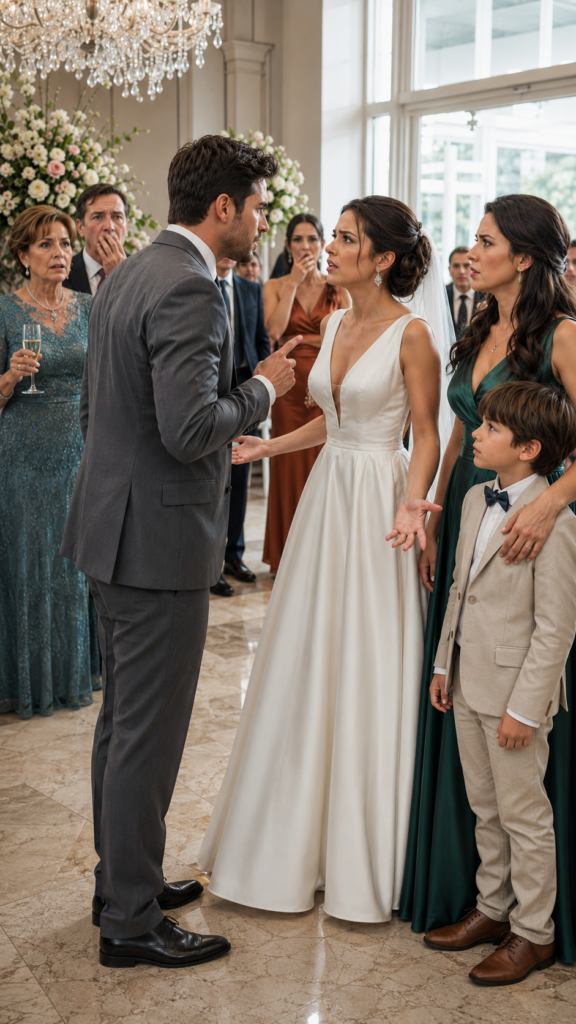
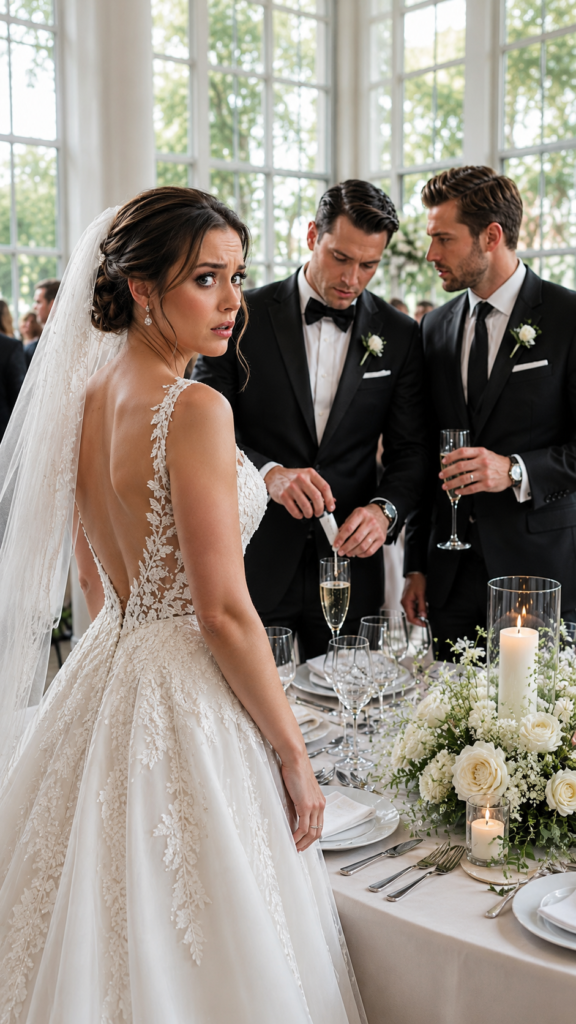
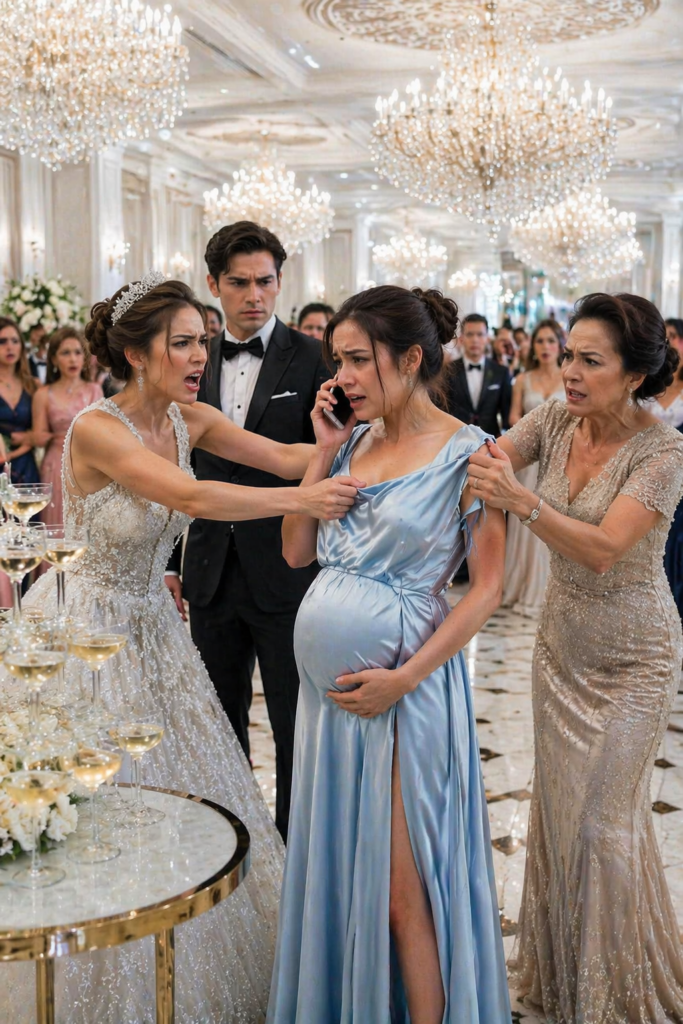
In the main hall of a luxury hotel in Guadalajara, 200 guests turned simultaneously toward the head table, where Regina Luján, the bride, held her empty left hand and trembled with rage.
—That ring is worth more than that deadbeat’s entire life! —she screamed.
Regina's gaze landed squarely on Mariana.
Mariana stood by the chocolate fountain, wearing a simple olive green dress, her hair tied back, one hand resting on her eight-month belly. She hadn’t touched the ring. She hadn’t even approached the bride’s dressing room.
But in this family, truth had never mattered as much as the last name.
Ever since Mariana married Diego Luján, Regina had treated her like she’d entered the house through the servant’s entrance.
She called her “parasite,” “climber,” “poor little lucky girl.”
Her mother-in-law, Lourdes, never corrected her. On the contrary, she smiled with that poisonous elegance of women who attend mass and destroy lives over lunch.
—Check her bag —ordered Lourdes—. That girl always plays the innocent, but need has long nails.
Diego, Mariana’s husband, was three steps away.
He said nothing.
He simply tightened his grip on the wine glass and stared at the floor.
—I didn’t take anything —Mariana said, her voice firm even though she felt the baby move inside her.
Regina approached in her crystal-studded white dress.
—Then you won’t mind if we search you, right?
Before Mariana could respond, Regina snatched her purse. She dumped its contents onto a table. Keys, a lipstick, prenatal pills, a black wallet, and a metal card with no visible name fell out.
Nothing more.
—She hid it in her clothes —Lourdes said.
Mariana stepped back.
—Don’t touch me.
But Lourdes already had her by the back.
Regina yanked the fabric of the dress from the shoulder. A dry, horrible sound echoed. The seam tore open up to her waist.
Several women screamed. Some men pulled out their phones. Others pretended not to watch.
Mariana covered her chest with both hands. The inner lining protected her, but the humiliation left her frozen.
—Diego —she whispered—. Say something.
He barely raised his gaze.
—Mariana… let them check. We’ll talk at home later.
That phrase didn’t sound like fear.
It sounded like betrayal.
For three years, Mariana had endured insults at family dinners, cruel jokes at Christmas, and comments about her “lowly background.” Diego always promised he would talk to his mother. He always said “later.” He always asked for patience.
But that night, in front of 200 people, with her dress torn and her pregnancy exposed as if it were a shame, Mariana understood that her silence hadn’t bought her peace.
It had only trained others to mistreat her.
Then she saw something.
To the side of the stage, the wedding coordinator was pale. She was looking at Jimena, Regina’s cousin, who hugged a golden purse to her chest as if carrying a bomb.
Mariana also spotted a black camera in the corner of the ceiling.
She took a deep breath.
She pulled out her cell phone.
Regina let out a laugh.
—What are you going to do? Call the cops, ridiculous?
Mariana didn’t look at her.
She dialed a number.
Her father answered immediately.
—Dad —Mariana said softly—. I can’t take it anymore.
Then she looked at Diego for the last time as a wife.
—Close all the doors.
PART 2
On the other end of the line, there was a brief silence.
Then she heard the calm voice of Ernesto Valcárcel.
—Don’t move, daughter. Security has received the order.
Diego blinked, confused.
—Valcárcel?
Mariana didn’t respond.
Regina still smiled, thinking it was all cheap theater. Lourdes fiddled with her pearl necklace in annoyance, as if the pregnant woman they had just stripped was the real inconvenience of the night.
But 20 seconds later, the side doors of the hall swung open.
Five men in black suits walked in. They didn’t rush. They didn’t need to. They moved with a calm that froze the music, conversations, and even the fake laughter.
The head of security approached Mariana and slightly lowered his head.
—Miss Mariana Valcárcel, do you require medical attention?
The last name dropped into the hall like a stone in a lake.
Valcárcel.
Someone whispered:
—Is she the daughter of Don Ernesto?
Another guest’s eyes widened.
—The owner of Valcárcel Hotels?
Regina stopped smiling.
Lourdes let out a nervous laugh.
—There must be a mistake. She’s Mariana Luján.
—No —Mariana said, holding the pieces of her dress—. Luján was the name I accepted for love. Valcárcel is the one you insisted on despising without knowing.
The silence became heavier than the crystal chandeliers.
Diego took a step toward her.
—Mariana, you never told me...
—I did tell you that my family was private. You decided that meant poverty.
The head of security spoke into his radio.
—By instruction of Mr. Ernesto Valcárcel, no one leaves the hall until the security footage is reviewed.
Regina reacted too late.
—It’s my wedding! You can’t lock up my guests!
—It’s my father’s hotel —Mariana replied—. And you just falsely accused a pregnant guest, ripped her dress, and caused a scene in front of cameras.
Lourdes approached, lowering her voice.
—Look, girl, don’t make this bigger. It was a family misunderstanding.
Mariana stared at her without blinking.
—When they called me a deadbeat, it was family. When your daughter ripped my dress, it was family. When my husband stayed silent, it was family. Now that there are consequences, it turns out it's a misunderstanding.
Several people looked down.
The same hall that moments ago had watched her as guilty now didn’t know where to hide its shame.
On the giant screens where romantic photos of Regina and her boyfriend had been projected, the image of the private hallway next to the dressing room appeared.
The video showed Regina before entering the hall. She took off the diamond ring, looked at it with a twisted smile, and handed it to Jimena.
Then Lourdes appeared.
Mariana’s mother-in-law looked around and pointed to a chair where Mariana’s purse sat.
Jimena shook her head, frightened.
Regina said something that wasn’t quite audible, but the gesture was clear: she wanted her to put the ring there.
The wedding coordinator appeared on camera. She saw the scene. Jimena got nervous and put the ring back in her golden purse.
The footage ended.
No one spoke.
Even Regina’s fiancé, Esteban, a businessman from Zapopan who had remained frozen with a distorted face, finally uttered a dry phrase:
—Did I marry someone capable of inventing a theft at her own wedding?
Regina turned red.
—It wasn’t like that. I just wanted to scare her. I wanted her to understand that she can’t come and feel like she’s our equal.
That confession was worse than any evidence.
Esteban slowly removed his wedding ring.
—Thanks for telling me before signing the marital contract.
Regina covered her face with her hands.
—Esteban, don’t be dramatic.
—Dramatic was humiliating a pregnant woman to feed your ego.
Lourdes turned to Diego.
—Do something. She’s your wife.
Diego looked at Mariana.
He finally seemed afraid.
Not afraid of losing her out of love, but afraid of understanding too late who the woman was that he had never defended.
—Mariana, let’s go. Let’s talk at home. We can’t destroy a marriage over a moment of pressure.
Mariana let out a sad laugh.
—It wasn’t just one moment, Diego. It was three years.
She touched her belly.
—Every Sunday at your house, every insult disguised as a joke, every time your mom told me to be grateful for finding you, every time Regina examined my clothes as if I smelled like a market and not like a person. You were there.
Diego swallowed hard.
—I didn’t want to fight with my family.
—Then you chose not to fight for yours.
The main door opened again.
Ernesto Valcárcel walked in.
He was not a man who needed to introduce himself. Tall, gray-haired, in a dark suit with a serene gaze, he walked toward his daughter without looking at anyone else.
When he saw the torn dress, his expression changed.
He didn’t shout.
That was scarier.
He took off his jacket and draped it over Mariana’s shoulders.
—My girl —he said—. Did they hurt you?
Mariana pressed her lips together.
—Just enough to awaken.
Ernesto closed his eyes for a second, as if that phrase hurt him more than any blow.
Then he looked at the head of security.
—Check the purse of Miss Jimena.
Jimena began to cry before opening it.
—Regina told me it was a joke. That Mariana needed to learn her place. I didn’t want to get into trouble.
She opened the golden purse.
There was the ring.
It sparkled so much it made one sick.
Regina screamed:
—Damn traitor!
Esteban let out a bitter laugh.
—The traitor is you.
The cell phones went up again. But now no one was recording Mariana out of morbid curiosity. They were recording the collapse of a family that had confused money with impunity.
Ernesto raised a hand.
—The video will be submitted to the authorities if my daughter decides to proceed. It will also be sent to Mr. Esteban’s lawyers for whatever he deems necessary. Furthermore, Grupo Valcárcel cancels any pending contract with companies linked to the Luján family from this moment on.
Lourdes paled.
—That ruins us.
—No —Ernesto replied—. You were ruined by thinking you could touch my daughter without consequences.
Diego took another step forward.
—Don Ernesto, please. I love Mariana.
Mariana’s father looked at him for the first time.
—Love without defense is comfort, boy.
Diego fell silent.
Mariana felt the baby move. It wasn’t a strong kick, just a warm reminder that inside her was someone who deserved to grow far from that cruelty.
—Diego —she said—, that night they didn’t just tear my dress. They broke the last excuse I had to stay.
He shook his head.
—Don’t do this to me.
—You did it to me when you looked away.
Mariana took her father’s arm.
Before leaving, she stopped in front of Regina.
The bride no longer looked like a queen. She looked like a spoiled child surrounded by expensive flowers and cheap truth.
—You called me a deadbeat because I didn’t flaunt what I had. But the ugliest poverty isn’t in the wallet, Regina. It’s in the soul of someone who needs to humiliate to feel big.
Regina cried out of rage.
—You stole my wedding.
—No. You traded your wedding for a lie.
Mariana exited the hall covered with her father’s jacket.
In the private hallway, a hotel doctor took her blood pressure. It was high. Ernesto stayed beside her, his hand on her shoulder.
—I should have intervened earlier —he said.
Mariana slowly shook her head.
—I didn’t want to be loved for being your daughter.
—Who only respects you upon knowing your last name never respected you.
That phrase broke her.
She didn’t cry in the hall.
But there, far from the cameras, Mariana cried for the three years she had confused patience with love.
That night she didn’t return to the apartment with Diego.
She slept at her father’s house, in a quiet room, in comfortable clothes, with her phone turned off.
At 5:40 AM, she turned it on.
She had 42 missed calls from Diego.
The most recent message read:
“Forgive me. I didn’t know you were Ernesto Valcárcel’s daughter.”
Mariana read the sentence twice.
Then she understood everything.
He wasn’t asking for forgiveness for not defending her.
He was asking for forgiveness because he discovered he had humiliated the wrong woman.
At 9:00 AM, she called her lawyers.
The divorce process began that same week.
Diego tried to enter the Valcárcel house with flowers, letters, and promises. Ernesto wouldn’t allow any scenes. Everything was discussed in a room with cameras on and lawyers present.
—I lost my position —Diego said, haggard—. My mom won’t stop crying. Regina is locked up. Esteban asked for annulment. Everything got out of control.
Mariana listened calmly.
—It didn’t get out of control. For the first time, there were consequences.
Diego covered his face.
—And our daughter?
Because the baby turned out to be a girl.
Mariana looked at him with a clean sadness.
—Our daughter will have a father if you learn to be one. But she won’t grow up seeing her mother lower her head so that a grandmother and an aunt can feel powerful.
Diego cried.
Mariana didn’t comfort him.
She had spent too much time comforting someone who had never cared for her.
Regina tried to claim on social media that it was all “wedding stress.” But the leaked video showed otherwise. The phrase “I wanted her to understand her place” became trending for days.
Esteban annulled the marriage.
Lourdes lost invitations, friendships, and honorary positions in foundations where she had previously paraded as an impeccable lady.
Jimena gave a written declaration.
And Diego, without Grupo Valcárcel contracts, discovered that many doors he thought were open because of his talent were actually held up by the woman he abandoned.
A month later, Lucía was born.
Mariana welcomed her on a cold dawn, with rain pounding against the hospital windows.
When the baby cried on her chest, Mariana felt something inside her was also being born. It wasn’t revenge. It was peace.
Diego arrived three hours later.
He didn’t come with Lourdes.
He didn’t arrive demanding.
He simply stood at the door, his eyes red.
—Can I meet her?
Mariana paused for a few seconds.
—You can come in. Only you.
Diego held Lucía with trembling hands.
—Hello, my girl —he whispered—. I hope one day I can deserve you.
Mariana didn’t respond.
Because pretty words don’t fix anything on their own.
They are tested over the years.
The divorce ended six months later. Diego accepted therapy, supervised visits at first, and a clear agreement: Lourdes and Regina could not approach Lucía without Mariana’s authorization.
The last time Mariana saw Regina was at a hearing.
She no longer wore diamonds.
She no longer walked as if everyone owed her reverence.
Mariana looked at her from the hallway and lowered her gaze.
She felt no triumph.
She felt distance.
And sometimes, distance is the only justice that doesn’t dirty the hands.
Two years later, Lucía ran through the garden of the Valcárcel house in a yellow dress, chasing bubbles that her grandfather blew with more excitement than any child.
Diego visited her on Saturdays. He had changed enough to speak with respect, to not justify his family, and to understand that being a father was not an automatic right but a daily responsibility.
Mariana never went back to him.
Not out of pride.
But out of memory.
One afternoon, Ernesto found her watching the sunset from the terrace.
—Do you regret that call? —he asked.
Mariana thought of the hall, the torn dress, the laughter, the cell phones, Diego’s silence, and her mother-in-law's hand pulling the fabric as if tearing away something of no worth.
Then she looked at her daughter sleeping in a small hammock.
—No, Dad.
She smiled calmly.
—Sometimes one doesn’t call to destroy anyone. One calls to rescue themselves before disappearing completely.
Ernesto took her hand.
—And you rescued yourself alone, daughter.
That night, Mariana understood that she hadn’t lost a family.
She had lost a cage adorned with a last name, elegant dinners, and humiliations disguised as tradition.
Because the day they wanted to strip her in front of 200 guests, they didn’t take away her dignity.
They only tore away the last piece of fear.
And since then, she never asked permission to be worth it.